Natural form
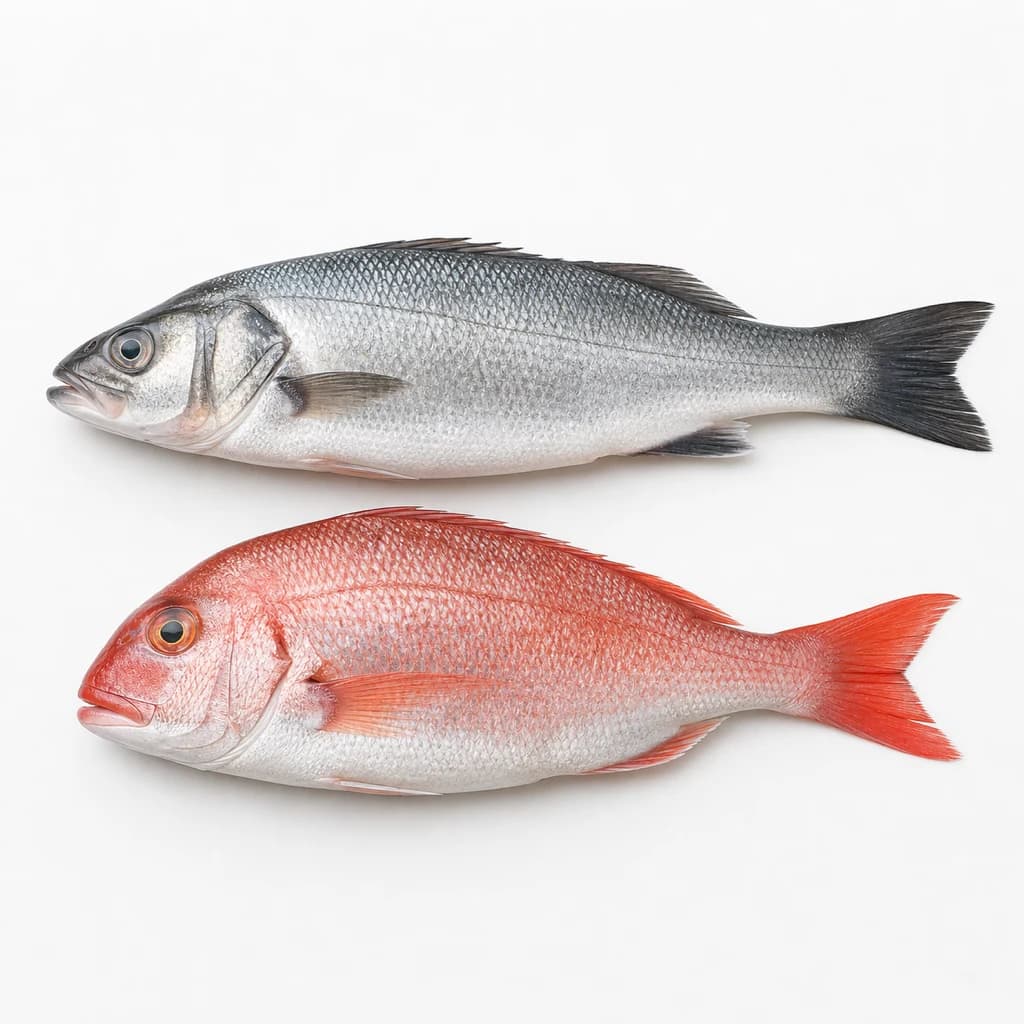
Two whole fresh fish showing clear eyes, bright scales, and firm body shape.
Readers learn to identify fresh fish by the visual freshness markers — clear eyes, vibrant intact scales, and rigid body — before any preparation.
Proteins
Fresh Fish
Whole or filleted fresh fish — grilled, fried, steamed, or stewed — a staple protein for coastal and riverside kitchens worldwide.
Fresh fish covers the broad category of just-caught sea, reef, and freshwater fish used as a primary protein. Depending on the species and culture it is grilled whole over coals, pan-fried, steamed with aromatics, or simmered in spiced or coconut-based stews. Freshness is judged by clear eyes, firm flesh, and a clean sea smell.
Fresh fish is among the most ephemeral and expressive of proteins—a canvas that reveals the character of the water it came from and the hands that handled it. Its appeal lies in subtlety: delicate textures, clean briny notes, and flavors that range from the mild sweetness of lean white fish like sole and cod to the rich, oily depth of salmon and mackerel. Understanding how fish behaves under heat is essential to cooking it well. Fish muscle contains less connective tissue than land proteins, and its collagen converts to gelatin at lower temperatures, meaning the margin between perfectly cooked and overdone is unforgiving. The fat content—lean, medium, or oily—dictates not only flavor but also which cooking methods suit each fish best and how it will hold up on the plate.
- Measured in
- g
- Storage
- Fridge
Allergens
Types & varieties
Lean white fish; mild, slightly sweet; large flakes; ideal for frying, poaching, baking
Lean white fish; firm, dense texture; mild flavor; holds up to grilling and roasting
Medium-fat white fish; buttery, delicate; versatile for most cooking methods
Medium-fat; sweet, nutty flavor; firm flesh; excellent for grilling and roasting
Lean white fish; extremely delicate; best lightly pan-fried or meunière
Lean, delicate; mild sweetness; best sautéed or pan-fried
Oily, pink-to-orange flesh; rich, distinct flavor; versatile; skin crisps well
Oily, strong flavor; high omega-3s; benefits from marinating; best grilled or baked
Very oily; pronounced flavor; rich in fats; excellent grilled or cured
Dense, meaty texture; beef-like when seared; also served raw as sashimi
Freshwater; delicate, mild; fine flakes; commonly pan-fried or grilled
Medium-fat; sweet, clean flavor; excellent whole-roasted or grilled
Lean, mild; dense, steak-like texture; underutilized; good for high-heat searing
Medium-fat; mild, clean flavor; flaky; versatile; excellent grilled or baked
Small oily fish; intense flavor; traditionally grilled whole or packed in oil
Common uses
Tips & pitfalls
- Always scale whole fish before cleaning; scales bitter the skin and affect browning
- Rinse cavity thoroughly after gutting to remove bloodline (dark tissue along the spine)
- Pat fillets completely dry with paper towels before seasoning—this is non-negotiable for achieving a proper sear
- Season fish generously with salt 15–20 minutes before cooking to improve texture and season the flesh throughout
- Let fish rest at room temperature 15 minutes before cooking for more even heat penetration
- Use the freshest fish available for raw applications (sashimi, ceviche, tartare); sushi-grade implies stricter handling
- Slide a thin fillet knife along the skin to separate flesh if skin sticks during pan-frying (work from tail to head)
- Flip fish only once; constant flipping fractures delicate flesh and prevents proper browning
- Fish is done when it just turns opaque throughout but still appears slightly translucent at the very center; carryover cooking completes it
- Rest grilled or roasted fish 2–3 minutes before serving to allow juices to redistribute
- Reserve fish bones and trim for making fumet or stock—a high-value byproduct
- Common mistake: buying 'fishy'-smelling fish; fresh fish smells of clean brine, not ammonia or sourness
- Common mistake: overcooking; dry, tough fish results from exceeding 145°F (63°C) internal temperature
- Common mistake: using high heat on delicate fish like sole—medium-low heat preserves texture and prevents tearing
- Common mistake: crowding the pan; steam rather than browning occurs, and fish cooks unevenly
Nutrition
Energy
519 kJ · per 100 g
Where the calories come from
Protein
20g
40% DV
Carbs
0g
0% DV
Fat
4.2g
5% DV
Fiber
0g
0% DV
Sodium
60mg
3% DV
Source · USDA FoodData Central · Fish, bluefish, raw
View on FDC →In the shops
Matched grocery products
No matched grocery products for Fresh Fish yet.
Good to know
- Freshness Indicators
- Clear, bulging eyes; bright red or pink gills; tight, shiny scales; flesh that springs back when pressed; clean, ocean-brine scent (not ammonia or sour)
- Storage Temperature
- 32–34°F (0–1°C); store on crushed ice in a perforated pan to allow meltwater drainage
- Shelf Life
- Whole fish: 1–2 days from catch; fillets: 1–2 days; properly iced and handled: up to 3 days
- Fat Content
- Varies by species: lean (cod, sole) 1–3%; medium (bass, halibut) 3–8%; oily (salmon, mackerel) 8–15%
- Cooking Time
- Roughly 10 minutes per inch of thickness at medium-high heat; fish is done when it just turns opaque throughout
- Protein Structure
- Myoglobin content determines color (white vs. pink vs. dark); collagen converts to gelatin at lower temperatures than red meat
- Yield
- Whole round fish to dressed: 65–75%; dressed to fillet: 45–55%; fillet to steak: 75–85%
Substitutes
- Other white-fleshed fish — Cod, halibut, sea bass, and snapper are largely interchangeable in most preparations; adjust cooking time by thickness
- Other oily fish — Salmon and mackerel substitute for each other in grilled or baked applications; flavor intensity varies
- Firm tofu (for vegan) — Press well, season aggressively, and sear at high heat; does not replicate fish flavor but provides similar texture applications
- Cod loins or portions — Pre-portioned convenience; quality varies; check for added solutions or glazing
Pairs with
Also called
Fresh Fish (Ikan) · Fresh Fish (Peixe) · Whole Fish · Fresh River Fish (Tilapia/Catfish) · River Fish (Carp) · Freshwater Fish · Sea Fish (Samak) · Reef Fish · White Fish · Ikan · Peixe · Samak
Appears in these dishes
Related

Egg
The kitchen's everything ingredient — bind, leaven, enrich, or fry

Chicken Breast
Lean, quick-cooking white meat for everyday dinners

Ground Beef
Versatile minced beef for burgers, ragù, tacos, and meatballs

Pork Loin
Lean, tender roasting cut that stays juicy with care

Salmon
Rich, rosy fish that roasts, grills, or cures beautifully

Egg White
Pure protein that whips to airy peaks for meringue and more

Egg Yolk
Rich, golden yolk for custards, mayonnaise, and pasta

Quail Egg
Tiny, speckled eggs for garnishing and elegant bites