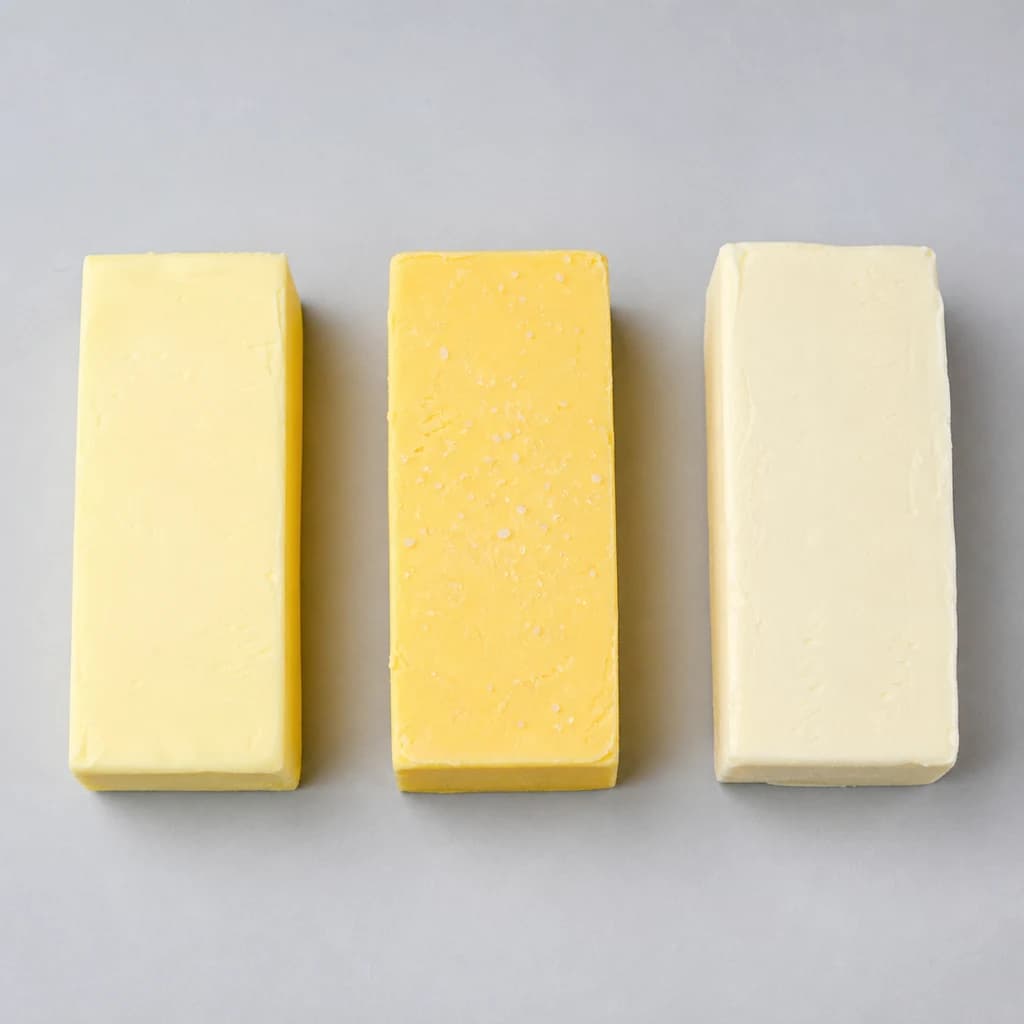
Dairy & Eggs
Brown Butter (Beurre Noisette)
Butter cooked until the milk solids toast nut-brown, lending a hazelnut-caramel aroma to cookies, sauces, and finished vegetables.
Brown butter is not a separate ingredient so much as a transformation: ordinary butter, heated until its water evaporates, its milkfat clarifies, and the suspended milk solids turn nut-brown through Maillard browning and lactose caramelization. What remains is a clear amber fat freckled with toasted bits and an aroma that reads as toasted hazelnut, toffee, and warm caramel — which is precisely what the French name *beurre noisette* (literally 'hazelnut butter') describes, even though no hazelnuts are involved.
Cooks prize it because it delivers a depth of flavor that feels elaborate but takes only minutes, and because the clarified structure changes how the fat behaves. With most of the water gone, brown butter contributes more pure fat per gram to a batter and a more concentrated dairy flavor — which is why it transforms cookies, financiers, and pound cakes the moment you swap it in. In savory cooking it is the engine of the meunière family of sauces and a finishing fat that turns a simple bowl of pasta, a tray of roasted squash, or a plate of seared fish into something memorable.
The catch is timing. Once the foaming dies down, the butter goes from perfect to burnt in a window measured in seconds, and the visual cues are quiet. The two named stages on either side of that window — *noisette* (hazelnut brown) and *noir* (almost black, intentionally taken further) — define the entire working life of the technique, and knowing where you are in that range is what separates a brilliant finish from a bitter mistake.
- Measured in
- g
- Storage
- Refrigerate
Allergens
Find it in
Suits
Types & varieties
The standard: milk solids toasted to a warm hazelnut brown; nutty, sweet, caramelized.
Cooked further until the milk solids turn very dark, almost black; intensely bitter-nutty. Classically deglazed with vinegar or lemon juice to cut the bitterness (raie au beurre noir is the archetype).
Strained through a fine sieve or cheesecloth to remove the browned solids, leaving only the toasted-flavored fat — useful when you want the aroma without the speckled bits in a pale sauce.
Noisette vs. Noir: Two Stages, Two Different Dishes
Classical French cookery treats the two endpoints of browned butter as distinct ingredients rather than mistakes. *Beurre noisette* is the sweet, nutty version most home cooks mean when they say 'brown butter' — the one that goes into cookies, finishes pasta, and dresses green vegetables. *Beurre noir* is the same fat taken past toffee into something almost bitter, mahogany-black, with a sharp roasted edge; on its own it would dominate, so it is almost always cut with acid (vinegar, lemon juice, or sherry vinegar) and sometimes a little parsley. Skate wing in *beurre noir* is the textbook application, where the dark, tangy sauce is the whole point of the dish. The lesson is that 'too far' is a destination, not a failure — provided you go there on purpose, with the acid ready to balance it.
Brown Butter in Baking
Swapping regular butter for brown butter in a baking recipe is rarely a one-to-one substitution, because the structure of the fat has changed: the water is largely gone, the proteins are already denatured and browned, and the lactose has begun to caramelize. A few practical consequences for the baker are worth keeping in mind.
- Brown butter has less water than fresh butter, so it contributes more pure fat per gram and the denatured milk solids no longer help structure the dough. Cookies tend to spread more and brown more (the milk solids are already partially caramelized), so chilling the dough well before baking is even more important. If the cookies are darkening too fast, drop the oven temperature by about 25°F (15°C).
- For creaming with sugar, chill the brown butter until it is the consistency of cold butter (pliable, not liquid, not rock-hard). Too warm and it won't aerate; too cold and it won't cream. A short rest at room temperature usually gets it right.
- The toasted milk solids carry most of the flavor; if you strain them out for a pale batter like génoise, you lose what made the swap worth doing.
- In financiers, madeleines, and brown butter chocolate chip cookies, leaving the solids in is the whole point — those dark flecks are the visual signature of the technique.
Common uses
Tips & pitfalls
- Use a light-colored, heavy pan (stainless steel or enamel) so you can watch the milk solids change from white to tan to deep amber. A black nonstick pan hides the cue and you will overshoot.
- Start over medium heat; once the vigorous foaming dies down, the water is largely gone — drop the heat to medium-low and stay close, because the final stage is fast.
- Swirl the pan rather than stirring with a spoon. Agitation slows browning and scrapes the solids up unevenly.
- Pull the pan off the heat 5–10 seconds before the color you want. Residual heat keeps cooking it, and your nose is the most reliable gauge: when the kitchen smells like toasted hazelnut, it is ready.
- If it smells acrid, sharp, or like burnt popcorn, it has gone past noisette into beurre noir (or beyond). It cannot be rescued — start over.
- For baking, pour the finished butter into a heatproof bowl or onto a sheet pan to halt the cooking, then chill until pliable before creaming with sugar.
- Use unsalted butter for predictable seasoning; if you use salted, cut added salt in the recipe by roughly 1/4 teaspoon per stick.
- Make a double batch. Brown butter keeps well refrigerated for 1–2 weeks and frozen for months, and having it on hand turns a weeknight vegetable or bowl of pasta into something memorable.
Nutrition
Energy
3766 kJ · per 100 g
Where the calories come from
Protein
0g
0% DV
Carbs
0g
0% DV
Fat
100g
128% DV
Fiber
0g
0% DV
Sugars
0g
of which
Sodium
0mg
0% DV
Source · USDA FoodData Central · approx. Butter, Clarified butter (ghee)
View on FDC →In the shops
Matched grocery products
 €2.10
€2.10Unsalted Butter
Hacendado · 250 g · Mercadona
 €2.45
€2.45Unsalted Butter
Hacendado · 250 g · Mercadona
 €3.69
€3.69Unsalted Butter
ASTURIANA · kg · Bonpreu
 €8.90
€8.90BREDA Unsalted Butter
BREDA · kg · Bonpreu
 €2.39
€2.39Cadí Butter
CADÍ · kg · Bonpreu
 €3.99
€3.99Cadí Butter
CADÍ · kg · Bonpreu
Good to know
- French name
- Beurre noisette — 'hazelnut butter,' from the color and aroma, not the nut
- Composition
- Clarified butterfat with toasted milk solids — casein proteins browned by the Maillard reaction and lactose caramelizing
- Starting butter
- Unsalted cultured or sweet-cream butter, ~80–82% milkfat; European-style works well but is not required
- Yield
- Roughly 80–85% of the original weight; most of the loss is water (~16–18%)
- Active time
- 3–7 minutes over medium heat, depending on quantity and pan
- Best pan
- Heavy-bottomed and light-colored (stainless steel or enamel) so the color change is visible
- Storage (refrigerated)
- Up to 1–2 weeks in a sealed container; the toasted flavor continues to deepen
- Storage (frozen)
- Several months; freezes well either liquid or re-solidified
Substitutes
- Regular butter + toasted ground hazelnuts or almonds — Mimics the nutty aroma but lacks the Maillard caramelization of the milk solids — the closest practical swap in savory dishes.
- Ghee browned with a splash of milk powder — Reintroduces toasted milk solids to a clarified fat; a more accurate reconstruction, though fussier than the real thing.
- Toasted sesame oil (in Asian-leaning dishes) — Not a true match, but supplies a similarly toasty, nutty note in sauces and vegetables.
- Cultured butter, just melted — Adds tangy, dairy depth but none of the caramelization; acceptable only when the recipe has other strong flavors (miso, soy, brown sugar).
Pairs with
Also called
beurre noisette · browned butter · nut-brown butter · mantequilla avellanada