Oils & Fats
Toasted Sesame Oil
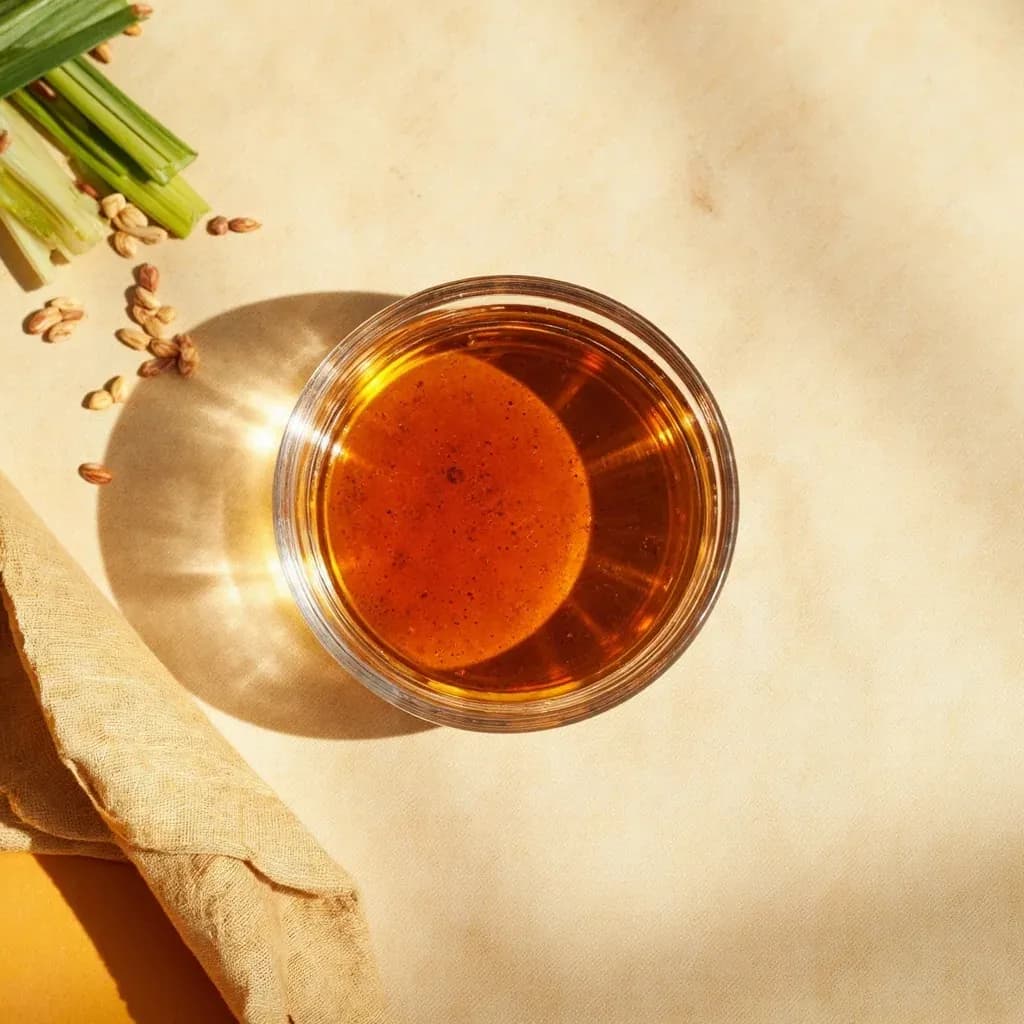
Dark, intensely nutty oil pressed from toasted sesame; a finishing oil, not a frying fat—drizzle off heat over noodles, dressings, and stir-fries to keep its aroma intact.
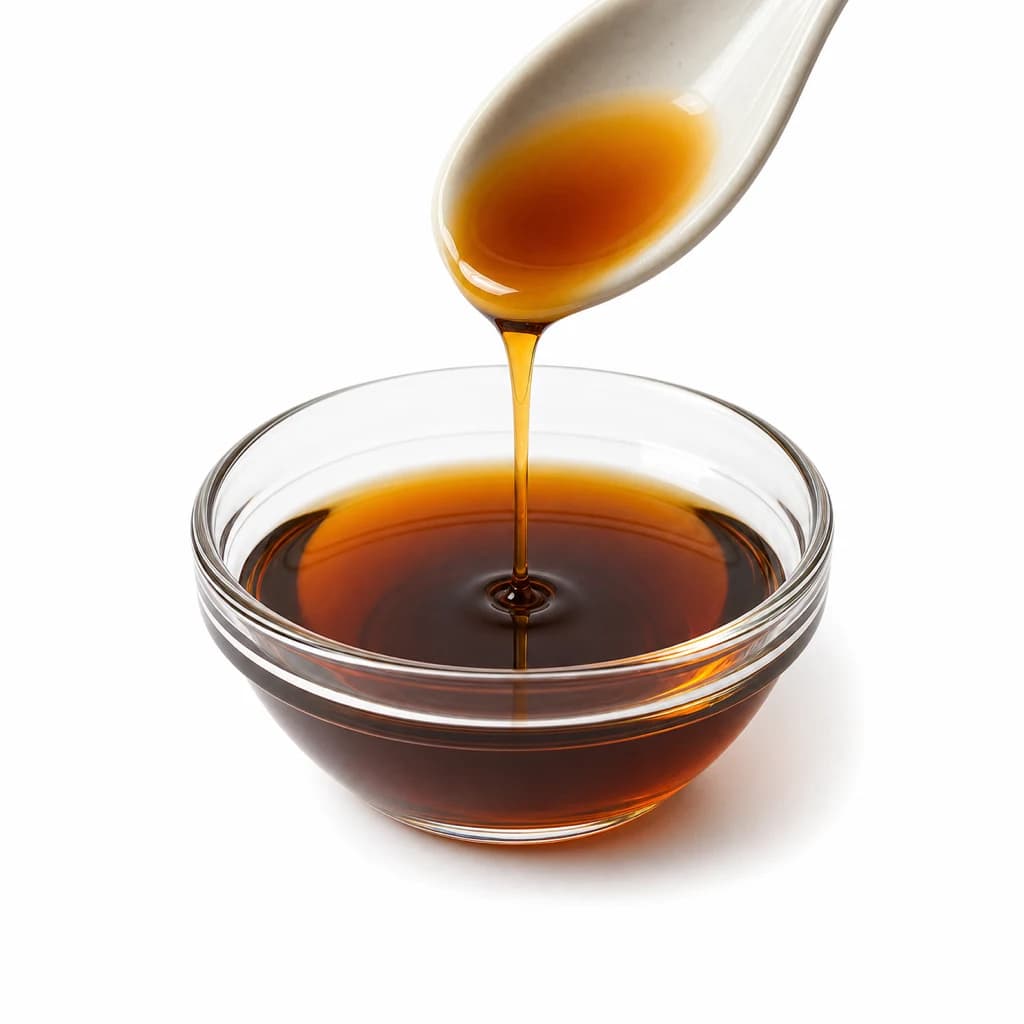
Toasted sesame oil is the dark, deeply aromatic oil pressed from sesame seeds that have been dry-roasted before extraction. Unlike untoasted sesame oil — a pale, mild product that behaves much like other neutral cooking oils — the toasted version draws its character from Maillard browning on the seed surface before pressing, which generates the smoky, savory, almost caramel-like aroma cooks associate with Korean bibimbap, Japanese cold noodles, and Cantonese-style dressings. It is a finishing and seasoning oil in the same category as extra-virgin olive oil or a slick of chili crisp: a small amount added at the end of cooking or on a finished plate, never the workhorse fat that builds a dish.
The oil behaves very differently from common cooking fats. Its smoke point sits around 175–210°C / 350–410°F depending on refinement — lower than most nut and seed oils. The aroma compounds that define it, principally pyrazines and other Maillard products formed during roasting, are volatile and dissipate quickly under heat, which is why the oil is added at the end of cooking or off the heat entirely. The sesame lignans — sesamin, sesamol, and sesamolin — are what give the oil its relative oxidative stability and shelf life, not its aroma. Used as a primary cooking fat, the oil turns acrid and the pan smokes. Its real role is to land on the tongue at full intensity: drizzled over noodles after the heat is off, whisked into a soy-and-vinegar dressing, or stirred into a marinade just before the meat goes on.
In practice, treat toasted sesame oil the way you'd treat a finishing salt or a squeeze of citrus — economical, decisive, and added last. A teaspoon in a four-serving stir-fry is usually plenty, and a small bottle kept in the fridge will outlast several months of regular cooking. Regional traditions in Korea, China, Japan, and Taiwan each treat the oil slightly differently, which is why bottles from different cuisines can look and smell quite distinct on the shelf.
- Measured in
- ml
- Storage
- Dark Cool
Allergens
Find it in
Suits
Types & varieties
Pressed from heavily toasted white sesame seeds; very dark, almost mahogany, with the most aggressive nutty aroma. The standard finishing oil in Korean cooking (bibimbap, namul, dipping sauces).
Northern Chinese versions are very dark and intensely aromatic from deeply roasted seeds; Cantonese versions tend to be lighter. Used sparingly in dumpling fillings, cold dishes, and to finish stir-fries.
Often lighter and more restrained than Korean or Chinese; 'kō-xiang' (太香) or 'pure/roasted' labels indicate toasted versions. Kadoya and Marutomo are common reference brands.
Black sesame oil from roasted black sesame; deeper, more bitter profile. Used in traditional postpartum and warming dishes.
Usually pressed from raw, untoasted seeds; light in color and mild. Not interchangeable with toasted versions in flavor.
Filtered and sometimes deodorized; lighter color, milder flavor, higher smoke point. Aimed at commercial kitchens, but loses the hallmark aroma.
Buying the right bottle
In the US market, a bottle labeled simply 'sesame oil' is almost always the untoasted, light-colored, mild product — closer to a neutral cooking oil than to the dark, smoky flavor most recipes are calling for. Asian markets and the international aisle of larger supermarkets carry the toasted version more reliably, often in squat glass bottles. Color is a rough guide: lighter golden oil tends to be Japanese-style and milder; deep amber to mahogany points toward Korean or northern Chinese styles with a heavier roast. The single best test is to smell the open bottle — fresh toasted sesame oil is pungent, smoky-nutty, and almost meaty in aroma; a flat, paint-like, or faintly fishy smell means the oil has oxidized and should be replaced.
Common uses
Tips & pitfalls
- Treat it as a seasoning, not a cooking fat — add at the very end of cooking or off the heat. The aroma compounds that define the oil volatilize quickly over high heat.
- A little goes a long way: 1–2 teaspoons is usually enough for a four-serving dish. If you can smell it strongly in the pan before tasting, you have probably over-seasoned.
- Buy small bottles. The flavor and aroma decline noticeably 4–6 months after opening, and large bottles go stale long before you finish them.
- Refrigerate after opening. Cold storage slows oxidation; some brands turn cloudy in the fridge — this is normal and reverses as the oil warms to room temperature.
- Don't confuse it with light/untoasted sesame oil (often labeled simply 'sesame oil' in US supermarkets). They are very different products and cannot be swapped one-for-one.
- Smell the bottle before you buy if you can. Fresh oil is intensely nutty and slightly smoky; flat or paint-like aroma means it has gone off.
- Balance with acid and salt, not sugar. Soy sauce, miso, rice vinegar, and citrus make toasted sesame oil sing; sweetness competes with its savory depth.
- Avoid layering it into dressings already loaded with strong competing aromatics (raw garlic, blue cheese, sharp mustards) unless you are deliberately building a bold flavor profile.
Nutrition
Energy
3699 kJ · per 100 g
Where the calories come from
Protein
0g
0% DV
Carbs
0g
0% DV
Fat
100g
128% DV
Fiber
0g
0% DV
Sugars
0g
of which
Sodium
0mg
0% DV
Source · USDA FoodData Central · approx. Oil, sesame, salad or cooking
View on FDC →In the shops
Matched grocery products
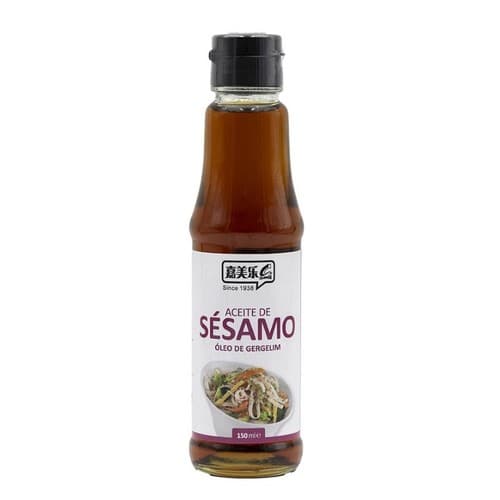 €3.19
€3.19Sesame Oil
CAMILL · l · Bonpreu
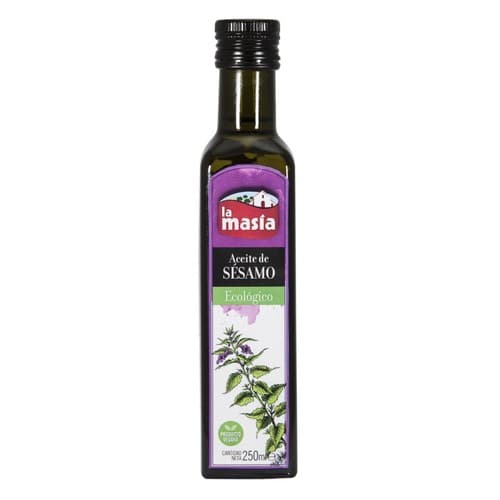 €3.99
€3.99La Masia Organic Sesame Oil
LA MASIA · l · Bonpreu
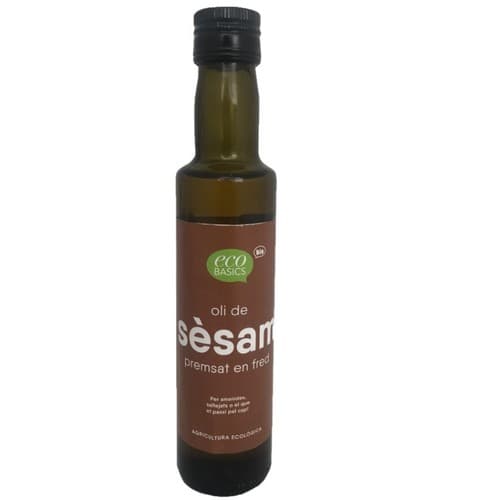 €4.25
€4.25Ecobasics Organic Sesame Oil
ECOBASICS · l · Bonpreu
Good to know
- Origin
- One of the oldest known culinary oils; sesame cultivation in the Indus Valley and ancient China dates back roughly 3000–5000 years.
- Made from
- Sesame seeds (Sesamum indicum) dry-roasted before pressing; the roast drives Maillard browning and produces the characteristic dark color and nutty aroma.
- Color
- Amber to deep reddish-brown; Korean and many Chinese versions are notably darker than Japanese versions, which can be golden.
- Flavor
- Intensely nutty, smoky, savory, with a slight bitterness; many times stronger than untoasted sesame oil.
- Smoke point
- Approximately 175–210 °C / 350–410 °F, depending on refinement; unrefined oil sits at the lower end and is unsuitable for high-heat cooking.
- Fatty acid profile
- Roughly balanced polyunsaturated (linoleic) and monounsaturated (oleic) fats, with sesame lignans (sesamin, sesamol, sesamolin) contributing to oxidative stability and a long shelf life relative to other nut and seed oils.
- Storage
- Sealed: 12–18 months. Once opened, best used within 4–6 months. Refrigerate after opening; cloudiness in the cold is normal and reverses at room temperature.
- Forms available
- Unrefined/cold-pressed (strongest flavor), expeller-pressed, and refined/lighter versions (higher smoke point, less aroma).
- Allergen note
- Sesame is a recognized major allergen; declaration is mandatory in the US, EU, Canada, and Japan.
Substitutes
- Tahini or Chinese sesame paste, thinned with neutral oil — Closest match in dressings and sauces; tahini is more concentrated, so dose gradually.
- Toasted sesame seeds, freshly dry-roasted and crushed — Recovers the toasted aroma in dry applications (rice bowls, salads, garnishes) without the oil's mouthfeel.
- Walnut oil — Nutty and slightly tannic, with a similar finishing role; works in dressings and over vegetables but lacks the smoky/savory edge.
- Perilla oil (deulgireum) — Korean dark-roasted oil with a grassy, minty character; use at lower doses in Korean dishes.
- Chinese chili oil with sesame seed sediment — Adds toasted aroma plus heat; useful when the recipe is already calling for chili.
- Unrefined cold-pressed peanut oil — Mildly nutty and higher-smoking; works for cooking steps but not as a direct finishing substitute.
Pairs with
Also called
dark sesame oil · roasted sesame oil