Oils & Fats
Walnut Oil
Rich, nutty finishing oil — drizzle over salads, roasted vegetables, and goat-cheese plates, or fold into vinaigrettes and cakes; too delicate for high-heat cooking.
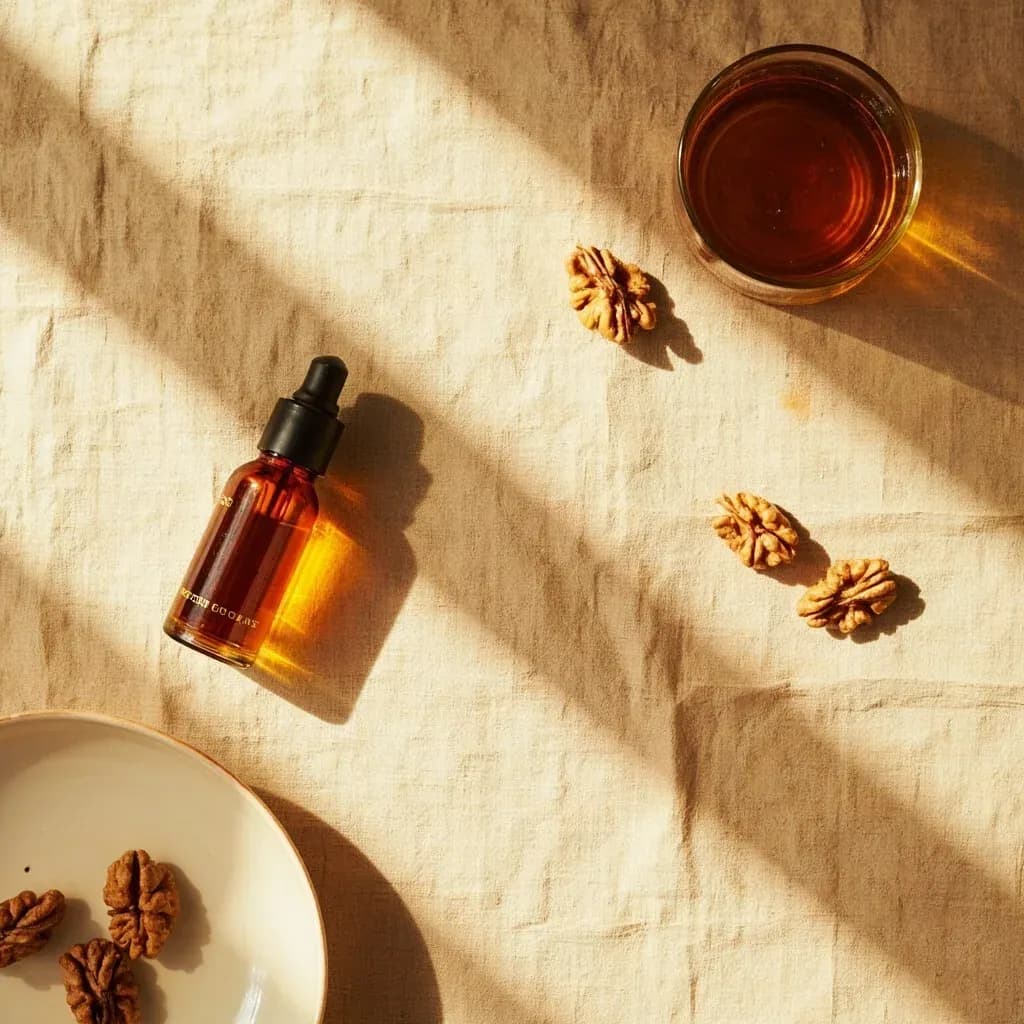
Walnut oil is the cold-pressed fat of walnut kernels, prized for its toasted-nut aroma and pale amber color rather than for any cooking versatility. It behaves like a seasoning: distinctively flavored, chemically fragile, and best left off the heat. The same volatile compounds that give it that buttery, slightly tannic character are destroyed by even moderate temperatures, which is why it is sold, stored, and used almost exclusively as a finisher. In a well-stocked kitchen it sits alongside aged balsamic and good mustard, deployed in small amounts to make a salad, a roasted vegetable, or a slice of cheese taste unmistakably of walnuts.
A few facts about its nature matter more than any recipe. The oil is roughly 70–75% polyunsaturated, rich in linoleic acid and unusually high in alpha-linolenic acid for a tree-nut oil, which makes it nutritionally interesting but also prone to oxidation. The unrefined version begins to smoke around 160 °C / 320 °F, well below the temperature of a sauté pan, and the flavor turns stale — often described as paint-like — within months of opening if the bottle is not refrigerated. That fragility is not a flaw to engineer around; it is the price of the flavor. Cooks who understand this treat walnut oil the way they treat truffle oil or vanilla extract: a finishing touch, applied at the table, in drops rather than in tablespoons.
- Measured in
- ml
- Storage
- Refrigerate
Allergens
Find it in
Suits
Types & varieties
Unrefined, most flavorful, lowest smoke point — the default finishing oil and the one most recipes assume.
Pressed from pre-roasted kernels; deeper, more pronounced, slightly bitter and tannic. Use sparingly, drop by drop.
Neutralized, bleached, deodorized; higher smoke point but largely stripped of the characteristic walnut flavor.
Pressed from Juglans nigra; more pungent, earthy, almost musky. Used in American regional cooking, drizzled over strong flavors like blue cheese or game.
Mechanically pressed at slightly higher temperatures than cold-pressed; a mid-tier in both flavor and stability.
Storage and Handling
Walnut oil is one of the most fragile common culinary oils, and most of its failures in the kitchen come from how it has been kept on the shelf at home rather than from the oil itself. Buy a small bottle — usually 250 ml or 8 oz — and aim to finish it well within its 6–9 month window, choosing dark glass or tin over clear plastic whenever possible. Light and oxygen are the two enemies; both are managed by a tight cap, a dark bottle, and a refrigerator door.
Once opened, treat the bottle like a good bottle of wine: refrigerated, tightly sealed, and finished within six to nine months. A two-second nose test before each use is non-negotiable. Fresh walnut oil smells clean, faintly buttery, and a little woody. An off bottle smells like crayons, old paint thinner, or rancid nuts — all signs that the polyunsaturated fats have oxidized. There is no kitchen use for an oxidized bottle; finishing a dish with it will be worse than finishing with no oil at all. Bring a refrigerated bottle to the counter for ten or fifteen minutes before using; the flavor blooms noticeably once it leaves the cold.
Getting Walnut Flavor into Cooked Dishes
Because unrefined walnut oil cannot take direct heat without losing both its flavor and its nutritional edge, the working rule is to add it at the end. For warm dishes, this means a small drizzle just before serving — over seared duck, lentil soup, pumpkin velouté, pasta tossed with browned butter, or a tray of roasted vegetables pulled from the oven.
When a dish genuinely needs the walnut note baked or braised in (a cake, a stew, a marinade), the better approach is to bloom the walnuts themselves in a more stable oil, or to brush the nuts with oil and toast them dry in the oven. Toasted nuts then release their aromatics into the surrounding food as it cooks, while the walnut oil in the bottle is saved for a final pass. If a recipe calls for walnut oil in a cake batter, fold it in last, after any melted butter or neutral oil, so the oven's heat is the only thermal stress it ever sees. For slightly more heat-tolerant behavior — say a brief warm sauté — blending walnut oil 50/50 with a high-oleic neutral oil buys you a small margin without giving up the flavor entirely.
Common uses
Tips & pitfalls
- Treat it as a finishing oil: direct heat destroys both the flavor and the delicate polyunsaturated fats that make the oil distinctive.
- Buy in small bottles; the flavor goes stale (rancid, paint-like) much faster than olive or grapeseed oil.
- Always refrigerate after opening, and bring to room temperature for ten or fifteen minutes before serving so the flavor opens up.
- If you need walnut flavor in a cooked dish, toast the walnuts in a neutral oil, or brush the nuts themselves with walnut oil and toast them dry, rather than heating the oil directly.
- Pair walnut oil with acid — lemon juice or a sharp vinegar — to balance its natural tannin and bitterness, especially with toasted versions.
- Smell the bottle before every use: a crayon, nail-polish, or old-paint odor means the oil has oxidized and should be discarded.
- Choose dark glass or tin over clear plastic; light accelerates rancidity in this fragile oil.
- A 50/50 blend with a high-oleic neutral oil gives you a slightly more heat-tolerant option for a brief sauté or warm vinaigrette, though it is still no substitute for a true high-heat oil.
Nutrition
Energy
3699 kJ · per 100 g
Where the calories come from
Protein
0g
0% DV
Carbs
0g
0% DV
Fat
100g
128% DV
Fiber
0g
0% DV
Sugars
0g
of which
Sodium
0mg
0% DV
Source · USDA FoodData Central · Oil, walnut
View on FDC →In the shops
Matched grocery products
 €2.75
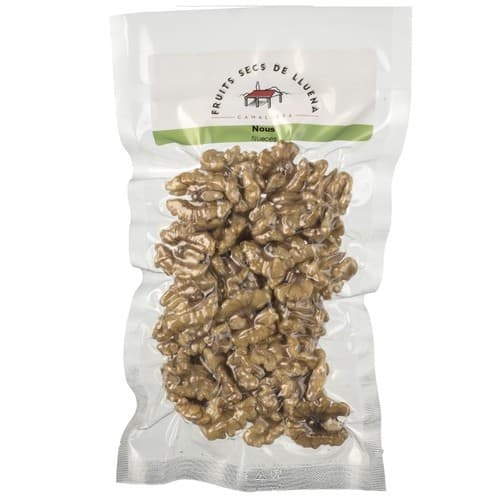
€2.75Raw Walnuts
LLUENA · kg · Bonpreu
 €3.70
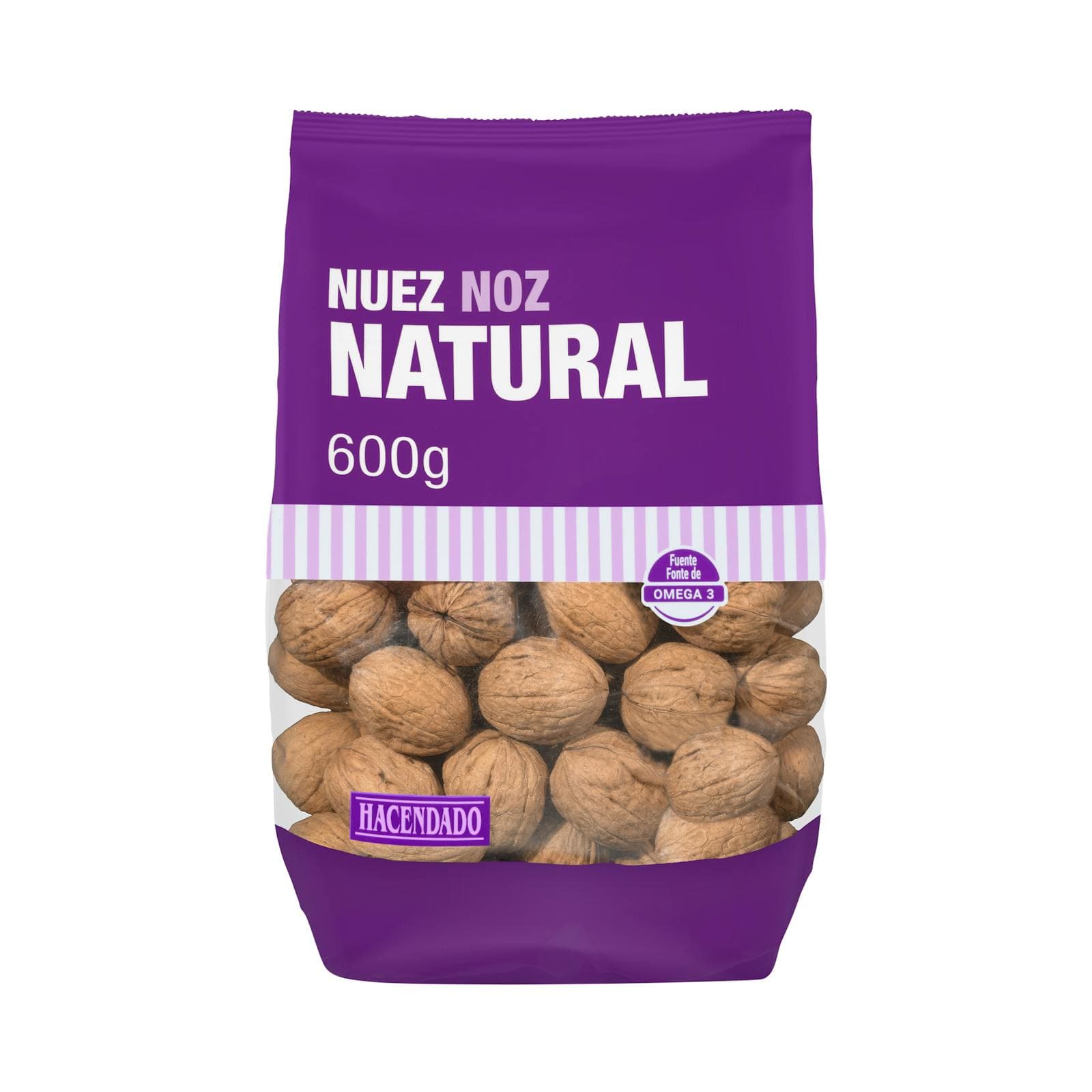
€3.70Natural Walnut
Hacendado · 600 g · Mercadona
 €3.45
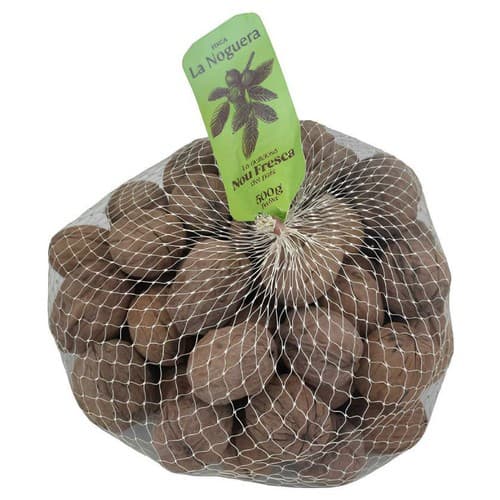
€3.45Walnuts in Shell
LA NOGUERA · kg · Bonpreu
 €1.99
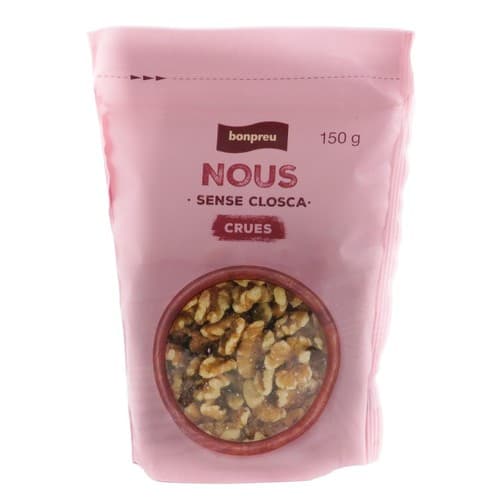
€1.99Raw Shelled Walnuts
BONPREU · kg · Bonpreu
 €3.75
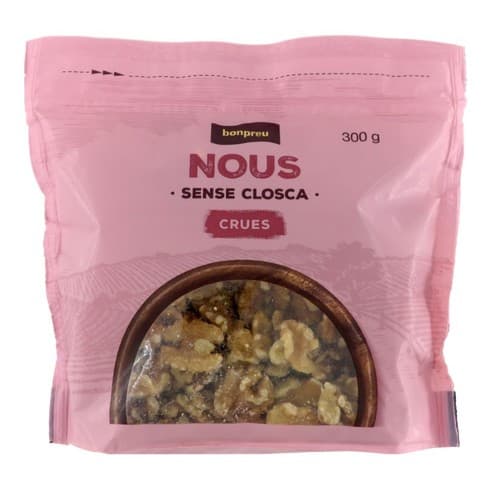
€3.75Raw Shelled Walnuts
BONPREU · kg · Bonpreu
 €0.60
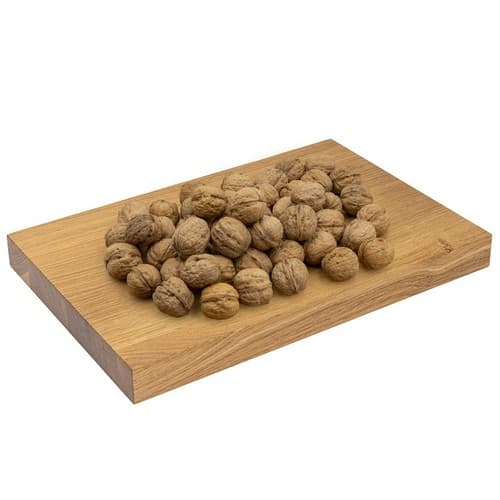
€0.60Walnuts in Shell Km0
ud · Bonpreu
Good to know
- Source
- Pressed from shelled walnut kernels, primarily English/Persian walnuts (Juglans regia); some specialty oils use American black walnuts (Juglans nigra).
- Production
- Cold-pressing (mechanical, low temperature) preserves flavor and nutrients; refined versions exist for higher-heat use but lose most of the walnut character.
- Smoke point
- Unrefined cold-pressed: ~160 °C / 320 °F. Refined: ~190–200 °C / 375–400 °F. Too low for frying or even a typical sauté.
- Fat profile
- Predominantly polyunsaturated — high in linoleic acid (omega-6) and one of the few common cooking oils that also supplies meaningful alpha-linolenic acid (omega-3).
- Flavor
- Mild, buttery, nutty with a slight bitterness; toasted versions are far more intense, woody, and a touch tannic.
- Color
- Pale straw to amber for cold-pressed; deeper amber for toasted versions.
- Storage
- Refrigerate after opening in a dark, tightly sealed bottle; use within 6–9 months for best flavor.
- Shelf life (sealed)
- Typically 12–18 months from bottling; always check the best-by date.
- Notable origin
- Périgord/Aquitaine in France is the benchmark; also produced in California, Chile, Ukraine, Moldova, and northern Italy. French 'Huile de noix du Périgord' holds a protected designation of origin (AOP).
Substitutes
- Hazelnut oil — The closest match in flavor profile and finishing role; slightly more pronounced toasted-nut character, a touch less tannin.
- Pecan oil — Similar richness, a touch sweeter; works well in the same finishing applications, especially with sweet potatoes or squash.
- Pistachio oil — Milder, slightly grassy; a good choice over salads and fish when you want nuttiness without walnut's tannic edge.
- Toasted sesame oil — Different flavor (savory, smoky) but serves the same finishing role over Asian-style dishes; use less, as it is more pungent.
- Roasted grapeseed oil — A more neutral, heat-tolerant substitute for vinaigrettes; less distinctly nutty but with a similar body.
- Quality extra-virgin olive oil — No walnut character, but the right body and a peppery finish for vinaigrettes and roasted-vegetable finishing.
Pairs with
Also called
roasted walnut oil
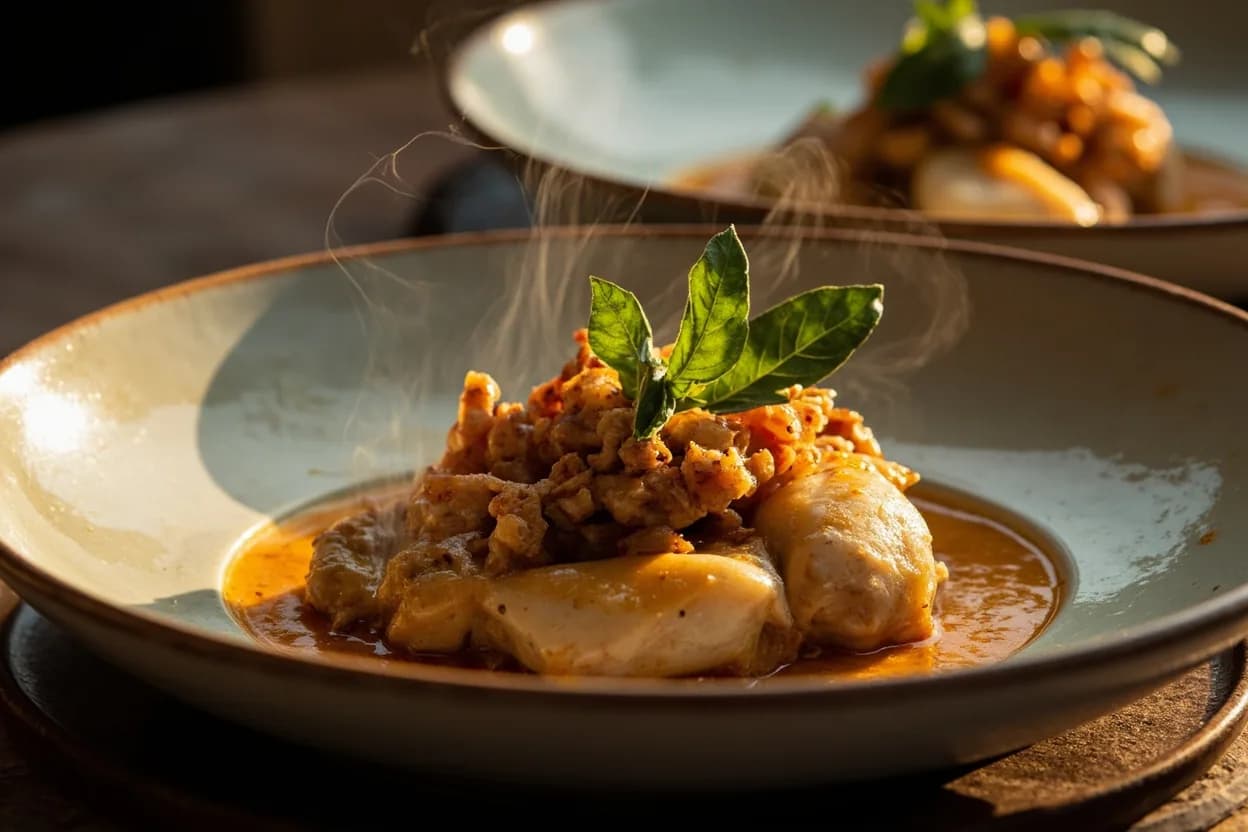
Appears in these dishes
Related
Olive Oil
Fruity, peppery everyday oil for sautéing, dressing, and finishing
Vegetable Oil
Neutral, high-heat oil for frying and all-purpose cooking
Canola Oil
Light, neutral oil for frying, baking, and dressings

Sunflower Oil
Clean, neutral oil for frying and everyday cooking
Sesame Oil
Toasty, aromatic oil — a finishing splash for Asian dishes
Coconut Oil
Fragrant, solid-at-room-temp fat for baking and frying
Peanut Oil
High-heat oil with a faint nutty note — ideal for frying

Lamb Tail Fat
Rich rendered fat from fat-tailed sheep — used as a cooking fat and flavor base in Central Asian and Middle Eastern dishes.