Baking
Dark Chocolate
Cocoa-rich chocolate (50–85%) with little or no milk; melts smooth for ganache and tempers crisp. Higher cocoa means more bitterness and less sugar.
Dark chocolate is the cook's workhorse: cocoa solids and cocoa butter, sweetened and lightly emulsified, with no milk solids in its pure form. What makes it a kitchen variable rather than a candy category is the number on the wrapper. The cacao percentage — the cocoa solids and cocoa butter that aren't sugar, milk, or other additions — directly governs sweetness, bitterness, the fat-to-dry-matter ratio, and how a bar behaves in a recipe. A 60% bar reads sweet, rounded, and forgiving; an 85% bar reads austere, acidic, and almost savory, and it can throw off a ganache that worked fine at 65%.
The reason dark chocolate behaves so differently from other baking ingredients is cocoa butter, a fat that melts just below body temperature (around 90–93°F / 32–34°C). That is why a square of good dark softens on the tongue and floods the mouth with flavor, and why melted dark chocolate can seize into a stiff paste from even a small amount of water — the cocoa butter repels moisture and the sugar binds it, locking the mass into a thick paste. Cocoa butter is also polymorphic: it can crystallize into several forms, but only Form V gives chocolate its glossy surface, clean snap, and the contraction that releases cleanly from a mold. Producing that crystal structure by controlled heating, cooling, and rewarming is called tempering, and it is the single technique that separates a professional-looking bonbon from a dull, bloomy bar.
For most baking — folding into batter, whisking into cream for ganache, melting into a sauce — tempering is optional. For coatings, dipped fruit, molded shapes, and decorations, it is non-negotiable. The choice between brands and origins becomes meaningful once you start tasting deliberately: Madagascar tends bright and red-fruited, Ecuadorian Arriba is floral and nutty, Ghanaian is the deep-cocoa classic, and Venezuelan Chuao runs to raisins and warm spice. Keeping one or two single-origin bars alongside a workhorse semisweet gives a cook the range to match chocolate to a dish, not the other way around.
- Measured in
- g
- Storage
- Dark Cool
Allergens
Find it in
Suits
Types & varieties
99–100% cacao liquor with no added sugar; intensely bitter and used only in recipes that add their own sugar.
American baking staple, around 56–65% cacao; balanced sweetness for cookies, brownies, and chocolate chips.
Generally 70%+ cacao; deeper, more complex; the standard for ganache, truffles, and serious baking.
Near-pure cacao with very little sugar; used in small amounts for intensity, or eaten straight.
Professional chocolate with 31–40% cocoa butter, sold as discs or pistoles; required for enrobing, molding, and fine work.
Sourced from one country or region (Madagascar, Ecuador, Ghana, Venezuela, Peru) for distinctive terroir-driven flavor.
Standard dark chocolate is naturally dairy-free, but verify the processing line if you are working around a strict allergy.
High-cocoa-butter chocolate that tempers to a glossy snap; melts thin for dipping, enrobing, and molded bonbons.
Flavor by origin
Single-origin dark chocolate rewards deliberate tasting because the same cacao percentage can taste like completely different ingredients depending on where the beans were grown, how they were fermented, and how long they were roasted. The broad regional signatures below are reliable starting points; specific estates and producers push further in any direction.
- Madagascar: bright red fruit — raspberry, cranberry, sour cherry. The most distinctive of the major origins; lifts ganache and pairs naturally with berries.
- Ecuador (Arriba / Nacional): floral and nutty, sometimes jasmine, peanut, or ripe banana. Soft acidity; a versatile middle ground.
- Ghana: the deep-cocoa classic. Roasty, low-acid, often espresso-like. The benchmark for traditional American baking and brownies.
- Venezuela (Chuao, Sur del Lago): complex, raisin-like, with warm spice. Considered the most nuanced of fine-flavor origins; shines in plain ganache and dark truffles.
- Dominican Republic and Peru: balanced, often with light fruit and brown-sugar notes; forgiving all-purpose origins for everyday baking.
- Trinidad: less commonly exported as a standalone single-origin; tends toward a complex profile with dried fruit, woody, or tobacco notes.
Common uses
Tips & pitfalls
- Chop into uniform ~1 cm pieces before melting so the mass heats evenly and doesn't scorch on the edges.
- Never let water, steam, or even a drop of egg white touch melting chocolate — it seizes into a stiff, grainy paste almost instantly.
- Melt over a barely simmering double boiler or in the microwave in 15–20 second bursts, stirring between each, rather than over direct heat.
- For a glossy snap, temper by the seeding method: melt two-thirds of the chocolate, then stir in finely chopped reserved chocolate to bring it down to ~82°F (28°C) before rewarming to 88–90°F.
- Common mistake: refrigerating chocolate to 'set' it. Cold surfaces cause condensation and sugar bloom, leaving a white, dusty crust and a dull texture — cool at room temperature instead.
- Common mistake: overheating above 120°F (49°C). Dark chocolate scorches quickly and loses volatile aromatics; use a thermometer whenever precision matters.
- Store away from strong-smelling foods (coffee, spices, onions) — cocoa butter readily absorbs ambient odors through its wrapper.
- Common mistake: substituting chocolate chips for bar or couverture chocolate. Chips contain extra stabilizers that prevent clean melting and will not temper properly, so save them for cookies and keep them out of ganache.
- If chocolate seizes mid-recipe, rescue with 1–2 tsp of neutral oil or melted butter per 100 g; this re-emulsifies a usable sauce but is not suitable for tempering.
- Different brands (Lindt, Callebaut, Valrhona, Ghirardelli, Scharffen Berger) behave differently in ganache — taste a chip before sweetening the cream to balance correctly.
- For fudgy brownies, use chocolate with 60–70% cacao; for intense truffle ganache, push to 70–85%.
Nutrition
Energy
2284 kJ · per 100 g
Where the calories come from
Protein
4.9g
10% DV
Carbs
61.2g
22% DV
Fat
31.3g
40% DV
Fiber
7g
25% DV
Sugars
47.9g
of which
Sodium
24mg
1% DV
Source · USDA FoodData Central · Chocolate, dark, 45- 59% cacao solids
View on FDC →In the shops
Matched grocery products
 €2.35
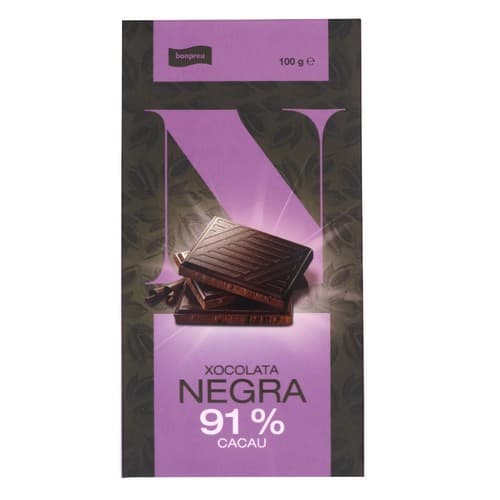
€2.3591% Dark Chocolate
BONPREU · kg · Bonpreu
 €2.40
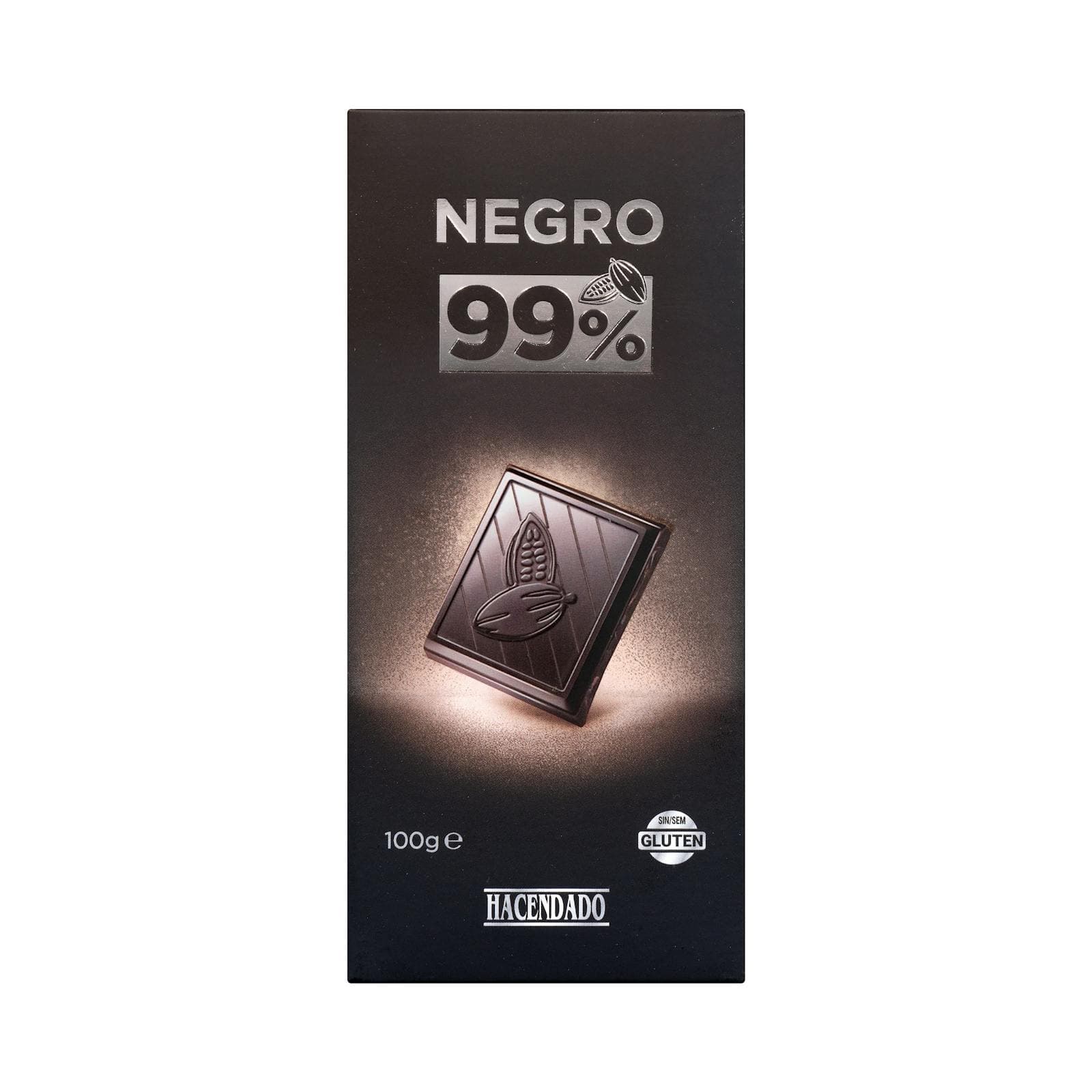
€2.4099% Dark Chocolate
Hacendado · 100 g · Mercadona
 €3.49
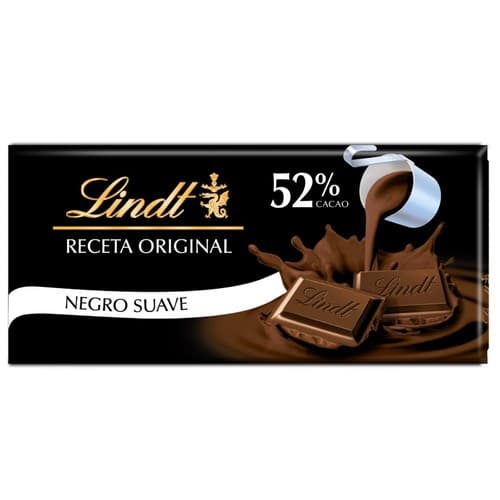
€3.4952% Dark Chocolate
LINDT · kg · Bonpreu
 €5.25
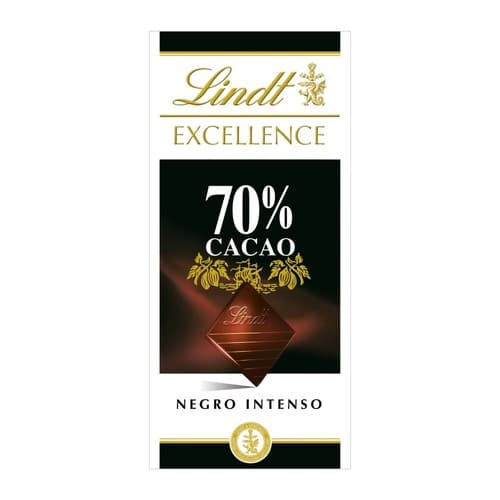
€5.2570% Dark Chocolate
LINDT EXCELLENCE · kg · Bonpreu
 €7.25
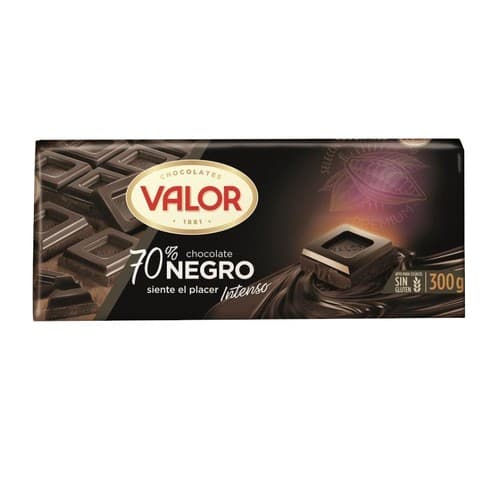
€7.25Dark Chocolate 70%
VALOR · kg · Bonpreu
 €2.25
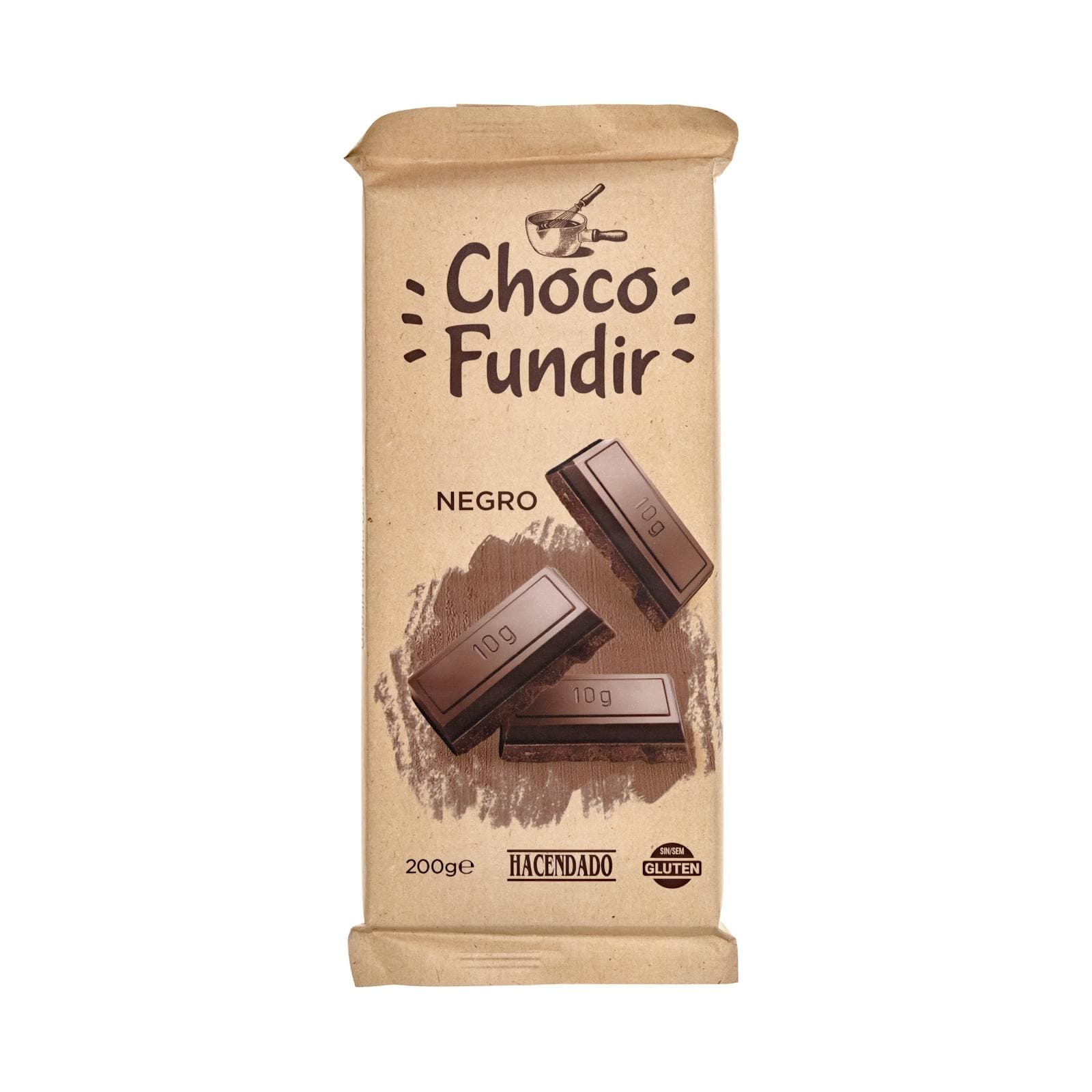
€2.25Dark Chocolate for Melting
Hacendado · 200 g · Mercadona
Good to know
- Composition
- Cocoa solids (liquor), cocoa butter, sugar, and usually a small amount of soy lecithin and vanilla. True dark chocolate contains no milk solids.
- Cacao percentage range
- Standard eating bars 50–85%; unsweetened baking chocolate is 99–100%. Semisweet typically lands at 56–65%, bittersweet often 70%+.
- US labeling
- The FDA does not legally define 'dark,' 'bittersweet,' or 'semisweet.' Treat the printed cacao percentage as the only reliable guide.
- Melting point
- Cocoa butter melts at about 90–93°F (32–34°C), which is why chocolate softens and melts in the mouth.
- Tempering range (dark)
- Melt to 115–120°F (46–49°C), cool to 80–82°F (27–28°C), rewarm to 88–90°F (31–32°C) for a glossy snap.
- Cocoa butter content
- Standard bars run 25–32% cocoa butter; professional couverture runs 31–40%, giving better fluidity and cleaner tempering.
- Storage
- 60–70°F (15–21°C) at 50–55% humidity, away from light. Wrapped well, dark chocolate keeps 1–2 years.
Substitutes
- Semisweet chocolate — Closest 1:1 swap in most baking recipes; slightly sweeter and a touch less complex.
- Milk chocolate — Works in a pinch, but reduce added sugar by 25–30% and expect a softer, creamier result.
- Unsweetened chocolate + sugar — For every 1 oz (28 g) unsweetened, add 1 tablespoon sugar to mimic semisweet.
- Cocoa powder + melted butter or oil — Use 3 tablespoons cocoa + 1 tablespoon melted fat per 1 oz chocolate; texture differs, so best for cakes and sauces, not coatings.
- Carob — Naturally sweet and caffeine-free, but the flavor is earthy rather than chocolatey; use only in mild applications.
- White chocolate + cocoa powder — Melted white chocolate with added Dutch-process cocoa approximates dark color and richness; sugar content rises, so adjust accordingly.
Pairs with
Also called
bittersweet chocolate · semisweet chocolate · plain chocolate · couverture
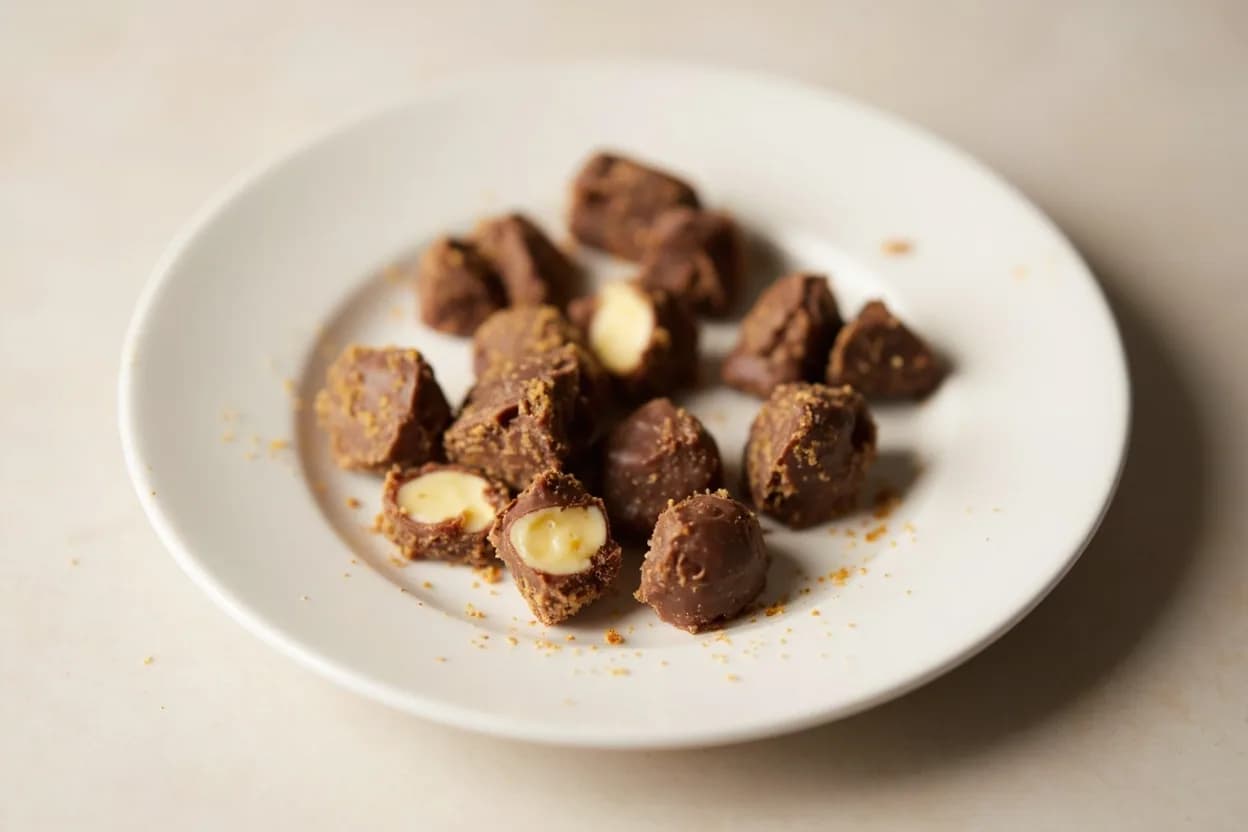
Appears in these dishes
Related

All-Purpose Flour
The do-anything flour for bread, cakes, sauces, and dredging

Bread Flour
High-protein flour for chewy, well-risen breads
Whole Wheat Flour
Nutty, whole-grain flour for hearty breads and bakes
Cake Flour
Fine, low-protein flour for tender, delicate cakes
Almond Flour
Nutty, gluten-free flour for macarons and tender bakes

Baking Powder
All-in-one leavener for fluffy cakes, pancakes, and biscuits

Baking Soda
Pure leavener that needs acid to lift — and tenderize
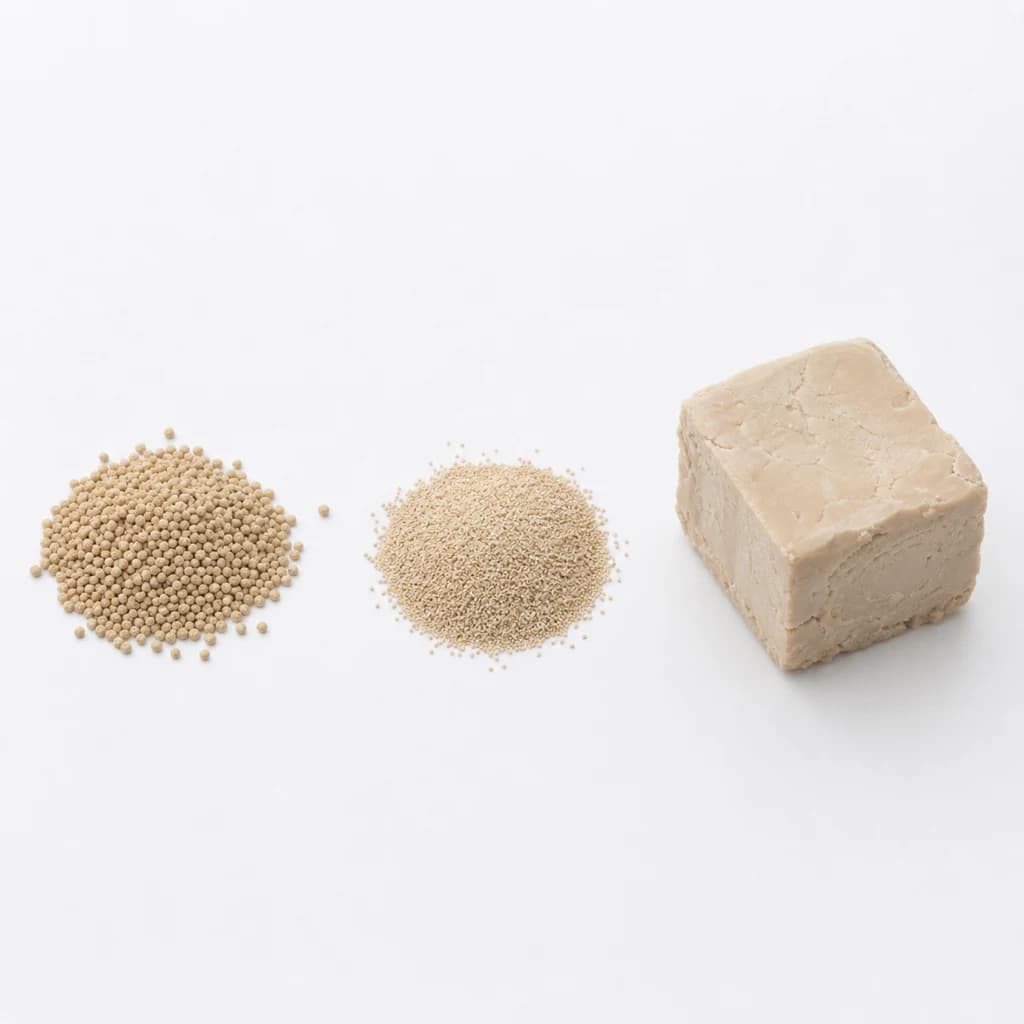
Yeast
Living leaven that makes bread rise and dough come alive