Ready to use
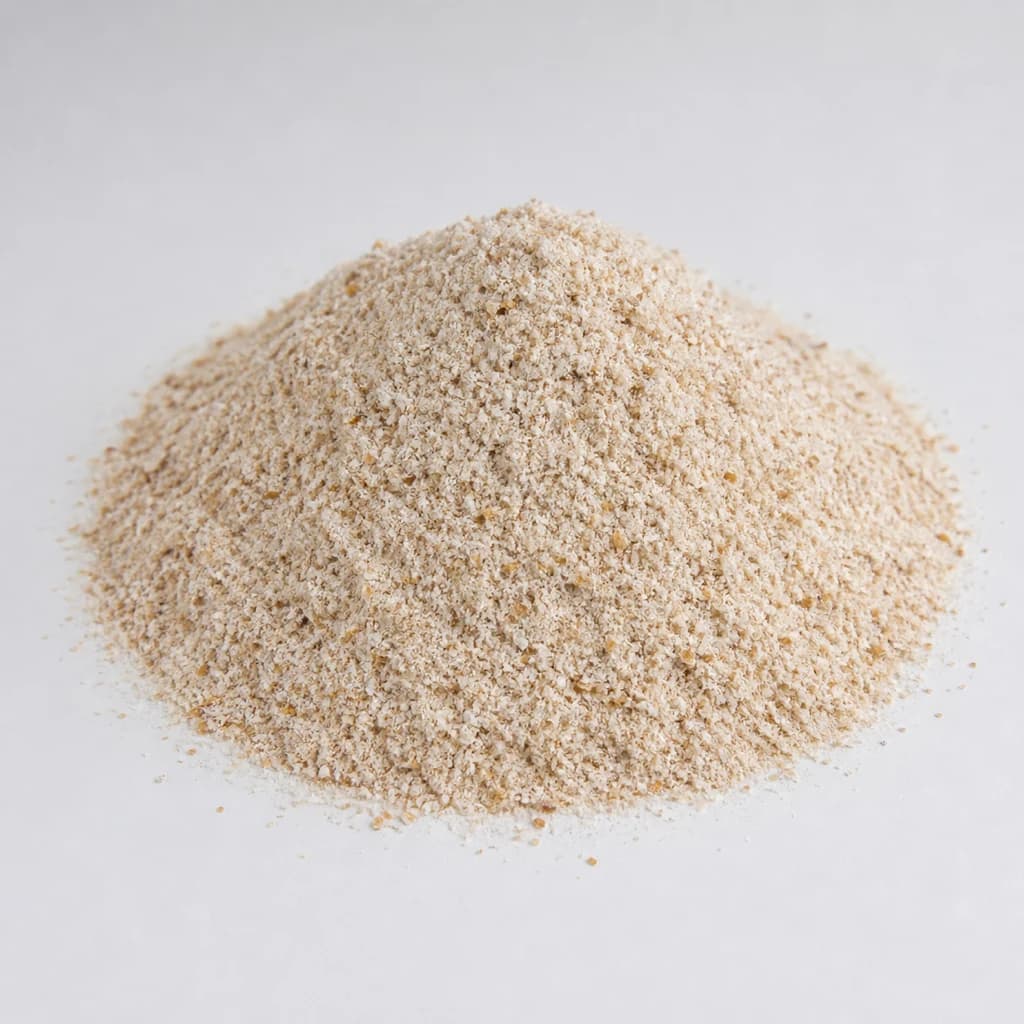
Whole wheat flour's tan color and visible bran flecks distinguish it clearly from white flour.
Shows the flour's defining visual traits — tan hue and bran specks — that distinguish it from white flour at a glance.
Baking
Whole Wheat Flour
Nutty, whole-grain flour for hearty breads and bakes
Milled from the entire wheat kernel, this flour brings a nutty depth and extra fiber to breads and bakes. It absorbs more liquid than white flour. Keep it airtight, ideally cool.
Whole-wheat flour is milled from the entire wheat kernel — bran, germ, and endosperm — keeping the fiber, oils, and nutrients that white flour strips away. That gives it a nutty, hearty flavor, a brown color, and more nutrition, but the sharp bran also cuts gluten strands, so 100% whole-wheat bakes denser and needs more liquid. Most bakers blend it with white flour to keep the goodness without losing all the lift.
- Measured in
- g
- Storage
- Airtight
Allergens
Find it in
Types & varieties
Standard, from hard wheat; for breads and hearty bakes.
From white wheat; milder and paler, all the nutrition.
From soft wheat; tender, for muffins and cookies.
Coarser, more rustic, fuller flavor.
How to use
Start by swapping 25–50% of white flour for whole wheat to add flavor and nutrition without too much density, then increase as you like. Add a little extra liquid, since the bran is thirsty, and let doughs rest so the bran softens.
- Hearty sandwich and rustic breads
- Whole-grain muffins and pancakes
- Blended into pizza and pasta dough
- Crackers and savory bakes
How to store
The germ's oils make it more perishable than white flour. Keep it airtight and refrigerate or freeze for longer storage; let it come to room temperature before baking. Note that flour is a raw agricultural product: don't eat raw dough or batter, and heat-treat flour before any no-bake use (E. coli/Salmonella risk).
Common uses
Tips & pitfalls
- Swap 25–50% of white flour first to keep some lift and tenderness.
- Add a bit more liquid — the bran absorbs more water.
- Refrigerate or freeze it; the germ oils go rancid faster.
- White whole-wheat gives the nutrition with a milder taste.
- Flour is raw and can carry E. coli or Salmonella — don't taste or eat raw dough or batter; cook or heat-treat it before using in any no-bake recipe.
Nutrition
Energy
1423 kJ · per 100 g
Where the calories come from
Protein
13.2g
26% DV
Carbs
72g
26% DV
Fat
2.5g
3% DV
Fiber
10.7g
38% DV
Sugars
0.4g
of which
Sodium
2mg
0% DV
Source · USDA FoodData Central · approx. Wheat flour, whole-grain (Includes foods for USDA's Food Distribution Program)
View on FDC →In the shops
Matched grocery products
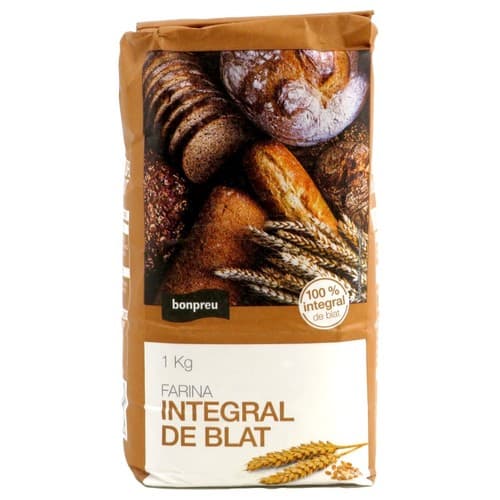 €0.89
€0.89Whole Wheat Flour
BONPREU · kg · Bonpreu
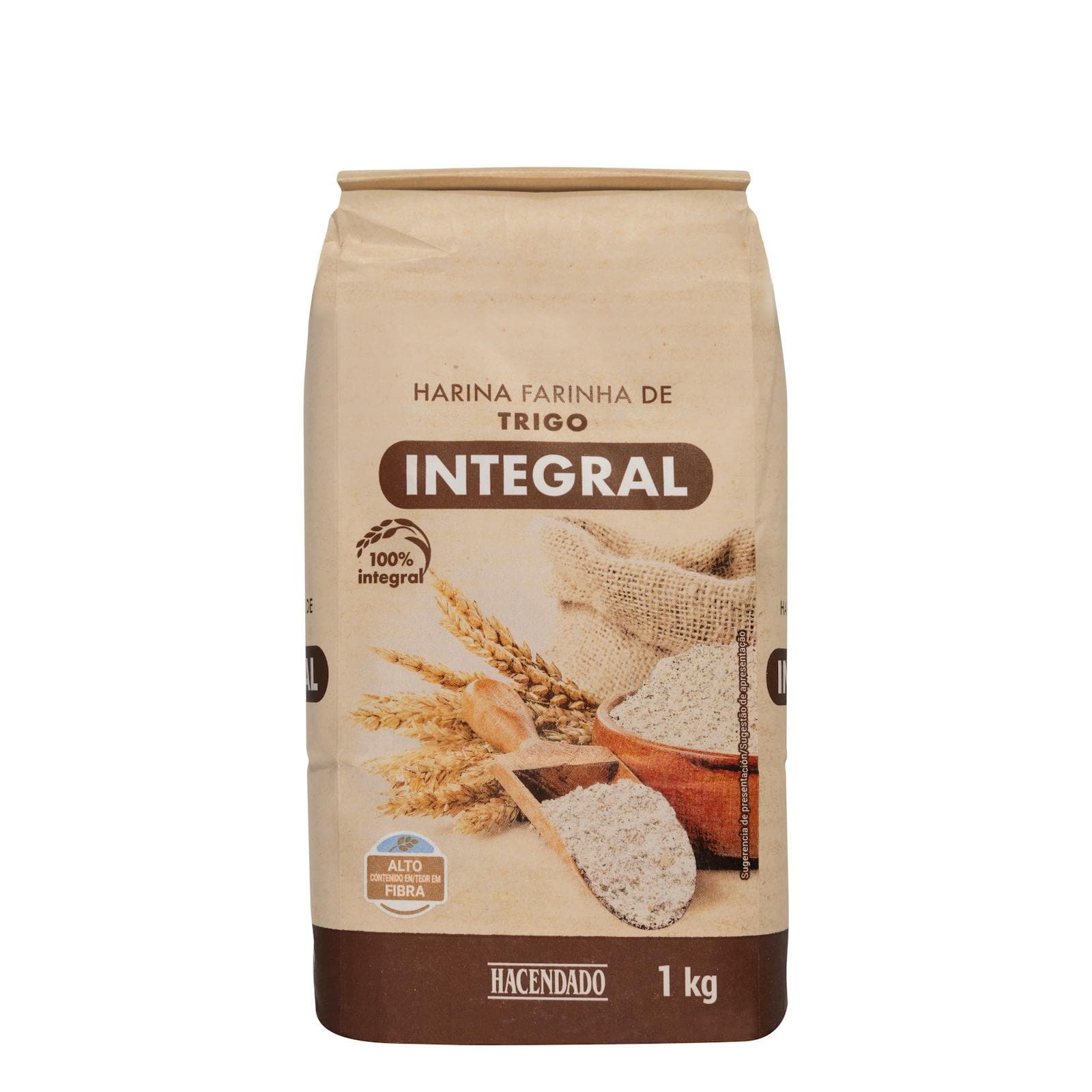 €0.90
€0.90Wholemeal Wheat Flour
Hacendado · 1 kg · Mercadona
Good to know
- Flavor
- Nutty, hearty, faintly sweet
- Made from
- The whole wheat kernel (bran, germ, endosperm)
- Best for
- Hearty breads, muffins, pancakes, blends
- Behavior
- Denser rise; absorbs more liquid
- How to store
- Airtight; refrigerate/freeze (germ oils)
- Shelf life
- ~3 months room temp; longer chilled
Substitutes
- White whole-wheat flour — Milder, paler, same nutrition.
- Spelt flour — Nutty whole grain, a bit easier to bake with.
- All-purpose flour — Lighter result; loses the whole-grain flavor.
Also called
wholemeal flour · wholewheat flour · harina integral de trigo · harina de trigo integral · farina integral de blat · farina de blat integral
Appears in these dishes

Related

All-Purpose Flour
The do-anything flour for bread, cakes, sauces, and dredging

Bread Flour
High-protein flour for chewy, well-risen breads
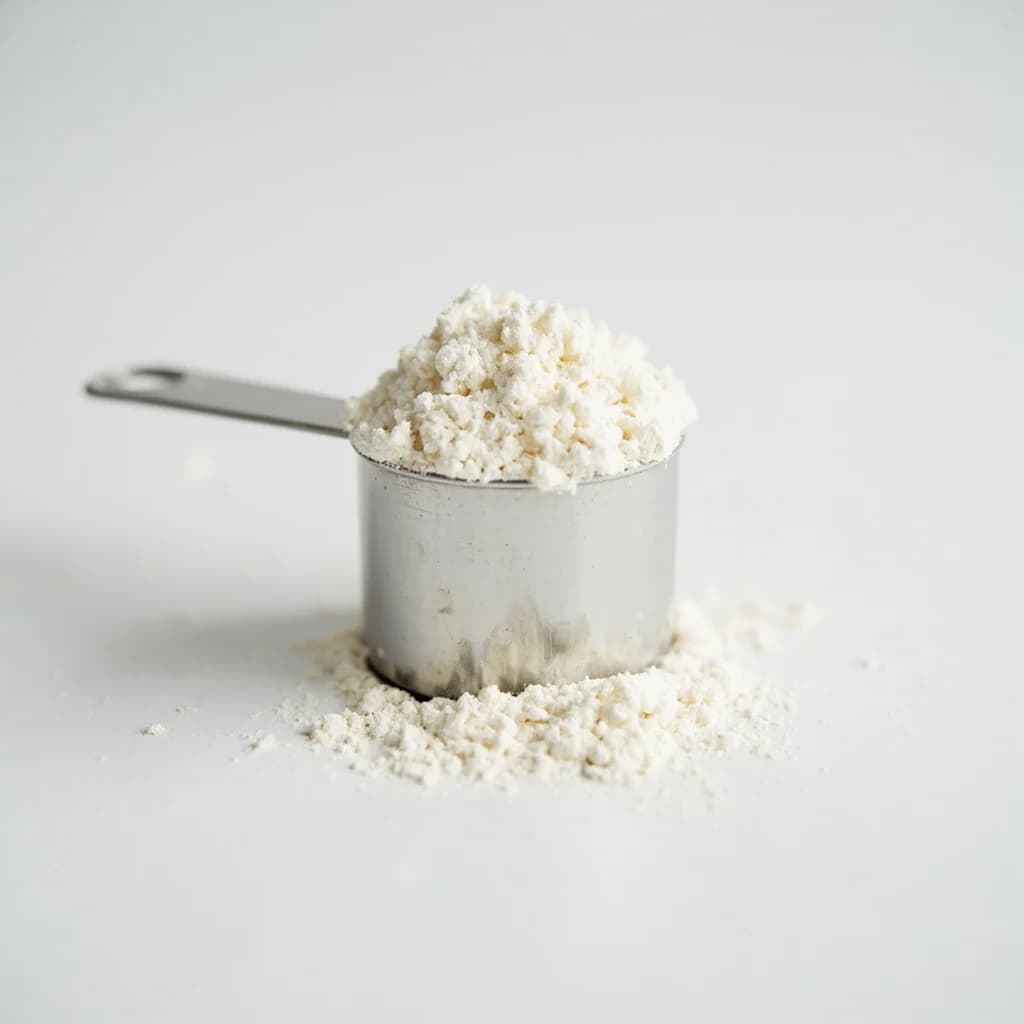
Cake Flour
Fine, low-protein flour for tender, delicate cakes
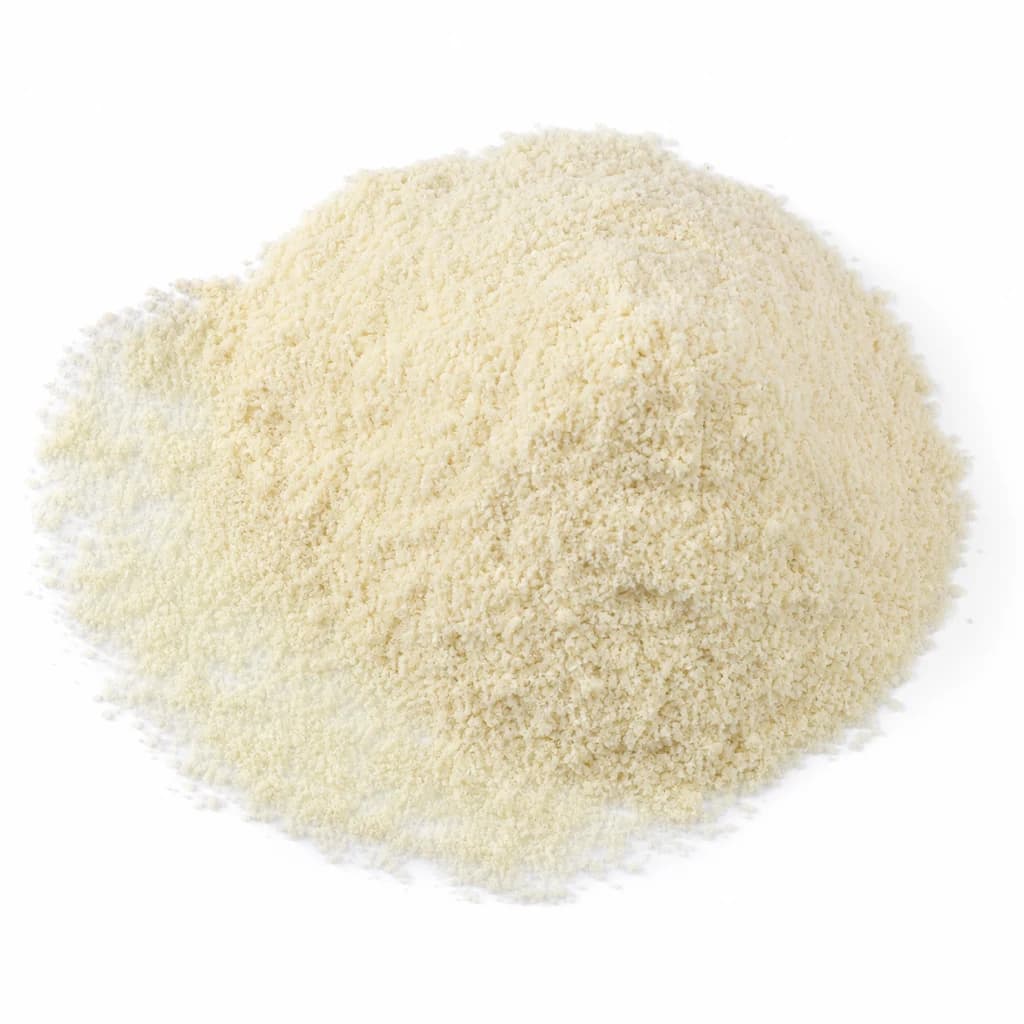
Almond Flour
Nutty, gluten-free flour for macarons and tender bakes

Baking Powder
All-in-one leavener for fluffy cakes, pancakes, and biscuits

Baking Soda
Pure leavener that needs acid to lift — and tenderize
Yeast
Living leaven that makes bread rise and dough come alive
Cocoa Powder
Deep, bitter chocolate powder for cakes, drinks, and dusting