Natural form
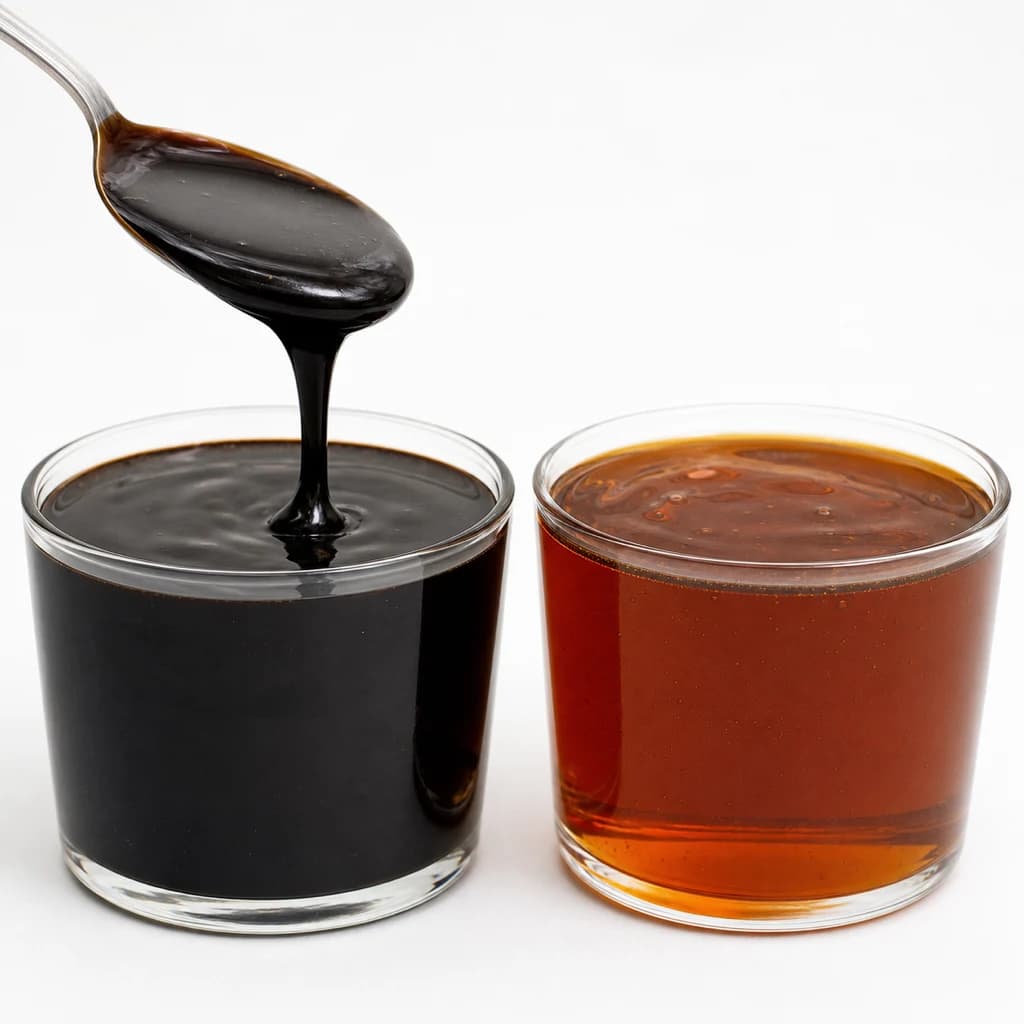
Blackstrap and light molasses poured to show the full range of color and viscosity.
Showing the syrup in its poured state communicates the defining physical properties: extreme viscosity, near-opaque dark brown color, and slow ribbon-like flow.
Sweeteners
Molasses
Dark, bittersweet syrup for gingerbread, beans, and rubs
Thick, dark, and bittersweet, molasses gives gingerbread its depth, baked beans their richness, and a barbecue rub its backbone. A little is intense. Keep it at room temperature.
Molasses is the dark, thick, bittersweet syrup left when sugarcane or beet juice is boiled to extract sugar — essentially the flavorful liquid that brown sugar gets its character from. Robust and only moderately sweet, with a faintly mineral, bittersweet edge (blackstrap most of all), it gives gingerbread, baked beans, and barbecue sauce their deep, smoky-bitter backbone. Grades run from mild first-boil to intense blackstrap; the strength matters enormously to the result.
- Measured in
- ml
- Storage
- Room Temperature
Find it in
Types & varieties
Mildest and sweetest; for general baking.
Less sweet, more robust; gingerbread and beans.
Third boil — intense, bitter, mineral-rich; use sparingly.
Unsulphured is cleaner-tasting and preferred.
How to choose
Use light or dark molasses for most baking; reserve blackstrap for recipes that call for it specifically, as its bitterness can overpower. Pick unsulphured for the cleanest flavor.
How to use
Its acidity activates baking soda, giving lift to gingerbread and dark breads, while its flavor anchors baked beans, barbecue sauce, and glazes. It also makes brown sugar — stir it into white sugar.
- Gingerbread, gingersnaps, and dark cakes
- Baked beans and barbecue sauce
- Brown bread and rye breads
- Glazes and marinades
How to store
Keep it sealed at room temperature. Oil the measuring cup first and the thick syrup will slide right out.
Common uses
Tips & pitfalls
- Oil the measuring cup so the sticky syrup pours out cleanly.
- Stir a spoonful into white sugar to make brown sugar.
- Use blackstrap sparingly — it's bitter and assertive.
- Its acidity helps baking soda leaven gingerbread.
Nutrition
Energy
1213 kJ · per 100 g
Where the calories come from
Protein
0g
0% DV
Carbs
74.7g
27% DV
Fat
0.1g
0% DV
Fiber
0g
0% DV
Sugars
74.7g
of which
Sodium
37mg
2% DV
Source · USDA FoodData Central · Molasses
View on FDC →In the shops
Matched grocery products
No matched grocery products for Molasses yet.
Good to know
- Flavor
- Deep, bittersweet, smoky, mineral
- Made from
- Boiled-down sugarcane or beet juice
- Best for
- Gingerbread, baked beans, BBQ, dark breads
- Note
- Acidic — reacts with baking soda for lift
- How to store
- Room temperature, tightly sealed
- Shelf life
- Long; thick and stable
Substitutes
- Dark brown sugar — Carries molasses flavor; loosen with a little liquid.
- Maple syrup or honey — Liquid sweeteners, milder and less bitter.
- Pomegranate molasses — Tart-sweet; different but deep for savory uses.
Also called
treacle · melaza · melassa
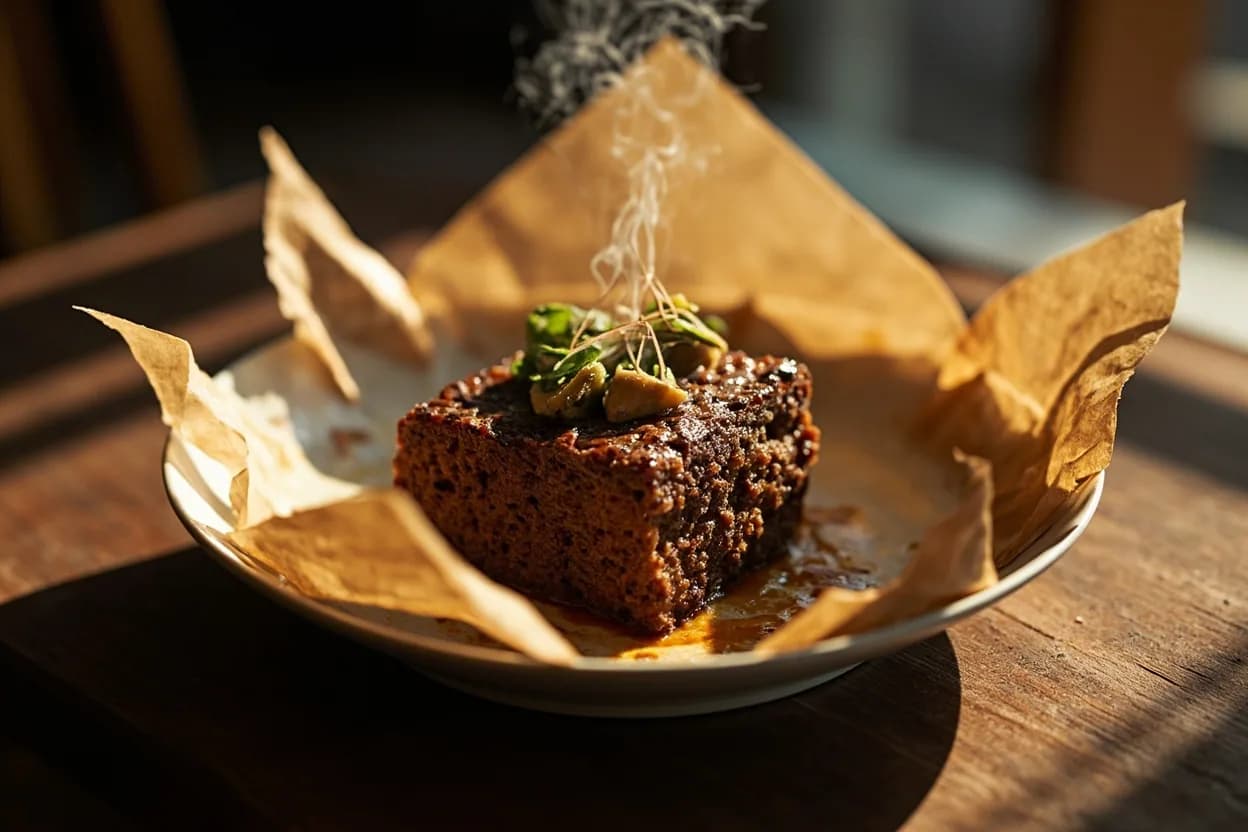
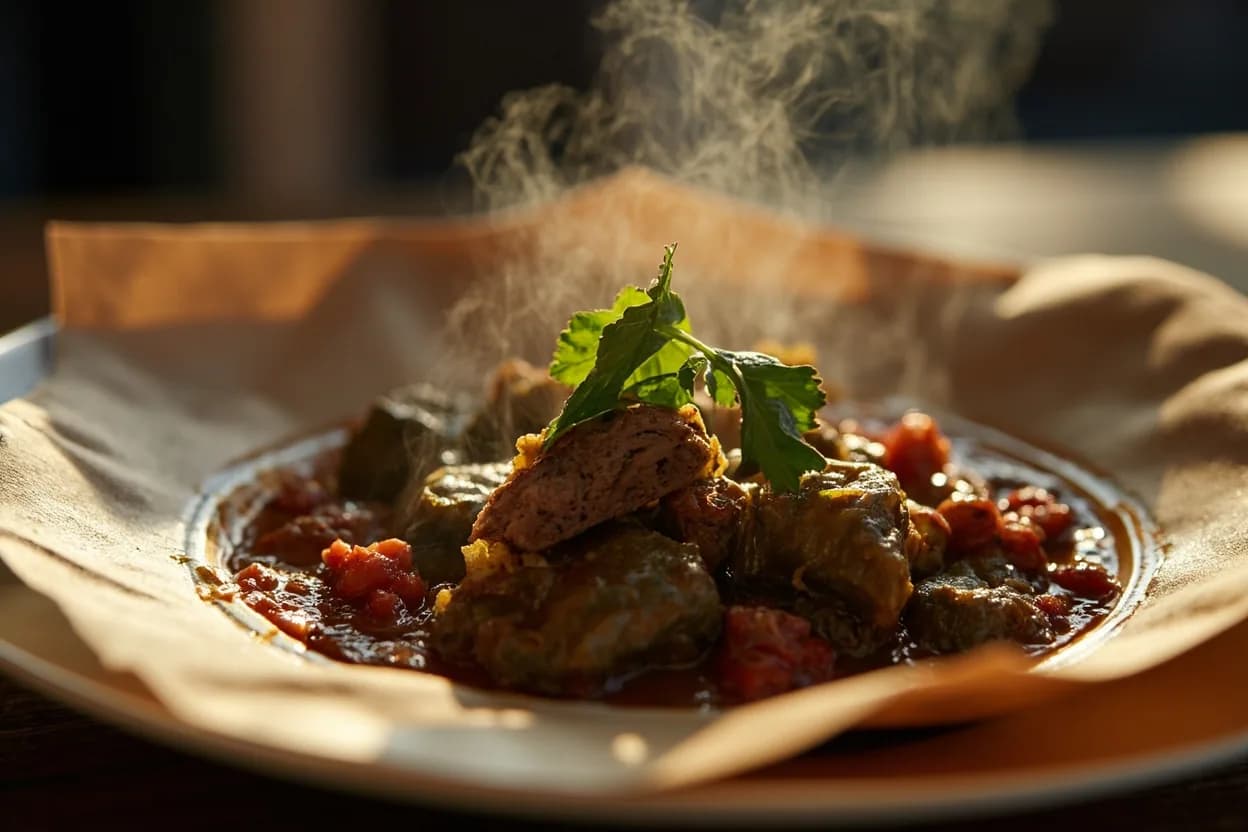
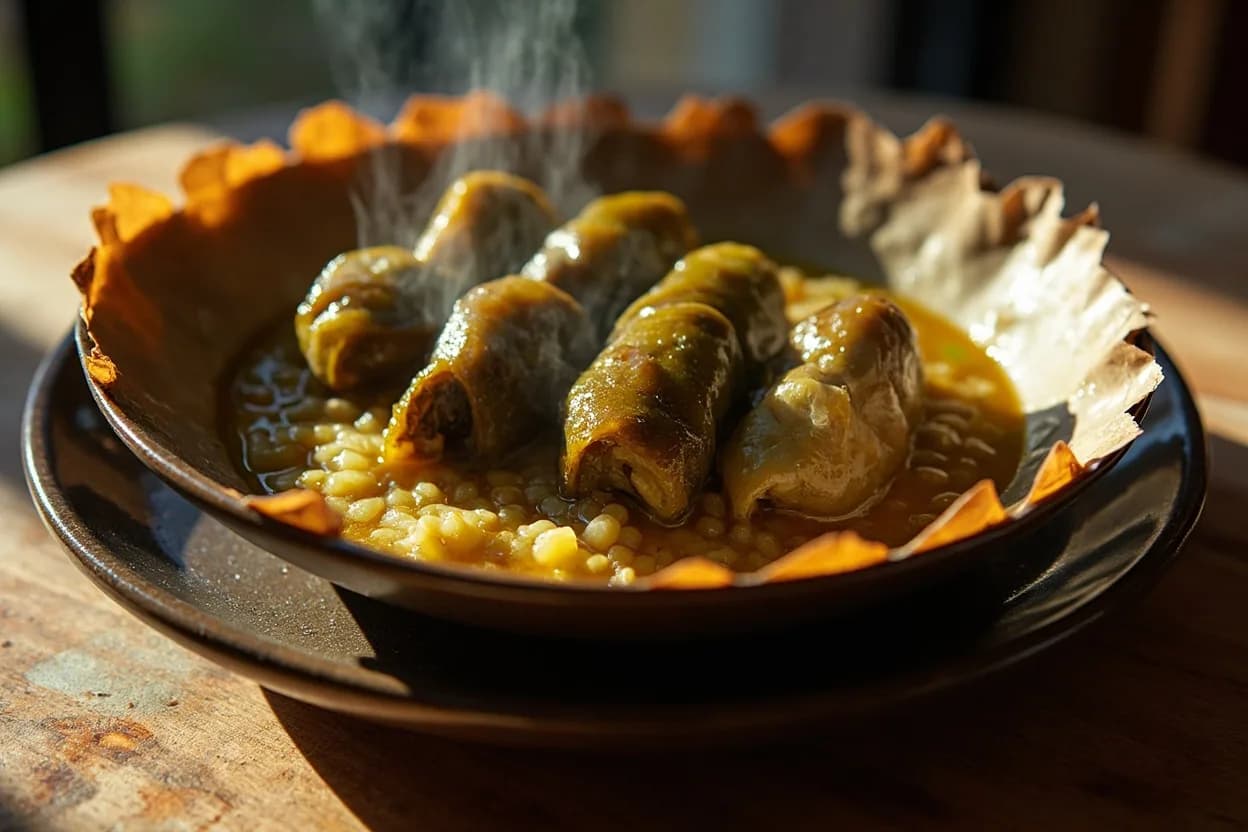
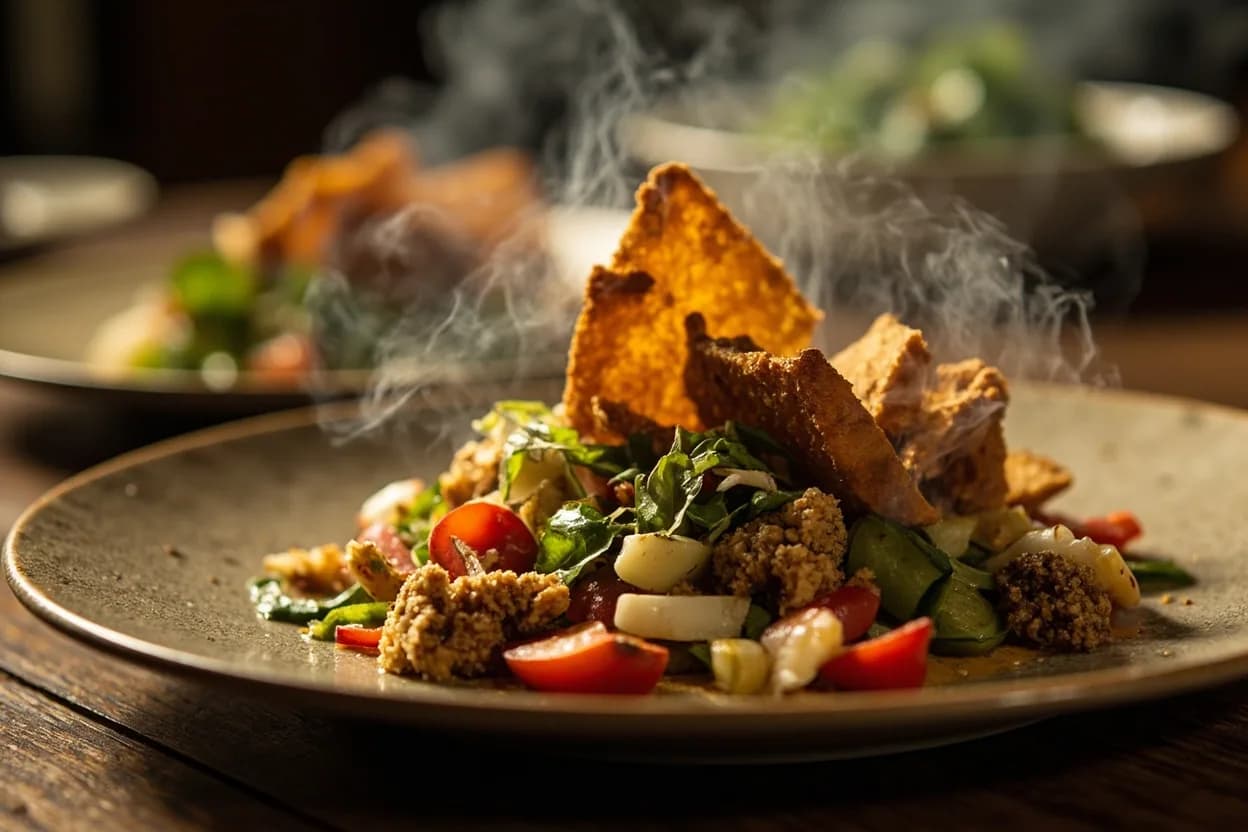
Appears in these dishes
Related

White Sugar
Clean, granulated sweetness for baking, drinks, and beyond
Honey
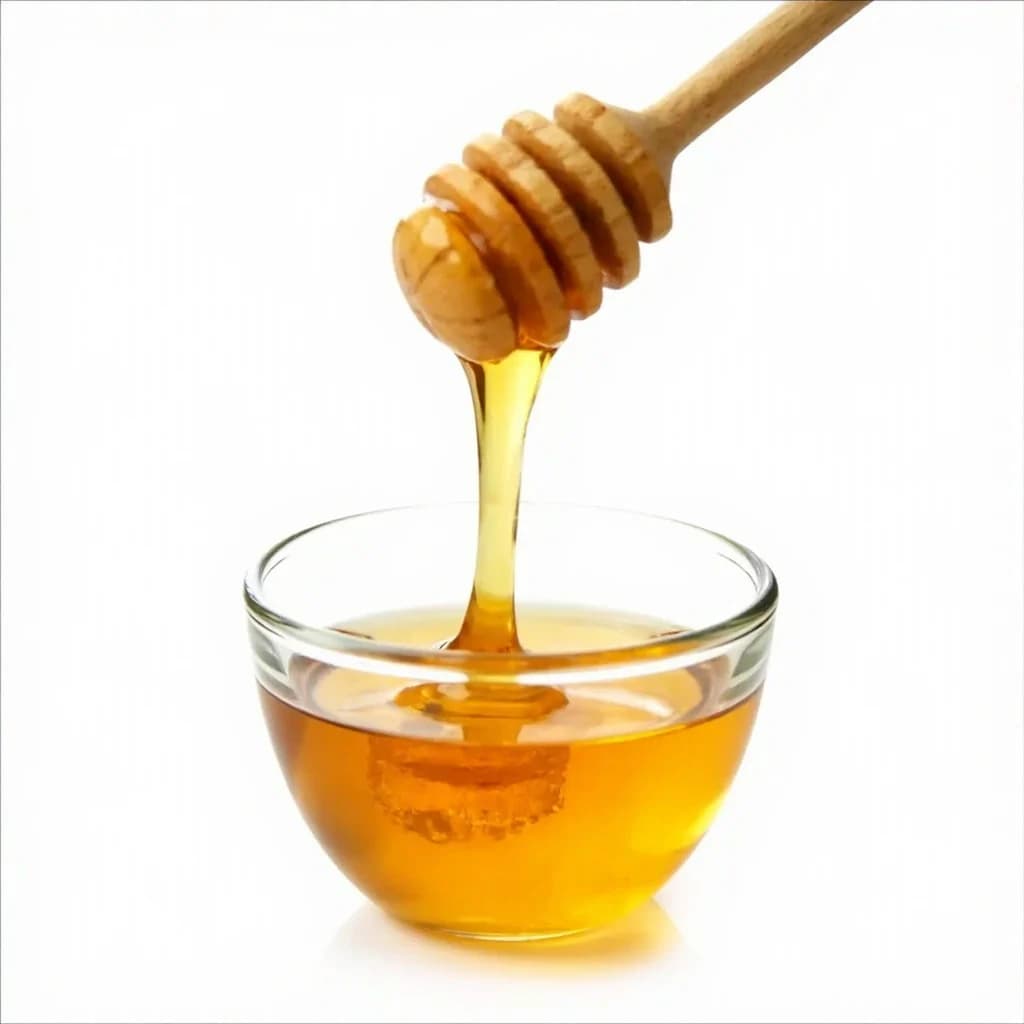
Floral, golden sweetener for drizzling, glazing, and baking
Brown Sugar
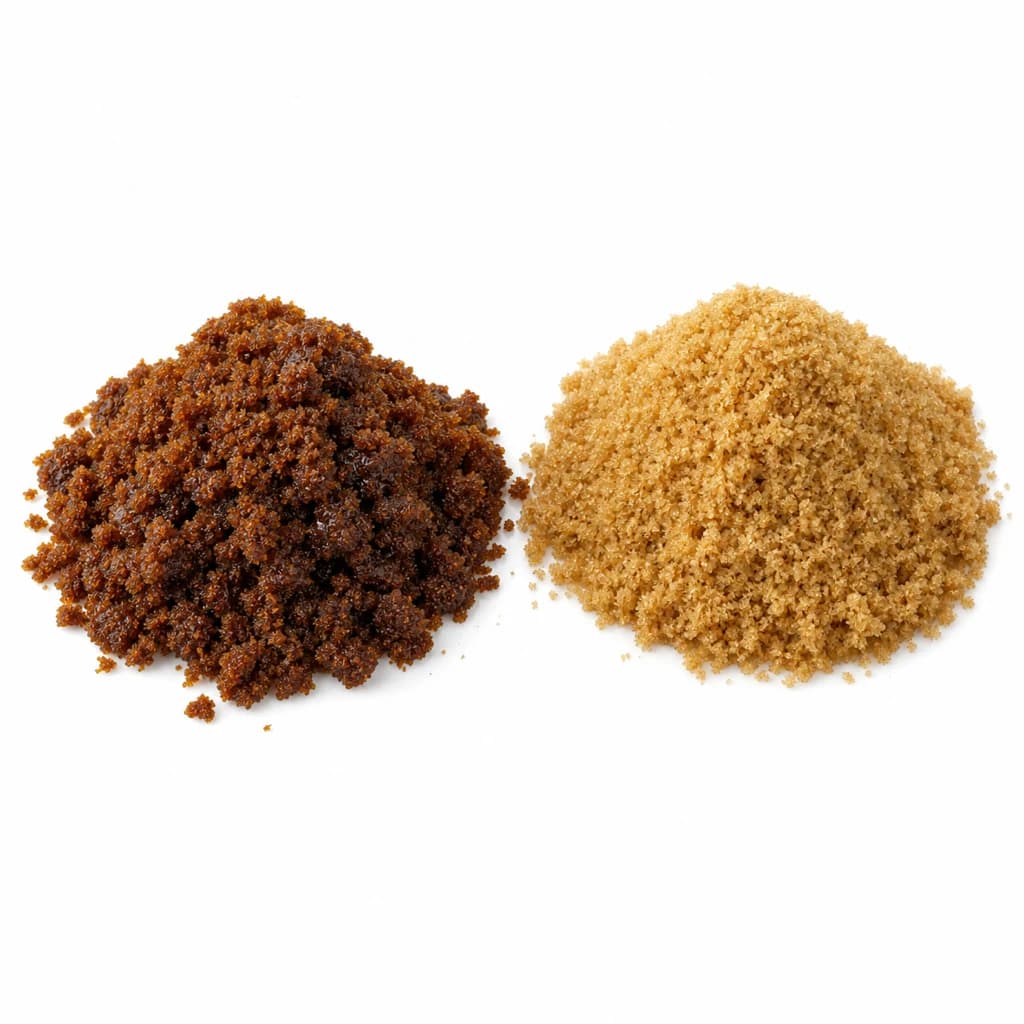
Moist, molasses-rich sugar for chewy cookies and glazes

Maple Syrup
Rich, woodsy syrup for pancakes, glazes, and baking
Powdered Sugar
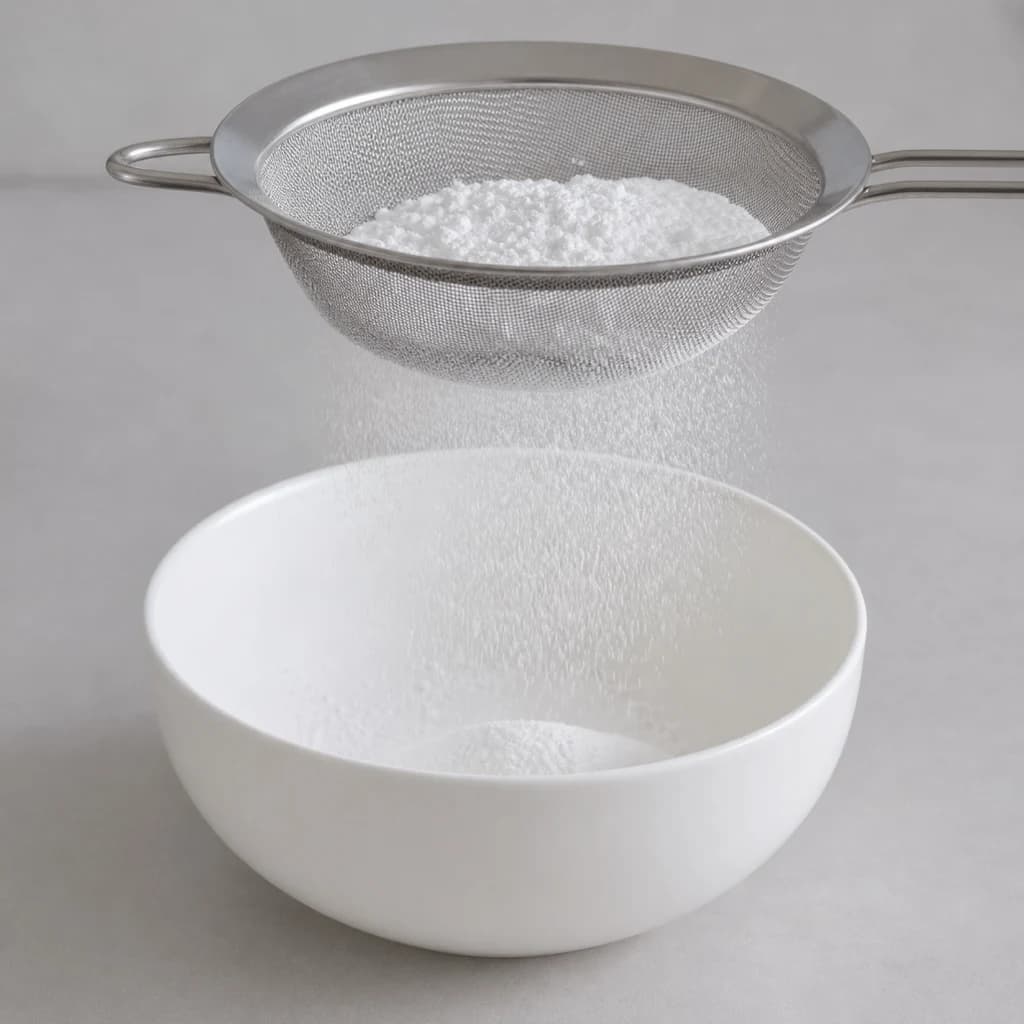
Fine, dissolvable sugar for icing, dusting, and frosting
Agave Syrup
Mild, pourable sweetener that dissolves easily into drinks
Simple Syrup
Dissolved sugar syrup for sweetening drinks and cocktails
Grenadine
Sweet-tart pomegranate syrup for color and cocktails