Grains & Rice
Pasta
Dried or fresh wheat dough shaped into noodles and forms, boiled and sauced.
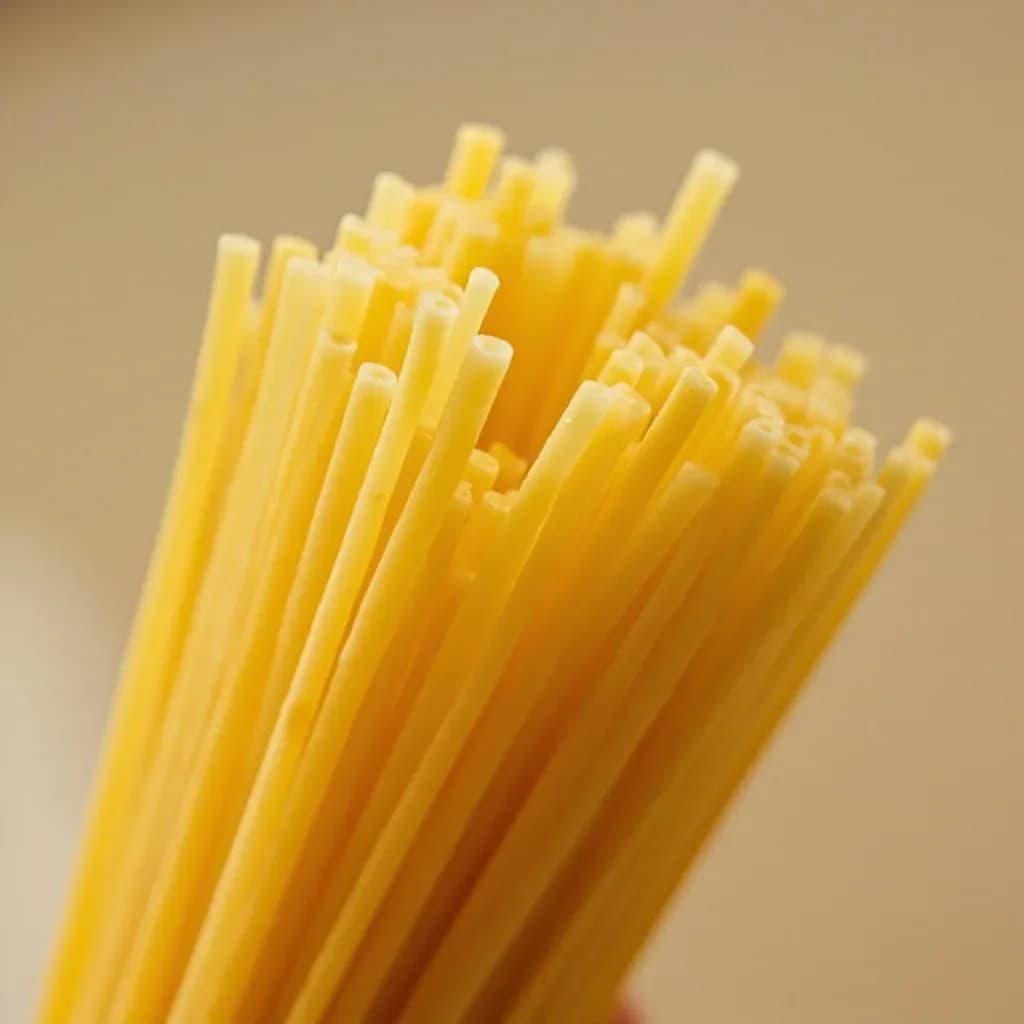
Pasta is an unleavened dough, usually of durum-wheat semolina and water (sometimes egg), extruded or rolled into shapes from spaghetti to penne. It is boiled until al dente and tossed with sauces, baked into casseroles, or added to soups. Italian in heritage but now global, pasta's shape is chosen to match the sauce it carries.
Pasta is the cornerstone of Italian cuisine, a vehicle of extraordinary versatility built from wheat dough and shaped into hundreds of distinct forms. Its power lies in simplicity: wheat flour (typically durum semolina for dried, 00 flour for fresh) combined with water or eggs, worked into a pliable dough, then shaped and cooked. The wheat's gluten network is what gives pasta its structural integrity in boiling water and its remarkable ability to carry and bind sauces. Understanding pasta means understanding this duality: dried pasta is a pantry staple with firm, resilient texture and a mild wheat flavor that holds its own against bold sauces; fresh pasta is tender, fragile, and buttery, suited to gentler, richer companions. Both are legitimate. Neither is superior. The choice depends entirely on the dish.
The distinction between dried (secca) and fresh (fresca) pasta shapes every decision from cooking time to sauce pairing. Dried pasta is made from durum wheat semolina and water, extruded or rolled and then dried at low temperatures. The drying process concentrates flavor and creates a porous surface that grips sauce. Fresh pasta is made with 00 flour and whole eggs or egg yolks, rolled thin and cut. It cooks in a fraction of the time and has a tender, almost custardy bite that deteriorates quickly if overcooked. Stuffed fresh pastas—ravioli, tortellini, cappelletti—are technically distinct: filled envelopes that require gentle handling and brief cooking in well-salted water or broth.
The shape-to-sauce rule is the governing principle of Italian pasta cooking. Long thin pasta suits fluid oil or tomato sauces that coat without overwhelming. Wide flat ribbons like pappardelle need substantial ragùs that cling to their rough surfaces. Tubular shapes with ridges—rigatoni, penne rigate—catch chunky sauces in their hollows and crevices. Small shapes and soup pasta work in broth. Stuffed pasta demands enough sauce to complement the filling without overwhelming it. Matching shape to sauce is not decoration; it is the difference between a dish that tastes coherent and one that feels like separate components arbitrarily combined.
- Measured in
- g
- Storage
- Pantry
Allergens
Types & varieties
Solid, round, 2 mm thick. The most recognized pasta shape. Use with tomato, oil, or light cream sauces.
Like thick spaghetti but hollow through the center. Ideal for amatriciana and carbonara; the hollow draws sauce inside.
Flat, narrow (4 mm wide); structurally similar to spaghetti cut on the edge. Classic with clam or seafood sauces.
Flat ribbon about 6–7 mm wide. Suited for rich, thick sauces like Alfredo or carbonara.
Flat ribbon, slightly wider than fettuccine (6.5–8 mm), with a rough surface that catches ragù. The traditional partner for ragù bolognese.
Wide flat ribbons, 25–30 mm wide. Excellent with hearty meat ragùs and game; the broad surface carries thick sauce beautifully.
Very thin solid rods, thinner than spaghetti. Cooks in 4–5 minutes; use with light, liquid sauces that can coat the delicate strands.
Large ridged tubes cut straight across the ends. Holds chunky meat or vegetable sauces well; the ridges and hollow create multiple textures.
Cylinders cut diagonally like a quill, ridged. The ridges grip sauce better than smooth penne; sauce collects in the hollow center.
Corkscrew or spiral shape. Sauce clings in the curves; good with pesto, cream sauces, or pasta salads.
Bow-tie or butterfly shape with a narrow center and wider folded ends. Use with light cream, tomato, or vegetable sauces.
Small cup or ear-shaped, made by pressing the thumb into small rounds of dough. Traditional with broccoli rabe and anchovies; the slight thickness provides resistance.
Shell-shaped; sauce pools inside the curve. Available in tiny (for soup) to jumbo (for stuffing) sizes.
Tight, short spirals; more compact than fusilli. Good for cold pasta salads or thick sauces where the compact shape holds together well.
Small, curved tubes; ridged on the outside. Classic for baked pasta dishes where the curves trap sauce and hold their shape through baking.
Rice-shaped, about 10 mm long. Used in soups, pilafs, and salads; behaves like a grain more than a typical pasta.
Hat-shaped stuffed pasta from Emilia-Romagna, typically filled with meat or cheese. Traditionally served in broth as a first course.
Square or circular stuffed pasta. Filling varies from ricotta and spinach to meat, pumpkin, or seafood. Cook briefly in gently simmering water.
Ring-shaped stuffed pasta from Emilia; traditionally filled with pork, prosciutto, and Parmigiano-Reggiano. Served in broth or with cream sauce.
Small, pinched pasta from Piedmont; multiple small envelopes pinched together rather than sealed by machine. Typically filled with roasted meat.
Technically a dumpling, not extruded pasta. Made from potato, ricotta, or semolina. Cooks in 1–3 minutes; needs careful handling to avoid dense, gummy texture.
Matching Shape to Sauce
The fundamental principle is structural compatibility. Long, thin solid rods (spaghetti, bucatini) work with smooth, fluid sauces—olive oil, light tomato, butter—where the sauce flows over and around the pasta. Flat ribbons (fettuccine, tagliatelle, pappardelle) need sauces with body: ragùs, cream sauces, or anything thick enough to cling to a broad surface. The roughness of hand-rolled pasta (tagliatelle, pappardelle) matters: that texture is not incidental, it is functional, providing mechanical grip for the sauce.
Tubular shapes with ridges (rigatoni, penne rigate) excel with chunky sauces because the ridges and hollow interiors trap solid pieces—tomato chunks, meat, vegetables. Small shapes (fusilli, farfalle, conchiglie) are versatile: they work in hot dishes with sauce, in cold pasta salads with vinaigrette, and in soups where they absorb broth. Stuffed pasta is its own category: the filling is the protagonist, so choose sauces that complement rather than overwhelm it. A light brown butter with sage, a gentle cream, or broth is usually right; a heavy meat ragù is usually wrong.
Sauce weight must also match pasta texture. Light, delicate sauces coat fresh pasta well. Robust sauces stand up to the assertive bite of well-cooked dried pasta. Forcing a light sauce onto undercooked dense pasta, or a heavy sauce onto tender fresh pasta, creates discord that no amount of seasoning can repair.
Dried vs. Fresh: When to Choose
Dried pasta is almost always the right choice for tomato-based sauces, baked pasta dishes, soups, and pasta salads. It holds its shape through extended cooking or standing time, and its firm, slightly resistant texture balances aggressive flavors. In a puttanesca, an amatriciana, a pasta al forno, dried pasta is unambiguously correct.
Fresh pasta belongs in dishes where its tenderness is an asset: butter and cheese sauces (carbonara, cacio e pepe, Alfredo), very light cream or oil sauces, or simply dressed with good olive oil and a shower of Parmigiano. It also belongs in stuffed preparations, where the delicate wrapper is part of the dish's identity.
The mistake many cooks make is treating fresh pasta as inherently better and using it indiscriminately. Fresh pasta added to a long-simmered puttanesca will dissolve into mush. Dried penne dumped into a delicate lemon-butter sauce will overwhelm it. Choose deliberately.
When fresh pasta is correct, use it within 24 hours of making or buying. Refrigeration degrades it noticeably after 2 days; the eggs oxidize and the dough dries and cracks. Frozen fresh pasta works in soups if used within a month; thaw in the refrigerator, not at room temperature.
Common uses
Tips & pitfalls
- Always cook pasta in a large volume of actively boiling water—a rolling boil prevents sticking far more reliably than adding oil to the water, which creates a slippery coating that repels sauce instead of gripping it.
- Salt the water aggressively. If it does not taste salty enough to sip like a broth, it is not salted enough. Under-seasoned pasta water produces under-seasoned sauce, since the water becomes part of the dish.
- Do not rinse pasta after draining. Rinsing strips away surface starch, and sauce cannot cling to smooth, starch-free pasta. The starch is the adhesive.
- Reserve at least 1 cup of pasta water before draining. This starchy liquid is the single most important sauce-building tool in Italian cooking; use it to emulsify fat and cheese, loosen tomato sauces, and bind everything together in the pan.
- Start tasting dried pasta 2 minutes before the package time. Pasta continues to cook from residual heat and from the sauce in the pan. Al dente means a firm bite with the slightest resistance at the very center, not mushy or crunchy—learn what that feels like by tasting.
- Do not add oil to cooking water. It serves no purpose in the pot and only coats the pasta, preventing sauce from adhering. If sticking is a concern, use more water and more stirring.
- Fresh egg pasta cooks in 2–4 minutes, not 8–12. It goes from perfect to overcooked very quickly. Watch it closely, taste frequently, and drain the moment it is tender but still offers resistance.
- Gluten-free pasta cooks differently and falls apart more easily. Use a wider ratio of water to pasta (at least 1.5 liters per 100 g), stir gently, and drain 1–2 minutes before the package time. Do not cook it to the same firm bite as wheat pasta; it will continue softening in the sauce.
Nutrition
Energy
1552 kJ · per 100 g
Where the calories come from
Protein
13g
26% DV
Carbs
74.7g
27% DV
Fat
1.5g
2% DV
Fiber
3.2g
11% DV
Sugars
2.7g
of which
Sodium
6mg
0% DV
Source · USDA FoodData Central · Pasta, dry, enriched
View on FDC →In the shops
Matched grocery products
No matched grocery products for Pasta yet.
Good to know
- Primary ingredients
- Durum wheat semolina and water (dried); 00 flour and eggs (fresh)
- Shelf life (dried)
- 1–2 years in a cool, dry pantry; keep away from light and strong odors
- Shelf life (fresh, refrigerated)
- 1–2 days; frozen up to 1 month
- Standard serving size
- 80–100 g dried pasta per person (about 1 cup cooked volume)
- Water ratio
- 1 liter per 100 g pasta; insufficient water causes sticking and cloudy boiling water
- Salt addition
- 10 g salt per liter at a full boil—add before the pasta, not after
- Cooking time (dried)
- 8–12 minutes for most shapes; capellini cooks in 4–6 minutes
- Cooking time (fresh)
- 2–4 minutes depending on thickness; fresh egg pasta is done far faster than expected
- Yield
- Dried pasta roughly doubles in weight when cooked; fresh pasta increases less dramatically
- Gluten
- Contains gluten; no natural wheat-free substitute replicates the texture and bite of wheat pasta
- Starch in water
- Cloudy starchy water is a sauce-building tool—reserve at least 1 cup before draining
- Fat content
- Plain dried pasta contains negligible fat; egg pasta contains fat from yolks
Substitutes
- Fresh egg pasta for dried pasta — Use 200–250 g fresh per 100 g dried equivalent. Fresh pasta cooks in 2–4 minutes versus 8–12 for dried. Texture is more tender and buttery.
- Gluten-free pasta (corn, rice, quinoa blends) — Cooks differently—often requires more water and slightly less time. Texture is softer and tends to break more easily when stirred. Do not overcook.
- Zucchini noodles (zoodles) — Raw or lightly blanched spiralized zucchini as a low-carb substitute. Serve immediately; they release water rapidly and lose structure quickly.
- Spaghetti squash strands — Baked squash scraped into strands. Neutral flavor; toss with sauce like pasta but accept a completely different texture—waterier and less al dente.
- Chickpea or lentil pasta — Higher protein and fiber than wheat pasta. Holds shape better than rice-based gluten-free pasta but may have a slightly grainy texture.
- Soba noodles (buckwheat) — Japanese noodles made from buckwheat flour. Serve hot in dashi broth or cold with dipping sauce. Earthier, nuttier flavor than wheat pasta.
- Rice noodles — White or brown rice flour noodles; common in Southeast Asian cooking. They absorb broth well and become tender but do not hold al dente the way wheat does.
Pairs with
Also called
Makarona · Noodles
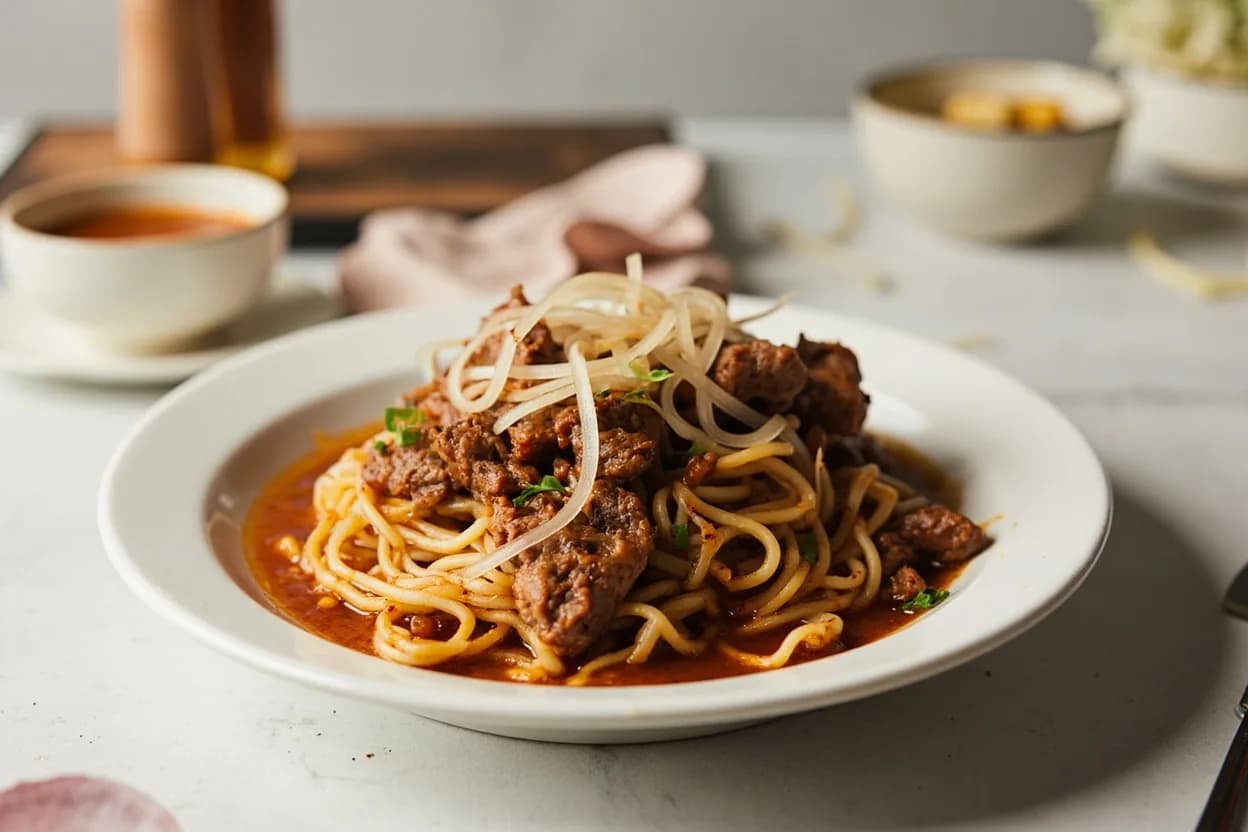
Appears in these dishes
Related

White Rice
Fluffy long-grain rice — the neutral base for almost any meal

White Bread
Soft sandwich loaf for toast, sandwiches, and crumbs
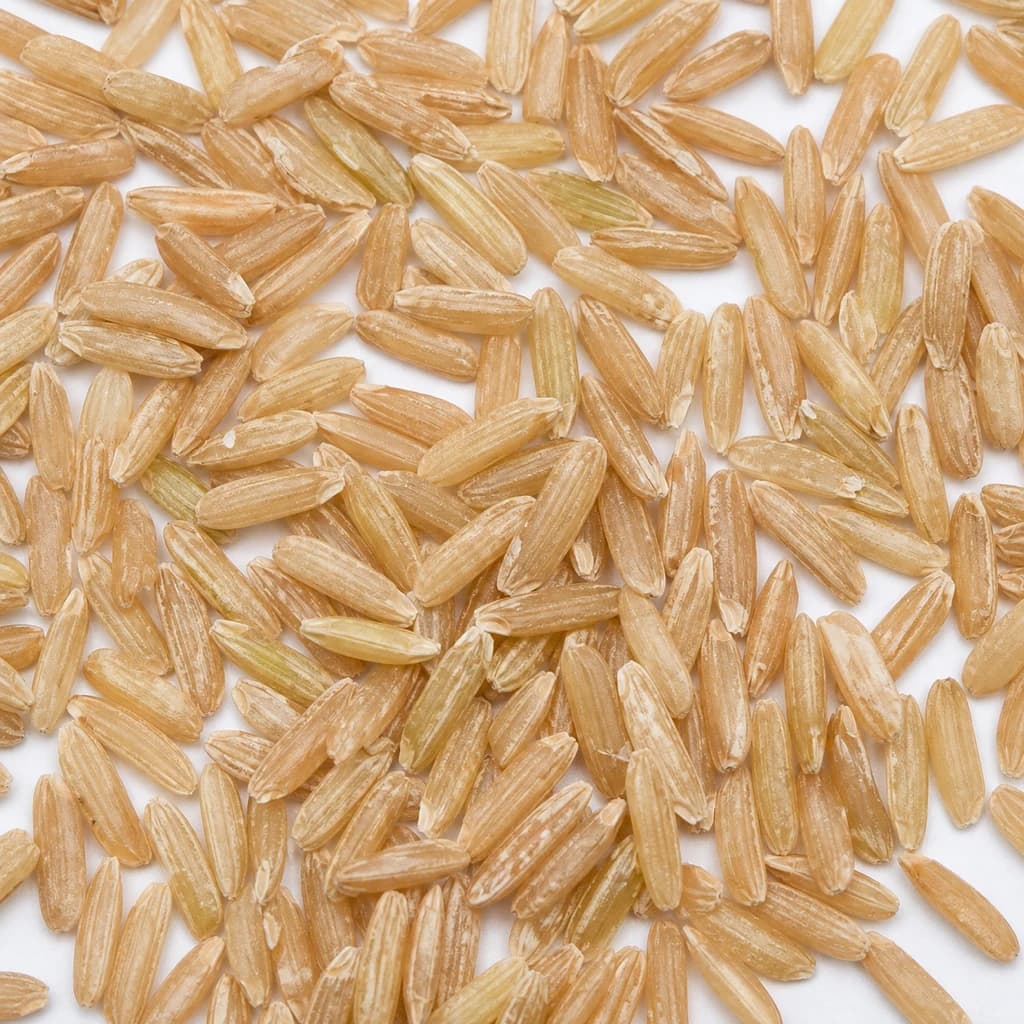
Brown Rice
Nutty, whole-grain rice with chew and extra fiber

Basmati Rice
Fragrant, long-grain rice that cooks up light and separate
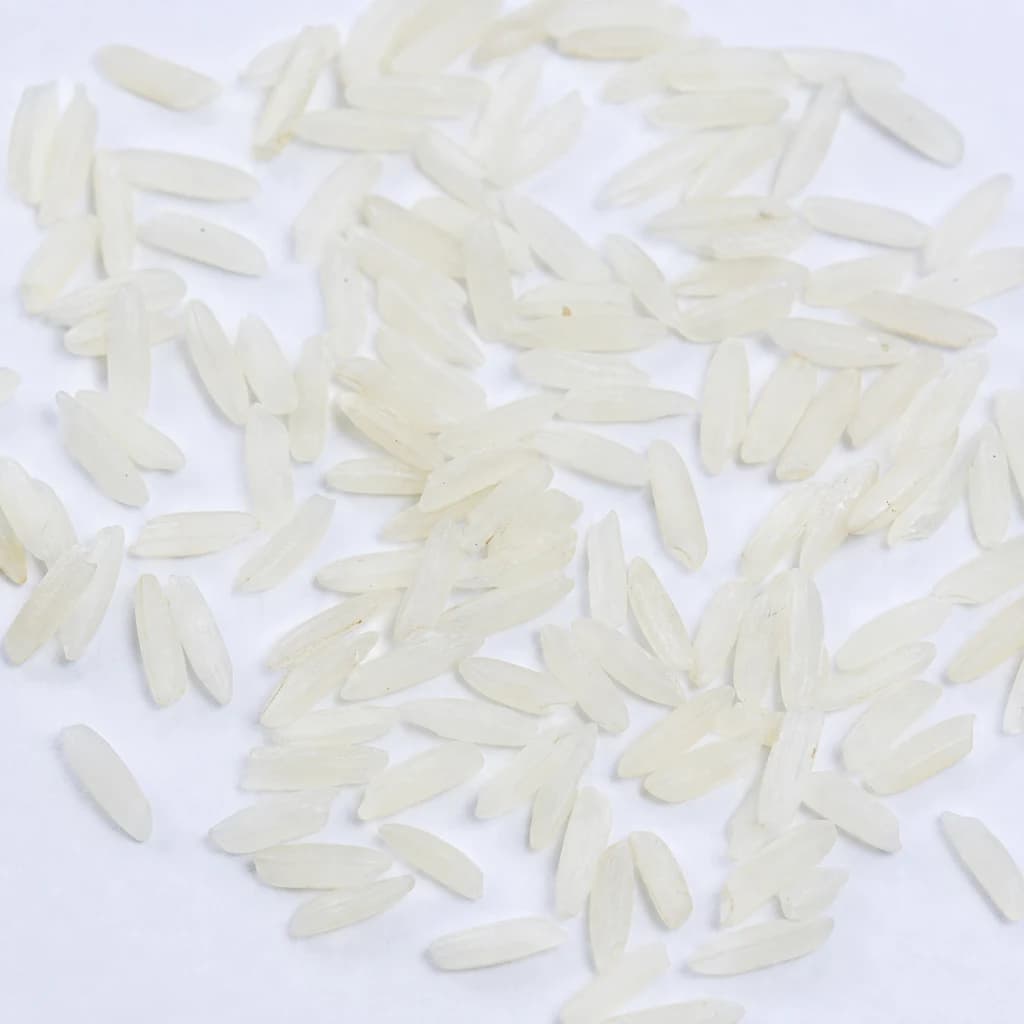
Jasmine Rice
Soft, floral-scented rice that's the pillar of Thai meals
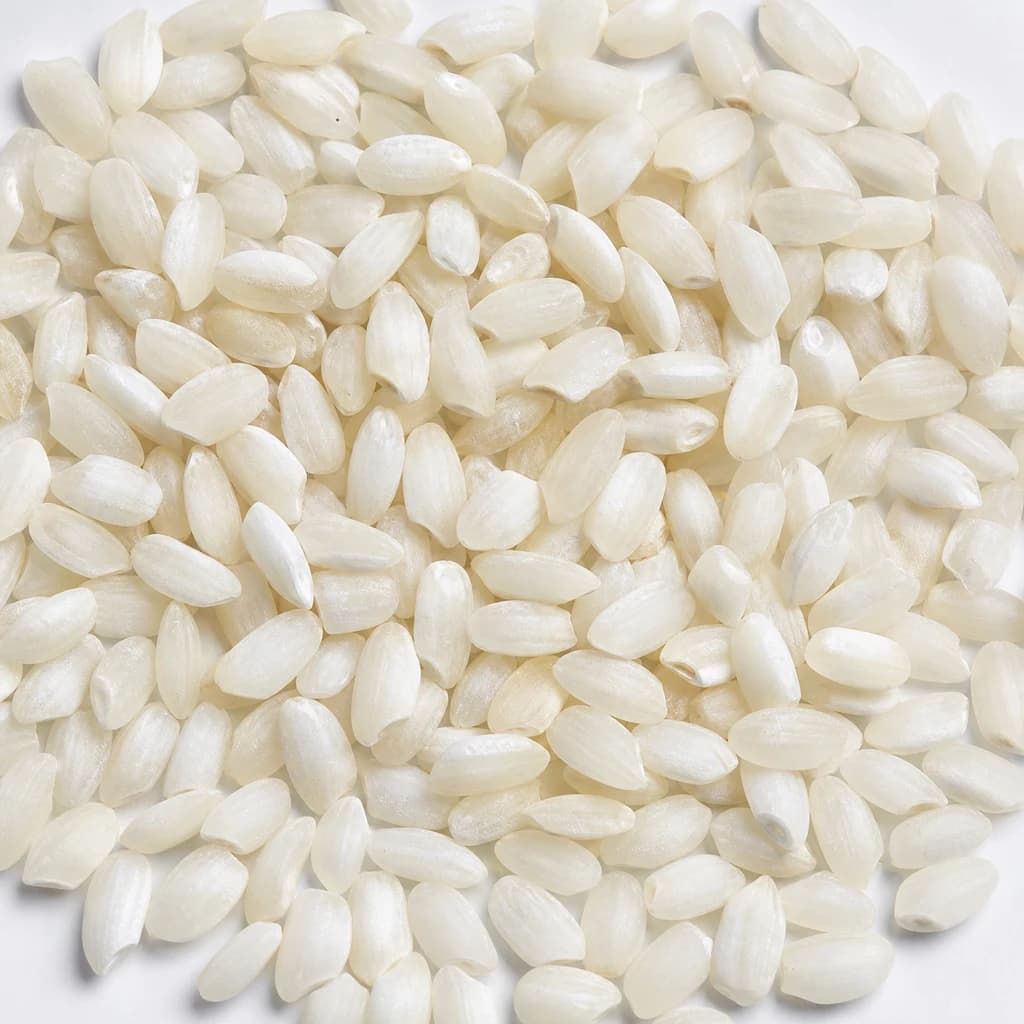
Arborio Rice
Plump, starchy rice that makes risotto creamy
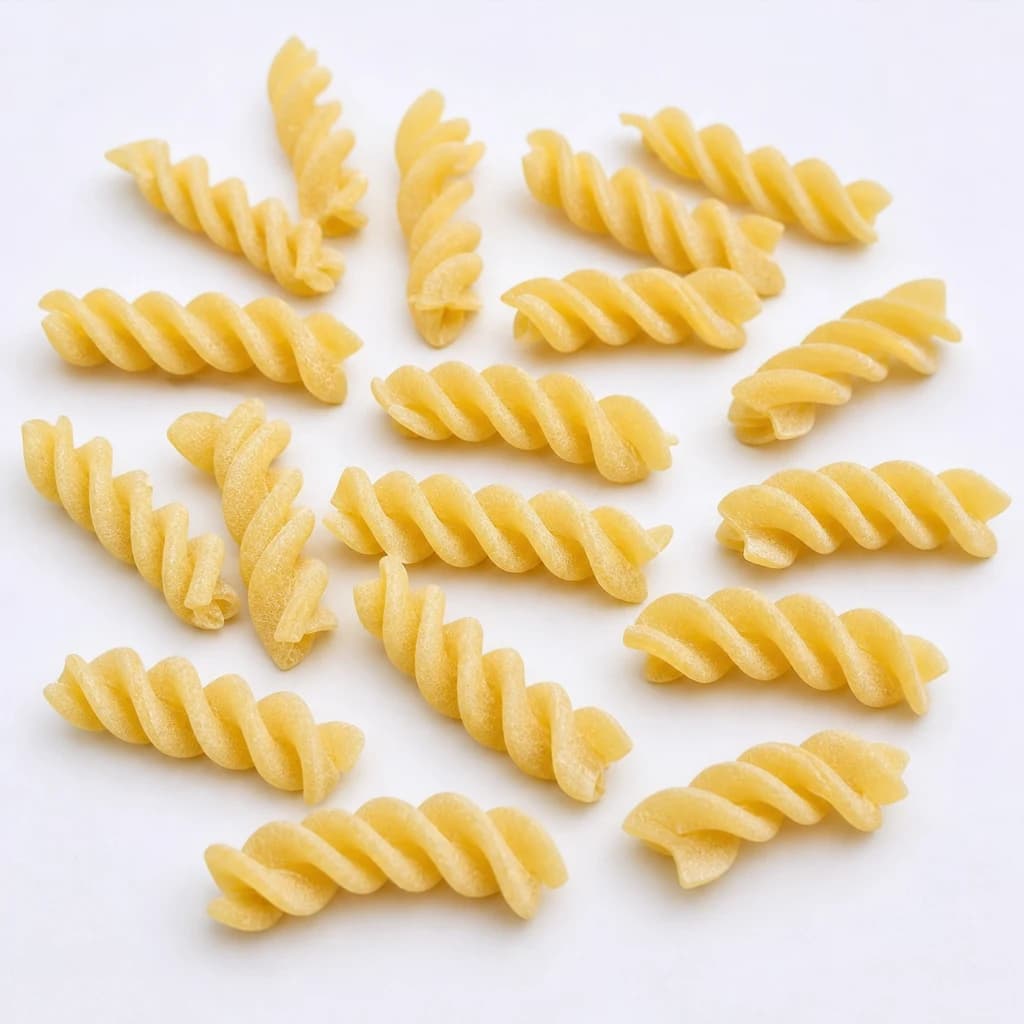
Fusilli
Spiraled pasta that twirls up sauce and dresses cold salads
Rolled Oats
Hearty flakes for porridge, granola, and chewy cookies