Natural form
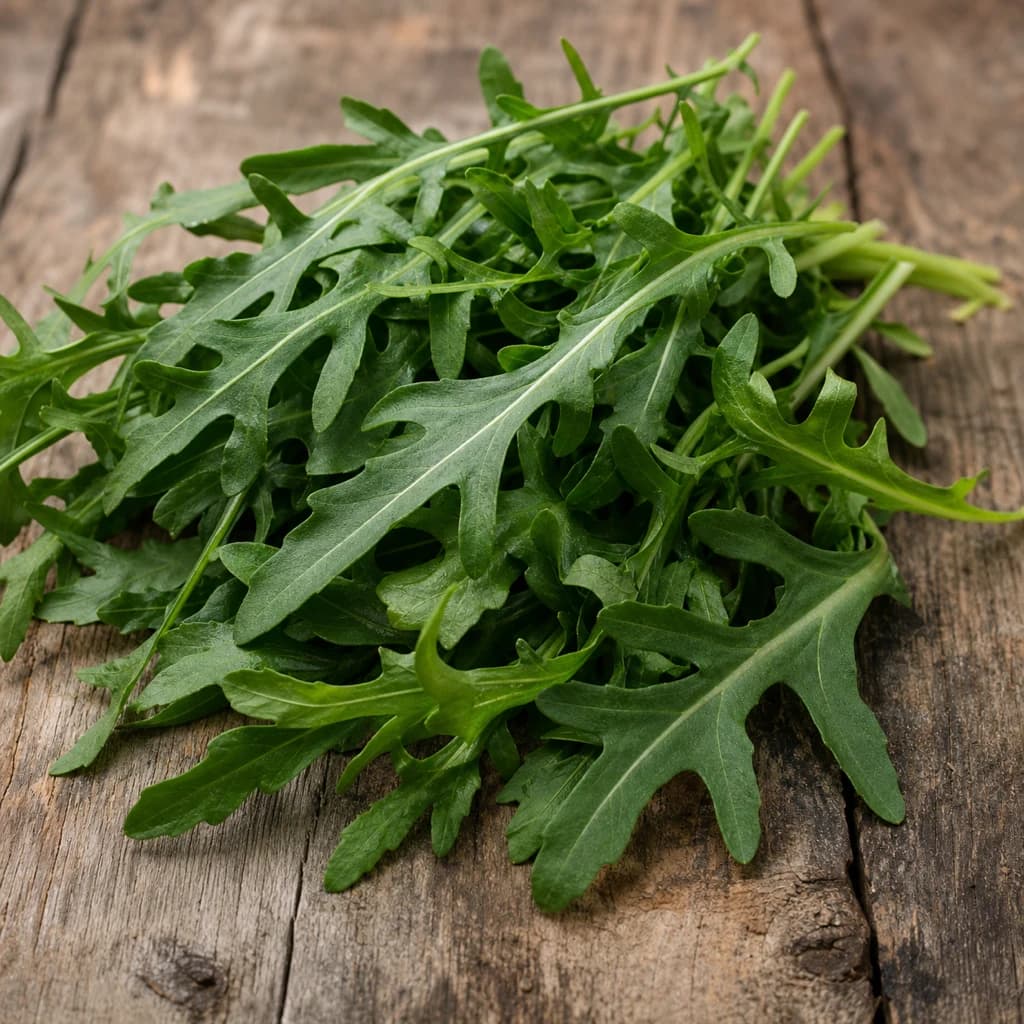
Fresh rocket leaves showing their deeply lobed shape and rich green color.
Shows the distinctive jagged, oak-leaf-like leaf shape and deep green color that makes rocket immediately recognizable.
Produce
Rocket (Arugula)
Peppery salad leaf used raw in salads and as a sharp finishing green.
Rocket is a leafy salad green with deeply lobed leaves and a sharp, peppery, mustard-like flavor. It is eaten raw in salads, piled onto pizza and pasta after cooking, or blended into pestos, and its bite mellows slightly when wilted. Known as arugula in the US and rucola in Italy, it is a Mediterranean staple.
Rocket (Eruca vesicaria) is a tender leafy green of the Brassicaceae family native to the Mediterranean, where it has been cultivated since Roman times—predating lettuce's spread across Europe. Its defining characteristic is a sharp, peppery bite that carries a faint bitterness, similar to mustard greens but more direct. The flavor intensifies as leaves mature and the plant approaches bolting, which is why young, tender rocket delivers the most balanced taste. In Italian cuisine, where it is known as rucola or rucola selvatica, rocket appears throughout the meal from appetizer salads to pizza and pasta finishes. It behaves poorly under heat: prolonged cooking turns it bitter and diminishes its fresh character. The culinary rule with rocket is restraint—use it raw, or add it at the very last moment to dishes that are already off the heat. Note that true rocket (Eruca) is botanically distinct from wall rocket (Diplotaxis tenuifolia), often labeled as wild rocket; both share a similar peppery profile and are used interchangeably in cooking, though Diplotaxis tends toward greater pungency.
- Measured in
- g
- Storage
- Fridge
Types & varieties
Standard supermarket type; milder, larger leaves; faster growing. Varieties include Astro, Runway, and Nativo.
Smaller, deeply lobed leaves; more intense peppery flavor; slower growing; holds up better in heat.
True wild foraged type; even more pungent; highly prized in Italian cuisine.
A red-veined variety; ornamental appearance with the same peppery flavor.
Selecting and Storing
Fresh rocket is perishable. Choose bright, medium-to-dark green leaves that are crisp and upright; yellowing leaves indicate age or heat damage, and wet spots mean accelerated spoilage. Store dry in a paper towel-lined bag or container in the refrigerator's crisper drawer. Wash only just before using—excess moisture is the enemy of shelf life. Properly stored, rocket holds for 2–4 days at best; plan to use it quickly after purchase.
- Look for crisp, vibrant green leaves with no yellowing or limp sections
- Store dry in a paper towel-lined bag in the crisper drawer
- Wash immediately before use, never in advance
- Use within 2–4 days; rocket deteriorates faster than most salad greens
Using Rocket in the Kitchen
Rocket's strength is its raw, peppery bite—respect that. The most common mistake is adding it too early to dressings or hot dishes, where acid and heat collapse its structure and amplify bitterness. For salads, toss rocket with dressing at the table, not in advance. For pasta or pizza, add it the moment the dish comes off the heat and fold gently. When wilting rocket into soups, drop it in just before serving and let residual heat do the work. Rocket also makes a vivid pesto that is sharper and more complex than basil versions; toast the nuts well and use a generous amount of Parmesan to balance the bite.
- Add to salads just before serving and dressing
- Fold into hot pasta off the heat
- Use as a raw garnish on pizza immediately before serving
- Make pesto: blend with pine nuts, Parmesan, garlic, and olive oil
- Never cook rocket heavily—it should barely wilt, never boil
Common uses
Tips & pitfalls
- Buy bright, crisp leaves with no yellowing or wet spots; limp rocket is past its best
- Store dry in a paper towel-lined bag in the refrigerator's crisper drawer
- Wash just before use; excess water accelerates spoilage
- Tear rather than cut to avoid bruising the tender leaves
- Add to salads just before dressing, as it wilts quickly under acid and salt
- Never cook rocket heavily; brief wilting in hot pasta or pizza is the maximum
- If rocket tastes overwhelmingly bitter, it may be old or heat-stressed; young leaves are milder
- Wild rocket tolerates heat better than cultivated types and is less prone to bolting
- Pick outer leaves and let the center continue growing to extend harvest
- Avoid overdressing; rocket needs very little vinaigrette compared to denser greens
Nutrition
Energy
105 kJ · per 100 g
Where the calories come from
Protein
2.6g
5% DV
Carbs
3.7g
1% DV
Fat
0.7g
1% DV
Fiber
1.6g
6% DV
Sugars
2.1g
of which
Sodium
27mg
1% DV
Source · USDA FoodData Central · Arugula, raw
View on FDC →In the shops
Matched grocery products
No matched grocery products for Rocket (Arugula) yet.
Good to know
- Scientific name
- Eruca vesicaria (formerly Eruca sativa)
- Family
- Brassicaceae (mustard family)
- Flavor
- Sharp, peppery, slightly bitter; heat intensifies with maturity
- Texture
- Tender when young; becomes tough and stringy when bolting
- Shelf life
- 2–4 days refrigerated in a loosely closed bag; wilts rapidly at room temperature
- Season
- Cool weather; spring and autumn in temperate climates; year-round in Italy, California, and the American South
- Primary use
- Raw, as a finishing green, or wilted into hot dishes at the last moment
Substitutes
- Watercress — Similar peppery bite; smaller, more delicate leaves; swap 1:1
- Mizuna — Milder mustard green; same family; good when you want less heat
- Radish greens — Peppery and slightly earthy; an underused substitute from the same Brassicaceae family
- Baby arugula — Younger, more tender leaves; essentially the same ingredient, more expensive
- Belgian endive — Bitter element but not peppery; use when you want bitter without the heat
- Mature spinach — Not peppery; use for texture only; lacks the characteristic bite
Pairs with
Also called
Rucola · Arugula · Roquette
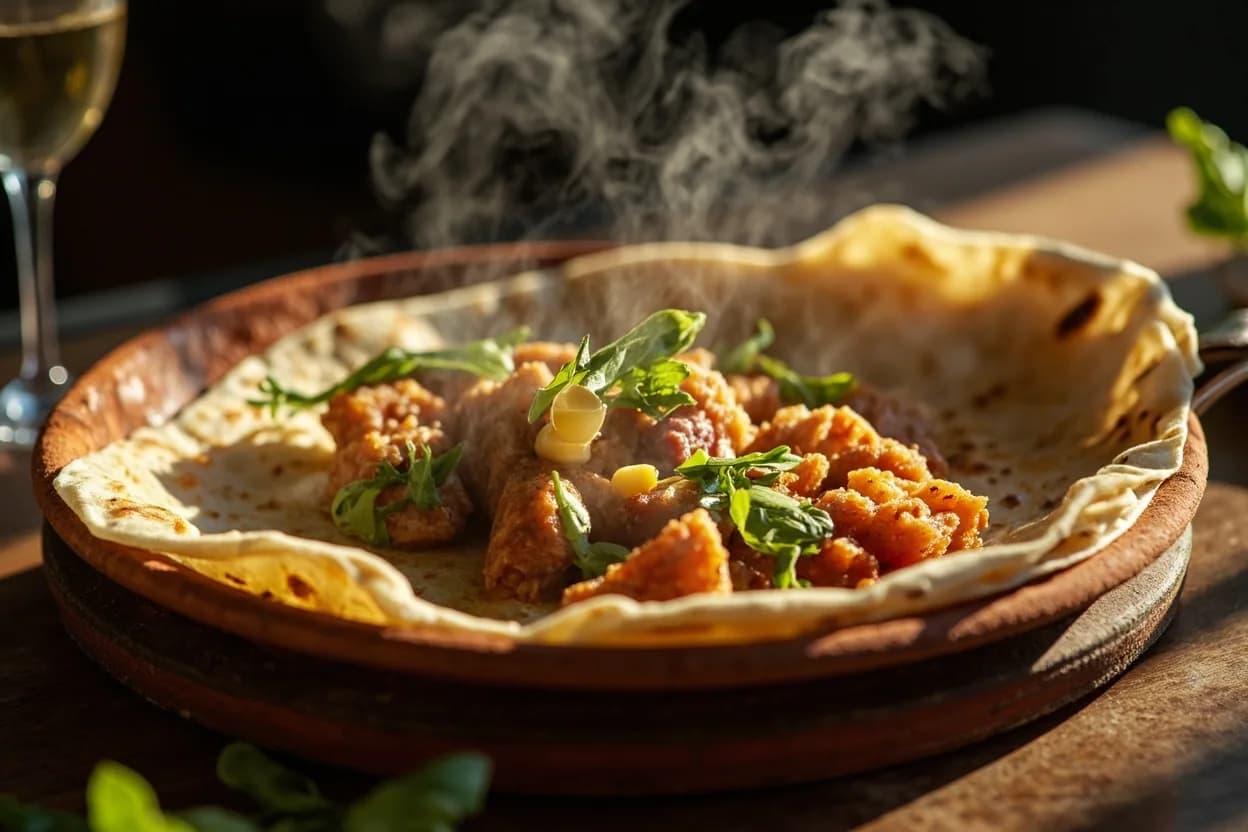
Appears in these dishes
Related
Tomato
Juicy, sun-sweet fruit for sauces, salads, and slow-cooked depth
Yellow Onion
The aromatic backbone of soups, sofritos, and braises
Garlic
Pungent cloves that perfume nearly every savory dish
Lemon
Bright, acidic citrus that wakes up almost any dish
Potato
Humble, hearty staple — roast, mash, fry, or boil
Carrot
Sweet, crunchy root — raw, roasted, or the base of a sofrito
Cucumber
Cool, crisp, and watery — for salads, pickles, and tzatziki

Lettuce
Crisp leaves for salads, wraps, and a fresh crunch