
Natural form
Raw basmati grains: slender, extra-long, and pale ivory before cooking.
Shows the defining physical characteristic of basmati — its unusually long, slender grain shape — so readers can identify it uncooked.
Grains & Rice
Basmati Rice
Fragrant, long-grain rice that cooks up light and separate
Aromatic and slender, basmati cooks into fluffy, separate grains perfect for biryani, pilaf, and alongside curry. Rinse before cooking; store the dry grains airtight.
Basmati is the aristocrat of long-grain rice — an aromatic variety from the Himalayan foothills of India and Pakistan whose name means 'fragrant' in Hindi. Its signature trick is twofold: the grains carry a natural, slightly nutty, popcorn-and-pandan aroma (from a compound called 2-acetyl-1-pyrroline), and they elongate dramatically as they cook, swelling into long, slender, separate needles that never clump. Aged basmati, dried and stored for a year or more before sale, cooks even drier and fluffier — which is why good biryani houses prize it. Rinsing and a short soak are the keys to its trademark texture: they wash off surface starch and pre-hydrate the grains so each one cooks evenly into the light, distinct fluff that makes basmati the only rice for a proper pilaf or biryani.
- Measured in
- g
- Storage
- Airtight
Find it in
Types & varieties
Polished, the classic — lightest and fluffiest, cooks fastest.
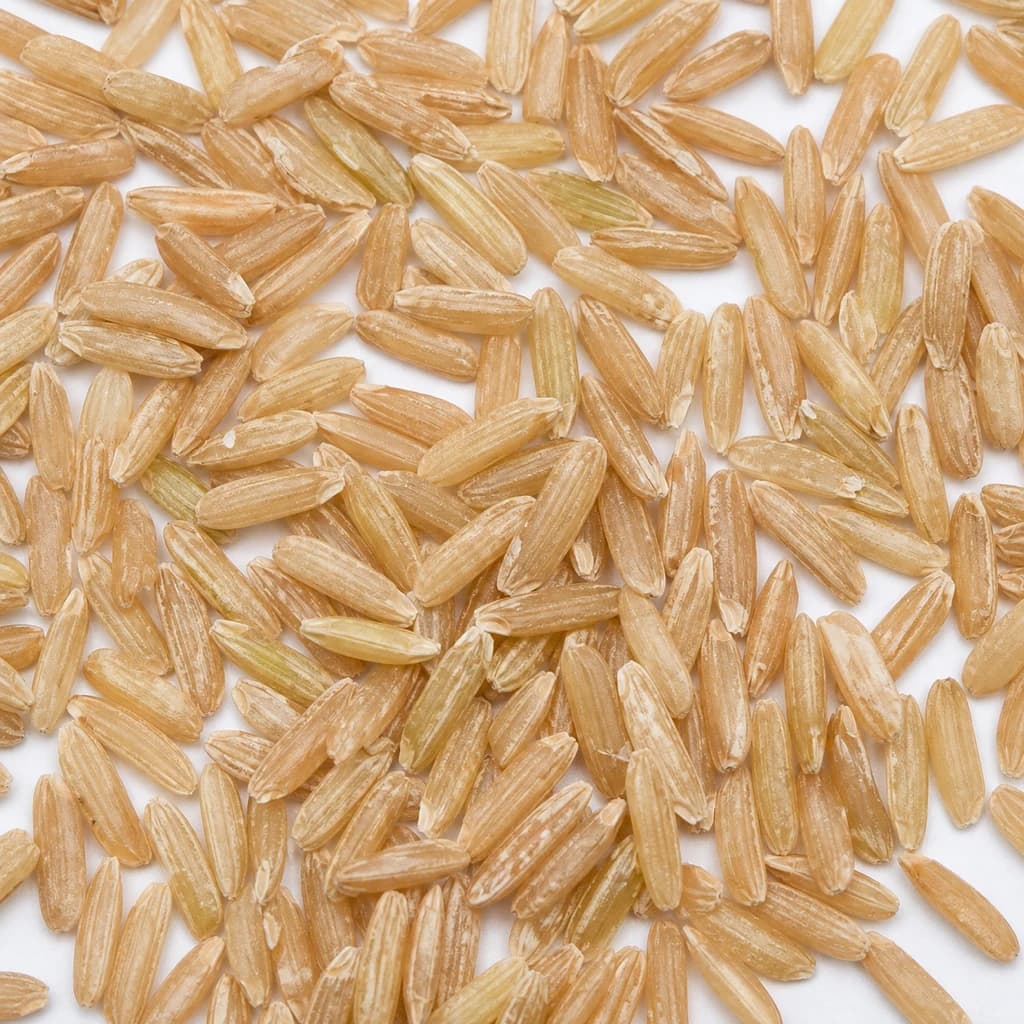
Bran intact, nuttier and chewier; more fiber, longer cook.
Matured 12+ months; drier, longer grains and a deeper aroma — the gold standard for biryani.
How to cook (pilaf method)
Rinse, soak, then either steam by absorption or par-boil and finish covered. The soak is non-negotiable for the long, distinct grains basmati is famous for.
- Rinse 3–4 times until the water runs clear
- Soak 20–30 min, then drain
- Use just 1.5 cups water per cup of soaked rice
- Bring to a boil, cover, simmer low 10–12 min, rest 10 min, fluff with a fork
How to prep & flavor
Basmati is built for the pilaf treatment — toasting the drained grains in ghee or oil with whole spices before adding water layers in fragrance and keeps the grains separate.
- Bloom whole spices (cardamom, cumin, bay, cinnamon) in fat first
- Toast the soaked, drained rice 1–2 min before adding liquid
- A pinch of saffron or a few drops of rose water lift it further
Common uses
Tips & pitfalls
- Always soak — it's the single biggest difference between flat, broken grains and long, elegant ones.
- Use less water than other rice (1.5:1); pre-soaked grains need less to finish.
- Fluff with a fork, never a spoon, to avoid crushing the delicate grains.
- Toast in ghee with whole spices for an effortless pilaf.
- Buy aged basmati when you can — it's worth the premium for biryani.
Nutrition
Energy
1527 kJ · per 100 g
Where the calories come from
Protein
7.1g
14% DV
Carbs
80g
29% DV
Fat
0.7g
1% DV
Fiber
1.3g
5% DV
Sugars
0.1g
of which
Sodium
5mg
0% DV
Source · USDA FoodData Central · Rice, white, long-grain, regular, raw, enriched
View on FDC →In the shops
Matched grocery products
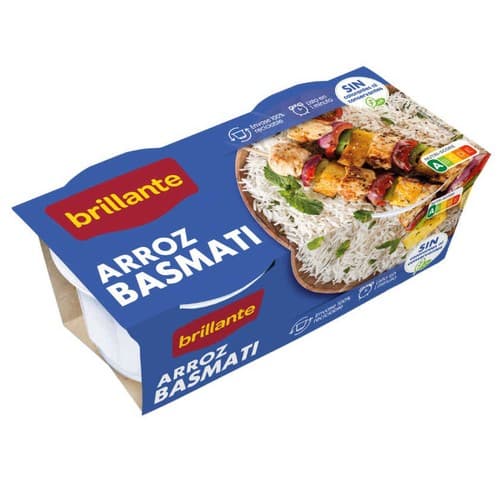 €1.29
€1.29Basmati Rice
BRILLANTE · kg · Bonpreu
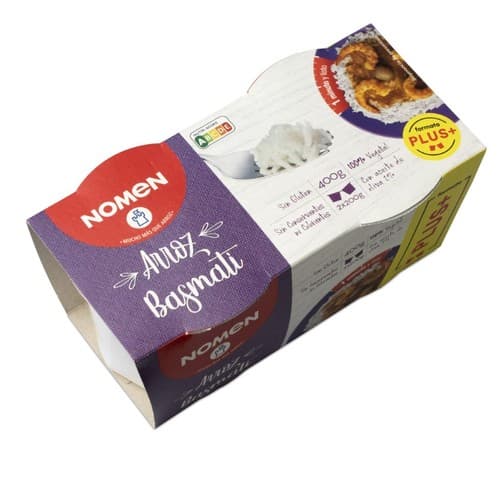 €2.29
€2.29Basmati Rice XL
NOMEN · kg · Bonpreu
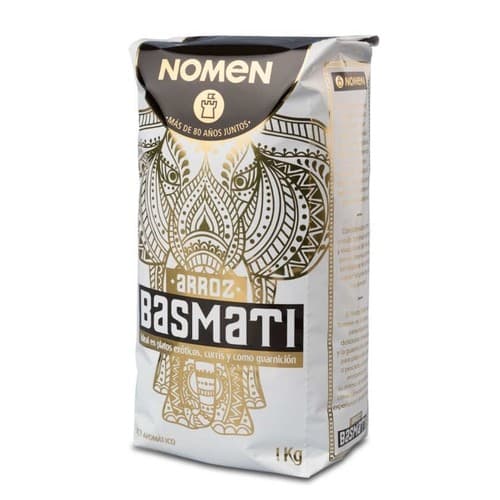 €3.45
€3.45Nomen Basmati Rice
NOMEN · kg · Bonpreu
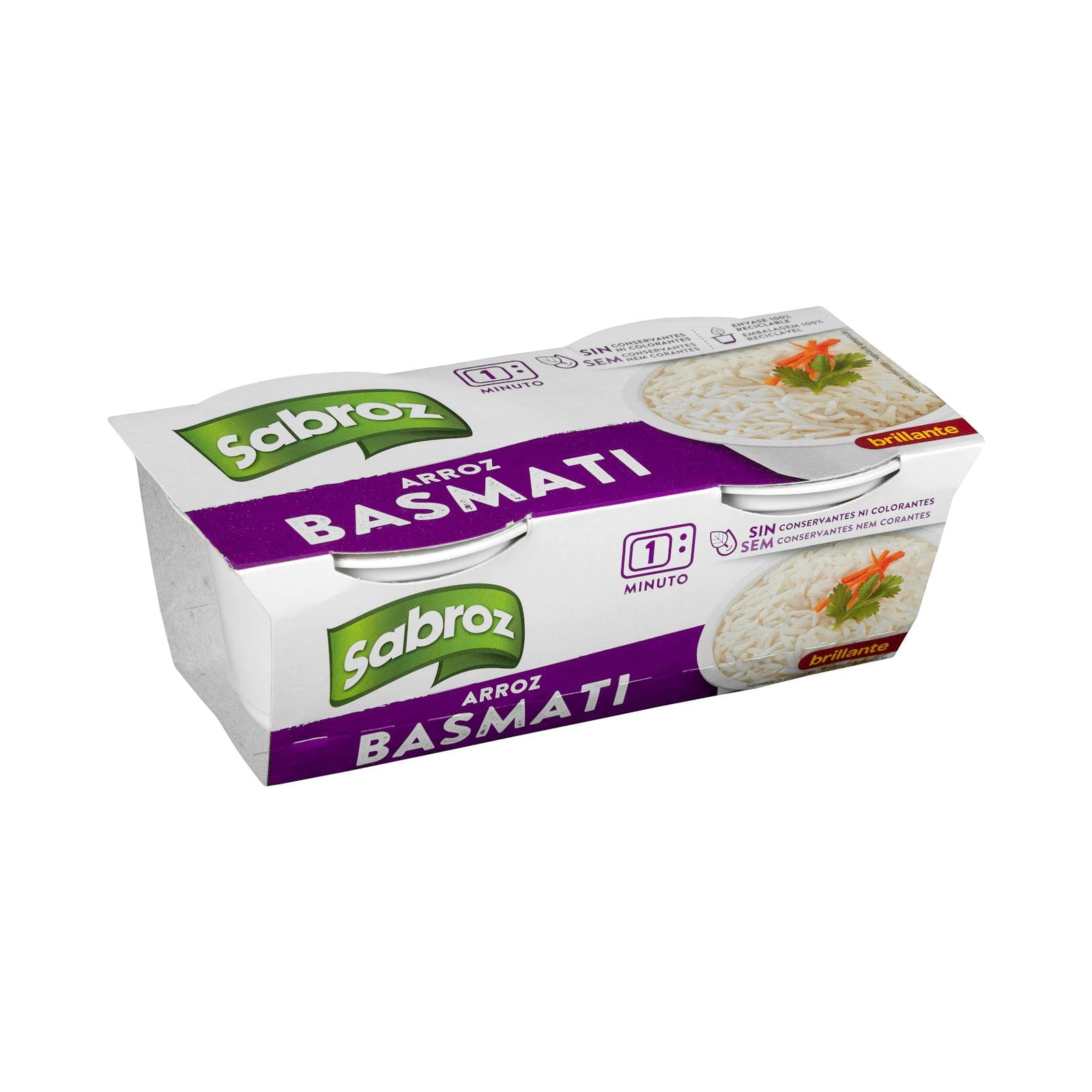 €1.10
€1.10Cooked Basmati Rice
Sabroz · 250 g · Mercadona
 €2.10
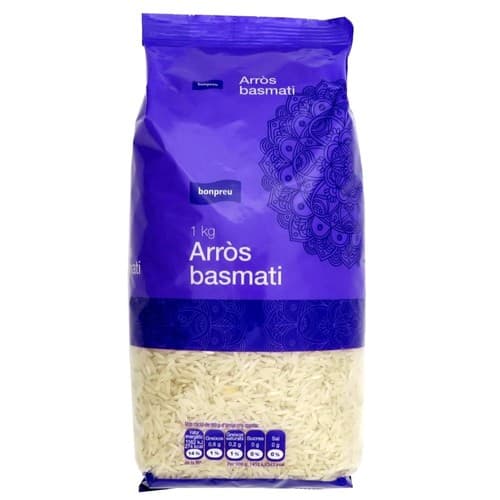
€2.10Bonpreu Basmati Rice
BONPREU · kg · Bonpreu
 €2.10
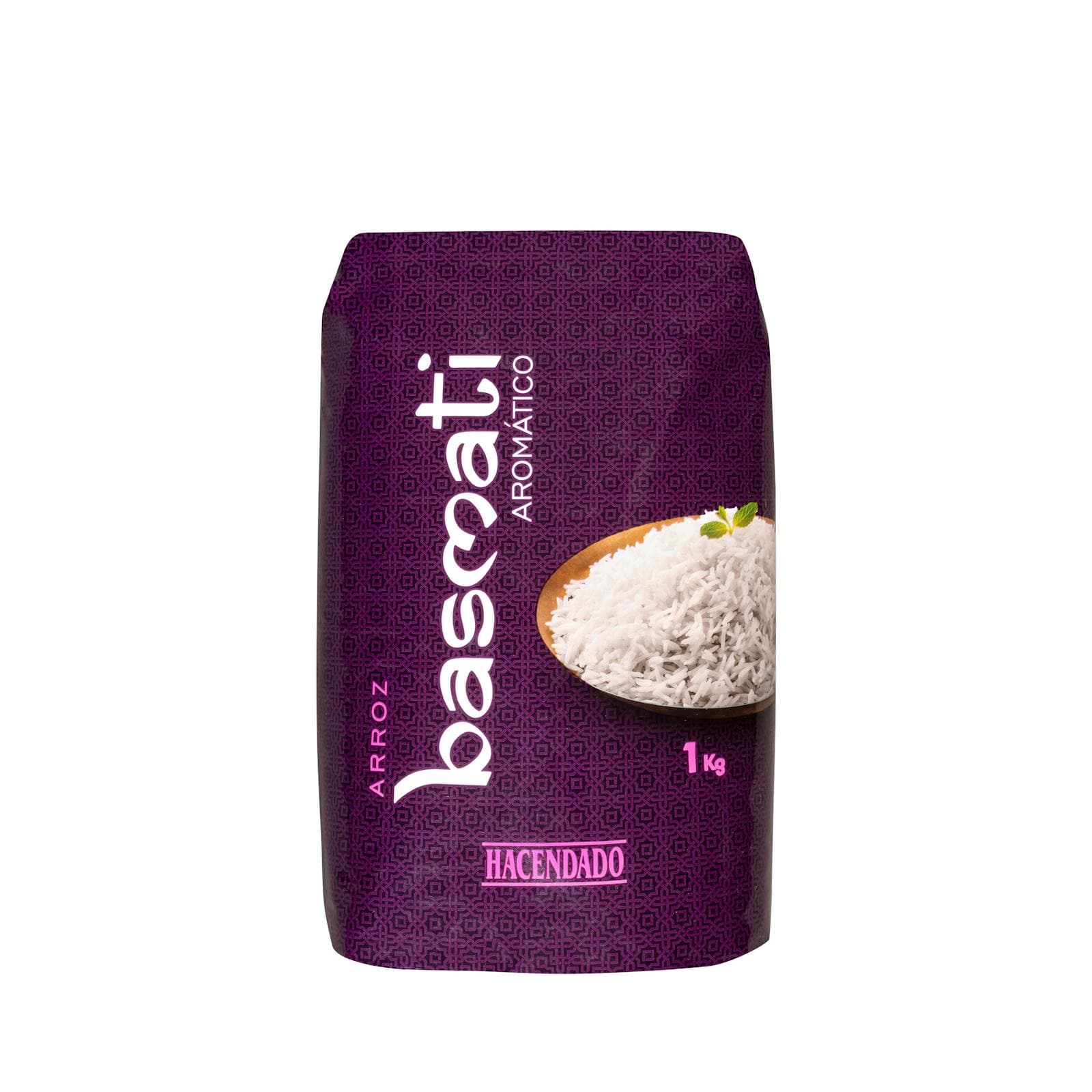
€2.10Aromatic Basmati Rice
Hacendado · 1 kg · Mercadona
Good to know
- Flavor & texture
- Nutty, floral aroma; long, slender, dry, separate grains
- Cook ratio & time
- 1 part rice : 1.5 parts water, simmer 10–12 min, rest 10 min
- Soak?
- Yes — rinse until clear, then soak 20–30 min for maximum elongation
- Nutrition
- ~130 kcal/100g cooked; ~3g protein; lower glycemic index than most white rice
- How to store
- Airtight and dry; ages well — older grains cook fluffier
Substitutes
- Jasmine rice — The other great aromatic long-grain; softer and a touch stickier, more floral.
- Long-grain white rice — Neutral and reliable but without the aroma or elongation.
- Brown basmati — Same variety with the bran on — nuttier and chewier.
Also called
arroz basmati
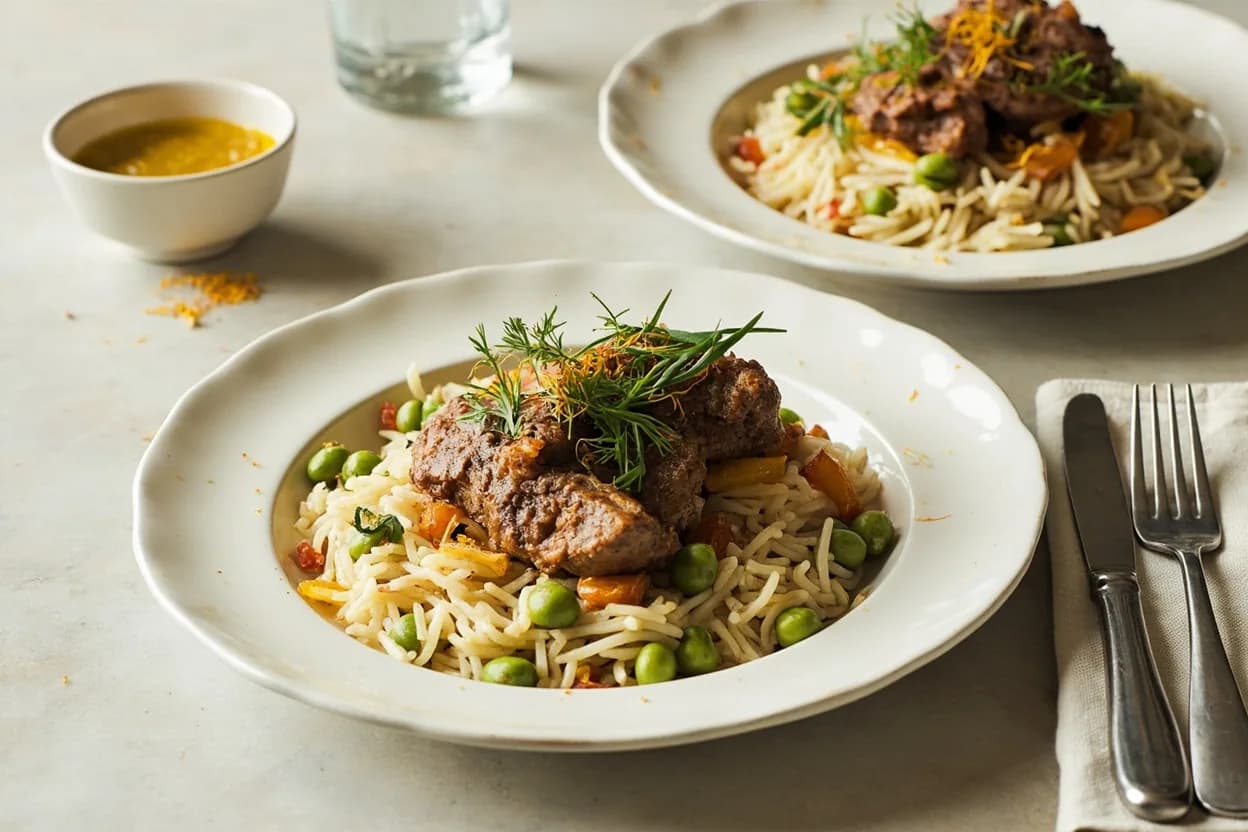
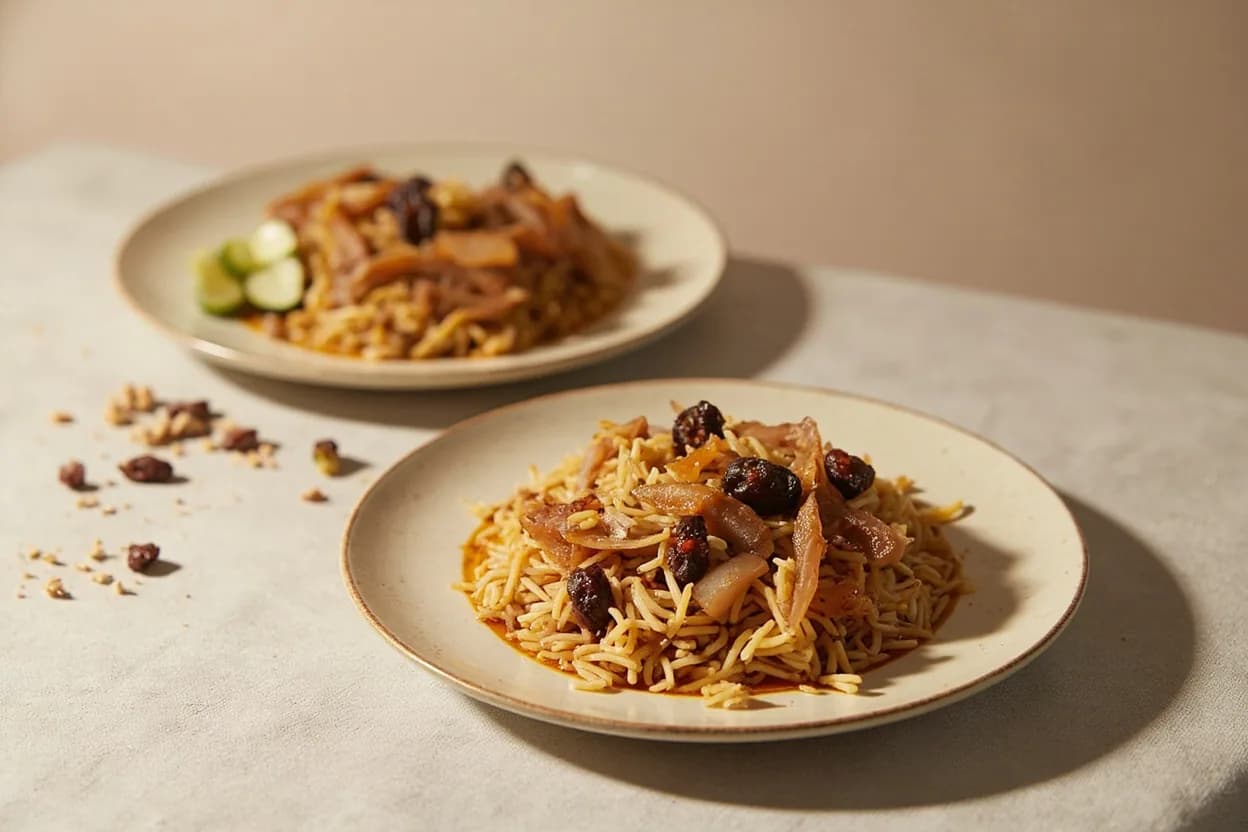
Appears in these dishes
Related

White Rice
Fluffy long-grain rice — the neutral base for almost any meal

White Bread
Soft sandwich loaf for toast, sandwiches, and crumbs
Brown Rice
Nutty, whole-grain rice with chew and extra fiber
Jasmine Rice
Soft, floral-scented rice that's the pillar of Thai meals
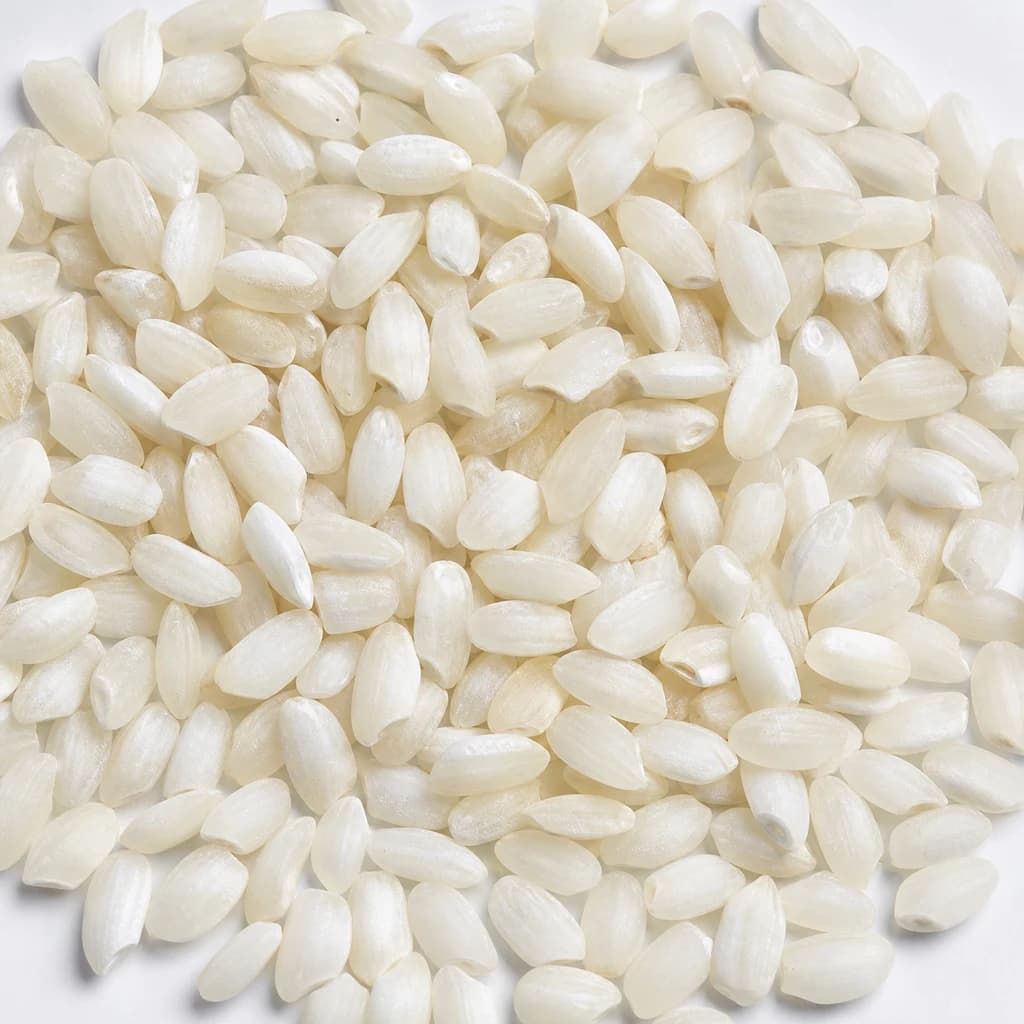
Arborio Rice
Plump, starchy rice that makes risotto creamy
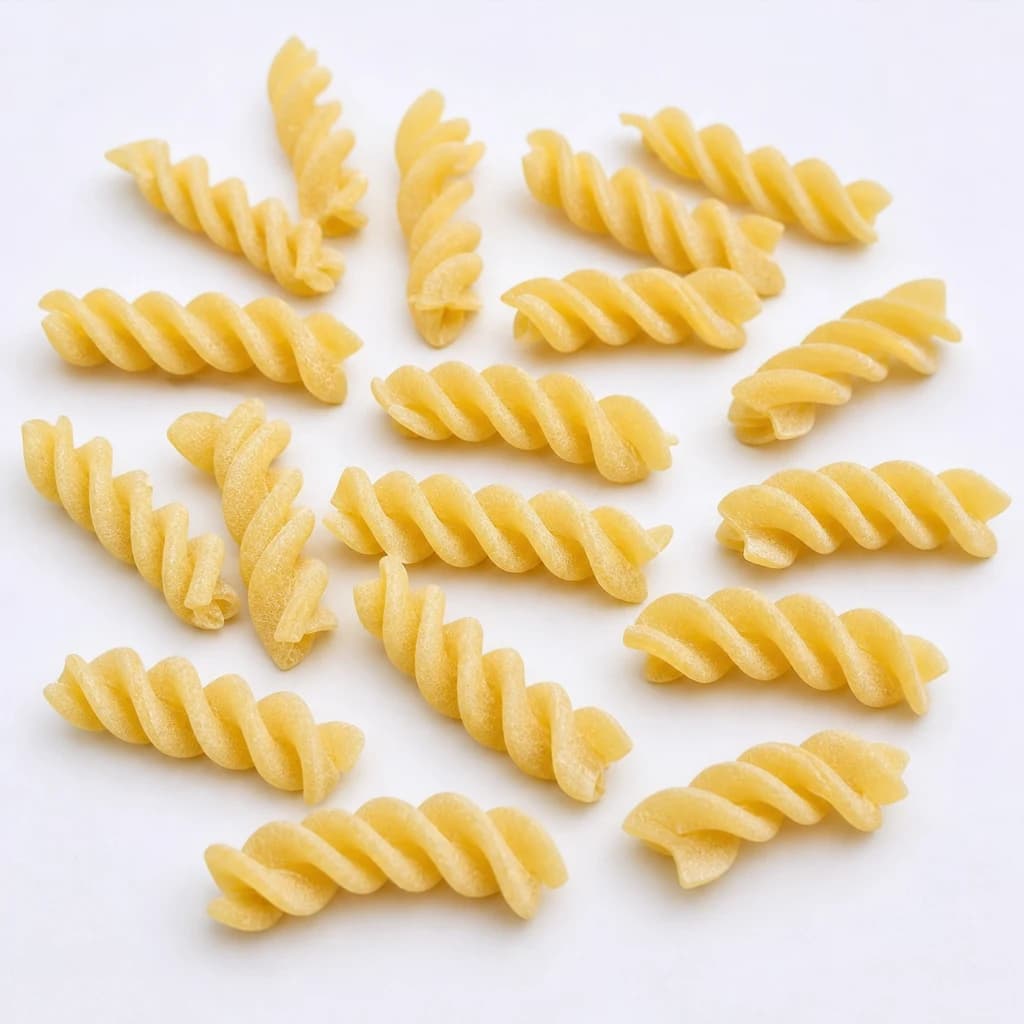
Fusilli
Spiraled pasta that twirls up sauce and dresses cold salads
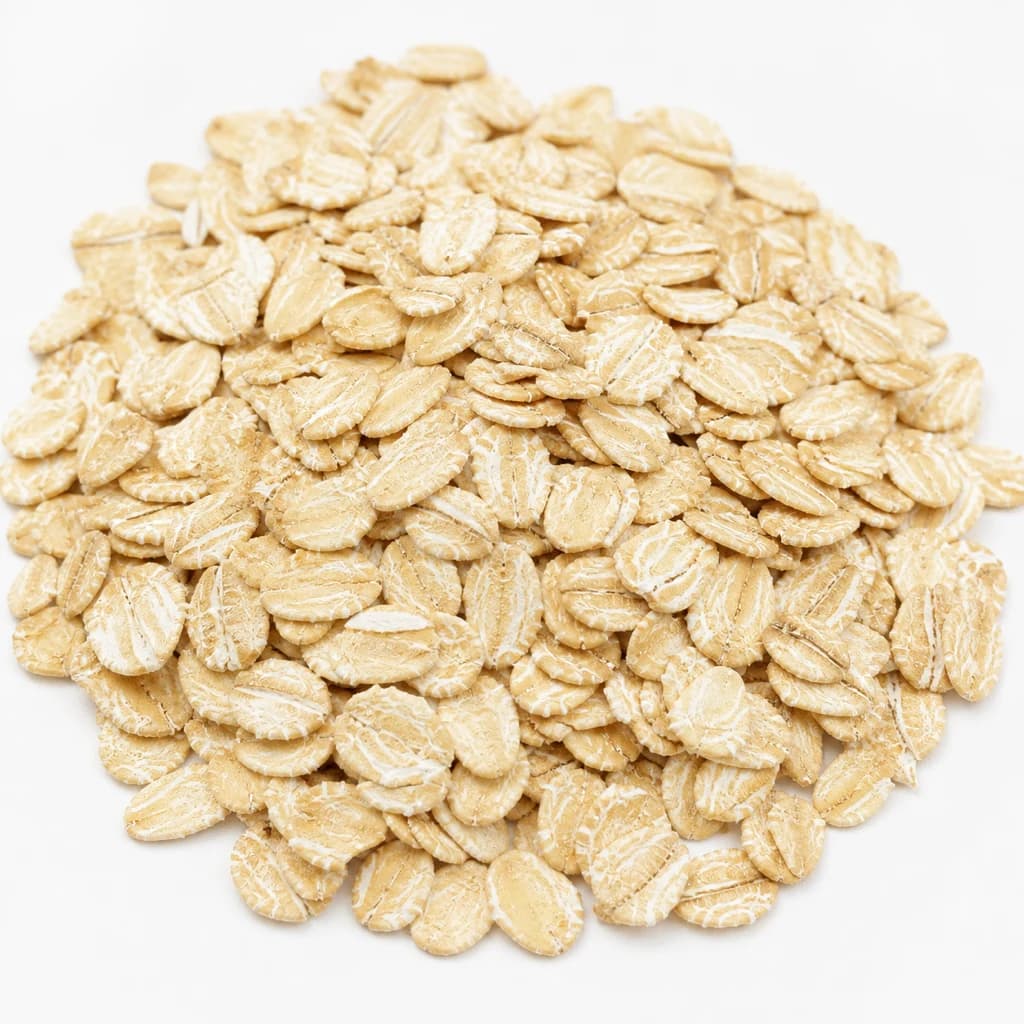
Rolled Oats
Hearty flakes for porridge, granola, and chewy cookies
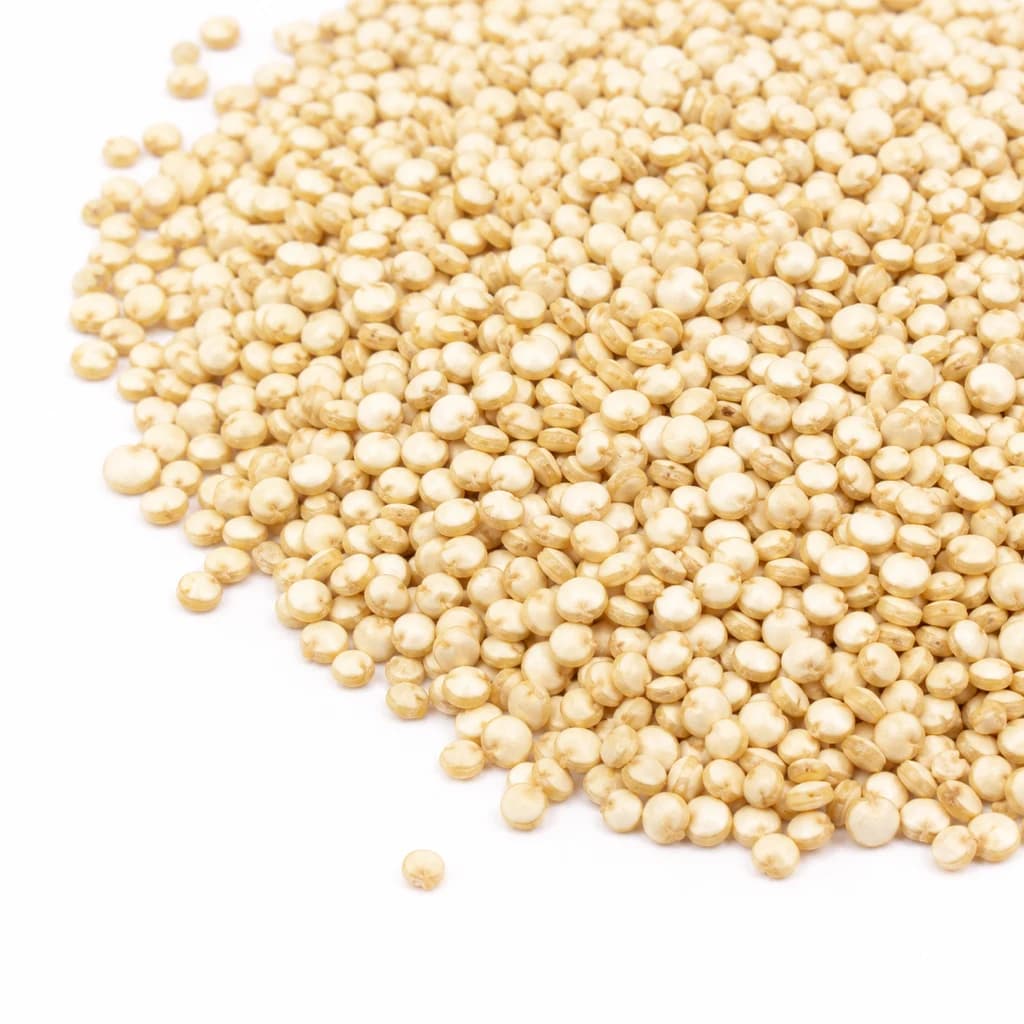
Quinoa
Protein-rich seed that cooks like a fluffy, nutty grain