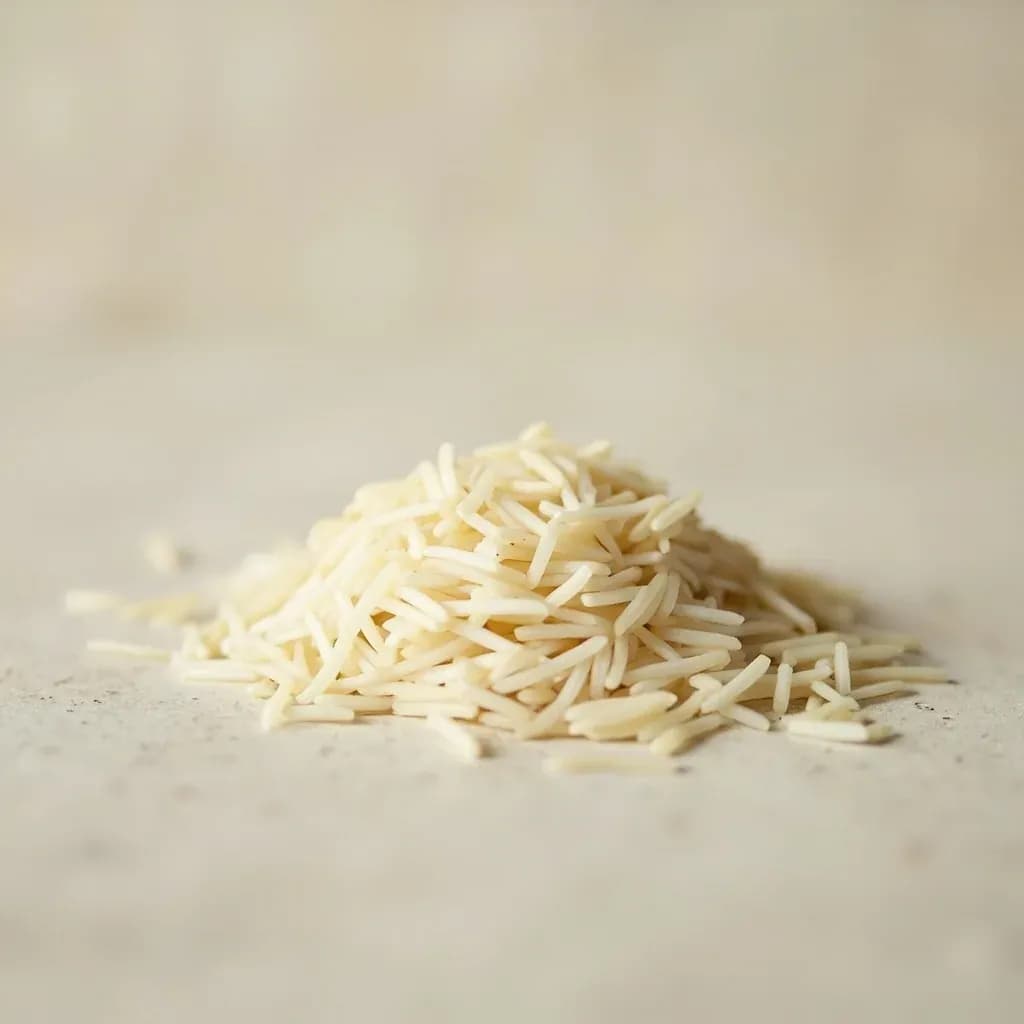
Grains & Rice
Long-Grain Rice
Slender rice that cooks up fluffy and separate, ideal for pilafs and side dishes.
Long-grain rice has slender kernels that stay firm and separate when cooked, thanks to its lower sticky-starch content. It is the go-to for fluffy steamed rice, pilafs, jollof, and biryani-style dishes. Basmati and jasmine are aromatic long-grain types; plain white long-grain is the everyday workhorse.
Long-grain rice is a category of rice distinguished by grains that measure roughly 4–5 times as long as they are wide. The defining characteristic is its high amylose content (20–28%), a straight-chain starch that produces the dry, fluffy, individual grains beloved in pilafs, side dishes, and fried rice. When cooked, amylose molecules prevent the starches from clumping together, giving long-grain rice its signature separated texture that holds up well to sauces and stirring.
The category encompasses both aromatic varieties like Basmati and Jasmine, and non-aromatic workhorse varieties like American long-grain. When a recipe simply calls for "long-grain rice" without specifying a variety, American-style long-grain white rice is the standard assumption in U.S. cooking. Aged Basmati (minimum one year) represents the premium end of the spectrum—the aging process reduces moisture content, allowing grains to elongate more dramatically and develop a more pronounced nutty, floral aroma.
Long-grain rice is one of the most versatile foundations in a cook's pantry. It absorbs flavors well without becoming gummy, maintains structure under the broiler or in a skillet, and stores cooked rice better than sticky varieties. Understanding its behavior—why it stays separate, how to toast it properly, when to let it rest—separates competent rice cooking from truly excellent results.
- Measured in
- g
- Storage
- Pantry
Types & varieties
Longest-grained variety; aged in India/Pakistan; distinct nutty, floral aroma; grains elongate significantly when cooked. Look for aged Basmati (at least 1 year) for best texture.
Thai variety; softer, slightly more moist than Basmati; faint floral scent; grains cling very slightly more than true Basmati. Preferred for Southeast Asian dishes.
Grown primarily in Arkansas, Louisiana, and Texas; milder flavor than Basmati or Jasmine; very dry and fluffy when cooked; most common in U.S. supermarket brands.
Heirloom variety from South Carolina; slightly tan-grained; rich, almost buttery flavor; prized for Lowcountry pilafs and Carolina gold rice dishes.
American hybrid of Basmati and long-grain; combines Basmati-like elongated grain with domestic ease of cultivation.
Common uses
Tips & pitfalls
- Rinse thoroughly in cold water until water runs clear — removes excess surface starch that causes clumping.
- Toast rice in 1–2 tbsp fat (butter, oil) over medium heat for 2–3 minutes before adding liquid — deepens flavor and improves texture.
- Use the absorption method for reliable, consistent results: measure water precisely and do not lift the lid during cooking.
- Let cooked rice rest covered for 5–10 minutes after turning off heat — allows moisture to redistribute and grains to firm up.
- Fluff with a fork, not a spoon, to preserve individual grains.
- For the fluffiest rice, spread hot cooked rice on a sheet pan to steam-dry briefly before serving.
Nutrition
Energy
1527 kJ · per 100 g
Where the calories come from
Protein
7.1g
14% DV
Carbs
80g
29% DV
Fat
0.7g
1% DV
Fiber
1.3g
5% DV
Sugars
0.1g
of which
Sodium
5mg
0% DV
Source · USDA FoodData Central · Rice, white, long-grain, regular, raw, enriched
View on FDC →In the shops
Matched grocery products
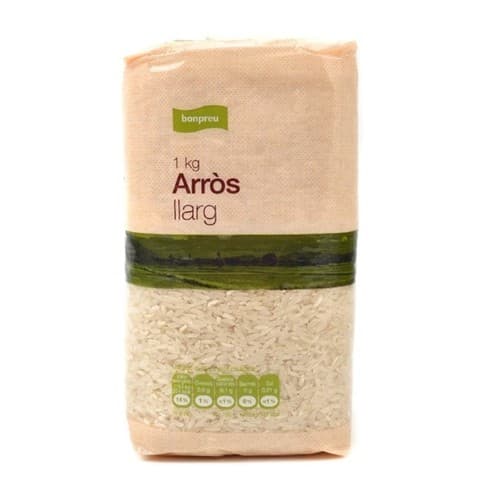 €1.19
€1.19Long Grain Rice
BONPREU · kg · Bonpreu
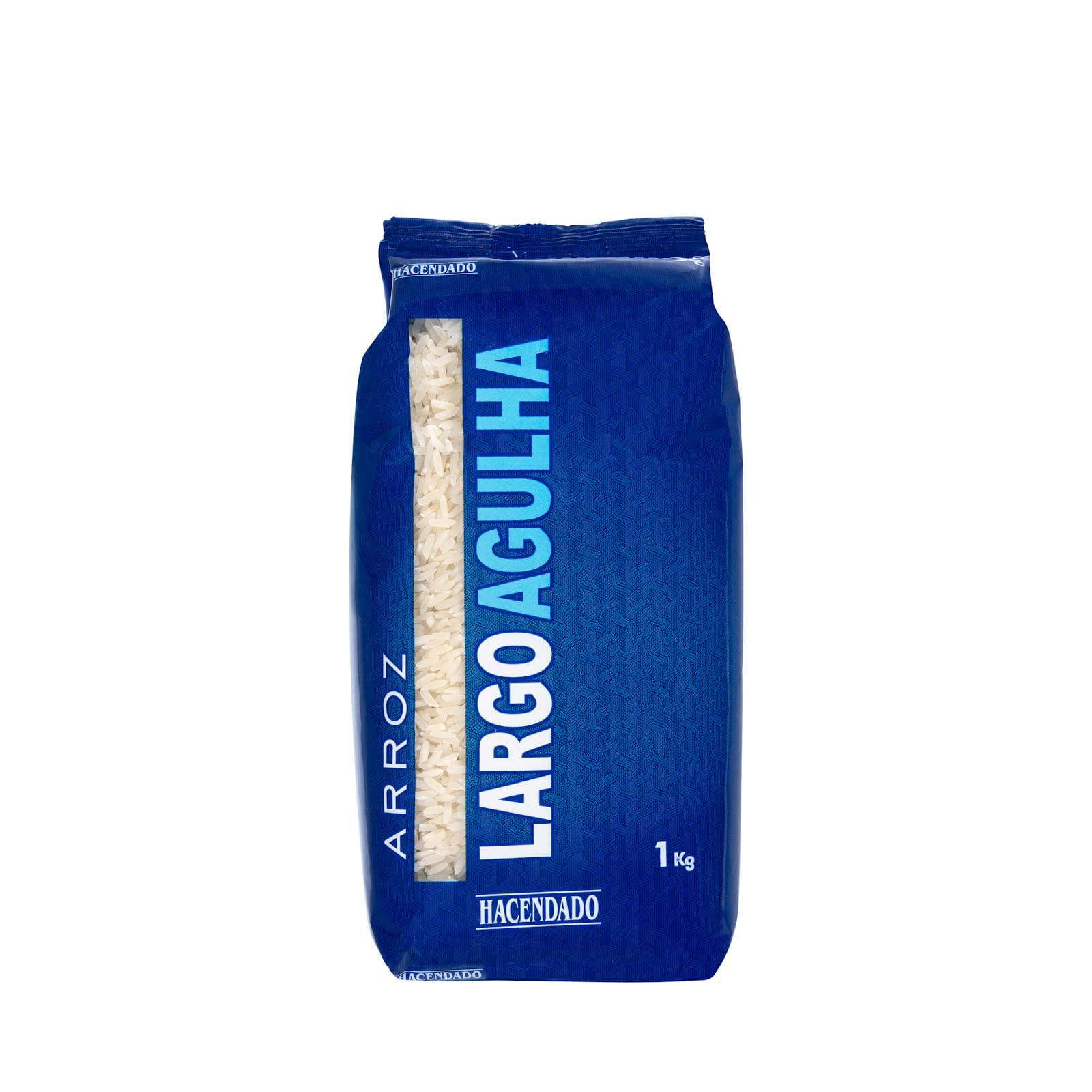 €1.25
€1.25Long Grain Rice
Hacendado · 1 kg · Mercadona
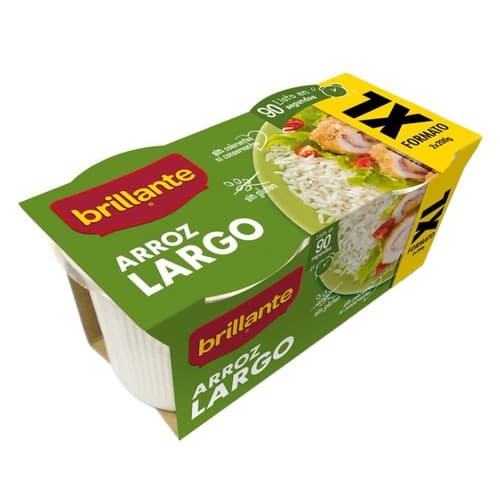 €1.95
€1.95Brillante XL Long Grain Rice
BRILLANTE · kg · Bonpreu
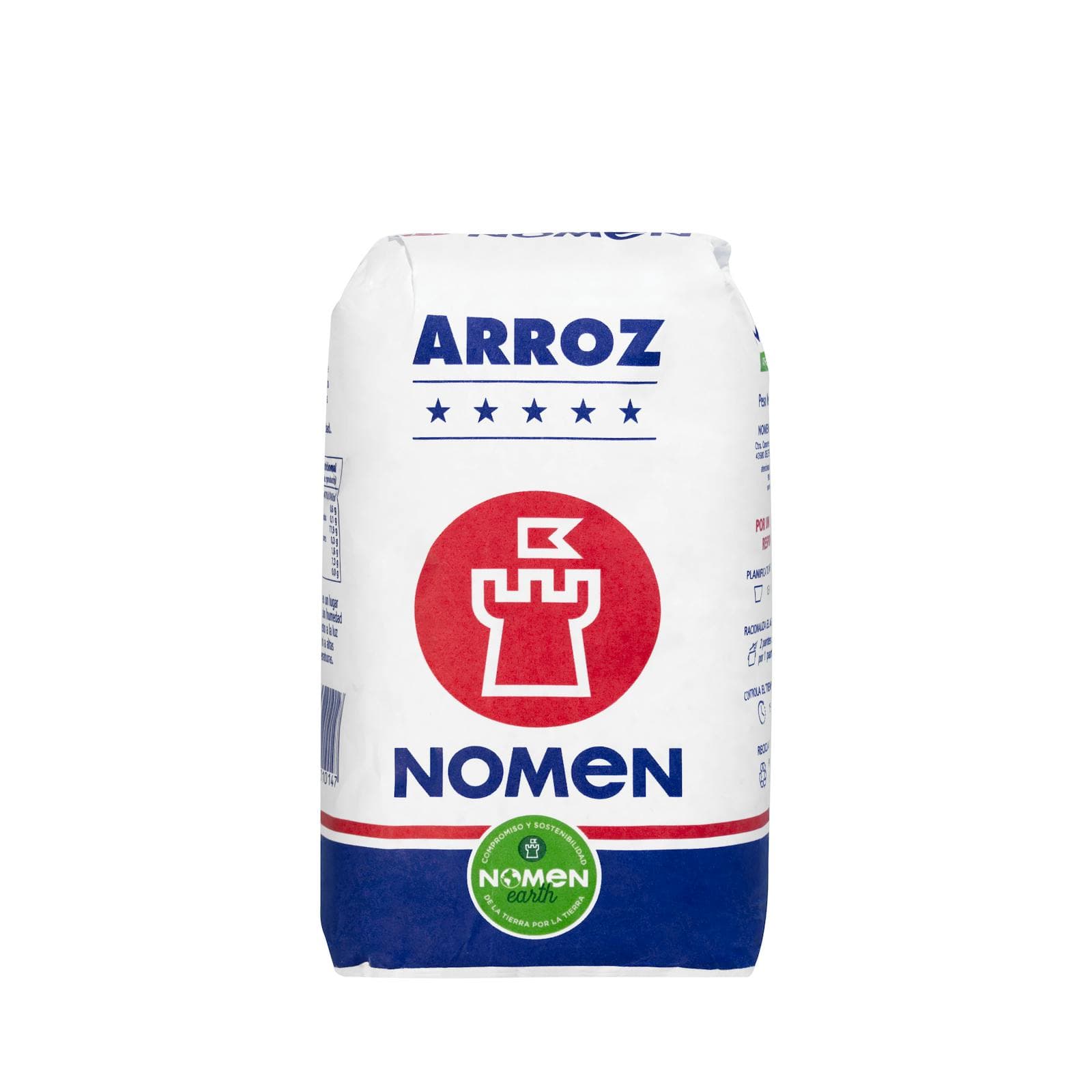 €1.89
€1.89Nomen Rice
Nomen · 1 kg · Mercadona
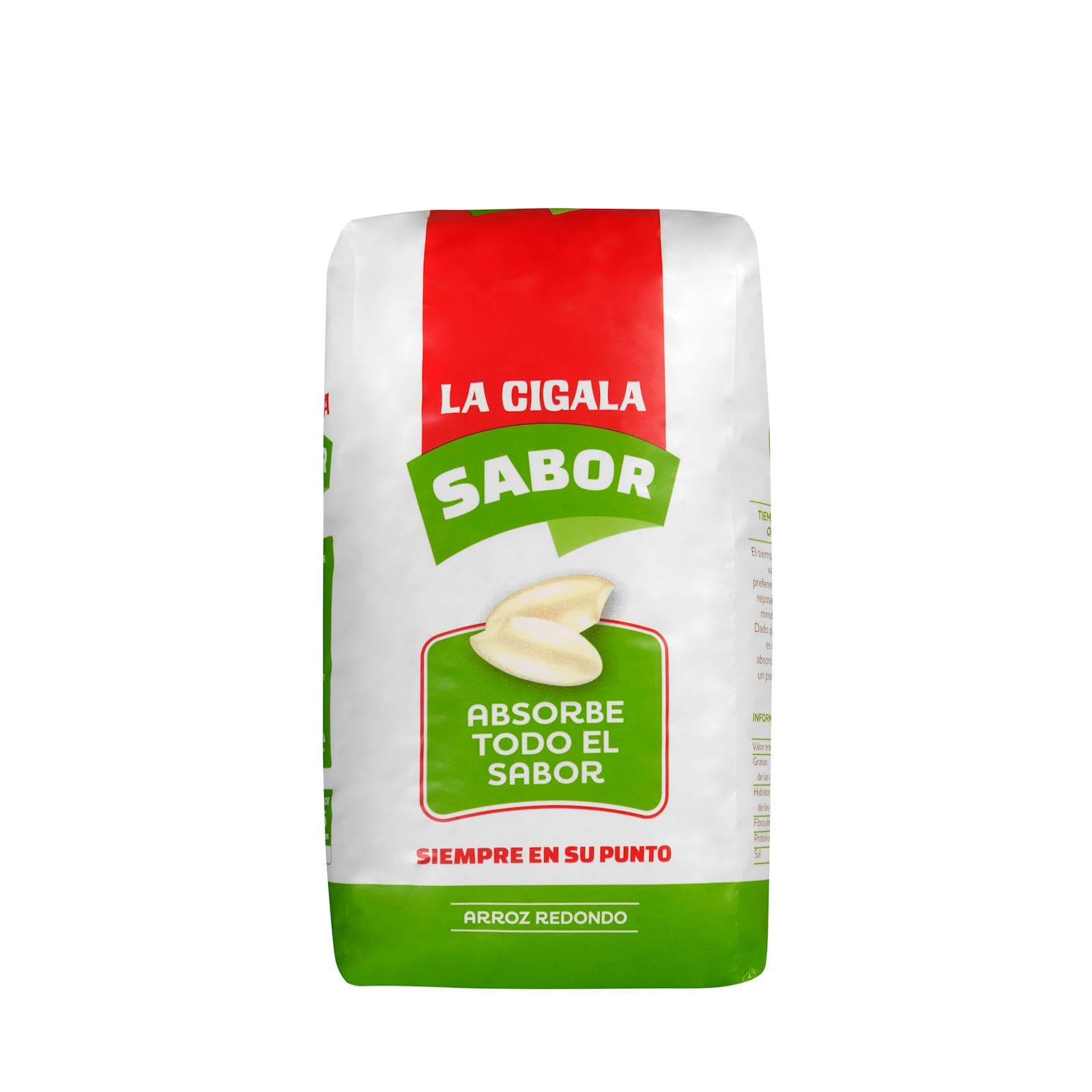 €2.45
€2.45Round Rice Sabor
Sabor · 1 kg · Mercadona
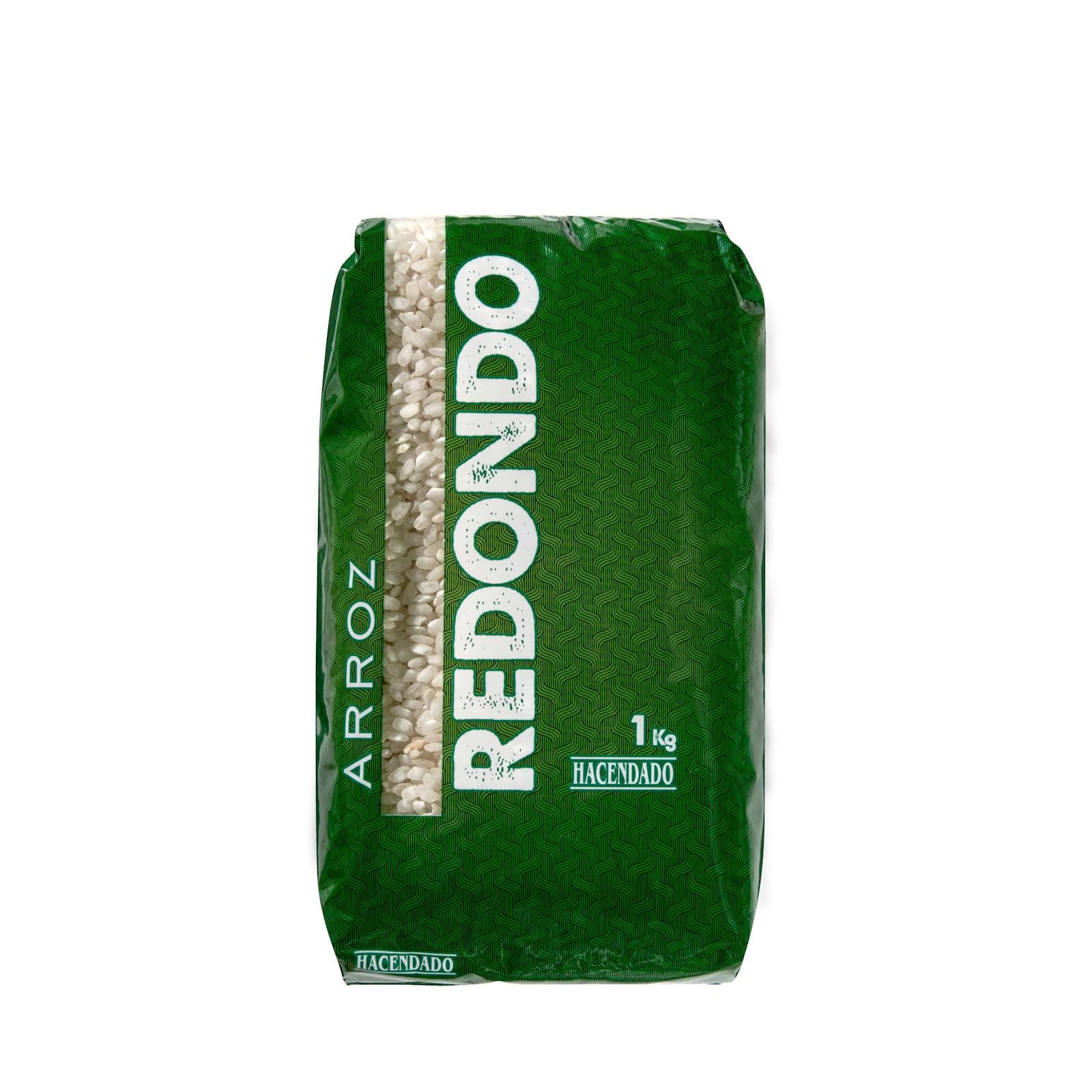 €1.30
€1.30Round Rice
Hacendado · 1 kg · Mercadona
Good to know
- Grain dimensions
- Length typically 4–5× the grain's width
- Starch composition
- High amylose (20–28%), low amylopectin — causes grains to remain separate when cooked
- Water ratio (absorption method)
- 1 cup rice to 1.5–1.75 cups water or stock
- Typical cook time
- 18–25 minutes, followed by 5–10 minutes covered resting
- Uncooked storage
- In airtight container in cool, dry place; keeps indefinitely
- Cooked storage
- Refrigerate up to 5 days; freeze up to 6 months
- Origin
- Cultivated in Asia for thousands of years; major global production in India, Pakistan, Thailand, Vietnam, and the United States
Substitutes
- Medium-grain white rice — Will be slightly softer and less separate; acceptable in a pinch for stuffed peppers or salads.
- Converted (parboiled) rice — Keeps shape and stays separate well; firmer texture and slightly nuttier; water ratio differs — follow package.
- Quinoa — Dissimilar flavor but comparable fluffy, separate texture; good for gluten-free or protein-rich substitution.
- Bulgur wheat (fine grade) — Completely different grain; works in Middle Eastern pilafs but has a distinctly different taste and texture.
Pairs with
Also called
Long-Grain White Rice
Appears in these dishes
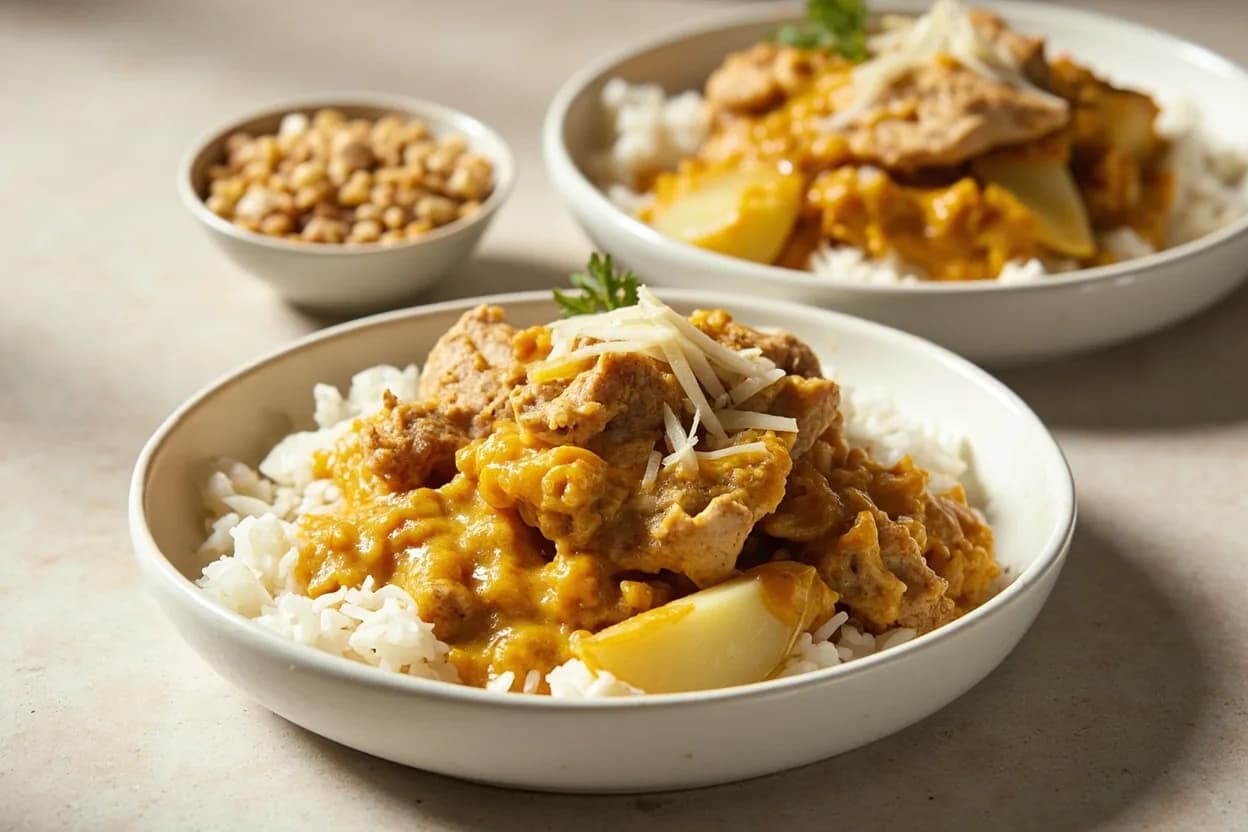
Related

White Rice
Fluffy long-grain rice — the neutral base for almost any meal

White Bread
Soft sandwich loaf for toast, sandwiches, and crumbs
Brown Rice
Nutty, whole-grain rice with chew and extra fiber

Basmati Rice
Fragrant, long-grain rice that cooks up light and separate
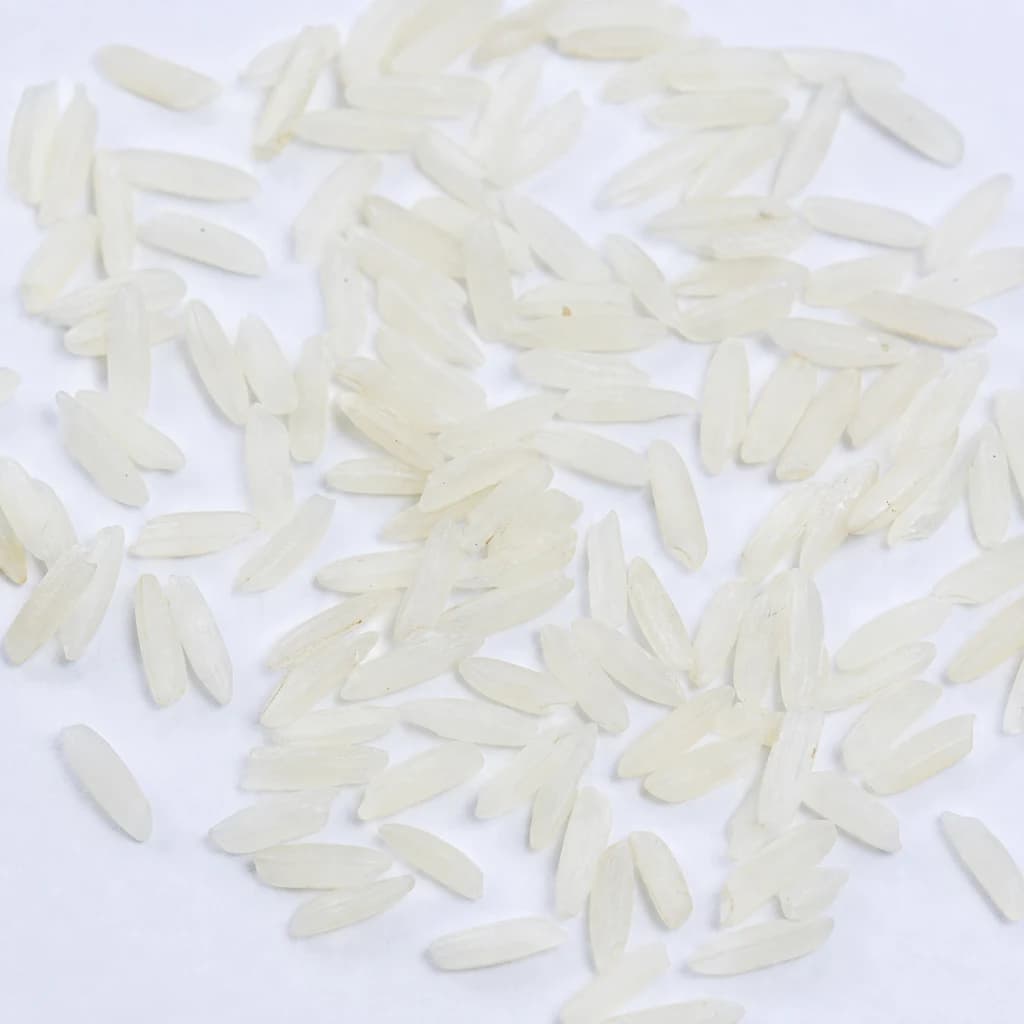
Jasmine Rice
Soft, floral-scented rice that's the pillar of Thai meals
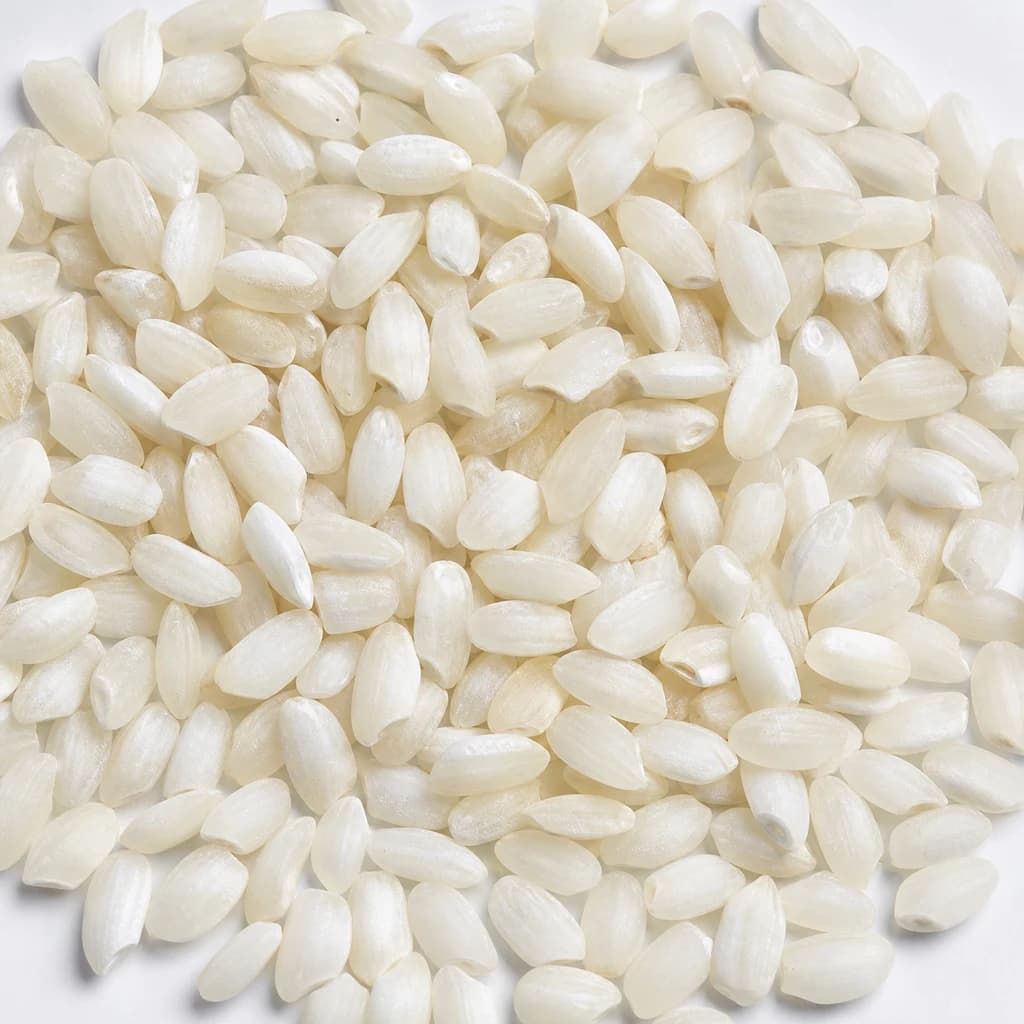
Arborio Rice
Plump, starchy rice that makes risotto creamy
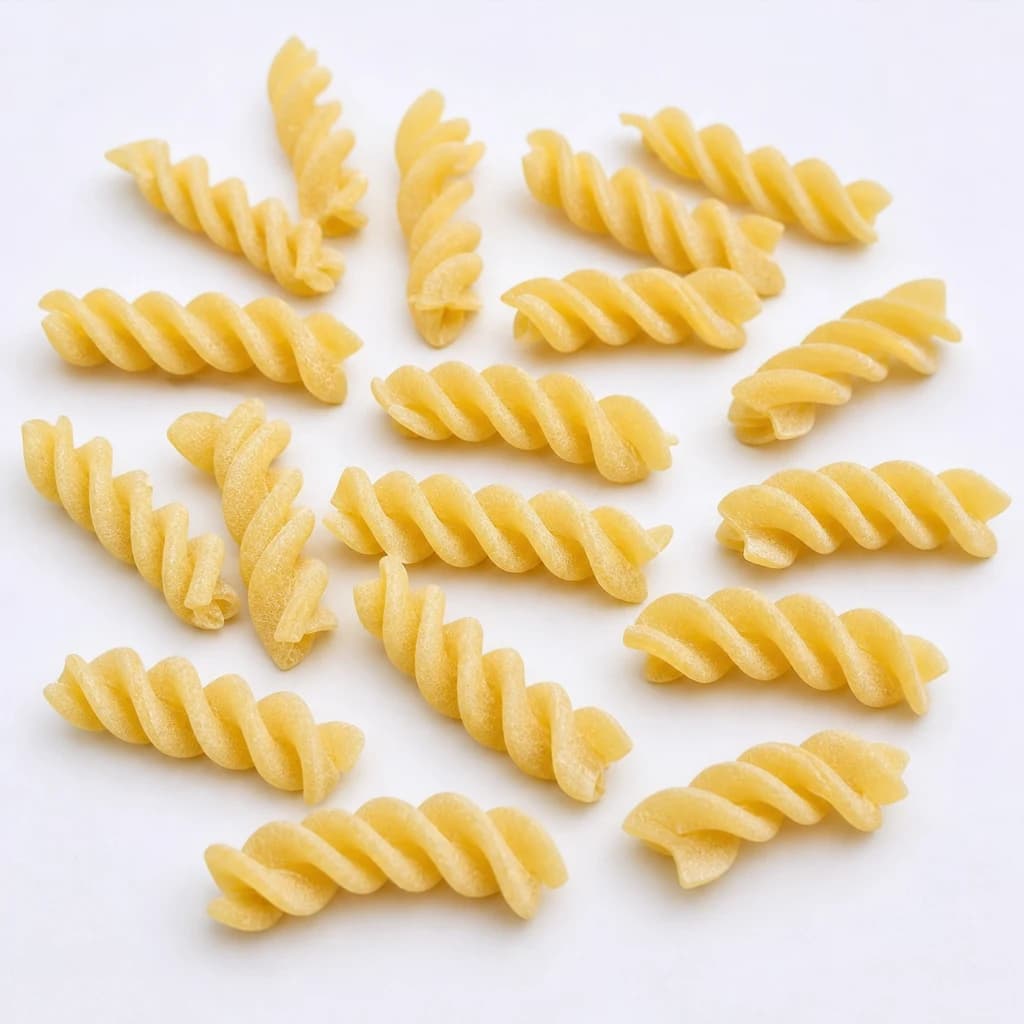
Fusilli
Spiraled pasta that twirls up sauce and dresses cold salads
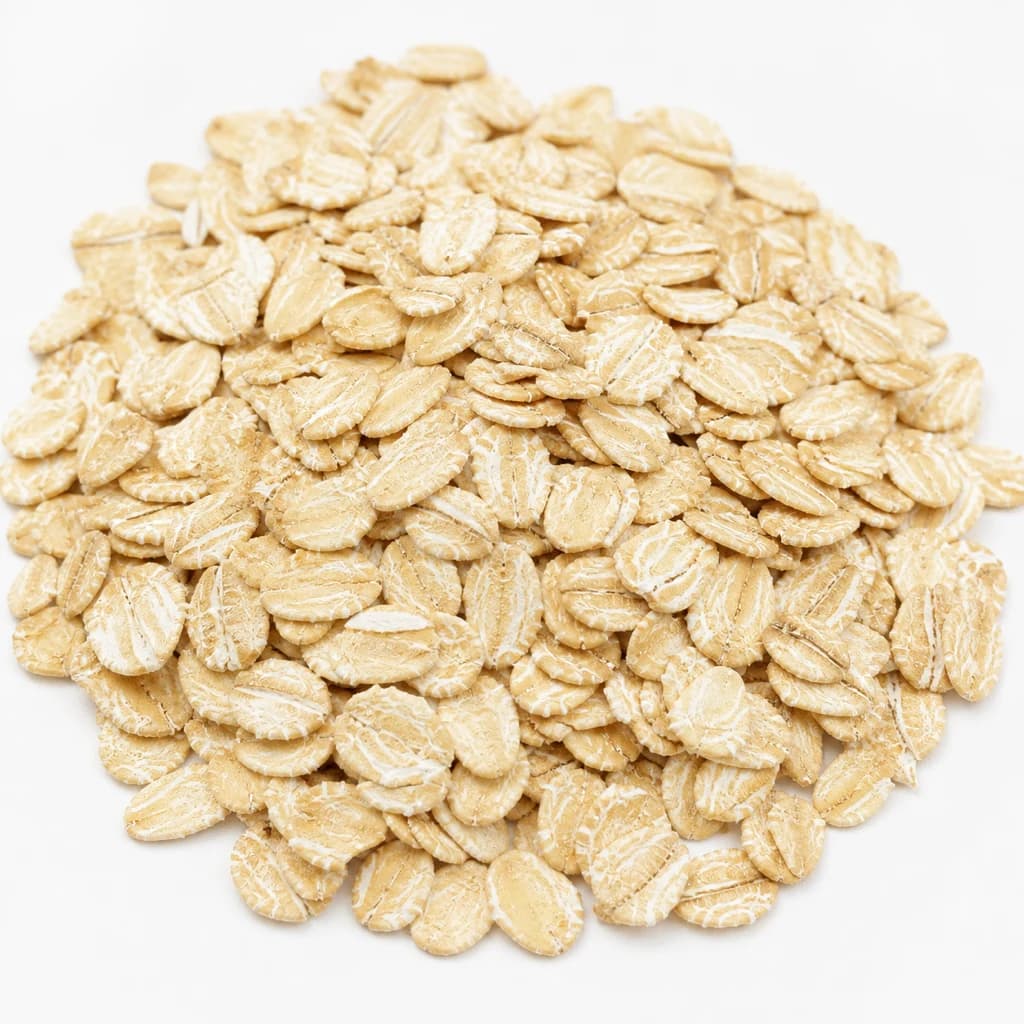
Rolled Oats
Hearty flakes for porridge, granola, and chewy cookies