Baking
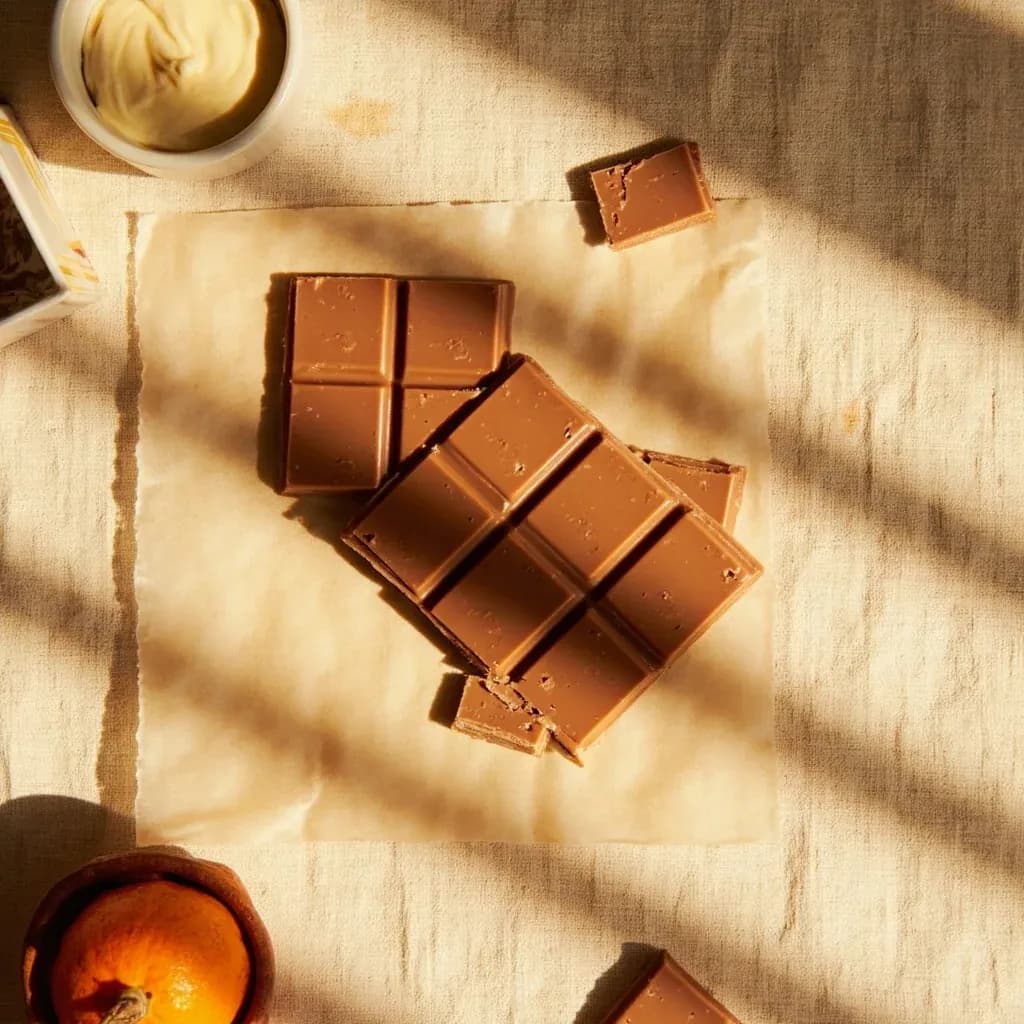
Milk Chocolate
Sweeter chocolate with added milk solids (often 30–45% cocoa); melts softer and scorches more easily than dark, so it behaves differently in ganache and bakes.
Milk chocolate is the sweetened, dairy-fortified form of eating chocolate — cocoa solids and cocoa butter cut with sugar and milk solids (powdered or condensed), plus an emulsifier such as soy or sunflower lecithin and usually vanilla. Daniel Peter, a Swiss chocolatier in Vevey, invented it in 1875 using the milk powder his neighbor Henri Nestlé had just developed, and the category has dominated confectionery ever since. In practice it is defined less by cocoa percentage than by balance: typical bars run 30–45% cocoa solids, with sugar and milk sharing the rest, and that ratio is what gives milk chocolate its mellow, creamy character compared with the sharper, more acidic bite of dark chocolate.
In the kitchen, milk chocolate behaves noticeably differently from dark. Its milk proteins scorch at lower temperatures, it begins melting around 30–32°C (86–90°F) and is fully molten by about 45–48°C (113–118°F), and it seizes just as readily from a drop of water. The sugar and milk fat also make the finished product softer: a milk chocolate ganache sets looser than the equivalent dark, an enrobed bonbon has a gentler snap, and a baked good finishes sweeter with less bitter edge. None of these are problems to fix — they are qualities to design around.
Working with it well comes down to gentle, even heat and disciplined temperature control. Chop it fine, melt it low, keep water away from it, and temper it to a working range of 29–31°C (84–88°F) if you want a glossy finish and a clean release from molds. Treated that way, milk chocolate is one of the most forgiving and rewarding ingredients in the pastry kitchen.
- Measured in
- g
- Storage
- Dark Cool
Allergens
Find it in
Suits
Types & varieties
High cocoa-butter content (31–39%), fluid when tempered; favored by pastry chefs for enrobing and molding.
Replaces cocoa butter with palm or other vegetable fats; no tempering required but flavor and mouthfeel are inferior.
Milk chocolate blended with hazelnut paste (typically 30–40% nuts); originated in Piedmont, Italy.
Smooth and milky, often higher in milk solids; Lindt and Frey are standard examples.
Distinctive caramel-milky flavor from lactose hydrolysis and higher milk fat; Cadbury Dairy Milk is the archetype.
Hershey's is the defining example — milk is treated with butyric acid during processing, creating a sharp, sour-milk tang.
Often higher cocoa content and smoother conche; Callebaut and Belcolade are common professional choices.
Bars from one country or estate (e.g., Madagascar, Dominican Republic); terroir expressed in a sweeter medium.
Working with milk chocolate
The two practical skills that matter most are melting and tempering. Both depend on understanding that milk chocolate is more thermally fragile than dark. The milk proteins and sugars brown and burn easily, and even small amounts of moisture will seize the mass into a stiff, grainy paste that resists recovery. The reward for respecting those limits is chocolate that snaps cleanly, shines on a finished dessert, and tastes of cocoa rather than scorched dairy.
- Chop bars or blocks into small, even pieces (about 1 cm) so they melt uniformly; large chunks overheat at the edges before the center softens.
- Melt over a double boiler, or in the microwave in 20-second bursts at half power, stirring between each. Aim for a smooth, just-melted state at about 45°C — never let it approach a simmer.
- Seed with finely chopped room-temperature chocolate: cool the melt to 27–28°C, add 25–30% seed by weight, stir until smooth, then rewarm to 29–31°C for a glossy, stable working range.
- Test a thin layer on the back of a knife or a piece of parchment. Properly tempered chocolate sets in 3–5 minutes with a shine and a clean snap; if it streaks dull or stays soft, seed again.
Reading a label
The number on the front — "33%," "38%" — almost always refers to cocoa solids, not the proportion of the bar. A 33% milk chocolate sits at the lighter, sweeter end of the range, while a 38% bar edges toward a more pronounced cocoa character. Couverture (high cocoa-butter) chocolate, intended for professionals, often lists 31–39% cocoa butter on the technical sheet and behaves very differently from a standard eating bar.
- EU chocolates must hit 25% cocoa solids and 14% milk solids to be labeled 'milk chocolate.' Anything below that is technically 'family milk chocolate' or similar, with less cocoa and more sugar.
Choosing between styles
Style matters as much as percentage. Swiss bars tend to be smooth and milk-forward; British bars have a softer, more caramelized dairy note; American bars can taste sharper because of how the milk is processed; Belgian and French couverture often have the cleanest, most balanced cocoa. For baking and pastry, reach for couverture: it has more cocoa butter, flows better when tempered, and sets with a finer texture than standard eating bars.
Common uses
Tips & pitfalls
- Melt gently — milk chocolate scorches faster than dark because of the milk proteins; use a double boiler or microwave in 20-second bursts at half power, stirring often.
- Chop finely and evenly so pieces melt uniformly without burning at the edges while the centers stay solid.
- Avoid water — even a drop will seize the chocolate into a grainy, stiff mass; keep bowls, whisks, and spatulas bone dry.
- Temper for a glossy snap and clean release from molds; skip tempering only if using compound chocolate or making ganache where the texture doesn't depend on a set shell.
- When seeding, use finely chopped chocolate at room temperature; cool the melt to 27–28°C (80–82°F) before adding seed, then rewarm to 29–31°C (84–88°F).
- Bloom (white or gray streaks) is fat or sugar migration from temperature swings — still safe to eat, just remelt and retemper.
- Balance sweetness in bakes by reducing added sugar in the recipe, since milk chocolate carries a lot on its own; cut sugar by roughly the chocolate's percentage of the batter's dry weight.
- Boost cocoa intensity in ganache by replacing 10–20% of the milk chocolate with dark chocolate if you want depth without losing creaminess.
- Store wrapped in foil then a zip bag, away from coffee, spices, and onions, which milk chocolate readily absorbs; a few weeks next to a spice rack is enough to taint the flavor.
- Don't refrigerate finished bonbons for long — condensation on the surface ruins snap and sheen; store cool (12–14°C) and dry instead.
Nutrition
Energy
498 kJ · per 100 g
Where the calories come from
Protein
3.1g
6% DV
Carbs
21.2g
8% DV
Fat
2.7g
3% DV
Fiber
0.3g
1% DV
Sugars
20.9g
of which
Sodium
111mg
5% DV
Source · USDA FoodData Central · Milk shakes, thick chocolate
View on FDC →In the shops
Matched grocery products
No matched grocery products for Milk Chocolate yet.
Good to know
- Invention
- Created in 1875 by Swiss chocolatier Daniel Peter in Vevey, with milk powder supplied by his neighbor Henri Nestlé.
- Composition
- Cocoa solids, cocoa butter, sugar, milk solids (powder or condensed), emulsifier (usually soy or sunflower lecithin), and often vanilla.
- U.S. FDA standard
- Must contain at least 10% chocolate liquor and 12% milk solids; minimum 3.39% milk fat.
- EU standard
- Minimum 25% cocoa solids and 14% milk solids; must be named 'milk chocolate' to meet this threshold.
- Typical cocoa range
- 30–45% cocoa solids, with the remainder made up of sugar and milk solids.
- Melting range
- Begins melting around 30–32°C (86–90°F); fully molten around 45–48°C (113–118°F).
- Tempering range
- Melt to ~45°C, cool to 27–28°C, rewarm to 29–31°C (seed method) for a glossy snap.
- Storage
- 12–14°C (55–57°F), 50–55% humidity, away from light and strong odors; well-wrapped, 6–12 months.
Substitutes
- Dark chocolate + milk powder + sugar — Approximate ratio: melt 70% dark chocolate with 1–2 tbsp milk powder and 1 tbsp sugar per 100 g; closer in body but not identical in flavor.
- Semi-sweet chocolate + sweetened condensed milk — For ganache-like applications; the dairy brings sweetness and creaminess but lacks the same cocoa balance.
- White chocolate + Dutch-process cocoa — Melt white chocolate with about 1 tsp cocoa per 100 g for color and slight bitterness; very different profile, last-resort option.
- Compound milk chocolate — Easy substitute for coating and molding where tempering isn't desired; flavor is noticeably waxy and flat.
- Caramelized white chocolate (e.g., Valrhona Dulcey) — For applications where a toffee-like, golden sweetness is acceptable; not interchangeable in delicate bakes.
Pairs with
Also called
milk couverture
Appears in these dishes
Related

All-Purpose Flour
The do-anything flour for bread, cakes, sauces, and dredging

Bread Flour
High-protein flour for chewy, well-risen breads
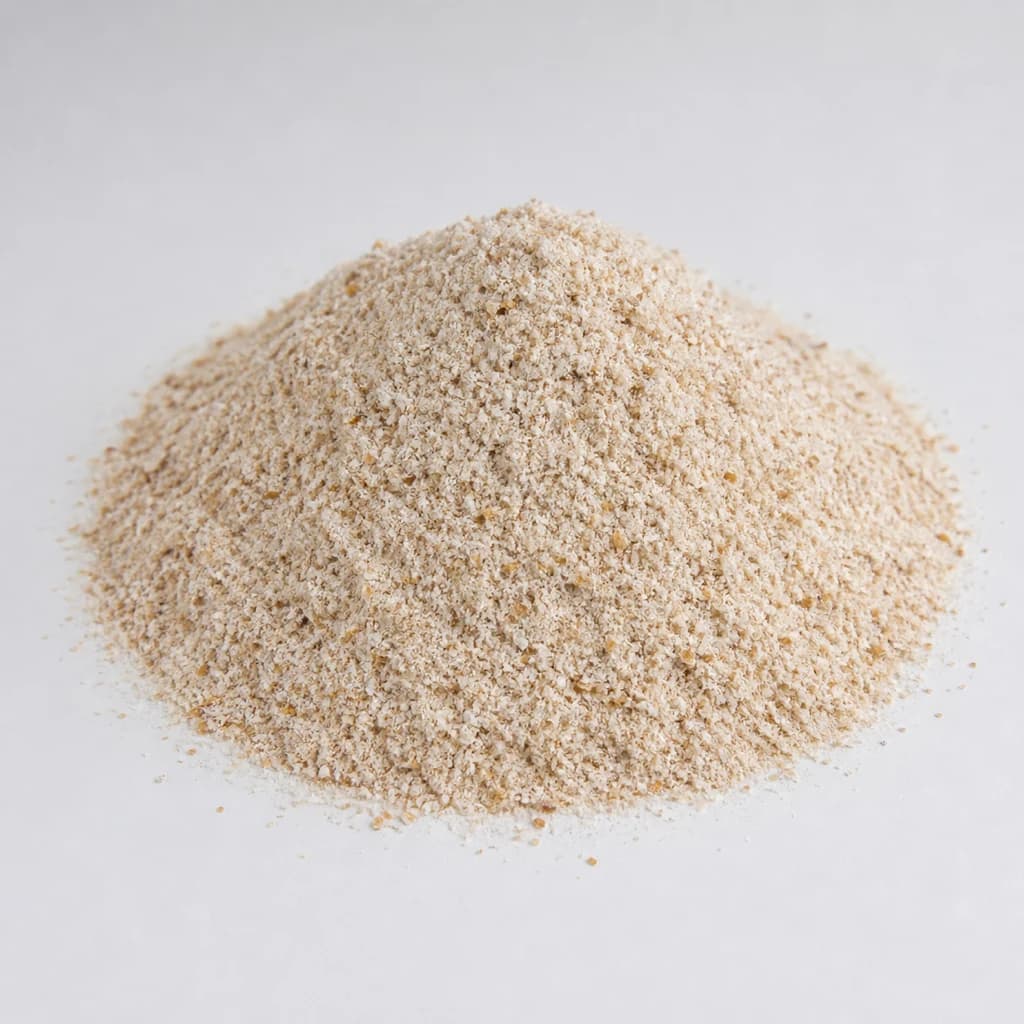
Whole Wheat Flour
Nutty, whole-grain flour for hearty breads and bakes
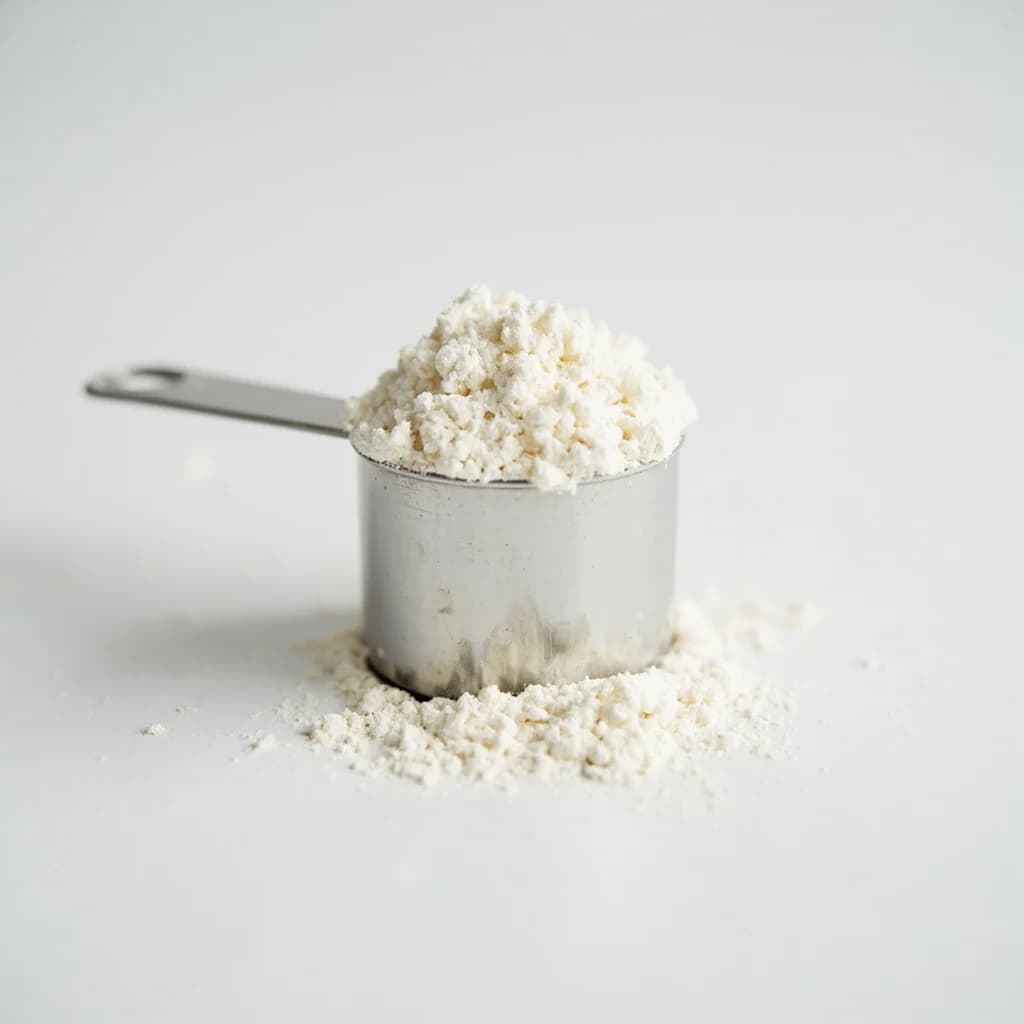
Cake Flour
Fine, low-protein flour for tender, delicate cakes
Almond Flour
Nutty, gluten-free flour for macarons and tender bakes

Baking Powder
All-in-one leavener for fluffy cakes, pancakes, and biscuits

Baking Soda
Pure leavener that needs acid to lift — and tenderize
Yeast
Living leaven that makes bread rise and dough come alive