Sauces & Pastes
Gochujang
Korean fermented red chili paste — sweet, savory, deeply umami with a slow building heat
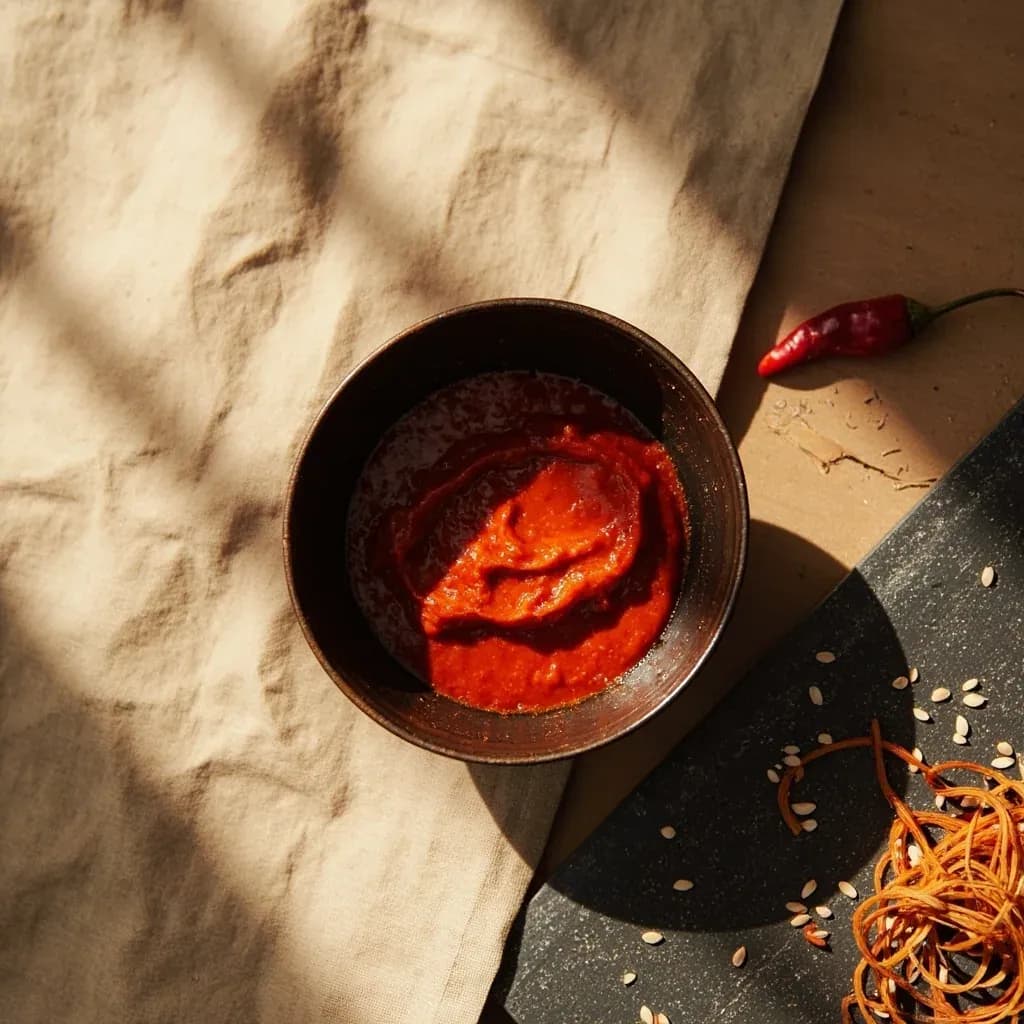
Gochujang is one of the three foundational jangs of the Korean pantry, sitting alongside doenjang (fermented soybean paste) and ganjang (soy sauce). Unlike a pure chili paste such as sambal, its character is built on a fermented grain base — traditionally glutinous rice, sometimes barley or wheat — that is inoculated, salted, and aged with gochugaru (Korean red chili powder) and powdered fermented soybean (mejugaru). The result is a thick, sticky, brick-red paste whose flavor swings across multiple taste registers at once: savory and deeply umami from the fermented grains, a slow-building sweetness from rice and soybean, restrained salt, and a heat that blooms on the palate rather than punching the tongue. That fermented grain backbone is what separates gochujang from chili pastes elsewhere in Asia; the heat is present but never the headline, and a good paste is more about savoriness than spice.
In Korean cooking, gochujang behaves less like a condiment squeezed from a tube and more like a building block. It is bloomed in oil to deepen its umami, whisked into marinades where its sugars feed caramelization on the grill, stirred into stews and jjigae where it provides body and color, and combined with doenjang, sesame oil, and aromatics to make ssamjang. Western cooks often reach for it the way they would sriracha, which is the first mistake: gochujang is denser, saltier, sweeter, and far more fermented, and it almost always wants company — a sweetener, an acid, garlic, and toasted sesame — to land properly in a dish. Treat it as a sauce base and a flavor engine, and it rewards you with a depth that simpler chili pastes cannot match.
Most cooks will keep a commercial tub on hand; the supermarket brands (Haechandle, Sempio, Ottogi) are bright red, pleasantly sweet, and consistent, and they are the right choice for everyday cooking. Artisan and traditionally aged versions — most famously from the Sunchang region of Jeollabuk-do — run darker, more mahogany, less sweet, and far more complex, and they are worth seeking out for jjigae, traditional kimchi, and any dish where the paste is a featured flavor rather than a glaze.
- Measured in
- g
- Storage
- Refrigerate
Find it in
Suits
Types & varieties
Long-fermented in earthenware onggi, deep mahogany in color, complex and less sweet; prized for traditional jjigae and kimchi.
Faster-fermented, often sweetened with corn or rice syrup, brighter red and rounder in flavor; the everyday workhorse of brands like Haechandle, Sempio, and Ottogi.
From Jeollabuk-do, a region long associated with high-quality jang, often produced by traditional methods with local well water.
Made with hot Cheongyang peppers; noticeably more pungent and sharper than standard versions, with quicker heat.
Commercial paste pre-blended with honey, designed as a quick glaze for fried chicken, ribs, and grilled meats.
Blended with extra grain syrup to reduce perceived heat while preserving the fermented umami; useful when cooking for mixed palates.
Made from yellow or mild peppers; pale orange-gold color, used in lighter dishes where the red hue of standard gochujang is undesirable.
Modern craft producers making rice-and-soybean-only versions for dietary restrictions.
How to build a sauce around gochujang
Gochujang on its own is dense, sticky, and unbalanced — almost salty-sweet-paste in one breath. The classic Korean technique is to round it with three partners: a sweetener to tame the heat and feed browning, an acid to cut the cloying weight, and toasted sesame oil to add nutty depth. A useful working ratio for a finishing sauce or marinade is roughly 2 parts gochujang to 1 part sweetener (honey, sugar, grated Asian pear, or rice syrup), 1 part acid (rice vinegar, lemon, or yuzu), and a generous pour of toasted sesame oil, with raw garlic and a splash of soy sauce stirred in last. Bloom the paste in a little neutral oil over medium heat for 30–60 seconds before adding liquid, and the raw grain taste cooks out and the umami deepens.
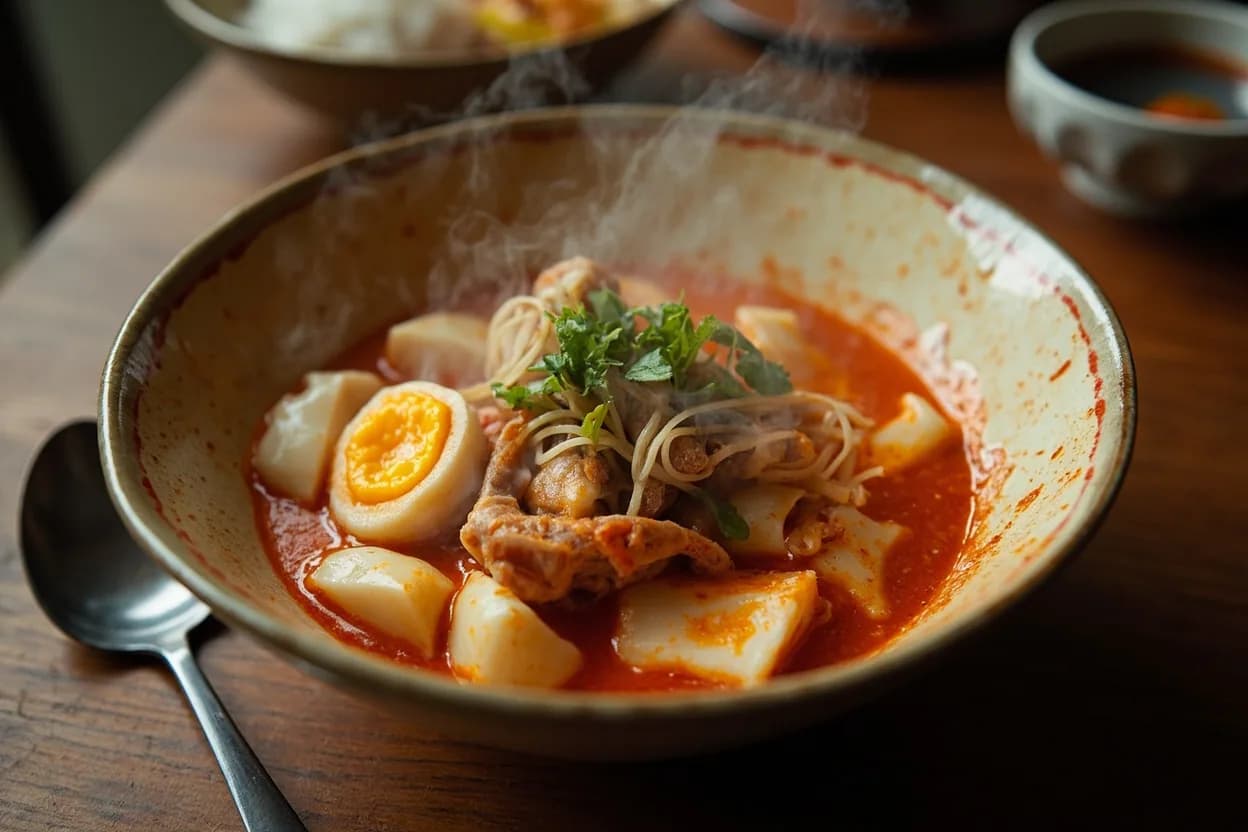
- For a tteokbokki sauce: 3 tbsp gochujang, 1 tbsp sugar, 1 tbsp honey, 1 tsp soy sauce, 2 cups stock or water; adjust with a splash of rice vinegar at the end.
- For a fried-chicken glaze: 2 tbsp gochujang, 2 tbsp honey, 1 tbsp rice vinegar, 1 tbsp soy sauce, 2 cloves garlic, 1 tsp grated ginger, simmered until glossy.
- For ssamjang: equal parts gochujang and doenjang by volume, loosened with sesame oil, minced garlic, chopped scallion, and a pinch of sugar.
- For a dip: 1 part gochujang whisked into 2 parts mayonnaise with a squeeze of rice vinegar and a little grated garlic.
Choosing a brand
Commercial gochujang quality varies dramatically, and the ingredient list is the quickest guide. Short lists — chili powder, rice or fermented soybean, salt, and perhaps a sweetener — generally indicate a more complex, less candy-like paste. Long lists dominated by corn syrup produce a one-dimensional, sugary flavor that flattens quickly in a finished dish. Mass-market Korean brands (Haechandle, Sempio, Ottogi) are reliable for everyday cooking and easy to find in Korean markets and most well-stocked supermarkets. For deeper flavor, look for traditional Sunchang-region producers or craft brands that advertise outdoor aging in onggi; these run darker, less sweet, and reward slower cooked dishes like kimchi-jjigae, doenjang-jjigae, and braised short ribs.
Common uses
Tips & pitfalls
- Bloom gochujang in a little neutral oil over medium heat for 30–60 seconds before adding liquid; this cooks out the raw grain taste and deepens the umami.
- Start with less than you think — both the salt and the heat concentrate as a dish reduces, so the final sauce is almost always saltier and spicier than the pot tasted ten minutes earlier.
- Always balance the paste with a sweetener (honey, sugar, mirin, or grated Asian pear) and an acid (rice vinegar or citrus); gochujang alone is unbalanced and tastes flat or harsh.
- Add gochujang late for bright red color and a fresher fermented tang; add it early for stews and braises where you want the flavor to meld into the dish.
- Avoid long cooking over high direct heat — scorching dulls the color from red to muddy brown and turns the paste bitter.
- Buy brands with short ingredient lists (chili, rice or soybean, salt, maybe a sweetener) for more layered flavor; corn-syrup-heavy pastes taste one-dimensional.
- If a dish tastes flat, the answer is almost never more gochujang; reach for acid, sweetness, or toasted sesame oil first, then reassess the salt.
- For a quick ssamjang, blend gochujang with doenjang at roughly 1:1 by volume, then loosen with sesame oil, minced garlic, chopped scallion, and a pinch of sugar.
Nutrition
Energy
879 kJ · per 100 g
Where the calories come from
Protein
5g
10% DV
Carbs
45g
16% DV
Fat
1g
1% DV
Fiber
2g
7% DV
Sugars
22g
of which
Sodium
3000mg
130% DV
Source · USDA FoodData Central · approx. curated estimate (USDA SR Legacy lacks this item)
In the shops
Matched grocery products
No matched grocery products for Gochujang yet.
Good to know
- Origin
- Korea; chili-based fermented pastes emerged in the Joseon dynasty after New World chiles reached Asia in the 16th century.
- Core ingredients
- Gochugaru (Korean red chili powder), glutinous rice (or barley or wheat), fermented soybean powder (mejugaru), and salt.
- Fermentation
- Traditional jang ages outdoors in earthenware onggi for months to years; commercial pastes typically ferment for weeks to a few months.
- Flavor profile
- Sweet, savory, deeply umami, with a slow-building, lingering heat rather than sharp capsaicin burn.
- Approximate heat
- Roughly 1,500–10,000 SHU depending on brand and chili ratio; Cheongyang-style versions run notably hotter.
- Storage (opened)
- Refrigerate tightly sealed; keeps 6–12 months, longer if the surface is smoothed and a thin layer of coarse salt is sprinkled on top.
- Pantry role
- One of the three foundational Korean jangs, with doenjang and ganjang; the base of ssamjang when combined with doenjang.
- Vegan / gluten notes
- Naturally vegan; traditional recipes are gluten-free, but many mainstream brands include wheat — read labels for dietary needs.
Substitutes
- Ssamjang — Closest Korean analog; gochujang plus doenjang and aromatics. Works in marinades and dipping, but earthier and less sweet than pure gochujang.
- Sambal oelek + sweet white miso — Mix about 2 parts sambal to 1 part miso with a pinch of sugar; mimics sweet-heat-umami, though it lacks true fermented depth.
- Doubanjiang (Pixian) — Chinese fermented broad-bean chili paste; saltier, less sweet, deeply fermented. Excellent in braises, less suited as a finishing sauce.
- Harissa — North African chili paste with roasted-spice character; works in marinades and stews but lacks the sweet-rice base of gochujang.
- Nam prik pao — Thai roasted-chili paste; sweet, smoky, and oily. Closer in sweetness than in umami, useful in glazes.
- Doenjang + gochugaru + honey — Emergency substitute for stews: 1 tbsp doenjang, 1 tsp gochugaru, and 1 tsp honey per tablespoon of gochujang called for.
Pairs with
Also called
Korean chili paste · kochujang · red pepper paste
Appears in these dishes
Related
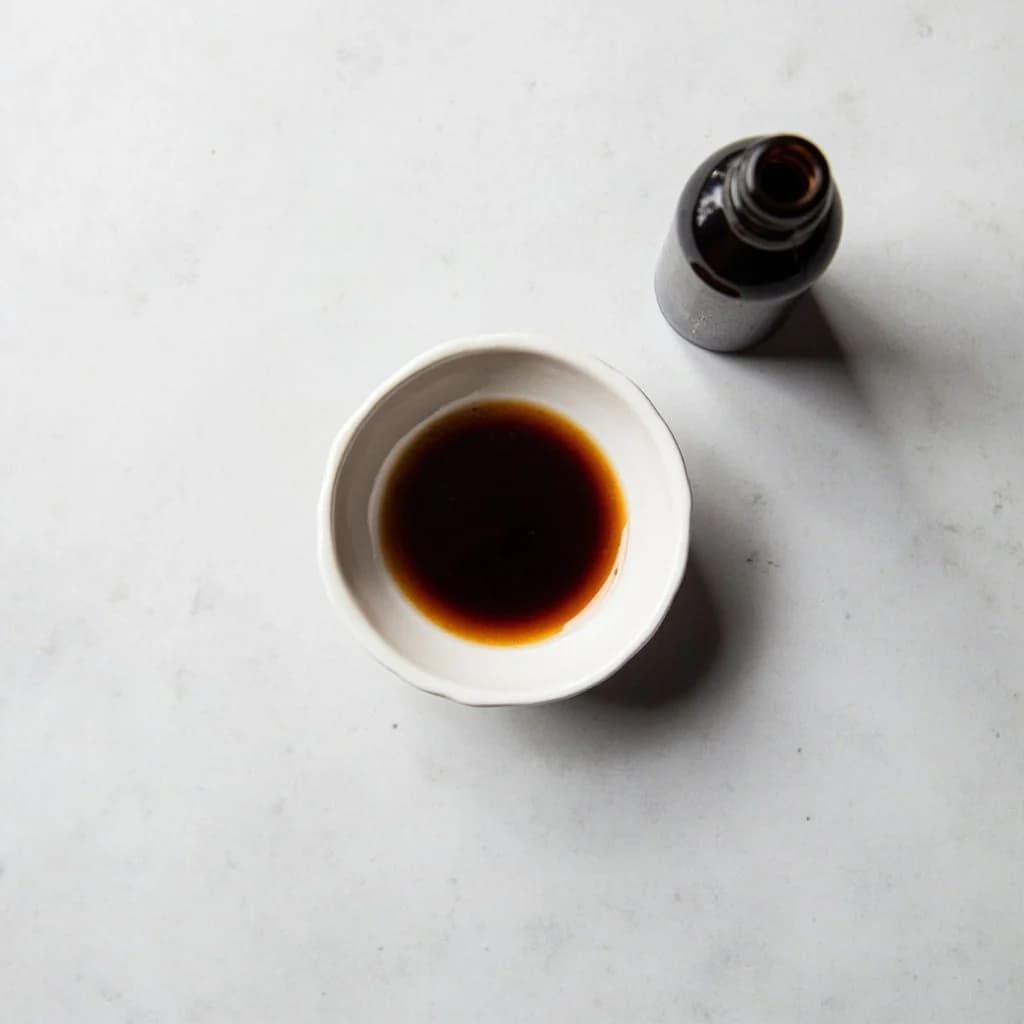
Soy Sauce
Salty, savory umami base for stir-fries and marinades
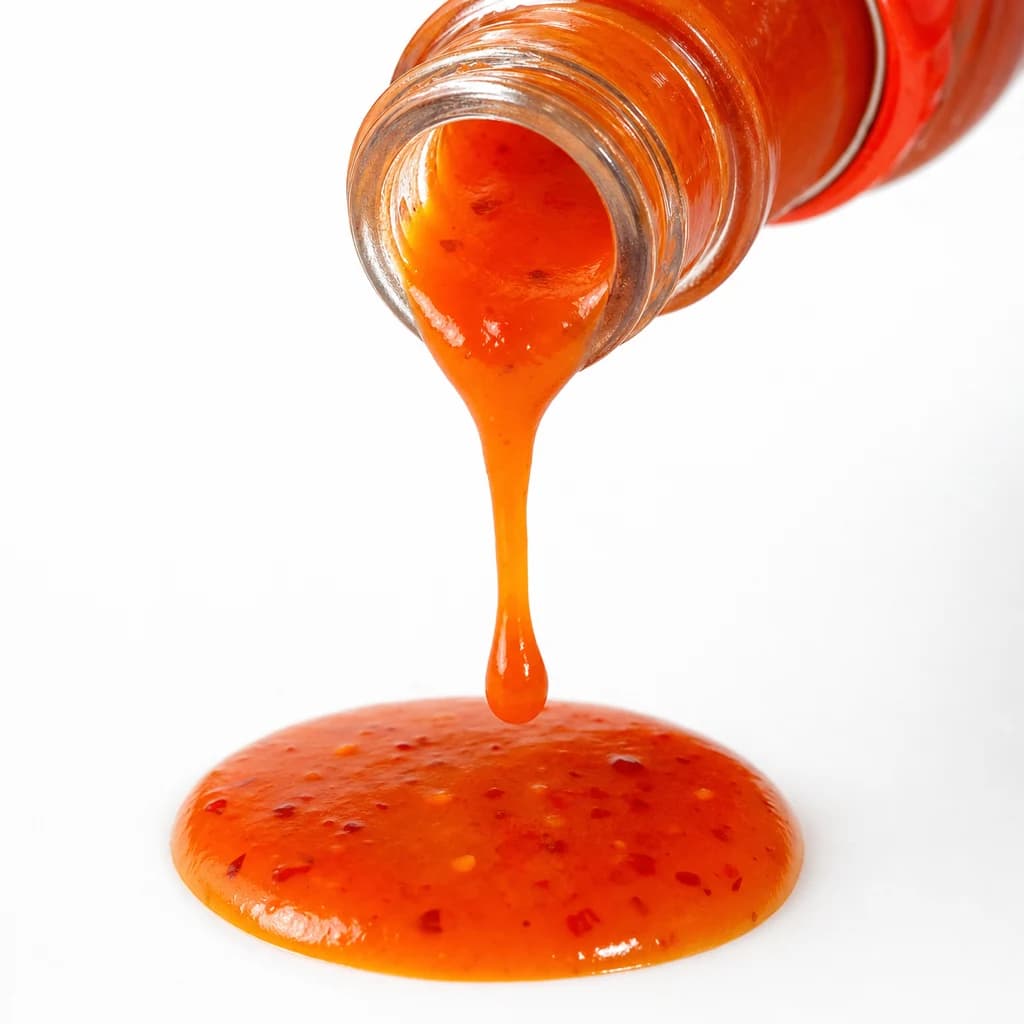
Hot Sauce
Tangy, fiery splash for eggs, tacos, and anything dull
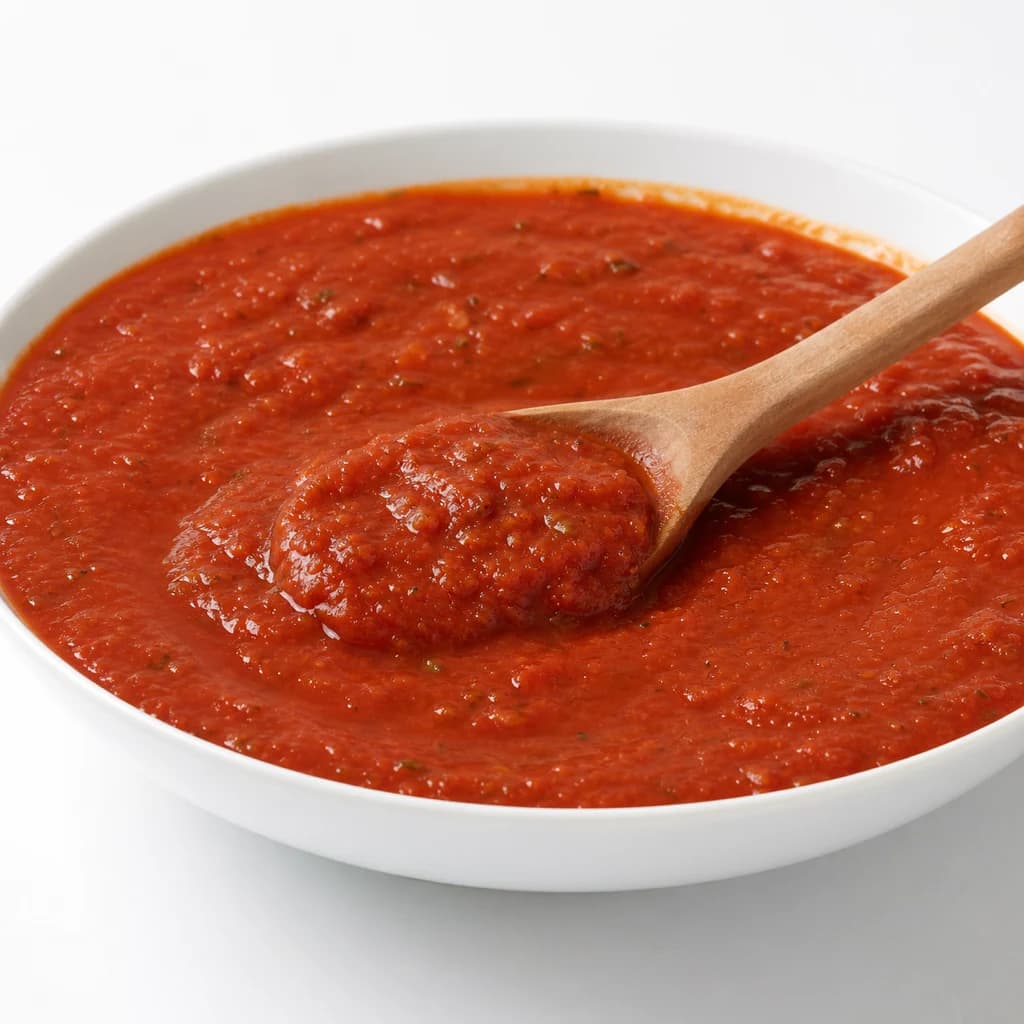
Tomato Sauce
Simmered tomato base for pasta, pizza, and braises
Barbecue Sauce
Smoky-sweet sauce for grilling, glazing, and dipping
Pesto
Vibrant basil-and-pine-nut sauce for pasta and beyond

Fish Sauce
Funky, salty essence that brings deep umami to SE Asian dishes
Worcestershire Sauce
Tangy, savory umami splash for marinades, stews, and Caesar

Sriracha
Garlicky chili sauce with sweet heat for drizzling and dipping