Sauces & Pastes
Doubanjiang
Sichuan fermented broad-bean and chili paste, the salty-spicy backbone of mapo tofu; bloom it in oil over low heat to release red color and aroma before adding liquid.
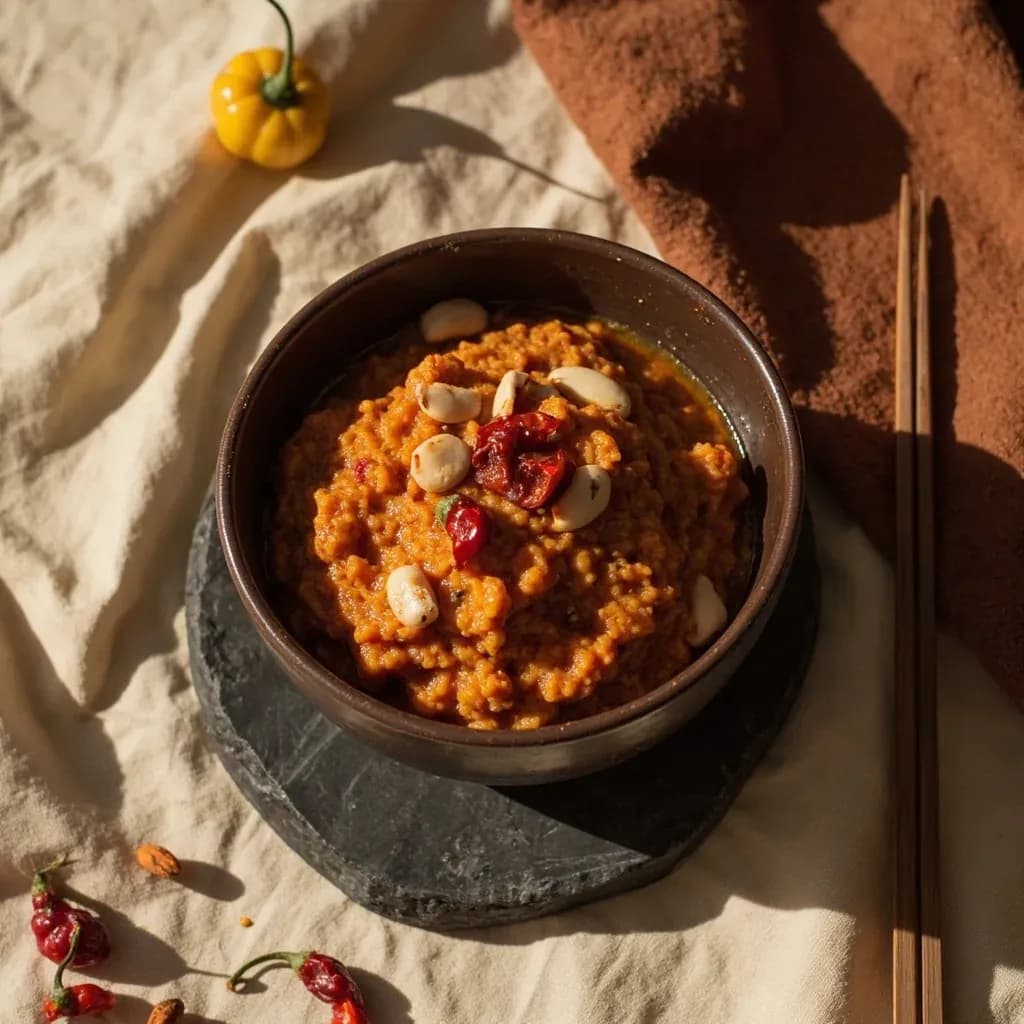
Doubanjiang is the fermented broad-bean and chili paste that gives Sichuan cooking its savory-salty-spicy backbone. Made from fava beans (蚕豆), dried red chilies — most often the fragrant erjingtiao variety — and salt, it is slowly fermented in open jars under the sun, sometimes for years, which develops the deep reddish-brown color, mellow heat, and deeply savory umami that define the region's food. Unlike a finishing sauce, doubanjiang is a building block: a spoonful bloomed in oil at the start of a dish supplies salt, color, body, and the warm fermented aroma that other seasonings are then layered on top of. It is the single ingredient most responsible for what cooks mean when they say a dish tastes 'Sichuan.'
- Measured in
- g
- Storage
- Refrigerate
Allergens
Find it in
Suits
Types & varieties
The benchmark style from Pixian County; multiple grades by aging, with longer-aged pastes deeper in color, less harsh, and more complex
Pre-blended with chili oil; easier to stir-fry with and yields red color quickly, though purists consider the plain paste superior
Made with the long, fragrant erjingtiao chili prized for aroma over heat
A darker, 'burned' style historically used in certain traditional dishes for a smoky, deeper fermented note
Older farmhouse production yields chunkier, drier 'bean-curd' style; modern commercial pastes are smoother and wetter
How traditional Pixian doubanjiang is made
Real Pixian paste is a slow, sun-driven fermentation rather than a quick chili sauce. Broad beans are dehulled, steamed, and cooled, then mixed with salt and set aside to begin fermenting on their own. Separately, erjingtiao chilies are sun-dried, de-seeded, chopped, and salted. After roughly three months the beans and chilies are combined, packed into wide shallow jars, and left in the open air. Workers turn and aerate the mixture daily through the long Sichuan summer — the daily sun and night cool-down drive enzymatic and microbial activity that turns harsh raw beans and fresh chili into a mellow, deeply savory paste. The longer it ages, the darker, softer, and more aromatic it becomes; the most prized lots rest three to five years or longer.
Reading the label
Not every jar labeled doubanjiang is the same. A few things to look for on the package and in the tub:
- Origin line: 'Pixian' or 'Pi County' (郫县) is the strongest indicator of traditional style; pastes from other regions often use less chili and more salt to mimic the look.
- Aging claim: a stated fermentation period (six months, one year, three years) usually signals a producer using the real method; no aging claim is a hint of a shortcut product.
- Ingredient list: broad beans, chili, salt, and sometimes wheat flour should be near the top. Sugar, soybean, or large amounts of oil in the list point to a hybrid or chili-oil style.
- Color in the jar: a deep, almost mahogany reddish-brown with a glossy surface oil is the look of well-aged paste. Bright brick red with no separation of oil suggests a younger, sharper product.
Common uses
Tips & pitfalls
- Always bloom doubanjiang in oil over low-to-medium heat for 30–60 seconds before any liquid touches the pan — this releases the red oil and tames raw fermented harshness
- Use low heat only; high heat scorches the chili and turns the flavor bitter, not richer
- Less is more — the paste is heavily salted, so taste before adding extra soy sauce or salt
- Some cooks briefly rinse a portion to reduce surface salt, but never soak it or you wash out the fermented aroma
- If using red-oil doubanjiang (pre-blended with chili oil), you can skip the plain-oil bloom and go straight into the stir-fry
- Store opened paste with a thin film of neutral oil on top, tightly capped, in the fridge — it keeps for many months
- Do not confuse it with Korean gochujang (sweet, rice-based), tianmianjiang (sweet, no chili), or Hunan yuntunjiang (different beans and chili character)
- Toast Sichuan peppercorns and dry chilies in the same oil before the doubanjiang for a fuller mala base
- Add a splash of Shaoxing wine after blooming to lift the aroma before the main ingredients go in
- When a dish tastes flat and under-seasoned, an often-overlooked cause is under-bloomed doubanjiang — give it another 20–30 seconds in the oil
Nutrition
Nutrition
No USDA FoodData Central match for Doubanjiang yet. We surface a per-100 g profile once a generic whole-food entry is matched and verified.
In the shops
Matched grocery products
No matched grocery products for Doubanjiang yet.
Good to know
- Origin
- Pixian (Pi) County, Chengdu, Sichuan — the benchmark producing region; premium paste is sold under the name 'Pixian doubanjiang' (郫县豆瓣)
- Primary ingredients
- Broad beans (fava), dried red chilies (typically erjingtiao), and salt; some producers add wheat flour
- Fermentation time
- Several months at minimum; traditional Pixian grades are aged one to five-plus years in open sun jars
- Flavor profile
- Savory, salty, moderately spicy, deeply umami from fermented beans, with sun-dried chili aroma
- Texture
- Coarse, slightly chunky paste with visible bits of bean and chili skin
- Salt content
- Roughly 10–15% by weight, which both seasons and preserves the paste
- Color
- Deep reddish-brown; releases a bright red oil when fried in fat
- Shelf life
- Years unopened; many months refrigerated once opened, ideally sealed with a thin layer of neutral oil on top
Substitutes
- Korean gochujang — Closest in fermentation and chili-heat, but distinctly sweet and rice-based; use less and add salt — works in mapo tofu in a pinch
- Thai nam prik pao — Sweet-savory roasted-chili paste with heat and depth, but lacking broad-bean umami — best bolstered with soy sauce or miso
- Yellow miso + chili paste — Mix 2 parts miso with 1 part chili paste (sambal or chili-garlic) as a rough stand-in for the salty, fermented, spicy backbone
- Fermented black beans (douchi) + chili flakes — Recreates the salty-fermented-spicy trio but lacks the broad-bean sweetness and red color
- Tianmianjiang (sweet bean sauce) — Not a flavor substitute, but a small amount can approximate body in a sauce if no doubanjiang is available — add chili separately
Pairs with
Also called
broad bean chili paste · Pixian doubanjiang · fermented chili bean paste
Appears in these dishes
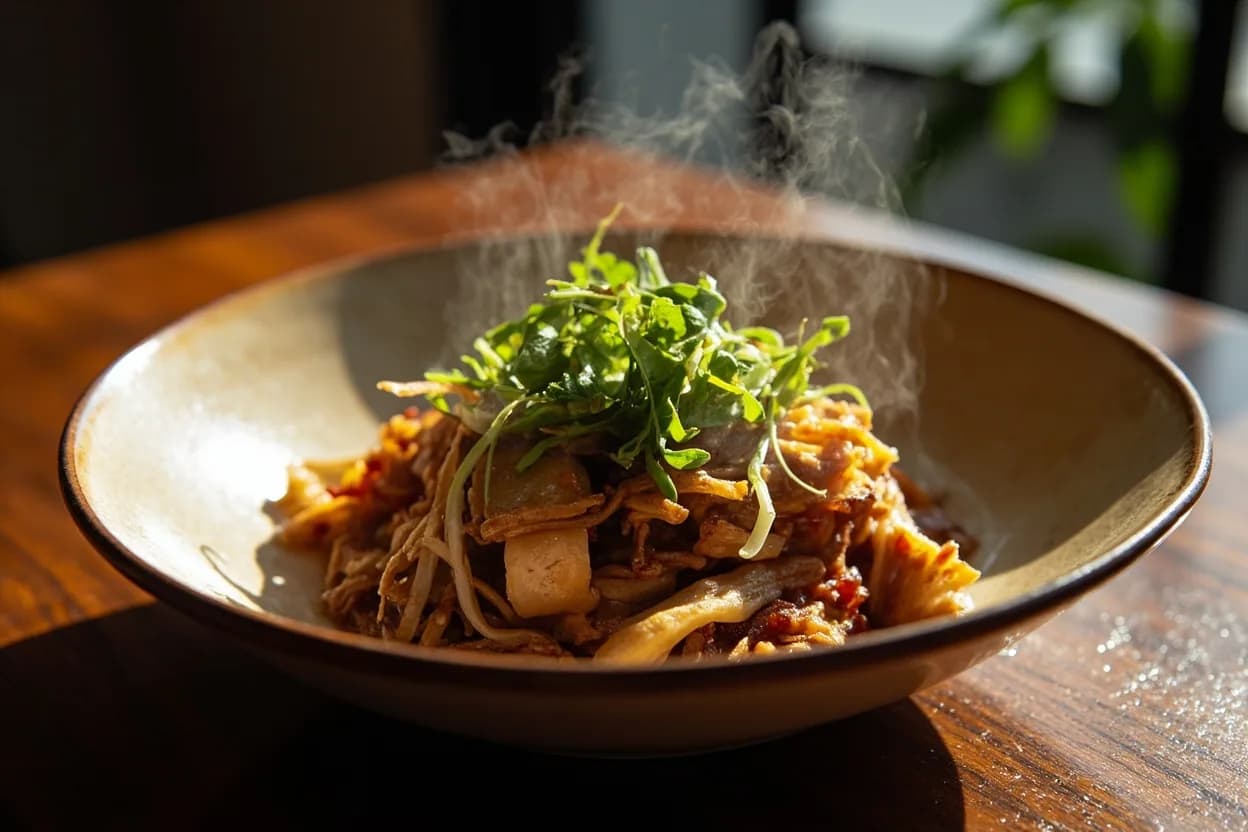
Related
Soy Sauce
Salty, savory umami base for stir-fries and marinades
Hot Sauce
Tangy, fiery splash for eggs, tacos, and anything dull
Tomato Sauce
Simmered tomato base for pasta, pizza, and braises
Barbecue Sauce
Smoky-sweet sauce for grilling, glazing, and dipping
Pesto
Vibrant basil-and-pine-nut sauce for pasta and beyond

Fish Sauce
Funky, salty essence that brings deep umami to SE Asian dishes
Worcestershire Sauce
Tangy, savory umami splash for marinades, stews, and Caesar

Sriracha
Garlicky chili sauce with sweet heat for drizzling and dipping