Heat & Fire
Browning Butter (Beurre Noisette)
Cooking butter until its milk solids toast to a nutty, golden-brown aroma.
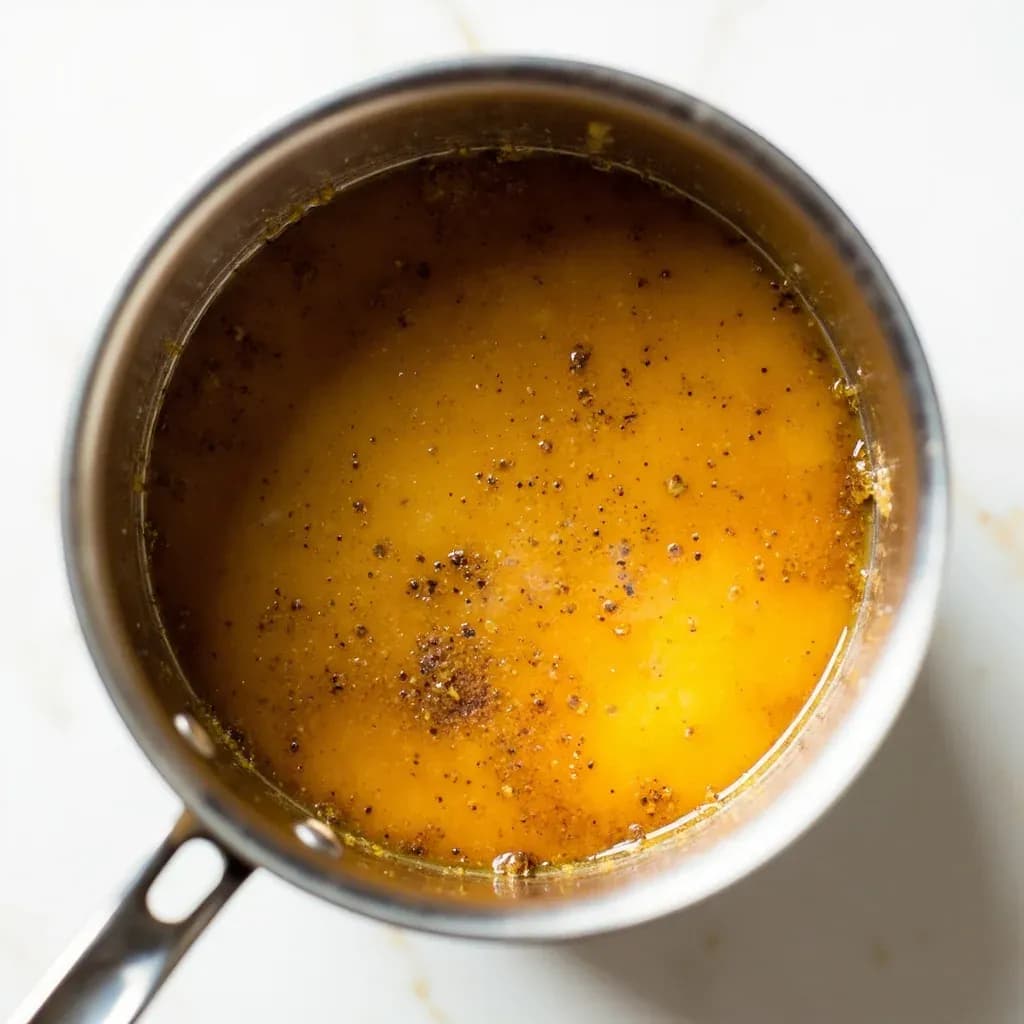
Browning butter heats it past the melting point so the water boils off and the milk solids caramelize, turning amber and smelling of toasted hazelnuts (hence beurre noisette). It adds deep, nutty flavor to sauces, baked goods, and pasta. The window is short, so cooks watch for the foam to subside and the solids to brown, then pull it off the heat immediately to avoid burning.
Beurre noisette — literally "hazelnut butter" — is what happens when you push butter past melting and let its milk solids toast in their own fat. Ordinary butter is roughly 80% milk fat, 16–18% water, and just 1–2% milk solids (casein proteins and lactose). Heat the butter, the water boils off as foam, and what remains is golden fat carrying those solids through the Maillard reaction. Within five to eight minutes the cool dairy smell of butter gives way to something toasted, warm, and faintly caramel — the aroma of hazelnuts, toffee, and bread just out of the oven.
It is one of the highest-leverage techniques in a working cook's repertoire. A single pan, a few minutes of attention, and an everyday ingredient becomes a finishing fat that flatters fish, vegetables, pasta, pastry, and bread. In classical French kitchens it is the foundation of sauce meunière, the classic partner to a pan-fried sole or skate. In modern pastry it is the difference between a good chocolate chip cookie and one people write home about. The flavor compounds created by toasting milk solids — diacetyl, furans, lactones — belong to the same family of notes that show up in toasted bread, roasted coffee, and seared meat, which is why brown butter reads as "more savory" than plain butter even inside a sweet cake.
The catch is timing. The window between hazelnut-brown and burnt is often under thirty seconds, and a thick blanket of foam hides the true color of the liquid underneath. Success depends less on a recipe than on the right equipment and an attentive eye: a light-colored, heavy-bottomed pan so you can see the color forming, medium heat so the solids toast instead of scorch, and a quick way to arrest the cooking the moment the smell turns nutty.
- Difficulty
- Easy
Types & varieties
The classic: butter cooked to deep amber with toasted milk solids still in the fat; nutty and toasty.
Cooked one stage past noisette, then stopped with lemon juice or vinegar; classically served with capers and parsley over eggs, skate, or sweetbreads.
Butter clarified first, then browned; yields a clear amber fat that is excellent for glazing vegetables or finishing at higher heat.
Made from cultured butter; the cultured milk solids add a tangier, more complex aroma to the toastiness.
Noisette finished with sage, thyme, rosemary, or sliced garlic off the heat — a classic Italian and French finishing butter for pasta, gnocchi, and ravioli.
How to do it
- 1
Cut the butter and prepare to stop
Cut 115–230 g (1–2 sticks) of unsalted European-style butter into even 1–2 cm cubes. Have a cold heatproof bowl, a fine-mesh strainer, or a few extra cubes of cold butter within arm's reach — you will need them in a hurry. Choose a light-colored, heavy-bottomed saucepan wider than it is deep.
- 2
Melt over medium heat
Place the butter in the pan over medium heat. It will melt, then foam and bubble vigorously as the water boils off. Swirl the pan occasionally; do not stir with a spoon or whisk, which knocks the foam aside and hides the true color of the liquid beneath.
- 3
Watch the foam and the color underneath
After 3–5 minutes the violent bubbling subsides and a thick white foam forms on top. Tilt the pan and use the edge of a spatula or the back of a spoon to part the foam so you can see the liquid and any sediment on the bottom. The color of those solids is the truth; the foam is a curtain.
- 4
Reach the noisette stage
When the butter turns a deep amber / hazelnut brown and smells unmistakably of toasted nuts and toffee, pull the pan off the heat. From cold butter this usually takes 5–8 minutes; from already-soft butter, less. Trust the smell and the color more than the clock.
- 5
Stop the cooking immediately
Pour the butter into a cold bowl, set the pan on a cool surface, or whisk in 1–2 cubes of cold butter. Residual heat in a heavy pan will carry browned butter into burnt territory within seconds — do not leave it on the burner to 'finish.'
- 6
Strain, use, or store
Use the brown butter as is for saucing, or strain through a fine sieve or cheesecloth-lined strainer if you want a clear fat. The dark sediment left in the strainer is intensely flavored — stir it into cookies, mashed potatoes, or a compound butter. Refrigerated, brown butter keeps 3–4 weeks; frozen, several months. It will re-solidify with a slightly grainy texture; that is normal and melts back smooth.
Reading the Stages
The visible life of a batch of brown butter moves through three overlapping stages, and learning to read them is the whole skill. In the first two or three minutes the butter melts, then boils vigorously as its water content turns to steam. The surface is loud with large bubbles. The smell is still dairy. In the second stage, around three to five minutes, the violent bubbling subsides and a thick, pale foam blankets the surface. The butter looks 'done' to a distracted eye, but underneath the foam the liquid is still pale yellow and the smell is buttery, not nutty. This is the trap. In the final stage the foam begins to collapse, the liquid beneath turns a deep amber, and the aroma shifts decisively to toasted hazelnut, toffee, and just-browned butter. Pull the pan the moment you sense that shift — the difference between the smell of 'warm and toasty' and 'burned' is a matter of seconds, not minutes.
- Stage 1 (0–2 min): Vigorous bubbling as water boils off; smells like melting butter.
- Stage 2 (2–5 min): Foam rises and thickens; color of the liquid is still pale — this is the stage most home cooks mistake for 'done.'
- Stage 3 (5–8 min): Foam settles, liquid turns deep amber, aroma turns from dairy to toasted nut — act now.
- Use a light-colored pan so the color change is unmistakable; in a dark pan you are cooking by smell alone.
Beurre Noir and How It Differs
Beurre noir is the same technique pushed one stage further, then arrested with acid. The butter is cooked until the milk solids verge on dark brown — genuinely mahogany, not amber — and the pan is taken off the heat and loosened with a squeeze of lemon juice, a splash of red wine vinegar, or sometimes a spoonful of caper brine. The acid stops the cooking and brightens what would otherwise taste acrid. Classic French preparations finish the sauce with capers and flat-leaf parsley and pour it over poached eggs, pan-fried skate, or sweetbreads. The line between noisette and noir is the same narrow window that separates perfect brown butter from burnt — only the destination is different.
Common uses
Tips & pitfalls
- Use unsalted butter — added salt both obscures the toasty flavor and burns faster than the milk solids do.
- Cut the butter into even 1–2 cm cubes so it melts uniformly; a single slab melts in patches and scorches where the fat hits the hot pan first.
- Pick a light-colored, heavy-bottomed pan (stainless or enameled cast iron) so you can actually see the milk solids changing color. Common mistake: cooking in a dark nonstick or cast iron, which forces you to work blind by smell and leads to burnt butter.
- Keep the heat at medium or medium-low. High heat is the most common mistake — it scorches the milk solids before the fat has time to develop its full nutty aroma, leaving the butter acrid and bitter.
- Swirl the pan, don't whisk. Whipping air into the foam turns it opaque and hides the color, which is exactly the cue you need to see.
- When foam obscures your view, tilt the pan or dip a spoon to peek at the milk solids on the bottom — color of the sediment, not the foam, tells you when to stop.
- Pull the pan the moment the smell turns from buttery to nutty. The window between perfect and burnt is often under 30 seconds, and residual heat will keep cooking the butter after you take it off the burner.
- Save the strained sediment — it is essentially toasted milk solids and carries an outsized share of the flavor. Stir it into cookie dough, pancake batter, or mashed potatoes.
Good to know
- French name
- Beurre Noisette, literally "hazelnut butter," after its toasted amber color
- Composition of butter
- ~80–82% milk fat, ~16–18% water, ~1–2% milk solids — the solids are what brown
- Core process
- Water evaporates first; remaining milk solids (casein + lactose) brown via the Maillard reaction in the fat
- Target color
- Deep amber / hazelnut brown — never dark brown or black
- Best pan
- Light-colored, heavy-bottomed stainless steel or enameled cast iron, wide rather than deep
- Best butter
- Unsalted, high-fat European-style (82–84% fat) for more solids to brown and a richer flavor
- Timing
- Roughly 4–8 minutes; the gap between perfect and burnt is often under 30 seconds
- Yield
- ~80–85% of starting weight once water is gone; strained clear fat yields ~75–80%
- Related term
- Beurre noir ("black butter") — cooked one stage further, then arrested with lemon juice or vinegar
Also called
beurre noisette · brown butter
Dishes that rely on it

Related

Sear
Blast the surface hot for a deep-browned, savory crust

Sauté
Cook quickly in a little fat over lively heat, tossing as you go

Stir-Fry
Toss bite-sized pieces over roaring heat for fast, smoky cooking

Pan-Fry
Crisp food in a shallow layer of hot fat, turning once or twice

Deep-Fry
Submerge in hot oil for an all-over crackling crust

Roast
Cook uncovered in dry oven heat for browned edges and tender centers

Bake
Cook with steady, surrounding oven heat — the soul of bread and pastry

Broil
Hit food from directly above with fierce overhead heat