Heat & Fire
Melting (Fondue / Raclette)
Warming cheese or chocolate to a smooth, fluid pour for dipping or scraping.
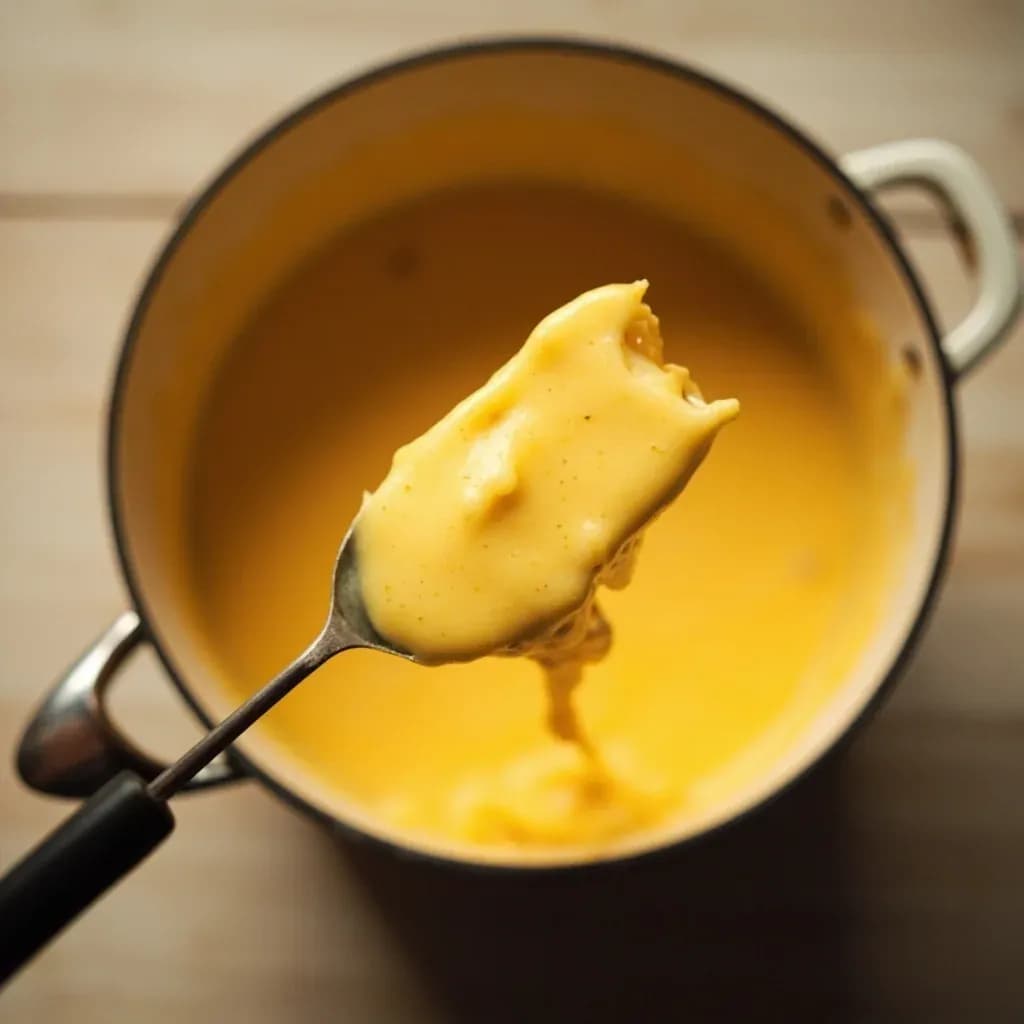
Melting applies gentle, even heat to turn solid cheese, chocolate, or fat into a smooth liquid for dipping and serving. In fondue, cheese is melted with wine and a little starch to keep it emulsified; in raclette, a cut face of cheese is melted and scraped onto food. Low, steady heat is key, since overheating can break cheese into greasy clumps or seize chocolate.
Melting cheese for fondue or raclette is, at heart, a controlled emulsion problem. Alpine-style cheeses like Gruyère, Emmental, Vacherin Fribourgeois and Raclette are dense in fat and protein with relatively little moisture, so when heat hits them too fast the fat liquefies and escapes before the protein network can swell and hold it — the result is a greasy split, with beaded oil floating over rubbery curds. A successful melt keeps the temperature low (a lazy 65–70 °C is the target), the liquid slightly acidic from white wine, and the proteins buffered with a little starch. Fondue stirs all of this into one homogeneous, pourable pot kept warm on a rechaud; raclette instead melts the cheese in thin slabs under a top heater and scrapes the molten layer onto plates. Both reward patience and good cheese, and both punish haste, dry wine, and pre-shredded supermarket bags.
Beyond cheese, the same communal-pot logic transfers cleanly to chocolate fondue, where heavy cream or butter provides the fat and a splash of liqueur or vanilla carries the flavor; the rules are identical — low heat, continuous stirring, and never let the pot boil. Treat the technique less as a recipe and more as a method you can deploy whenever you want warm, fluid, dippable cheese or chocolate.
- Difficulty
- Easy
Types & varieties
Classic Fribourg/Vaudois version using roughly half Gruyère and half Vacherin Fribourgeois.
French Alpine style built on Gruyère, Comté, Beaufort and sometimes Emmental, often finished with a splash of kirsch.
Older, looser style from Neuchâtel using only Gruyère, white wine and a little kirsch — no flour or cornstarch.
Stabilized with cornstarch and finished with kirsch; the most familiar restaurant version.
Traditional table-side scrape onto boiled potatoes with cornichons, pickled silver onions and dried meat.
French version using Reblochon or Tomme de Savoie alongside Raclette.
Same communal-pot logic applied to chocolate — heavy cream or butter, low heat, optional kirsch, Cointreau or Grand Marnier.
How to do it
- 1
Prep the cheese and pot
Grate or finely cube 400 g total of Gruyère and Emmental (or Vacherin Fribourgeois) and let it rest at room temperature for 20–30 minutes. Rub the inside of a caquelon with the cut side of a garlic clove, then discard the clove.
- 2
Heat the wine
Pour 200 ml dry white wine (Sauvignon Blanc, Fendant or a similar acidic, unoaked wine) into the pot with a small squeeze of lemon juice. Warm over medium-low heat until it steams and the surface just shimmers — do not let it boil.
- 3
Add the cheese in stages
Add the grated cheese a handful at a time, stirring continuously in a figure-8 pattern with a wooden spoon. Wait for each addition to melt fully before adding the next. Keep the heat gentle; a low, lazy bubble at the edge is the target.
- 4
Stabilize and season
Whisk 1 teaspoon of cornstarch with 2 tablespoons of kirsch (or the wine) and stir into the fondue. Season with white pepper and a fine grating of nutmeg. When the fondue is glossy and falls in a thick ribbon from the spoon, move it to the lit rechaud.
- 5
For raclette table-side
Slice the raclette cheese into 3–4 mm slabs and load the individual coupelles, or set slices directly under the top heater. Heat 4–6 minutes, until the surface is blistered and the cheese is fully molten through.
- 6
Scrape and serve
Scrape the molten raclette with a wooden spatula onto plates of boiled potatoes, cornichons, pickled onions and charcuterie. For fondue, keep the burner on its lowest setting, stir every few minutes, and spear day-old bread with long-handled forks, dipping with a slow swirl rather than a plunge.
Why cheese splits — and how to stop it
Cheese is an emulsion of fat globules suspended in a protein mesh. As the cheese warms, fat melts and water-bound proteins (caseins) loosen and start to clump. With gentle heat, the proteins rearrange into a smooth network that traps the fat. With too much heat, the proteins contract and squeeze the fat out — you see it as a clear, oily layer floating over grainy curds. Acid from wine keeps the casein from clumping too tightly, and starch provides a backup network of its own. The cornstarch-and-kirsch slurry in a classic Fondue Vaudoise is doing real chemistry, not just thickening.
- Acid (wine, lemon, kirsch) keeps the casein proteins dispersed instead of contracting.
- Starch forms a parallel gel that traps fat even if the protein network weakens.
- Slow heating gives proteins time to hydrate and re-form around the melting fat.
- Boiling or reheating splits fondue because the protein network has already tightened and cannot relax a second time.
Troubleshooting at the table
Most fondue and raclette disasters are reversible if you catch them early. Splitting, seizing and skinning all have predictable causes and quick fixes — the trick is to work off the heat, add liquid or starch, and not panic-blend.
- Seized (thick, paste-like): lift off heat and whisk in 1–2 teaspoons of warm wine or kirsch, a little at a time.
- Split (oily layer on top): take the pot off the burner and whisk in a small ice cube — the water and cold often pull the emulsion back together.
- Thick, chewy skin (la religieuse) on top: the burner is too hot — turn it down so the crust stays paper-thin and glossy rather than leathery.
- Grainy texture in the finished fondue: the cheese was either cold when added or boiled — both are preventable next time.
Common uses
Tips & pitfalls
- Grate or cube the cheese yourself and bring it to room temperature — cold cheese chills the wine too sharply and clumps before it can melt.
- Avoid pre-shredded cheese; the cellulose anti-caking coating prevents a fluid melt and leaves a sandy, grainy texture.
- Heat the wine until it just steams and smells fruity, then add the cheese in small handfuls, stirring in a continuous figure-8 so the emulsion stays smooth.
- Never let the fondue boil — violent bubbling breaks the protein network and the pot will split into greasy curds.
- Bind with a cornstarch slurry (about ½ teaspoon cornstarch per 200 g cheese, whisked into the wine) rather than flour, for a cleaner, glossier texture.
- Cut raclette into thin 3–4 mm slices rather than thick chunks; thin slices melt through in the time the top heater browns the surface, while thick pieces turn rubbery inside.
- Choose potatoes that hold their shape — fingerlings, baby Yukon Golds or waxy Charlotte — boiled the day before and reheated, so they don't crumble under hot cheese.
- Keep a small bowl of plain tea, kirsch or water alongside the pot: the traditional remedy for cheese congealing in the stomach after a heavy fondue.
Good to know
- Origin
- Swiss Alps; communal pot-style cheese melting is documented in Neuchâtel in 1699, with the modern cheese-and-wine fondue promoted by the Swiss Cheese Union in the 1930s.
- Related Tradition
- Raclette takes its name from the French word racler ('to scrape') and originates in the canton of Valais, where half-wheels were traditionally held over an open fire.
- Core Cheeses (Fondue)
- Gruyère and Emmental in roughly equal parts; Vacherin Fribourgeois is also classic, with Appenzeller, Comté and Beaufort common as regional variants.
- Core Cheese (Raclette)
- Raclette cheese itself — a semi-hard, washed-rind cow's-milk Alpine cheese — traditionally served with boiled potatoes, cornichons, pickled onions and cured charcuterie.
- Key Stabilizers
- Acidity (dry white wine, lemon juice or kirsch) plus a starch slurry (cornstarch or potato starch) keeps the emulsion smooth and prevents an oily split.
- Target Temperature
- A gentle simmer only — ideally 65–70 °C (150–160 °F) on a rechaud. Boiling breaks the protein network and scorches the cheese.
- Essential Equipment
- A caquelon (earthenware or enameled cast-iron pot) for fondue; a raclette grill with top infrared heater and individual non-stick coupelles for raclette; a rechaud burner on gel or spirit fuel.
- Portion Rule of Thumb
- Roughly 200 g of cheese and 100 ml of dry white wine per person for a main-course fondue; about 200–250 g of raclette cheese per person for a raclette meal.
Also called
Cheese Fondue Melting · Melting Fondue · Raclette Melting · melting
Dishes that rely on it
Related

Sear
Blast the surface hot for a deep-browned, savory crust

Sauté
Cook quickly in a little fat over lively heat, tossing as you go

Stir-Fry
Toss bite-sized pieces over roaring heat for fast, smoky cooking

Pan-Fry
Crisp food in a shallow layer of hot fat, turning once or twice

Deep-Fry
Submerge in hot oil for an all-over crackling crust

Roast
Cook uncovered in dry oven heat for browned edges and tender centers

Bake
Cook with steady, surrounding oven heat — the soul of bread and pastry

Broil
Hit food from directly above with fierce overhead heat