Prep & Assembly
Grating
Shredding food into fine or coarse shards by rubbing it against a grater's blades.
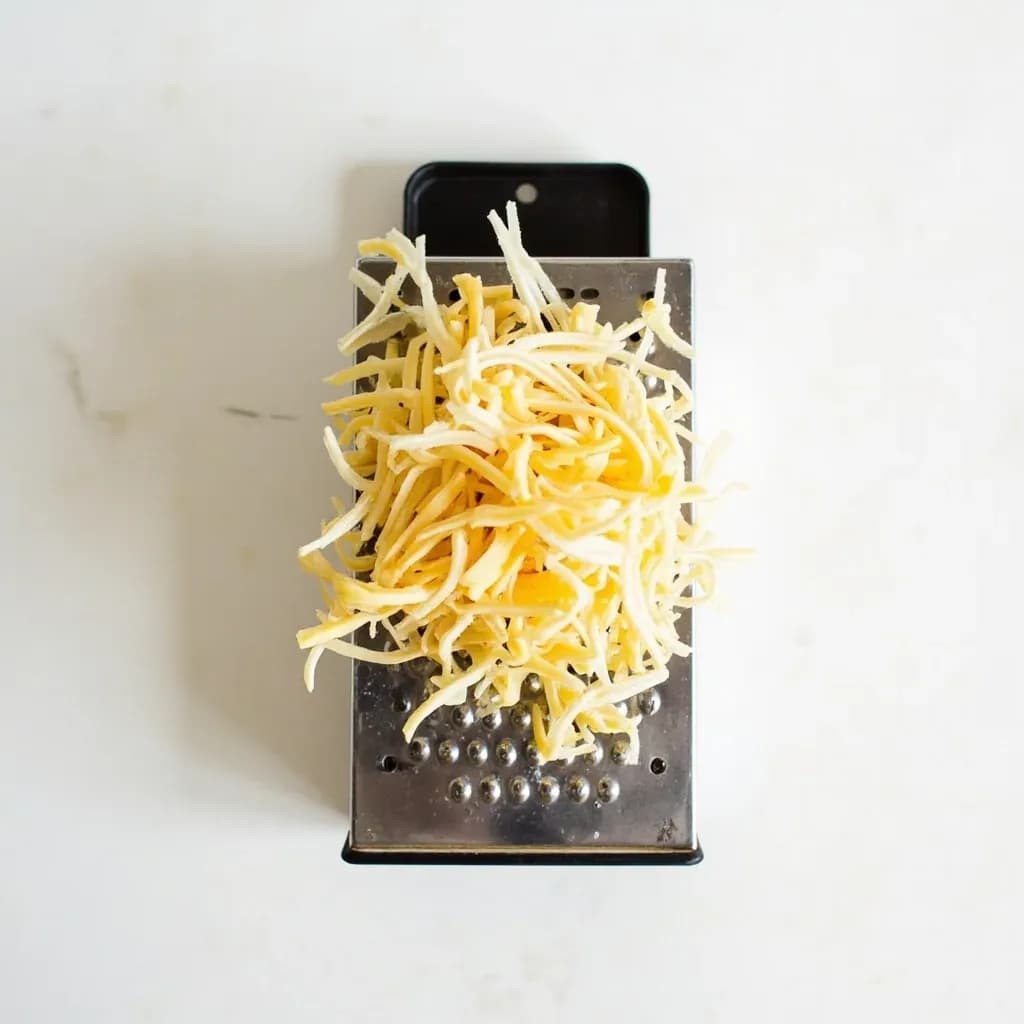
Grating rubs an ingredient against the sharp perforations of a grater or microplane to produce fine to coarse shreds. It is used for cheese, vegetables, citrus zest, ginger, nutmeg, and tomato across countless dishes, controlling texture and how quickly flavor releases. Choosing the right hole size, from fine zest to coarse shreds, shapes the final result.
Grating is a friction-based cutting technique in which food is dragged across a surface of raised, sharpened edges so that thin shavings or fine particles are shaved off as it moves. The action is fundamentally different from chopping or slicing: rather than severing a chunk with a single stroke, a grater removes many tiny pieces in a single pass, dramatically multiplying the surface area of the food. That expanded surface is exactly why cooks reach for a grater — more area means faster flavor release, quicker melting, and a more even distribution throughout a dish.
The texture a grater produces depends on the size and shape of its cutting holes. Coarse, punched holes on a box grater yield thick, meaty shreds suited to vegetables and softer melting cheese; the slicing slot on the same grater produces wide, flat ribbons; tiny, stamped holes create a sandy texture used for hard cheese and breadcrumbs; and the photo-etched teeth of a microplane cut so cleanly that they leave almost powdery, fluffy shavings — the standard for citrus zest, whole nutmeg, and finely grated hard cheese. Understanding this range is what separates grating as a reflex from grating as a deliberate technique.
The tool you choose matters as much as the food. A box grater is a workhorse for volume; a microplane is a precision instrument for aromatics; a rotary drum keeps fingertips far from the blade; and a citrus zester is shaped specifically to cut thin strips of peel. The sharper the blade and the firmer the food, the cleaner the cut — which is why a ten-minute chill in the freezer and light pressure almost always produce better results than bearing down hard on a soft, room-temperature block.
- Difficulty
- Easy
Types & varieties
Four-sided free-standing metal grater with coarse, medium, and fine grating faces plus a slicing slot; a removable base catches the shreds. Workhorse for cheese and vegetables.
Long flat blade with photo-etched teeth; exceptionally sharp; produces fine, fluffy shavings. The standard for citrus zest, hard cheese, nutmeg, ginger, and garlic.
Hand-crank drum with an internal blade; the safest option for fingers and ideal for hard cheese, chocolate, and nuts in moderate volume.
A single flat paddle with one or two grating surfaces; inexpensive and common in European kitchens; comfortable for small jobs.
Narrow blade with small round cutting holes that pulls off thin strips of zest rather than shredding it; produces a more decorative, less powdery result than a microplane.
A shredding disc fitted to a food processor or stand mixer attachment; used for high-volume shredding of cabbage, carrots, potatoes, and cheese.
How to do it
- 1
Select the right grater and surface
Match the tool to the food and the result you want. Use a microplane or the fine face of a box grater for citrus zest, hard cheese, nutmeg, ginger, and garlic. Use the coarse face of a box grater for vegetables and softer cheeses. Use the slicing slot of a box grater (or a mandoline) for ribbons. Reach for a rotary grater when volume is high and safety matters.
- 2
Prepare the food
Peel citrus with a vegetable peeler if you want only the colored zest and need to leave the bitter white pith behind — though for most uses, a microplane removes only the zest layer cleanly. Trim cheese, ginger, or nutmeg into a block shape that sits comfortably in your grip. Peel and halve vegetables for a secure hold, and chill hard cheese in the freezer for 10 to 15 minutes so it grates cleanly without sticking or crumbling.
- 3
Stabilize the grater
Set a box grater on a flat surface with a folded damp kitchen towel or non-slip mat beneath it to keep it from sliding or tipping. Hold a flat or microplane grater firmly over a cutting board or plate, angled slightly downward so the gratings fall where you want them.
- 4
Protect your fingers
Use the built-in guard on a box grater, or grip a folded piece of parchment paper or hold a fork tines-down to shield your fingertips. On a microplane, hold the food so your knuckles ride well behind the working edge — they are far safer than fingertips against a sharp blade.
- 5
Grate with controlled strokes
Press the food against the blade and push downward in long, even strokes. Lift and reposition rather than scrubbing back and forth, which dulls the blade and produces uneven pieces. Let the sharpness of the teeth do the work, especially on a microplane — heavy pressure crushes soft foods and can scrape skin.
- 6
Collect, recover, and store
Lift a box grater and scrape the underside and the catch tray. For a microplane, scrape the back with a spoon or bench scraper to release trapped shreds — particularly useful for soft cheese and garlic paste. Use the gratings immediately, or store them in a covered container; grated hard cheese keeps for several days in the refrigerator, while grated vegetables should be used promptly or they will weep liquid.
Grating vs. shredding, mincing, and other cuts
Grating is often used interchangeably with shredding, but the techniques and results differ in ways that matter in the kitchen. Shredding generally produces longer, coarser strips — typically cut with a knife, a mandoline, or the slicing slot of a box grater — and is the cut of choice for slaws, hash browns, and cheese that needs to melt in visible strands. Grating, on a true grating surface, produces shorter pieces and a finer overall texture, ideal when the food should disappear into a sauce or distribute flavor evenly without textural interruption.
Mincing is finer still and is done with a knife: garlic and herbs are minced into a paste-like consistency. A microplane can approximate a mince for small amounts of garlic, ginger, or nutmeg, with the bonus of releasing more of the aromatic oils. Chopping is the coarsest of these cuts and is rarely confused with grating, though grated cheese is sometimes called "finely chopped" in casual recipes. Knowing which cut the recipe is asking for — and being willing to switch tools if your result is too coarse or too fine — is one of the quiet skills that separates a careful cook from a hurried one.
Common uses
Tips & pitfalls
- Chill hard cheese in the freezer for 10 to 15 minutes before grating — a cold, firm block grates cleaner, finer, and with far less sticking than a soft, room-temperature one.
- Zest citrus before you juice it. Once the fruit is halved, the round, wet surface is awkward and dangerous to hold against a grater.
- Rub the food across the grater in one direction, away from your fingers, rather than sawing back and forth — sawing tears rather than cuts, and dulls the blade faster.
- Anchor a box grater on a damp towel or non-slip mat; an unsecured grater can slide across the counter and into your knuckles.
- Use light pressure on a microplane. The photo-etched teeth are so sharp that bearing down crushes soft food and risks scraping skin.
- Tap or scrape the back of a grater with a spoon or bench scraper to recover shreds trapped in the holes — especially soft cheese in a box grater.
- Remove the bitter white pith from citrus with a vegetable peeler before zesting when the pith is thick, as on grapefruit or pomelo, since it carries most of the bitterness.
- Freeze food briefly when shredding in volume — slightly firm vegetables and cheese grate into clean pieces instead of turning to mush under the pressure of a fast-moving hand.
Good to know
- Tool family
- Box, flat/rasp, rotary, microplane/zester, and food-processor shredding discs
- Primary function
- Shave food into fine, medium, or coarse particles by friction against raised metal cutting edges
- Typical materials grated
- Hard cheese, citrus zest, nutmeg, ginger, garlic, horseradish, chocolate, bread, carrots, zucchini, potatoes, apples
- Grater surfaces
- Coarse (large shreds), Medium, Fine (sandy), Slicing slot (flat ribbons)
- Microplane origin
- Adapted from a woodworking rasp in the 1990s; blades are photo-etched rather than stamped
- Yield note
- 1 oz of Parmigiano-Reggiano yields roughly 1/4 to 1/3 cup grated
- Difficulty
- Easy with the right tool; main risk is knuckle injury from an unguarded hand
- Time
- Seconds to a few minutes depending on quantity and tool
Also called
Grate · Grattugiare · Oroshi · Shredding
Dishes that rely on it


Related

Whisk
Beat ingredients smooth and aerated with a looping wire motion

Sift
Pass dry ingredients through mesh to aerate and remove lumps

Strain
Pour through mesh to separate solids from liquid for a smooth result

Filter
Pass liquid through fine material to clarify out the smallest particles

Rice
Press cooked potatoes through small holes for fluffy, lump-free texture

Mash
Crush soft cooked food into a rustic, creamy purée

Grind
Crush food into a coarse to fine texture, from spices to meat

Grate
Shred food into fine bits against a sharp-toothed surface