Knife Skills
Zesting
Grating the colored outer rind of citrus for fragrant, oil-rich flavor without the bitter white pith.
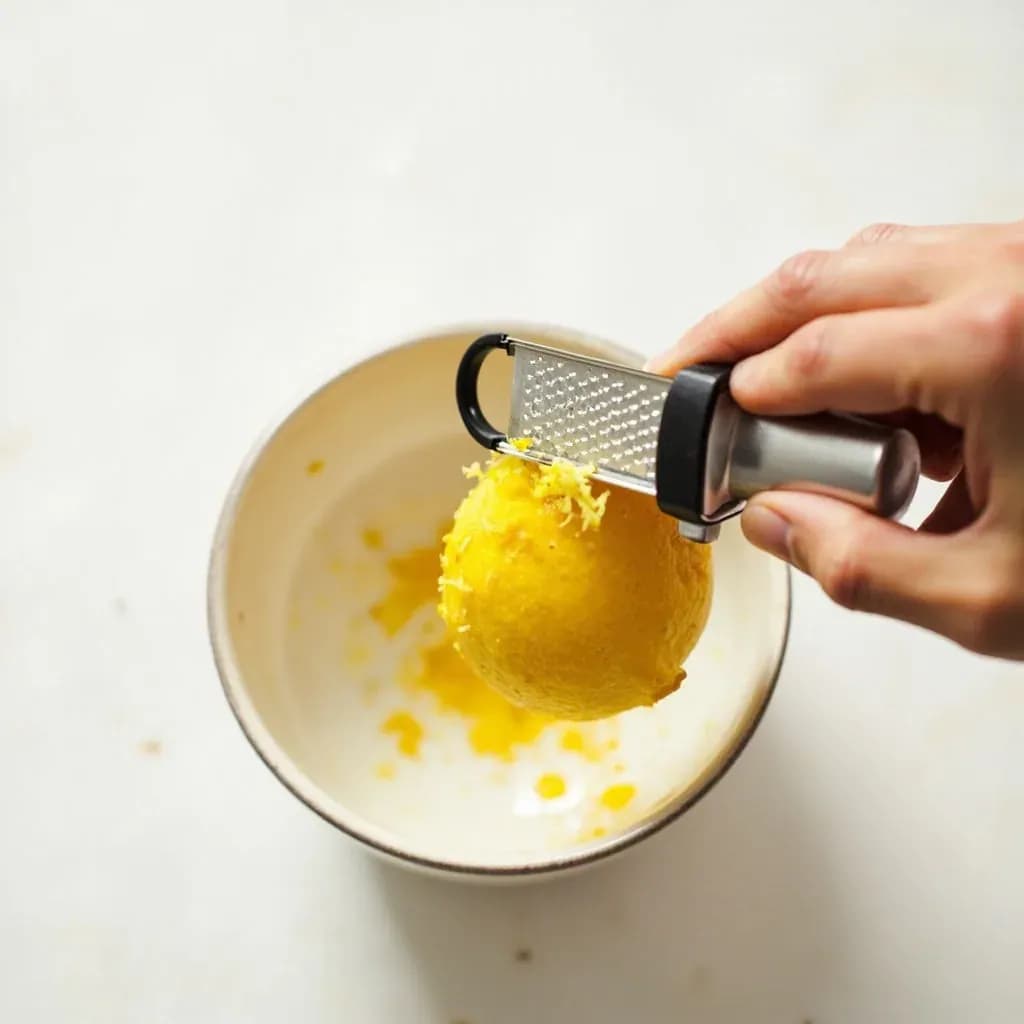
Zesting removes the thin, colored outer layer of citrus peel, which holds the fruit's aromatic essential oils. It is done with a microplane, fine grater, or zester to season baked goods, dressings, marinades, and garnishes. The key is to take only the colored skin and avoid the bitter white pith beneath. A light pass keeps the oils intact for maximum perfume.
Zesting is the practice of removing only the colored outer skin of a citrus fruit — the flavedo — to capture the essential oils that give lemons, limes, oranges, and their relatives their unmistakable fragrance. That thin, glossy layer is a reservoir of volatile aromatic compounds, and it is responsible for most of the bright, floral character we associate with citrus. The pale pith (the albedo) sitting just beneath it carries bitter compounds, so the entire craft of zesting amounts to a discipline of stopping at exactly the right depth.
Because those oils are volatile and heat-sensitive, fresh zest behaves more like a leafy herb than a dried spice. Fold it into batters raw, stir it into a sauce at the end of cooking, or shower it over a finished dish so its perfume survives. A small quantity of zest is far more aromatic than a much larger volume of juice, which is why recipes that call for "zest and juice" lean on the zest for fragrance and the juice for acidity — the two are not interchangeable, and dropping the zest will flatten a dish even when the juice is intact.
The shape of the zest matters as much as the quantity. Fine rasp-grated shreds melt invisibly into custards, doughs, and dressings. Long channel-zester curls crown cocktails and pastries. Wide peeler strips become candied peel, marmalade, or slow infusions in oil and sugar. Choosing the tool is, in effect, choosing how the peel will read on the plate.
- Difficulty
- Easy
Types & varieties
Very fine, fluffy shreds produced by a rasp-style grater; ideal for baking, salad dressings, marinades, and anywhere the zest should melt into the dish
Long, thin curls cut by a five- or six-hole channel zester; classic for cocktail garnishes, chocolate work, and fine pastry decoration
Larger, chunkier pieces from the smallest holes of a box grater; good for marmalade, chutney, and rustic applications where a more pronounced peel texture is welcome
Wide, flat pieces lifted by a vegetable peeler or swivel peeler; the starting point for candied peel, citrus oleo saccharum, marmalade, and slow infusions
Peel removed with a paring knife, then cut into fine strips; traditional for gremolata, fines-herbes-style blends, and dishes where a clean, ribbon-like peel is desired
How to do it
- 1
Wash and dry the fruit
Rinse the citrus under warm running water and dry thoroughly. Warm water loosens any surface wax; a dry fruit is far easier to grip. If the fruit is waxed, give it a quick scrub with a clean brush under the tap.
- 2
Select the right tool for the result you want
Use a microplane for fine, fluffy zest that will disappear into batters and dressings; a channel zester for long curling strips to garnish drinks and desserts; a vegetable peeler for wide strips to candy or steep; a paring knife when you want clean, hand-cut pieces for gremolata or a relish.
- 3
Position the tool and fruit
Lay the microplane or zester flat on a board with the handle slightly raised, or hold it firmly in the air over a plate or bowl. Hold the fruit in your dominant hand with your fingertips tucked back.
- 4
Zest in long, light strokes
Press the fruit gently against the blades and draw it across the tool in a single long stroke, moving away from your body. Let the sharp edges cut; heavy pressure is unnecessary and only pushes you into the pith.
- 5
Rotate and stop at the pith
After each stroke, rotate the fruit a quarter turn to expose a fresh band of colored peel. As soon as you see white pith, shift to a new section — bitterness lives almost entirely in that pale layer.
- 6
Collect, measure, and use promptly
Sweep the zest into a small bowl with the back of a knife or your fingers. For baking, fold it into the dry ingredients first so it disperses evenly through the batter. Store any leftovers loosely covered in the refrigerator, or freeze for later use.
Reading the fruit: flavedo, pith, and where to stop
The line between zest and pith is the line between perfume and bitterness, and learning to see it is the single most important zesting skill. On most supermarket citrus, the colored flavedo is surprisingly thin — often only around a millimeter thick — and the white albedo shows itself quickly as you draw the fruit across a blade. As soon as the surface you are working on turns pale, rotate the fruit and move on. A few missed strokes will introduce bitterness that is difficult to fully correct, even with sugar or extended cooking. With thick-skinned fruits such as citron, bergamot, or navel oranges, the flavedo is generous and forgiving; with thin-skinned fruits such as Meyer lemon or key lime, work patiently and expect a smaller yield.
- Fruits with the most pith (navel oranges, grapefruit) demand a lighter touch and a sharper tool.
- Fruits with the thinnest flavedo (Meyer lemon, key lime, finger lime) yield the least zest but the most intensely aromatic.
- Organic, wax-free fruit avoids the food-grade shellac or beeswax often applied to conventional citrus; the wax is not harmful but can leave a faint residue on very finely grated zest.
Storing and reviving zest
Fresh zest loses its lift within days as the volatile oils oxidize, but it freezes exceptionally well because the oils are captured in a tight matrix of plant tissue. Freeze it in measured teaspoon portions on a parchment-lined sheet, then tip the frozen pucks into a labeled bag. They drop straight into simmering sauces, melted butter, or cake batter with no thawing required. Dried zest, by contrast, has lost most of its top-note perfume and is best used in long-cooked dishes such as braises and spice blends where its woody, slightly bitter character is an asset rather than a liability.
- Refrigerate fresh zest in a small airtight container, pressed flat to limit air exposure.
- Freeze in single-use portions to avoid repeated thawing, which accelerates aroma loss.
- Avoid drying zest in the oven; the heat drives off the very oils that make it valuable.
Common uses
Tips & pitfalls
- Always zest before juicing — a whole fruit is far easier to grip and rotate than a halved one, and the juice yield is unaffected.
- Use light pressure on a microplane; the blades are extremely sharp and do the work, and pressing harder only drives you into the pith.
- Stop the moment white pith appears and rotate to expose fresh colored peel; pith will not mellow in cooking the way zest does.
- Bring citrus to room temperature before zesting for the most fragrant release of oils.
- Choose organic or scrubbed, wax-free fruit when possible; conventional citrus is often coated in food-grade shellac or beeswax.
- Hold the fruit, not the tool, when using a microplane, and always grate away from your body to keep fingertips clear of the blades.
- Freeze leftover zest in teaspoon portions on a parchment-lined sheet, then bag and store; it drops straight into simmering sauces and batters.
- Do not swap zest one-for-one for bottled citrus extract — the flavor profile is built on fresh essential oils and is brighter, more complex, and less sweet.
Good to know
- Origin of term
- From French 'zeste', meaning a small piece of citrus peel used for flavoring; the word itself dates to at least the 17th century
- Part of fruit used
- The flavedo — the thin, colored outermost layer that holds the essential oil sacs
- Layer to avoid
- The albedo (white pith), which carries bitter compounds including limonin and, in grapefruit, naringin
- Common tools
- Microplane-style rasp, channel zester, vegetable peeler, box grater, paring knife
- Microplane history
- Adopted into the kitchen from woodworking; the Microplane brand (Michigan) introduced its first kitchen rasps in the early 1990s and helped popularize fine-zesting technique
- Approximate yield
- About 1 tablespoon of finely grated zest from one medium lemon; varies with fruit size and tool
- Storage
- Fresh zest keeps about 1 week refrigerated in a sealed container; freezes well for 3–6 months
- Fruit temperature
- Room-temperature fruit releases aromatic oils more readily than refrigerated fruit
- Aromatic strength
- Zest carries the majority of a citrus fruit's essential oil; a small amount of zest is more aromatic than a much larger volume of juice
- Difficulty
- Beginner-friendly; main risks are grating into pith or grating fingertips with a sharp rasp
Also called
Zest
Related

Chop
Cut into rough, irregular pieces — the everyday workhorse cut

Dice
Cut into uniform cubes for even cooking and a tidy look

Mince
Cut as fine as possible so flavor melts evenly into the dish

Slice
Cut into even, flat pieces for consistent cooking and presentation

Julienne
Cut into thin matchsticks for fast cooking and elegant garnish

Brunoise
Cut into tiny, precise cubes — the finest dice in the kitchen

Chiffonade
Roll and slice leafy greens into delicate ribbons

Batonnet
Cut into tidy sticks, thicker than julienne — think classic fries