Prep & Assembly
Juicing
Extracting juice from citrus, fruit, or vegetables for cooking and drinks.
Juicing presses or squeezes the liquid out of fruits and vegetables, most often citrus, for use in dressings, marinades, sauces, and drinks. Fresh-squeezed juice has a brightness that bottled juice loses. Rolling a lemon or lime firmly before cutting, or warming it briefly, breaks the inner membranes so it yields more juice.
Juicing is the mechanical extraction of liquid and water-soluble flavor from whole fruits and vegetables, leaving the pulp, fiber, and skin behind. It differs from blending in kind, not degree: juice contains only water and what dissolves in it — sugars, organic acids, pigments, some aromatic oils — while a smoothie keeps the full cell structure in suspension. That separation is what makes juice so useful in a pan sauce, marinade, or cocktail, and so fragile, because the same exposure that releases those compounds begins oxidizing them within minutes.
The technique divides into two families. Citrus juicing is reaming or pressing, usually by hand, and works because the fruit is already structured as little juice-filled sacs inside thin membrane. Produce juicing — apples, carrots, ginger, greens — needs a machine: either a fast centrifugal juicer that grates and flings juice through mesh, or a slow masticating (cold-press) juicer that crushes and presses at low speed. Match the tool to the produce: a centrifugal machine is wrong for wheatgrass, a hand reamer is right for a single lemon.
- Difficulty
- Easy
Types & varieties
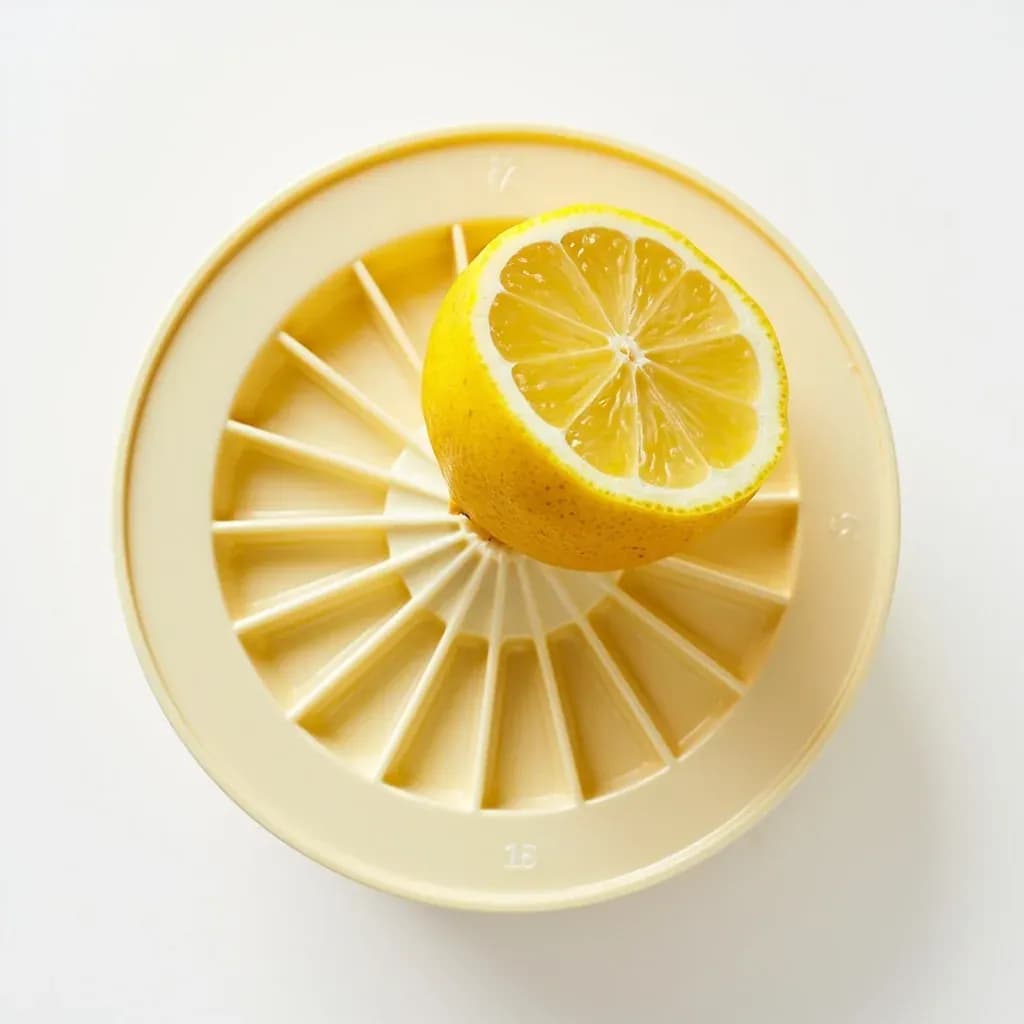
Ridged wooden, glass, or plastic cone used by hand; ideal for small quantities of lemon, lime, or small oranges.
Hinged aluminum or cast-iron press; the classic bar tool for lime and lemon halves.
Countertop press with a long handle; the standard in bars and cafés for high-volume citrus work.
Motorized reamer; a half-fruit is pressed down onto a spinning cone.
Fast and easy with hard fruits and root vegetables; produces more foam and more oxidation than masticating models.
Auger-style machine that crushes and presses at low speed; higher yield, drier pulp, less oxidation, handles greens and wheatgrass.
Two interlocking augers; the highest-yield style, used for serious green and root juicing.
Stainless three-pot kettle for batch juicing of grapes, berries, and stone fruit for preserving — no electricity required.
Puree soft fruit in a blender, then press through a fine-mesh sieve; the right tool for seedy or low-water fruit like papaya, mango, and seeded watermelon.
How to do it
- 1
Select and prep the produce
Choose ripe, unbruised fruit and fresh, firm vegetables. Wash thoroughly; peel only items whose skin is bitter (grapefruit, pineapple, most citrus) or waxy. Cut to fit the juicer feed chute and remove pits, stones, and any leaves or stems that carry bitterness — carrot tops and citrus pith are the usual offenders.
- 2
Prepare citrus separately (if using a reamer or hand juicer)
Roll the whole fruit on the counter under firm palm pressure to break the internal sacs. Halve crosswise, not pole to pole, so the cut follows the segments. Bring to room temperature if refrigerated; cold fruit gives up significantly less juice.
- 3
Set up the juicer and a clean vessel
Place a glass or stainless pitcher under the spout. If juicing multiple items, alternate hard with soft (carrot with cucumber, apple with mint) so the machine feeds continuously and the juice blends as it pours.
- 4
Extract the juice
For a centrifugal juicer: switch on first, then feed pieces steadily with the tamper — never force. For a masticating juicer: run produce through at a measured pace; many models need a minute or two of dry run at the end to express every last drop. For citrus: press and twist the half onto the reamer, flip, and ream the skin side as well — the membrane side holds the most liquid.
- 5
Strain if you want clarity
Pour through a fine-mesh strainer for clear juice — essential for cocktails, jellies, and pan sauces. Skip straining when you want body, as in a green juice or a gazpacho base.
- 6
Taste and adjust
Fresh juice almost always needs a small adjustment: a pinch of salt, a squeeze of extra acid, or a touch of sweetener (sugar, honey, or simple syrup) to balance bitterness or astringency. Dilute strong vegetable juices with water or apple juice.
- 7
Serve or store immediately
Juice oxidizes rapidly. Pour into a chilled glass over ice, or transfer to a clean glass jar filled to the brim, cap tightly, and refrigerate. Drink citrus juice within 2–3 days and other fresh juice within 24–48 hours for best flavor and color.
Matching the tool to the produce
The single most useful thing a cook can know about juicing is which tool does which job. Citrus wants a reamer or press — a centrifugal juicer is wasted on lemons and limes because it adds oxidation and foam without buying you anything. Hard produce (apples, carrots, beets, ginger) is the natural territory of a centrifugal juicer: fast, simple, and forgiving. Soft greens, herbs, and wheatgrass require a masticating or twin-gear machine; a centrifugal juicer simply cannot extract them efficiently and will leave you with wet, expensive compost. Soft, seedy, or low-water fruit — papaya, mango, banana, avocado, seeded watermelon — should never go through a juicer at all; blend and strain instead. The blender-and-strain method, often dismissed, is actually the correct technique for these fruits because it works with their structure rather than fighting it.
Storing fresh juice
Juice oxidizes fast, and storage decisions have a real effect on flavor. A few rules cover almost every situation:
- Use glass. Plastic absorbs citrus oils and off-flavors within hours.
- Fill the jar to the brim. Minimal headspace means minimal oxygen, which means slower browning and flavor loss.
- Refrigerate immediately and drink quickly. Citrus juice holds 2–3 days; other fresh juice is best within 24–48 hours.
- For longer keeping, freeze in ice cube trays and transfer the cubes to a freezer bag — useful for cooking, less so for cocktails where clarity matters.
What to do with the pulp
Pulp is flavor and fiber, and tossing it is leaving money on the counter. Citrus zest-and-pulp goes straight into marmalade. Fruit pulp enriches quick breads, granolas, and fritter batters. Vegetable pulp folds into burger mix, meatloaf, soups, and stock. Herb or carrot pulp can be spread thin on a sheet pan and dried in a low oven, then crumbled as a finishing powder.
Common uses
Tips & pitfalls
- Roll whole citrus firmly on the counter under your palm before cutting — it breaks the internal membranes and nearly doubles the juice yield.
- Microwave a halved lemon or lime for 10–15 seconds before squeezing; the heat thins the juice and the yield jumps noticeably.
- Bring citrus to room temperature before juicing — cold fruit releases significantly less juice, and this is the single most common home-bar mistake.
- Use a masticating juicer for leafy greens (kale, chard, wheatgrass); a centrifugal machine cannot extract them efficiently and will leave you with wet compost.
- Do not put bananas, avocados, mangoes, or papayas through a juicer — they have no free water and will clog the machine. Blend and strain them instead.
- Do not store fresh juice in plastic. Citrus oils absorb plastic off-flavors within hours; use glass or stainless steel.
- Fill jars to the very top with minimal headspace, cap tightly, and refrigerate immediately to slow oxidation.
- If the juice tastes flat, it is almost always under-salted or under-acidic — a pinch of salt or a squeeze of extra acid brings it to life.
Good to know
- Definition
- Mechanical extraction of liquid and water-soluble flavor from whole fruits or vegetables, leaving pulp and skin behind.
- Two main families
- Citrus juicing (reaming or pressing) and produce juicing (centrifugal or masticating/cold-press).
- Centrifugal juicer
- Spins a grater disc at 6,000–14,000 RPM and flings juice through a mesh basket; fast, easy, more foam and oxidation.
- Masticating juicer
- Auger-style machine running at 40–100 RPM; higher yield, drier pulp, less oxidation, handles greens and wheatgrass.
- Lemon yield
- About 2–3 tablespoons (30–45 ml) per medium lemon.
- Storage
- Glass jars or bottles only — citrus oils leach plasticizers and off-flavors from plastic within hours.
- Shelf life, refrigerated
- Citrus juice: 2–3 days; other fresh juice: 24–48 hours before noticeable oxidation and flavor loss.
- Vitamin C loss
- Ascorbic acid begins degrading on contact with air; more rapid in centrifugal juice than cold-pressed.
Also called
Juicing Limes (Exprimir) · Citrus Juicing · Juicing Citrus
Related

Whisk
Beat ingredients smooth and aerated with a looping wire motion

Sift
Pass dry ingredients through mesh to aerate and remove lumps

Strain
Pour through mesh to separate solids from liquid for a smooth result

Filter
Pass liquid through fine material to clarify out the smallest particles

Rice
Press cooked potatoes through small holes for fluffy, lump-free texture

Mash
Crush soft cooked food into a rustic, creamy purée

Grind
Crush food into a coarse to fine texture, from spices to meat

Grate
Shred food into fine bits against a sharp-toothed surface