Water & Steam
Simmering
Cooking gently in liquid just below the boil for soups, stews, and tender results.
Simmering holds liquid at a soft, barely-trembling temperature below a full boil so food cooks gently and evenly. It is ideal for soups, stews, beans, and sauces that need slow melding without the agitation of a hard boil. A Japanese drop lid (otoshibuta) keeps simmered foods submerged so flavor penetrates evenly.
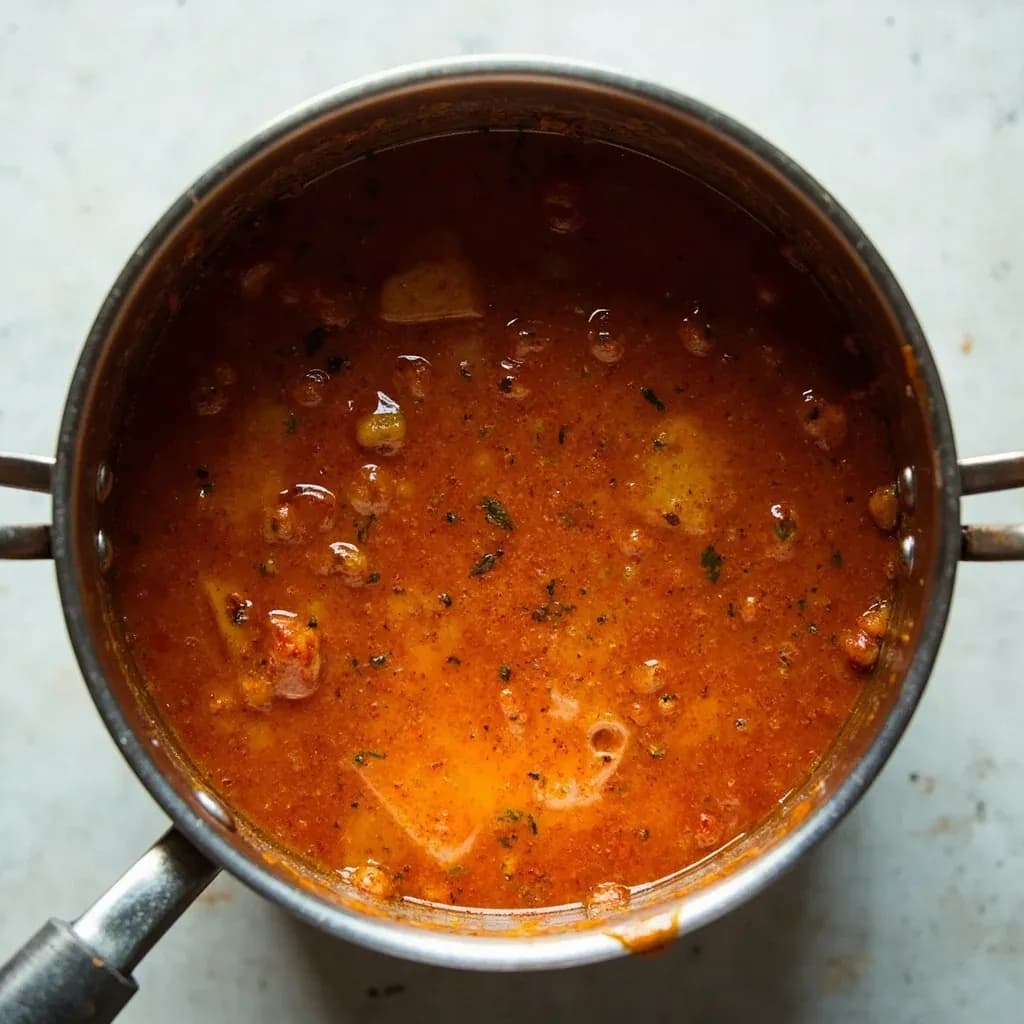
Simmering is the controlled state a pot reaches just below a full boil — somewhere between 180°F and 205°F (82–96°C), where small bubbles form on the base and sides, rise lazily, and break the surface without violence. In practice it is defined less by a number than by what you see: a shimmer across the surface, a low hiss rather than a roar, light steam, and the occasional lazy bubble popping through. It sits in the narrow window between poaching (no bubbles at all) and the rolling boil (212°F at sea level), and that window is where most slow, moist-heat cooking actually happens.
Why this matters comes down to what water does to food at different temperatures. Above about 185°F, the connective tissue in tough cuts of meat begins to break down into gelatin, while muscle proteins stay relatively relaxed — the combination that turns chuck, shank, and short rib into something spoon-tender. Push the same pot to a hard boil and the muscle proteins seize and toughen, fat emulsifies into the liquid, and the surface churns albumin into a cloudy scum. A simmer is the compromise that gives you long, even cooking without aggression: collagen converts, flavors meld, vegetables keep their shape, and stocks stay clear.
The catch is that a simmer demands attention. A heavy pot on low heat behaves predictably; a thin pot on a high-output burner can climb from a lazy simmer to a rolling boil in the time it takes to slice bread, and once a stock has emulsified or a custard has split, there is no going back. The best simmering is more about choosing the right pot, the right burner setting, and the right lid position than about recipes.
- Difficulty
- Easy
Types & varieties
Around 180–185°F (82–85°C). Occasional bubble; surface almost still. Used for delicate sauces, milk-based reductions, fish in court bouillon, and custards on the edge of setting.
185–195°F (85–90°C). Small bubbles regularly break the surface. The default for soups, stews, braises, beans, and stocks.
195–205°F (90–96°C). More active bubbling, just short of a true boil. Used when you want a brisker cook without losing it — faster reductions, sturdier vegetables, or pasta water moments before adding pasta.
Older English and French term (frémir) for the gentlest end of the range — a shiver of motion across the surface, often 180–185°F. Used for poaching-adjacent work and very fragile mixtures.
How to do it
- 1
Choose the right pot
Select a heavy-bottomed saucepan, saucier, or Dutch oven large enough to hold the liquid with several inches of headroom. Thin pots create hot spots that scorch the base and can trigger boil-overs once a steady simmer is running.
- 2
Combine liquid and ingredients
Add the liquid and any base ingredients — aromatics, bones, meat, vegetables. A cold start is fine for stocks and beans (and helps leach less albumin into stocks); for reductions and delicate sauces, start with warm or room-temperature liquid for tighter control.
- 3
Bring to a full boil
Turn the heat to high and bring the pot to a full, rolling boil. This is a starting point, not the cooking state — it gives you a known temperature to step down from rather than slowly creeping up through the simmer range.
- 4
Reduce heat to maintain a simmer
Drop the burner to low or medium-low. Look for small bubbles that lazily break the surface, light steam, and gentle movement. On gas, keep the flame inside the pot's footprint; on induction, use a low setting; on electric, you may need to cycle off the burner entirely.
- 5
Verify with a thermometer when precision matters
For custards, stocks, and reductions, an instant-read or clip-on probe should read 185–195°F (85–90°C) for a standard simmer, or 180–185°F for a slow simmer. Visual cues are usually enough, but a thermometer eliminates doubt.
- 6
Adjust with the lid and with stirring
Use the lid to trap steam and raise the simmer if it has dropped too low; remove the lid to release heat and concentrate the liquid. Stir occasionally to even out the temperature and prevent sticking on the base.
- 7
Skim and monitor
Skim foam, scum, and excess fat as it rises — critical for stocks and consommés. Keep watch: a simmer can climb to a boil if the burner is too high, the lid stays on too long, or the liquid reduces and changes the pot's heat capacity.
- 8
Finish and use
Simmer for the time the recipe calls for, or until the desired tenderness, concentration, or doneness is reached. Remove from heat and proceed — strain the stock, mount the sauce with butter, rest the stew, or take the custard off the heat while it carries over.
Why Simmer vs. Boil Matters
The distinction between a true simmer and a boil is the difference between clear stock and cloudy stock, tender meat and tough meat, a glossy sauce and a broken one. The mechanisms are physical, not stylistic.
- Collagen converts to gelatin most efficiently between roughly 180°F and 195°F over a long cook — exactly the simmer range.
- Muscle proteins tighten and squeeze out moisture above 200°F, which is why a hard-boiled stew turns stringy.
- A rolling boil emulsifies fat and suspended albumin into the liquid, turning a translucent stock milky and giving it an off, gluey flavor.
- Delicate mixtures — milk, cream, egg-based custards — curdle or scorch well below the boil; they need the gentle end of the simmer range, sometimes closer to poaching temperatures.
Equipment and Heat Control
Holding a steady simmer is mostly a problem of matching pot to burner. Heavy pots dampen the swings, flat bases transfer heat evenly, and lids act as variable resistors — closed raises the temperature, open lowers it.
- A heavy Dutch oven or saucier evens out the burner output and resists scorching on the base.
- A flame-tamer or heat diffuser under a gas ring restores the low, steady heat that high-output burners can struggle to deliver.
- On electric coils, you may need to cycle the burner off entirely once the simmer is established; on induction, low-end control is usually precise enough.
- At altitude, water boils well below 212°F, so the entire temperature window shifts downward — rely on visual cues (lazy bubbles) more than fixed numbers.
Common uses
Tips & pitfalls
- Bring the pot to a full boil first, then drop the heat — it shortens time to temperature and prevents the long warm-ups that can toughen proteins.
- Use a heavy-bottomed pot (Dutch oven, saucier) to even out the heat and avoid scorching on the base.
- Skim foam, scum, and surface fat as it rises if you want a clear stock, a refined sauce, or a non-greasy stew.
- A true boil toughens proteins and emulsifies stock into a cloudy liquid — hold the pot just below it so the surface trembles rather than churns.
- 'Simmer uncovered' signals that the cook wants reduction; 'simmer covered' wants gentle moist cooking and minimal evaporation.
- At altitude, water boils well below 212°F, so 'simmer' shifts lower in absolute terms — rely on visual cues (lazy bubbles) more than numbers.
- An instant-read thermometer set for 185–195°F removes guesswork for custards, reductions, and stocks.
- Never walk away from a long simmer — a forgotten pot can climb to a boil in minutes and ruin a clear stock or split a sauce.
Good to know
- Temperature range
- 180–205°F (82–96°C), just below a full boil
- Visual cue
- Small, lazy bubbles breaking the surface; light steam; surface barely disturbed
- Reference points
- Poaching 160–180°F; rolling boil 212°F (100°C) at sea level
- Heat setting
- Low to medium-low once liquid is up to temperature
- French terms
- Mijoter (slow simmer) and frémir (tremble at the edge of boiling)
- Italian term
- Sobbollire or cuocere a fuoco lento
- Spanish term
- Cocer a fuego lento or hervir a fuego lento
- Equipment
- Heavy-bottomed pot (saucier, saucepan, or Dutch oven), lid, optional heat diffuser and instant-read thermometer
- Best for
- Tough cuts of meat, stocks, beans, grains, reductions, custards, soups, and stews
Also called
Simmer · Mijoter
Dishes that rely on it
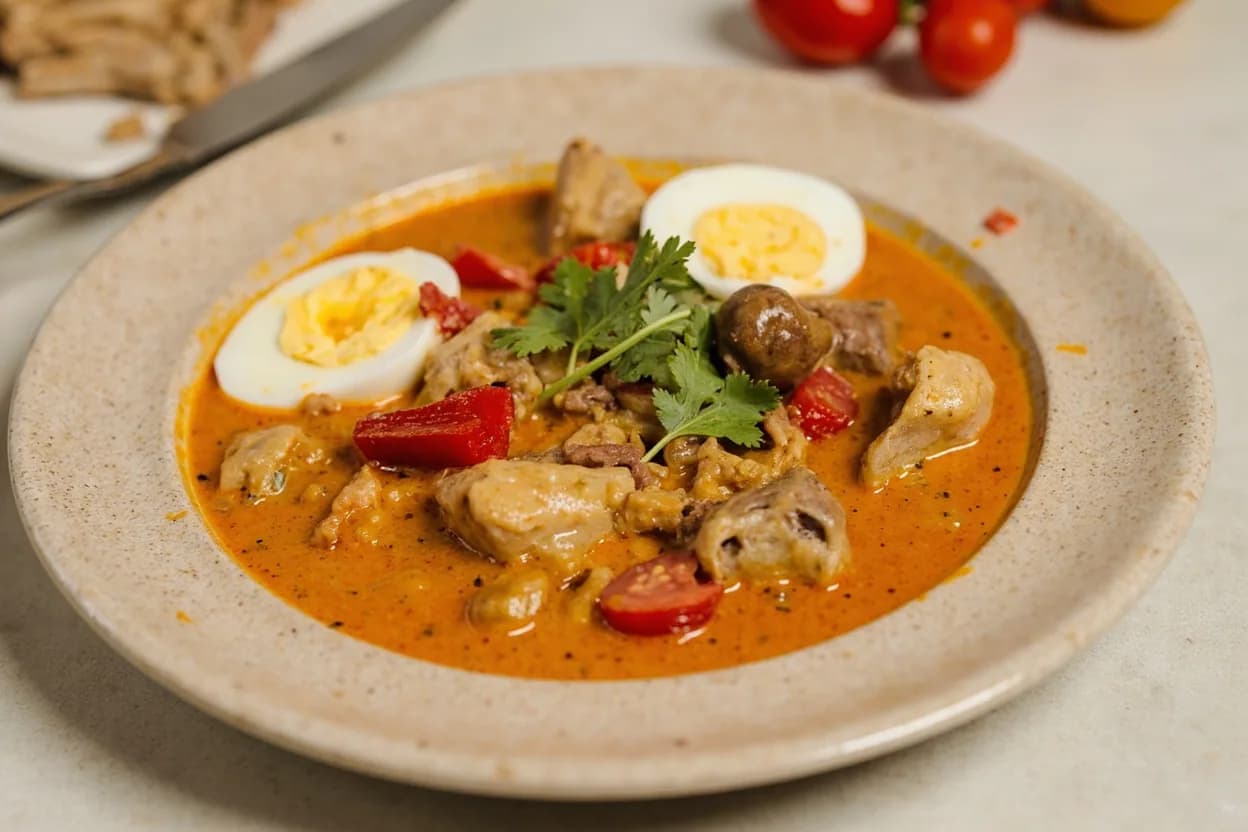
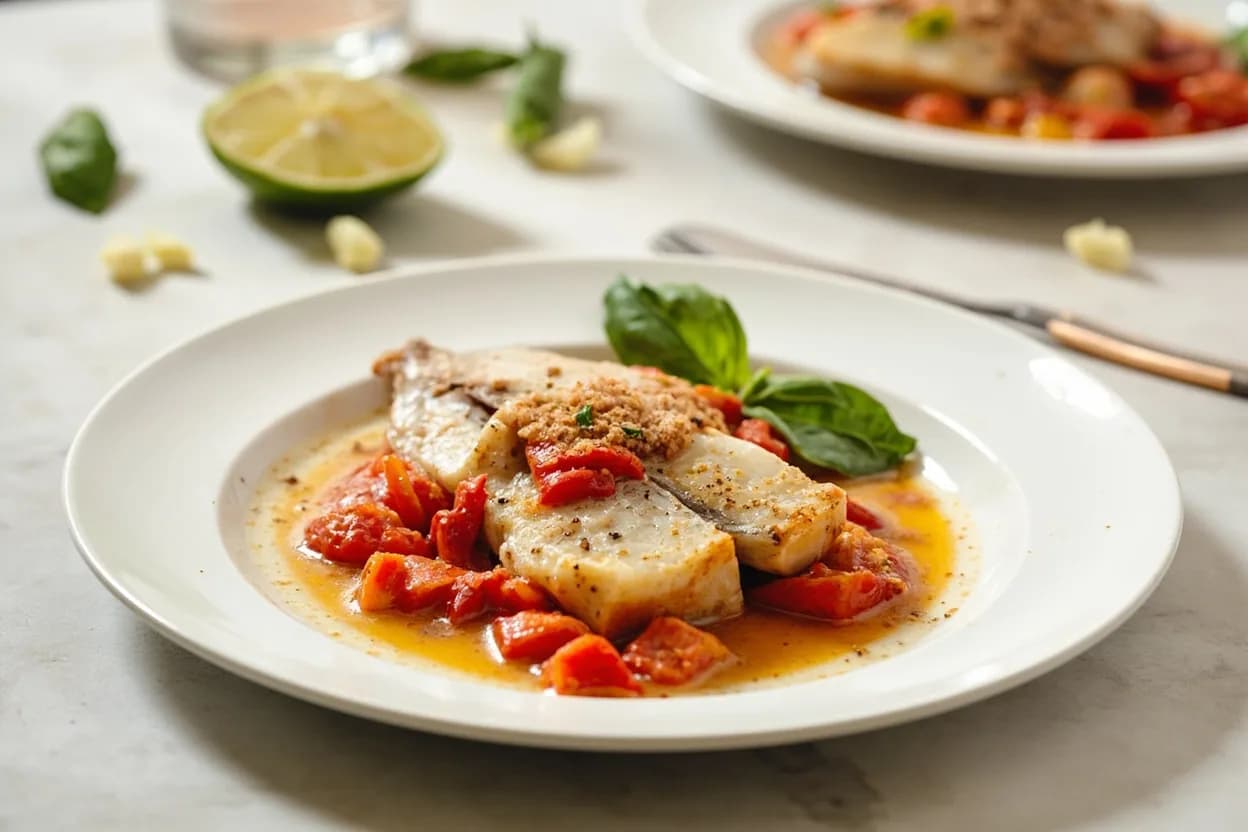
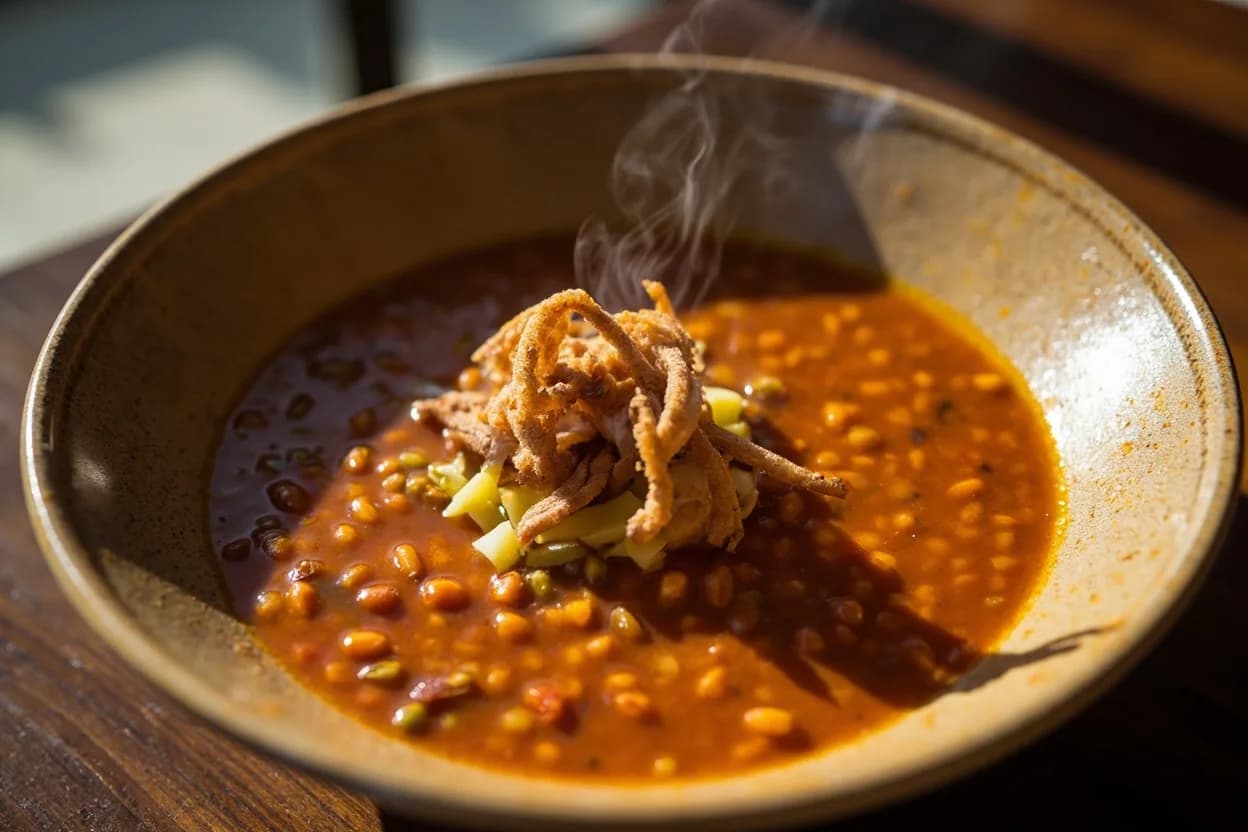
Related

Boil
Cook in vigorously bubbling liquid at full rolling heat

Simmer
Hold liquid at a gentle shimmer for tender, unhurried cooking

Poach
Cook gently in barely-trembling liquid for silky, tender results

Steam
Cook in rising vapor to keep color, nutrients, and shape intact

Blanch
Plunge briefly in boiling water, then shock cold to lock color

Braise
Sear, then cook slow in a little liquid until fall-apart tender

Stew
Simmer bite-sized pieces fully submerged into a rich, unified pot

Sous-Vide
Seal and cook in precise warm water for edge-to-edge doneness