Transform & Preserve
Reduction
Concentrating a stock, wine, or sauce by simmering it down for intense flavor.
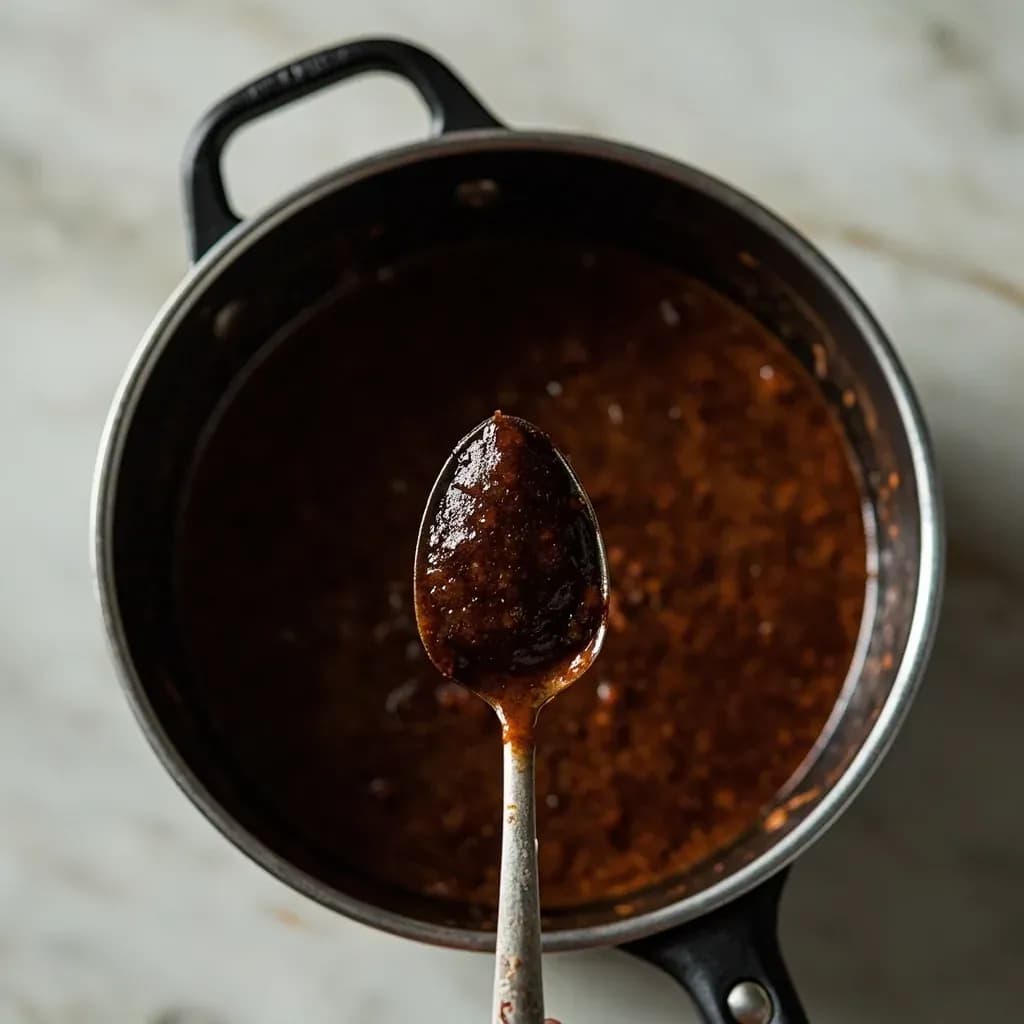
Reduction simmers a liquid such as stock, wine, or sherry until much of its water evaporates, concentrating flavor and thickening the result into a glaze or sauce. It underpins classic preparations like a la vizcaina sauce and sherry glazing, where the reduced liquid carries the dish's character. Reducing over moderate heat and tasting as you go prevents the sauce from turning overly salty or bitter.
Reduction is the controlled, lid-off simmering of a liquid — stock, wine, vinegar, cream, juice, or even butter — until a meaningful share of its water has evaporated, leaving behind a smaller volume with more concentrated flavor, color, body, and often viscosity. The mechanism is simple: water leaves as vapor, and everything dissolved or suspended in that water (sugars, salts, acids, proteins, aromatics, pigments) is left behind in a tighter package. It is, in practical terms, the most fundamental concentration technique a cook has, and almost every classical sauce passes through a reduction at some stage of its construction.
Reduction behaves predictably once you understand what concentrates and what escapes. Water and ethanol are the things that leave; salt, acid, sugar, bitter compounds, tannins, and milk solids all intensify roughly in proportion to the volume lost. The most volatile aromatic compounds (esters, light terpenes, the fruity top notes of wine) cook off early as well, which is why a long-reduced wine smells savory and tannic rather than fruity. That is also why a stock that tasted properly seasoned at room temperature can become a salt lick after two hours of simmering, and why a wine reduction tastes sharper and more astringent than the wine you started with. The cooking window also narrows as the liquid shrinks: a four-liter stock can roll for an hour without much danger, but the final 20 percent of volume thickens in seconds, and a sauce can blow past its target — from nappe to paste, from nappe to scorched — in under a minute.
Beyond stocks and pan sauces, reduction is the underlying move behind syrups and glazes, demi-glace and meat glaze, gastriques, beurre blanc, beurre noisette, coulis, passata, and the final mounting of a sauce with cold butter. The skill is less about a recipe than about reading the pan: watching the bubble size, listening to the simmer, skimming with discipline, and learning the wooden-spoon trail that signals nappe. Master that, and almost every savory and many sweet preparations get easier.
- Difficulty
- Easy
Types & varieties
Brown or white stock simmered down to demi-glace or further to a meat glaze (glace de viande); often hours of gentle cooking.
Dry white or red wine simmered, often au sec (nearly dry), to build the base of pan sauces, beurre blanc, bordelaise, and marsala sauces.
Balsamic, sherry, or red-wine vinegar cooked down alone to a syrup or with caramelized sugar as a gastrique.
Caramelized sugar deglazed with vinegar and reduced — the sweet-sour backbone for many classical sauces.
Heavy cream simmered to thicken pasta sauces, pan sauces, and potage; lactose and milk-fat solids concentrate.
Roasting-pan drippings deglazed with wine and/or stock, then reduced to nappe for a roast jus.
Juice or sugar syrup boiled down to a glaze (orange, pomegranate, maple) for desserts and plating.
Strained tomatoes or fresh tomatoes reduced to intensify flavor and thicken for pasta, pizza, and braises.
Fruit purées or coulis cooked down for intensity and spoonable consistency in dessert work.
Butter cooked until its water evaporates and milk solids toast to a nutty amber — a dry-heat reduction producing a flavored fat.
How to do it
- 1
Choose and prep the base
Strain stocks, sauces, or juices through a fine sieve so impurities and excess fat are removed; clarity at the start gives clarity at the finish. Skim visible fat from cold stocks before heating, and taste the base so you know its starting seasoning.
- 2
Select the right pan
Use a wide, shallow pan — a sautoir, saucier, or rondeau — with straight or slightly sloped sides. More surface area means faster, more even evaporation. Avoid filling the pan more than two-thirds full; boilover and splatter are real risks.
- 3
Bring to temperature
Set over medium heat and bring to a gentle, steady simmer — small bubbles breaking the surface, not a hard rolling boil. Stocks and long reductions tolerate a slightly stronger simmer; cream, wine, and butter reductions want to stay calm to avoid scalding or breaking.
- 4
Skim and monitor
Skim foam, scum, and surface fat with a ladle or flat spoon during the first phase. Stir occasionally from the bottom only as needed to prevent sticking; aggressive stirring re-incorporates fat you have just skimmed and dulls the gloss.
- 5
Reduce to target
Simmer until the liquid reaches the volume and consistency you need. Sauces typically target nappe — a spoonful should coat the back of a spoon and hold a clean trail. Stocks can be taken to demi-glace (roughly half their body) or further to a few tablespoons of glossy meat glaze.
- 6
Strain (optional)
For a polished sauce or glaze, pass the reduction through a fine chinois or a cheesecloth-lined sieve to remove any coagulated proteins or sediment released during the simmer.
- 7
Mount with butter (optional but classic)
Off the heat, whisk in cold cubed butter a piece at a time. Each cube should emulsify fully before the next is added, giving the sauce gloss, roundness, and a final lift in viscosity through emulsion rather than starch.
- 8
Season and adjust
Taste and adjust salt, acid (a few drops of lemon juice or vinegar), and sweetness only at this stage. If the reduction has gone too far, loosen with a small splash of the original liquid — wine, stock, or cream — rather than water, which would dilute flavor. Serve immediately or hold warm in a bain-marie.
Reading doneness
Reduction has no timer; it has cues. Learn them and you can stop a sauce at exactly the body you want.
- Nappe test: dip a wooden spoon or ladle, draw a finger through the coating on the back. If the track holds and the sauce closes slowly, you are at nappe. A metal spoon runs clean even when the sauce is still too thin, so favor wood for the test.
- Bubble size: large, lazy bubbles that break with a soft plop usually signal a sauce near its target. Tight, foamy bubbles suggest you are still well above it; a sudden quieting of the surface often means you are within seconds of being done.
- Sheet test: tilt the pan; a finished reduction sheets off the surface in a clean, glossy curtain rather than running like water.
- Weight on the tongue: a properly reduced sauce feels heavier and more coating than its volume suggests. Taste as you go — flavor should intensify in step with thickness, not outpace it.
- Final-mile warning: the rate of thickening accelerates sharply in the last 20 percent of volume. Plan to pull the pan off the heat a touch early and let carryover finish the job.
Why it works
Understanding what leaves the pan and what stays makes you a faster, more accurate cook.
- Water and ethanol evaporate first; everything dissolved or suspended in them — salts, sugars, acids, pigments, proteins, starch fragments — concentrates in the remaining liquid.
- Volatile aromatics (esters, light terpenes, ethanol) cook off early, which is why a long-reduced wine smells different from the glass you poured: the fruity top notes are gone, the savory and tannic backbone remain.
- Milk solids and proteins coagulate and brown as water leaves, contributing body, color, and flavor in cream reductions and beurre noisette.
- Acidity tastes sharper after reduction because the same acid molecules sit in less water — total acidity barely changes, so pH holds roughly steady, but the perception of sourness intensifies.
- Sugar concentration raises the boiling point slightly and produces thicker, glossier syrups as you pass roughly 60 percent sugar by weight.
Common uses
Tips & pitfalls
- Choose a pan with as much surface area as practical — wide and shallow beats tall and narrow for both speed and even evaporation.
- Hold a gentle simmer, not a hard rolling boil, especially for cream, wine, and butter reductions; violent boiling scalds dairy, breaks emulsions, and drives off aromatics before they can meld.
- Strain stocks and bases before reducing; impurities concentrate along with flavor and will muddy the finished sauce.
- Skim fat and scum as it rises during the early simmer — the cleaner the base going in, the glossier and more refined the reduction coming out.
- Season only at the very end. Salt, acid, and bitter compounds all concentrate as water leaves, so under-season the base and adjust after reduction.
- Watch the final 20 percent of volume closely — thickening accelerates sharply, and a sauce can scorch or jump past nappe in under a minute.
- Finish hot sauces by whisking in cold butter (monter au beurre) off the heat for shine, roundness, and a slight thickening through emulsion.
- If a reduction has gone too far, loosen with a small amount of the original liquid (wine, stock, cream) rather than water — it preserves flavor balance.
- Never cover the pan; you need a steady escape path for water vapor, and a lid will cause condensate to drip back and stall the process.
- Use a wooden spoon to test nappe — it holds a clean trail of the sauce across its surface. A metal spoon runs clean even when the sauce is still too thin, which misleads many cooks.
Good to know
- Category
- Moisture-removal / concentration technique
- Primary mechanism
- Evaporation of water over heat to concentrate flavor, color, and body
- Target consistency (sauces)
- Nappe — lightly coats the back of a spoon
- Typical temperature
- Gentle simmer (≈85–95°C / 185–205°F); higher boil for stocks and glazes
- Equipment
- Wide, shallow pan (sautoir, rondeau, saucier); never covered
- Time range
- Minutes (cream, pan sauce) to several hours (stock → demi-glace → glace)
- Yield loss
- Often 50–90% volume lost; a full stockpot reduces to a few tablespoons of glaze
- Salt behavior
- Salt and acidity concentrate with reduction — season only at the final stage
Also called
Reducing Stock · Slow Reduction · Sherry Glazing · A la Vizcaina
Dishes that rely on it
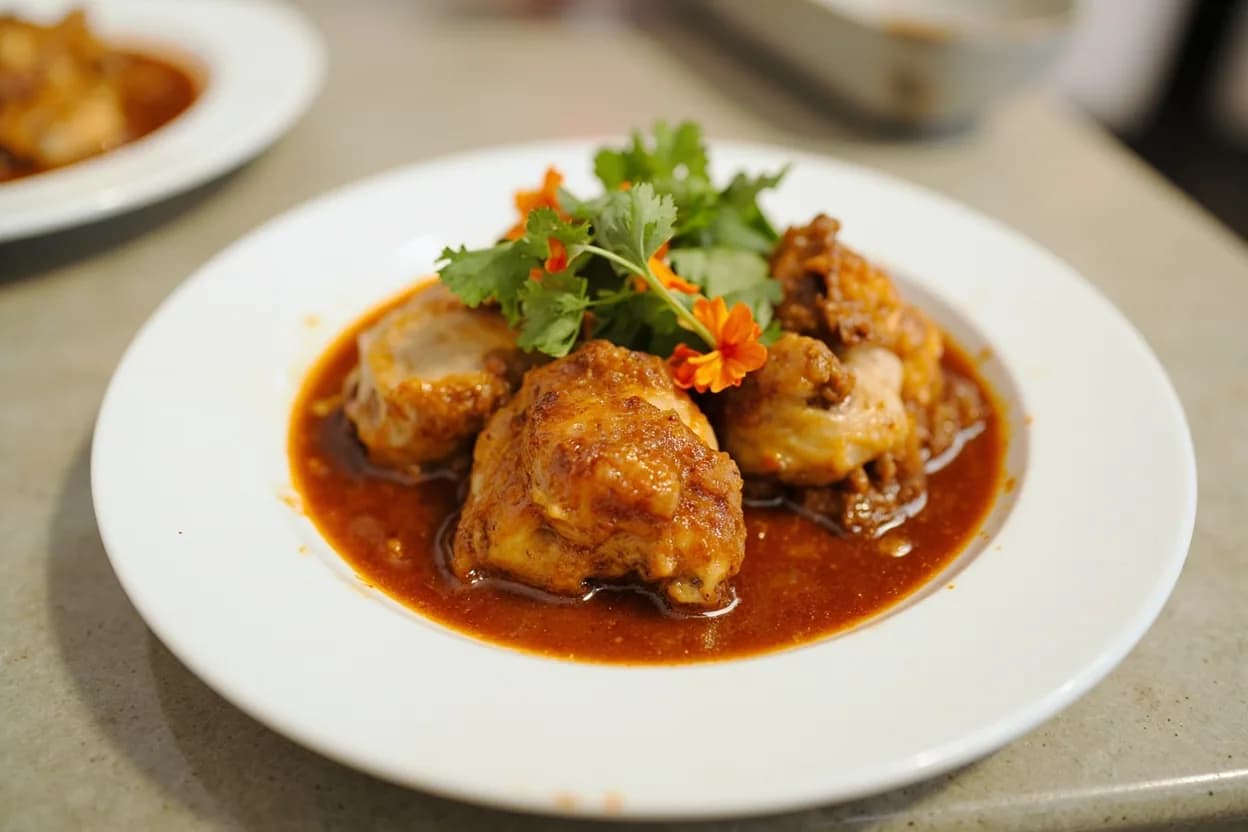
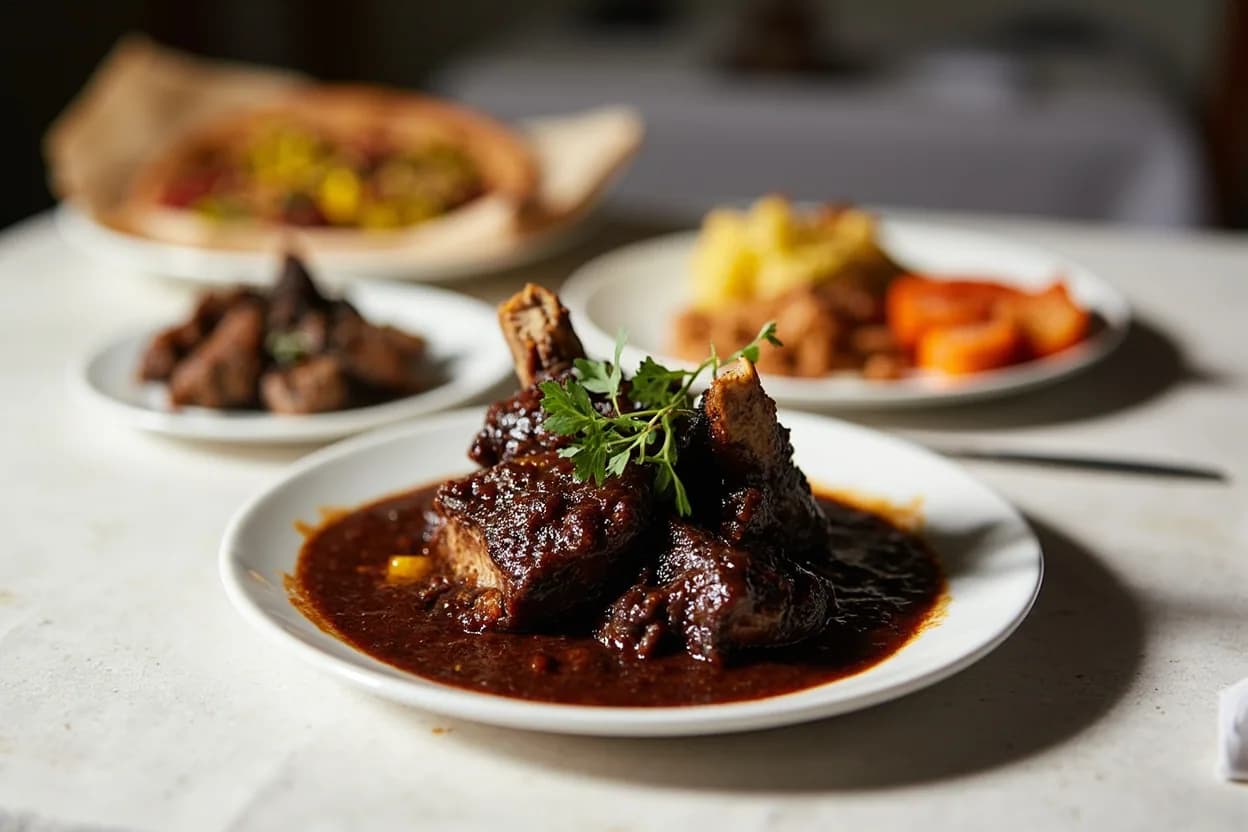
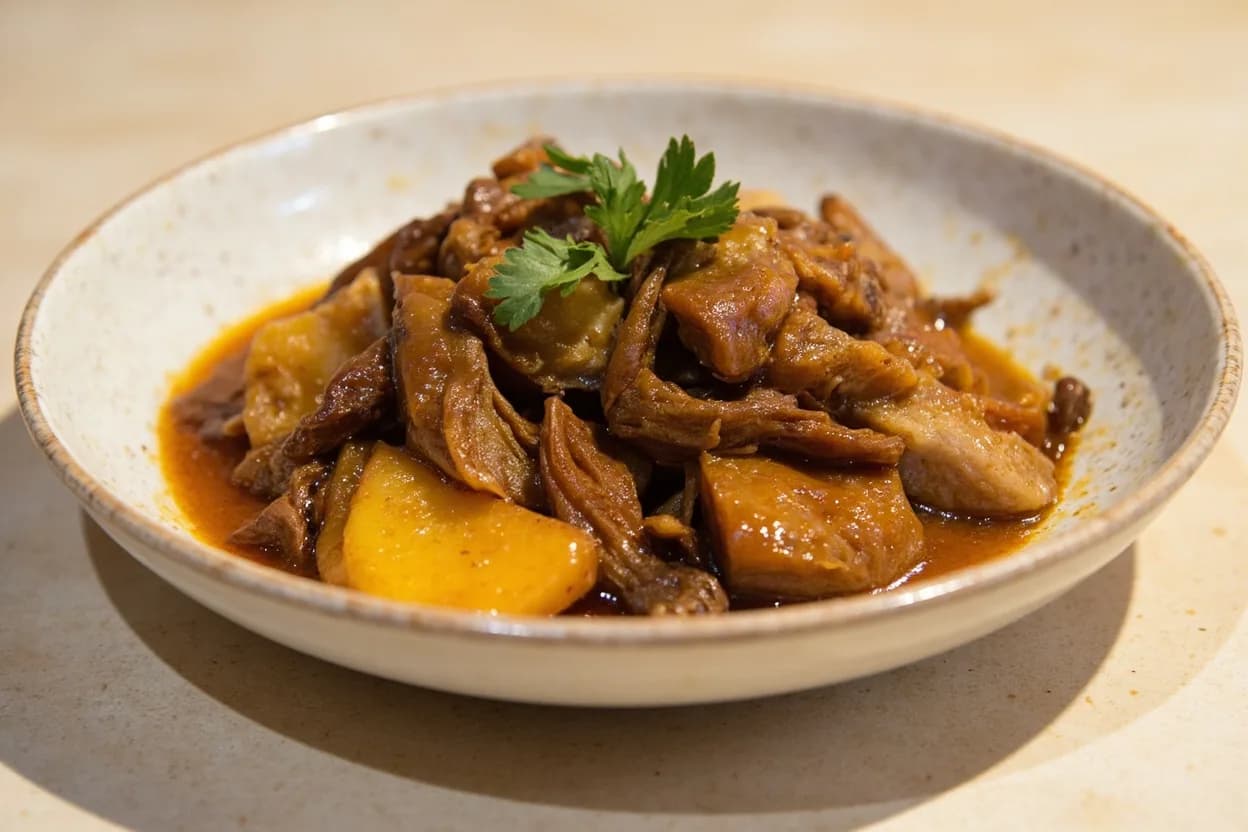
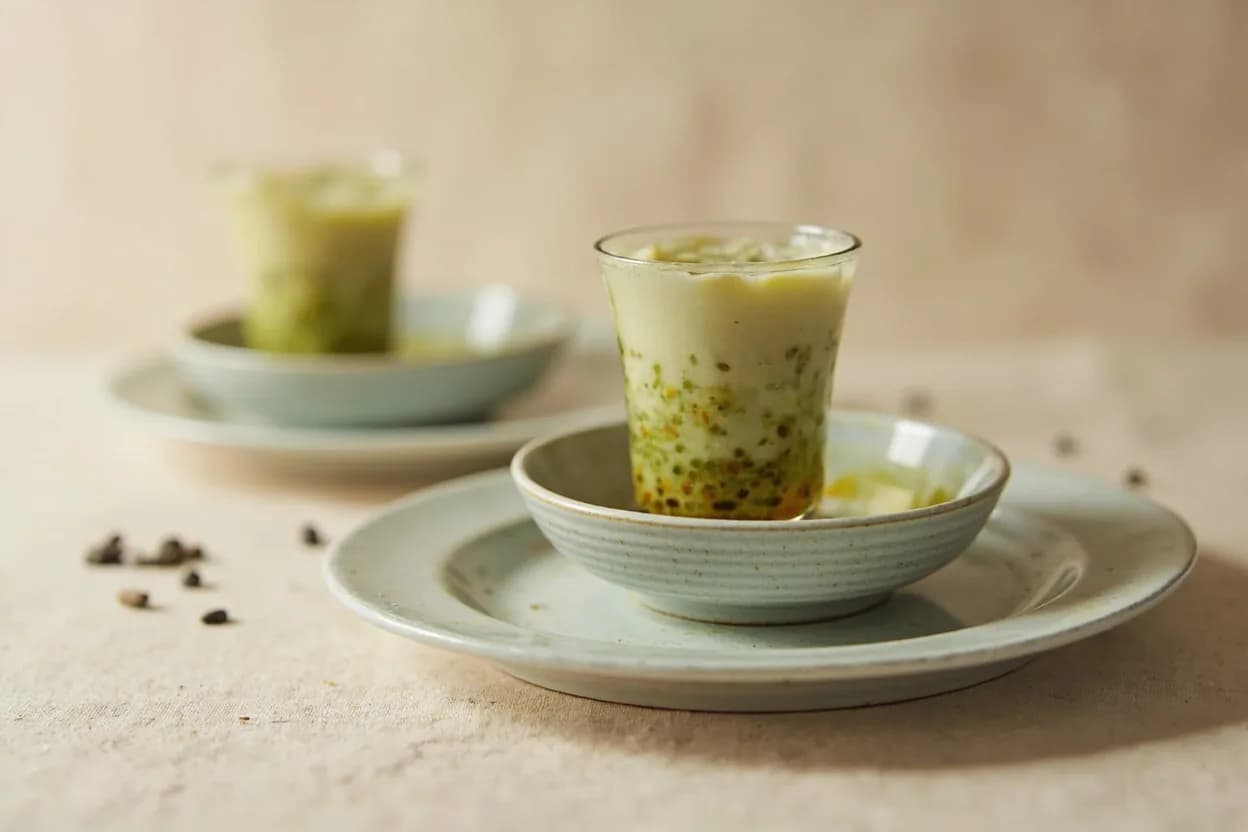
Related

Confit
Cook slowly submerged in fat for silky tenderness and keeping

Cure
Draw out moisture with salt and time to preserve and concentrate

Pickle
Steep in acidic brine for bright, tangy, crunchy preservation

Ferment
Let friendly microbes transform food into tangy, complex flavor

Marinate
Soak in a seasoned mix to flavor and tenderize before cooking

Brine
Soak in salt water so meat stays juicy and seasoned throughout

Dehydrate
Slowly dry out moisture to concentrate flavor and extend shelf life

Cold-Smoke
Perfume cured food with smoke without cooking it through