Heat & Fire
Making a Gastrique
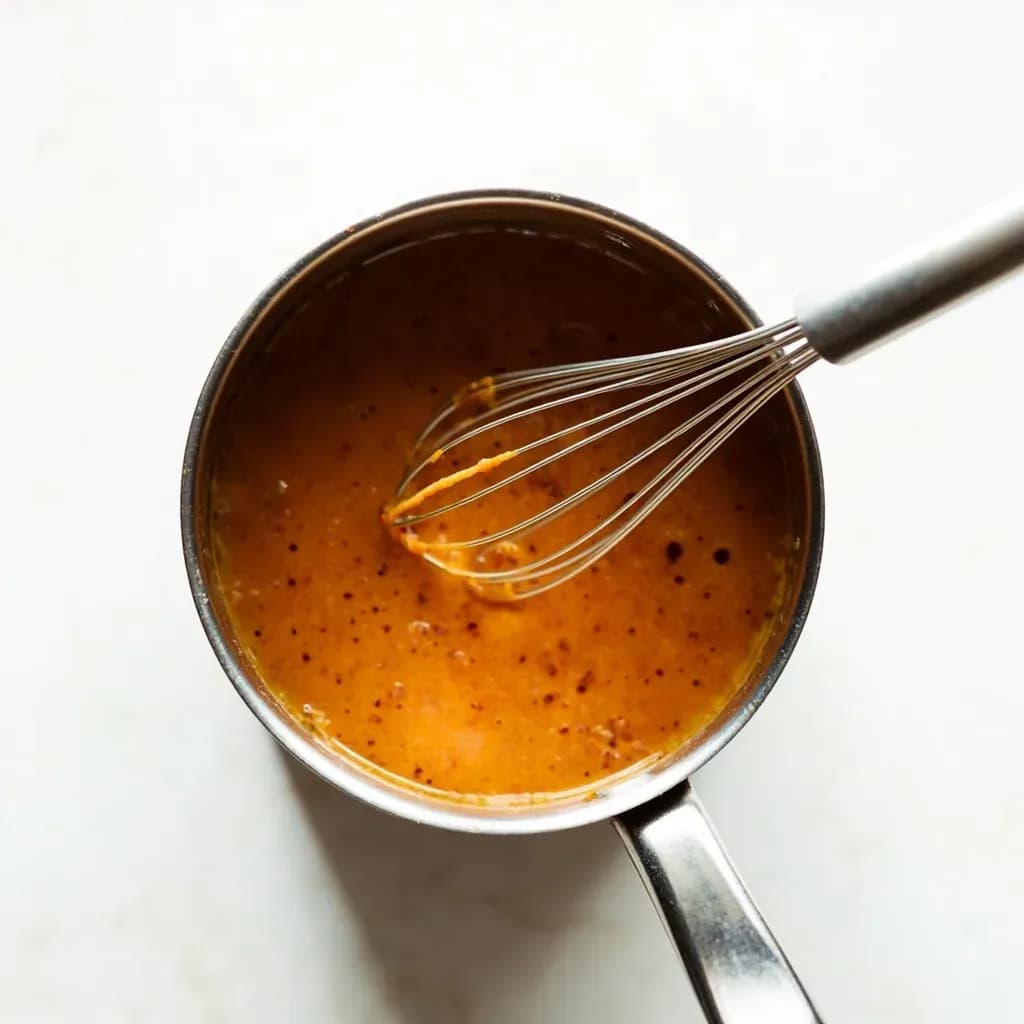
Cooking sugar to caramel then deglazing with vinegar to make a sweet-sour sauce base.
A gastrique is made by caramelizing sugar and then carefully adding vinegar to dissolve it into a glossy sweet-and-sour syrup, often finished with fruit, stock or aromatics. It balances richness in dishes by cutting fat with acidity, and is classic with duck, pork and roasted vegetables. Adding the vinegar causes vigorous steam, so the pan is handled with care.
A gastrique is the French classical technique for building a sweet-and-sour foundation from caramelized sugar and vinegar, used to bridge richness and acidity in a single ingredient. It works because the caramel contributes not only sweetness but also deep, slightly bitter toasted notes from the thermal breakdown of the sugar, while the vinegar (often supported by wine, stock, or fruit juice) supplies the bright acid that cuts through fat and lifts the caramelized surfaces on seared meat. The technique is fast — well under ten minutes of active work — but unforgiving: sugar jumps from golden to acrid in seconds, and a cold liquid hitting a hot caramel can erupt into a violent steam cloud. Once reduced by roughly a third, the gastrique becomes a light, glossy syrup that holds its acidity yet clings to whatever it meets, which is why it appears under duck, pork, foie gras, and roasted fruit in both classical and modern kitchens. In practice, gastrique is less a single recipe than a method: pick a vinegar, choose a ratio, control the caramel, and you have a building block for everything from a quick pan sauce to a full canard à la bigarade.
- Difficulty
- Medium
Types & varieties
The classic workhorse; pairs with duck, pork, lamb, and game, and is the most traditional French version
Lighter and more delicate; suited to fish, chicken, and sweetbreads
Nutty depth; excellent with foie gras, seared foie, and roasted pears
Naturally sweet and syrupy — cut the added sugar slightly and finish with aged balsamic for a glossy glaze on strawberries, beef, or duck breast
Fruity and mild; traditional with pork, sausages, and root vegetables
Bright and elegant; common with seared scallops, oysters, and rich white fish
Sugar caramelized and deglazed with fruit juice or purée (orange, raspberry, mango, blackberry) instead of, or alongside, vinegar; used in modern plating and duck à l'orange-style sauces
Raspberry-infused vinegar replaces plain vinegar for a dessert-leaning version drizzled over duck or cheese
How to do it
- 1
Choose and measure
Decide on the vinegar (or vinegar-plus-wine blend) and the sugar-to-acid ratio you want. Classic is 1:1 by volume (e.g., 100 g sugar to 100 ml vinegar); sweeter sauces use 2:1, sharper versions use 1:2. Measure both, stage them within arm's reach, and have any additional liquid (stock, wine, fruit juice) ready in a separate container.
- 2
Make the caramel
In a heavy-bottomed, light-colored saucepan, combine the sugar with just enough water to moisten it (about 1 tablespoon per 100 g sugar) for a wet caramel, or add it dry if you are experienced. Cook over medium heat without stirring until the sugar dissolves, then swirl the pan gently. Bring to a light to medium amber, around 170–180°C, watching the color closely in the last 30 seconds — it can go from golden to burnt in moments.
- 3
Deglaze off the heat
Pull the pan off the burner. Carefully and slowly pour in the vinegar — it will steam and bubble violently. Stand back, use a long-handled vessel, and pour in a steady stream rather than all at once to control the reaction. If you are also using wine, add it after the vinegar to avoid flare-ups from the alcohol.
- 4
Dissolve and reduce
Return the pan to medium-low heat. Whisk to dissolve any seized caramel clinging to the sides; a small splash of water will re-emulsify clumps. Simmer gently until the liquid reduces by roughly one-third and reaches a light syrup that coats the back of a spoon.
- 5
Finish or store
Taste and adjust: add more vinegar for sharpness, a touch of reduced sugar syrup for sweetness, or a pinch of salt to round the acidity. Use immediately as a base, or strain into a clean jar, cool, and refrigerate. The gastrique keeps 2–3 weeks refrigerated and freezes well.
- 6
Build a sauce (optional extension)
To turn the gastrique into a finished sauce, sweat minced shallots in butter, deglaze with the gastrique, add demi-glace or chicken or veal stock, and reduce to nappé. Mount with cold butter, finish with herbs or fruit segments, and adjust the seasoning.
The sweet-sour principle
Gastrique is the French expression of a principle that runs through most of the world's cuisines: a touch of sugar, a touch of acid, and a savory anchor. Italy has agrodolce, Spain has escabeche, Germany and Alsace build similar reductions for sauerkraut and pot-roasted dishes. What distinguishes the French gastrique is the caramel step — instead of dissolving sugar into a liquid, the cook drives it to amber first, so the final sauce carries bitter, toasted notes that plain syrup never does. That complexity is why gastrique stands up to fatty, aggressively seared proteins like duck breast and foie gras, where a simple sweet-and-sour would read as flat. When you build a gastrique, you are really balancing four forces: caramelized sugar (sweet, bitter), vinegar (sharp, sometimes fruity), stock or wine (savory depth), and the fat it will eventually meet on the plate.
Choosing the right caramel
Color is the entire game in a gastrique. Aim for light to medium amber — the color of dark honey or a copper penny. At that point the sugar has begun to break down through caramelization, developing volatile compounds that read as toasted, slightly bitter, and complex. Stop one shade before it smells of coffee or scorched toast. A common mistake is to chase a deep mahogany, which delivers only bitterness and an acrid edge that no amount of vinegar can rescue. If you are new to the technique, build a wet caramel — sugar dissolved in a tablespoon or two of water per 100 g — because it heats more evenly and is far less likely to scorch in spots. Dry caramel is faster and more responsive, but it punishes a distracted cook.
Common uses
Tips & pitfalls
- Always stage the vinegar next to the pan before you start — once the sugar reaches caramel you have seconds to act and cannot safely leave the stove to fetch liquid
- Pull the pan off the heat before adding the vinegar; pouring cold liquid into sugar that is still on the burner can cause a violent steam burst and dangerous splatter
- Stop the caramel at light to medium amber, around 170°C; beyond medium-dark it becomes acrid and cannot be rescued by more vinegar
- Use a wet caramel (sugar dissolved in a small amount of water first) when learning — it heats more evenly and is far less prone to hot spots than dry sugar
- Swirl the pan rather than stirring once the sugar begins to color, to avoid crystallization and to read the color evenly
- Taste the vinegar raw before using; a harsh, aggressive vinegar will dominate no matter how long you reduce
- If the caramel burns, discard it — do not try to salvage it by adding more vinegar, because the bitterness will carry through to the finished sauce
- Use a light-colored stainless or copper pan rather than nonstick, so you can judge the caramel color accurately
Good to know
- Origin
- French classical technique; the name derives from the Greek 'gastēr' (stomach), used for preparations thought to aid digestion
- Classic ratio
- Sugar to vinegar is typically 1:1 by volume, ranging from 2:1 (sweeter) to 1:2 (sharper) depending on the application
- Caramel target
- Light to medium amber, about 170–180°C / 340–355°F; beyond medium-dark the caramel turns acrid and unbalances the sauce
- Active time
- 5–10 minutes, longer if you continue reducing the deglazed liquid with stock or wine
- Yield
- Roughly 200–250 ml (¾–1 cup) from 100 g sugar and 100 ml vinegar, after a typical one-third reduction
- Acidity
- Finished gastrique usually lands between pH 2.5 and 3.5, depending on the vinegar and length of reduction
- Storage
- Keeps 2–3 weeks refrigerated in a sealed jar and freezes well for several months
- Related sauces
- Forms the foundation of bigarade (duck à l'orange), sauce aigre-douce, and many modern fruit-and-meat reductions
Also called
sweet and sour sauce · vinegar caramel
Related

Sear
Blast the surface hot for a deep-browned, savory crust

Sauté
Cook quickly in a little fat over lively heat, tossing as you go

Stir-Fry
Toss bite-sized pieces over roaring heat for fast, smoky cooking

Pan-Fry
Crisp food in a shallow layer of hot fat, turning once or twice

Deep-Fry
Submerge in hot oil for an all-over crackling crust

Roast
Cook uncovered in dry oven heat for browned edges and tender centers

Bake
Cook with steady, surrounding oven heat — the soul of bread and pastry

Broil
Hit food from directly above with fierce overhead heat