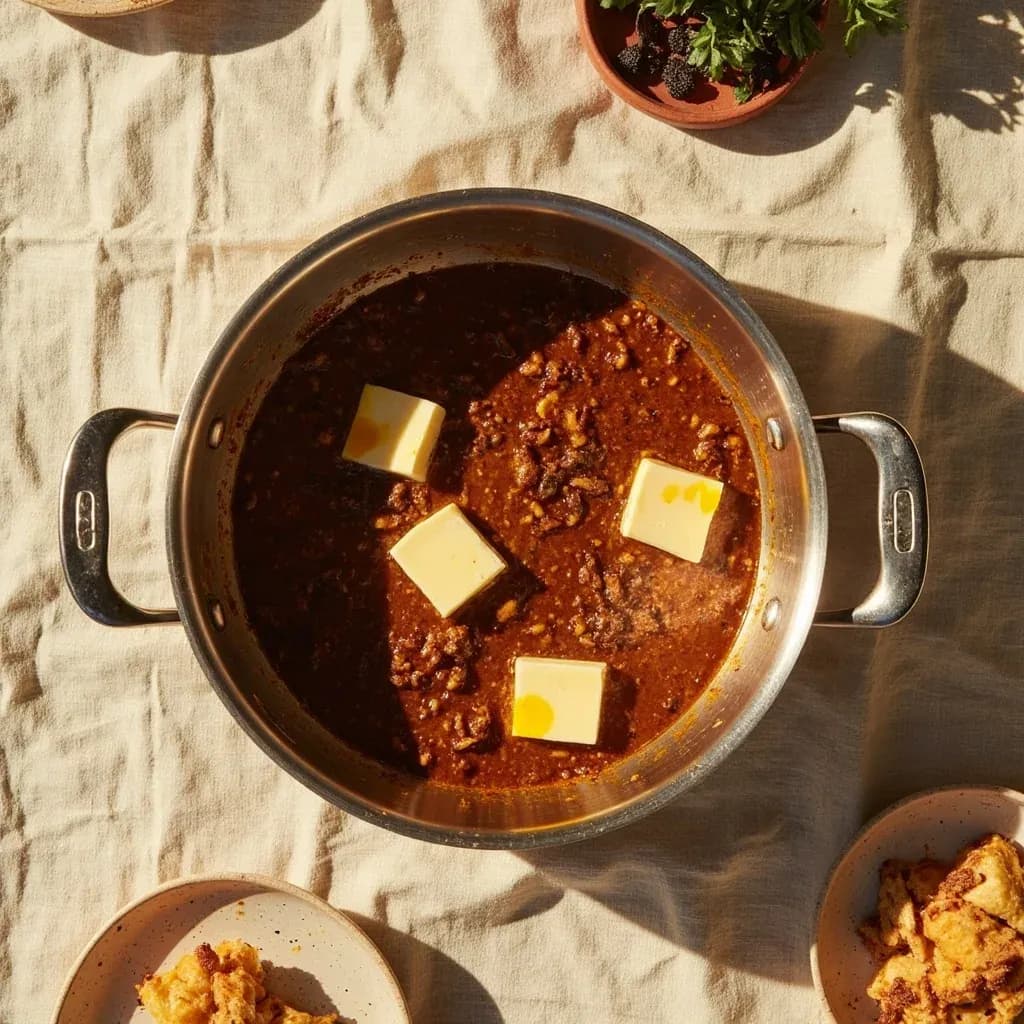
Prep & Assembly
Pan Sauce (Deglaze–Reduce–Mount)
Building a quick sauce in the searing pan: deglaze the fond with liquid, reduce to concentrate, then swirl in cold butter to gloss and thicken.
A pan sauce is the technique of building a finished sauce in the same skillet you used to sear the protein, using the browned drippings (the fond) as the foundation. It is the most useful single move in a home cook's repertoire for turning a plain seared chicken breast, pork chop, or fish fillet into something that tastes like bistro fare — and it is built in the time it takes to rest the meat. In professional kitchens it is called a sauce à la minute because, unlike the long-simmered mother sauces of classical cuisine, it is assembled to order in just minutes.
The architecture rests on three honest stages: deglaze, reduce, mount. Deglazing means pouring a liquid — wine, stock, brandy, even water — into the hot pan and scraping the fond into solution; that fond is concentrated flavor (caramelized proteins, sugars, and rendered meat juices) that would otherwise be washed down the drain. Reducing the liquid drives off water and concentrates flavor further; the sauce is ready for finishing when it lightly coats the back of a spoon (a consistency the French call nappé). Mounting — whisking in cold cubes of butter off the heat — creates a temporary fat-in-water emulsion: the butterfat and milk solids suspend in the reduced liquid, giving the sauce body, gloss, and a round, silky mouthfeel without cream or a roux.
The technique is forgiving in shape but unforgiving in detail. The pan must be stainless steel, carbon steel, or cast iron so the fond can form; the fond must be genuinely dark, not just lightly tan; the liquid must actually reduce, not just warm; and the butter must go in off the heat so the emulsion holds. Master those four disciplines and you have the skeleton for almost every classic French pan-served sauce — Bordelaise, Bercy, Chasseur, Robert, Diable, Sauce au Poivre — and a reliable answer to the question "what do I serve with this seared thing?"
- Difficulty
- Moderate
Types & varieties
Deglaze with red wine; finish with stock, shallot, and butter — the base for Marchand de Vin and Bordelaise
Deglaze with dry white wine; finish with fish or chicken stock — the base for Bercy and Sauce Vin Blanc
Deglaze with brandy and ignite to burn off the alcohol, then reduce with stock — classic for steak and duck breast
Cracked peppercorns seared with the steak, deglazed with cognac and cream, finished with butter
Stock and/or wine reduced with cream; butter is optional — common with chicken, veal, and pork
Sautéed mushrooms and shallots, white wine, a touch of tomato, stock, finished with butter and parsley
Shallots, white wine or vinegar, Dijon mustard, stock, and butter — sharp and classic with pork
White wine, shallot, cayenne or Tabasco, stock, and butter — sharp and spicy, classic for pork or game
Shallot and white wine reduced with fish stock to a syrup, then emulsified with cold butter — for sole, salmon, and sea bass
The lightest form: deglaze the roast pan with stock and simmer briefly, no butter — thin and broth-like
Quick weeknight version: shallots sweated in the pan fat, deglazed with wine and stock, finished with butter and fresh herbs
How to do it
- 1
Sear the protein and build the fond
Pat the meat, poultry, or fish dry, season, and sear in a stainless-steel, carbon-steel, or cast-iron skillet with a thin film of fat over medium-high to high heat without moving it. You want a deep brown crust and dark, sticky drippings stuck to the bottom of the pan. Transfer the protein to a warm plate to rest and pour off all but about 1 tablespoon of fat, leaving the fond behind.
- 2
Sweat the aromatics
Reduce the heat to medium. Add shallots (and garlic, peppercorns, or sliced mushrooms if using) to the fat and cook 30–60 seconds until softened and fragrant. If making a cognac-based sauce, deglaze here with brandy, then tip the pan away from you and ignite the vapors to flambé, letting the flames die down before continuing.
- 3
Deglaze the pan
Pour in a cold splash of wine, stock, brandy, or other liquid — it will hiss and steam. Scrape the bottom of the pan firmly with a flat-edged wooden spoon or flat whisk to dissolve every bit of fond into the liquid. If using wine or brandy, simmer 30 seconds to 1 minute until the harsh alcohol smell softens.
- 4
Reduce to concentrate
Add the main stock (or additional stock, cream, or other liquid if using) and simmer at a steady gentle bubble until the liquid reduces by roughly half to two-thirds. The sauce is ready for the butter when it lightly coats the back of a spoon (nappé) and tastes concentrated rather than watery.
- 5
Mount with cold butter
Reduce the heat to low — or pull the pan off the heat entirely. Whisk in a few small cubes of cold butter at a time, swirling the pan or whisking constantly, allowing each addition to melt and emulsify before adding the next. Aim for a glossy, lightly thickened sauce with the look of loose gravy. Do not let the sauce boil.
- 6
Adjust, finish, and serve
Off the heat, season with salt and freshly ground pepper, then add a small squeeze of lemon or splash of vinegar to brighten the sauce. Stir in soft herbs (parsley, chives, tarragon, or chervil) at the very end so they keep their color. Strain through a fine-mesh sieve for a glossy, restaurant-style finish, or leave unstrained for a more rustic look. Spoon over the rested protein and serve immediately.
The three stages, and why each one matters
Deglazing is not just about getting the pan clean. The fond stuck to the bottom of a hot stainless-steel skillet is a layer of caramelized protein, sugar, and rendered fat that holds most of the flavor produced by the sear. A liquid — wine, stock, brandy, even water — dissolves that layer back into solution in seconds; a flat-edged wooden spoon or flat whisk will release it more aggressively than a round spoon that floats over the surface. Use cold or room-temperature liquid rather than hot stock; the thermal shock lifts the fond more aggressively.
Reducing is concentration, not cooking. As water boils off, the sauce's flavor intensifies, its color deepens, and its body thickens slightly. A pan sauce is properly reduced when it lightly coats the back of a spoon (nappé) and tastes of its ingredients rather than of broth. If you stop reducing too early, the butter mount cannot save you — the sauce will taste thin and soupy no matter how much butter you whisk in.
Mounting is an emulsion, not a thickening agent. Cold butter whisked off the heat breaks into tiny droplets of fat that the reduced liquid suspends, giving gloss and a round, coating mouthfeel. The emulsion is temporary: it breaks if the sauce boils, sits too long, or is reheated aggressively. Treat the butter as a finishing ingredient added at the last minute, not as a cooking fat.
Troubleshooting: why a pan sauce fails
Almost every failed pan sauce fails for one of three reasons:
- No fond, because the pan was non-stick or the protein was moved too often during the sear. A pale fond makes a pale sauce; there is no recovery from a missing foundation.
- Soupy flavor, because the liquid was never reduced. A common mistake is to add the stock early and let it bubble for a minute, then mount. Simmer until the sauce coats the back of a spoon — typically a reduction of half to two-thirds — before reaching for the butter.
- Broken sauce, because the butter was added over high heat or the sauce was allowed to boil after mounting. The emulsion separates into greasy droplets and a watery liquid. To rescue a broken sauce, start over in a clean pan with a small amount of reduced stock, then whisk the broken sauce in slowly off the heat to re-emulsify.
Choosing your liquid
The deglazing liquid is the personality of the sauce. A short guide:
- Dry white wine (Sauvignon Blanc, Pinot Grigio, dry vermouth) — bright, acidic, the default for fish, chicken, and veal.
- Dry red wine (Cabernet, Merlot, Pinot Noir) — deeper, tannic, the default for red meat and duck.
- Brandy or Cognac — sweet and aromatic; flambé to burn off raw alcohol. Classic for steak (au poivre, Diane) and duck breast.
- Stock (chicken, beef, veal, fish) — the body and backbone of the sauce. Use homemade or low-sodium commercial; canned stocks are often too salty for a reduced sauce.
- Dry sherry, Madeira, Marsala, hard cider, and vermouth — all excellent substitutes that change the sauce's character meaningfully. Marsala is the traditional choice for veal Marsala; Madeira adds nutty depth to beef and game sauces.
Common uses
Tips & pitfalls
- Use a stainless-steel, carbon-steel, or cast-iron skillet — non-stick pans cannot form the fond a pan sauce depends on.
- Get the fond genuinely dark during the sear, not just lightly browned; deep color means deep flavor in the finished sauce.
- Rest the cooked protein on a warm plate while you build the sauce so it stays hot and the juices are not lost to the cutting board.
- Deglaze with cold or room-temperature liquid — the thermal shock releases the fond more aggressively than warm liquid.
- Use a flat-edged wooden spoon or flat whisk to scrape the fond; a round spoon tends to float over the surface.
- Reduce to the proper intensity before mounting — you cannot rescue a thin, weak pan sauce by adding more butter.
- Cut the butter into small cold cubes and whisk in a few pieces at a time off the heat or over very low heat; never let a butter-mounted sauce come to a rolling boil or it will break.
- Hold off on salt until the end — reduction concentrates salinity, and butter adds its own salt, so seasoning early often oversalts the finished sauce.
- A small squeeze of lemon or splash of vinegar at the very end brightens a heavy or overly rich pan sauce.
- Serve immediately — pan sauces are built to order and do not hold well; reheating can break the emulsion.
Good to know
- Origin
- French classical technique; known in professional kitchens as a sauce à la minute (minute sauce) because it is built to order in minutes
- Also called
- Sauce à la minute; the butter-finishing step is monter au beurre
- Three stages
- Deglaze (dissolve fond with liquid), Reduce (concentrate by simmering), Mount (finish with cold butter to emulsify)
- Foundation
- The fond (sucs) — caramelized proteins, sugars, and browned drippings left in the pan after searing
- Pan required
- Stainless steel, carbon steel, or cast iron; non-stick prevents fond from forming
- Target consistency
- Nappé — sauce lightly coats the back of a spoon
- Time
- Roughly 5–15 minutes from start to finish once the protein is out of the pan
- Chemistry
- Cold-butter mounting creates a temporary fat-in-water emulsion; butterfat and milk solids suspend in the reduced liquid for gloss and body
Also called
pan gravy · jus · deglaze sauce
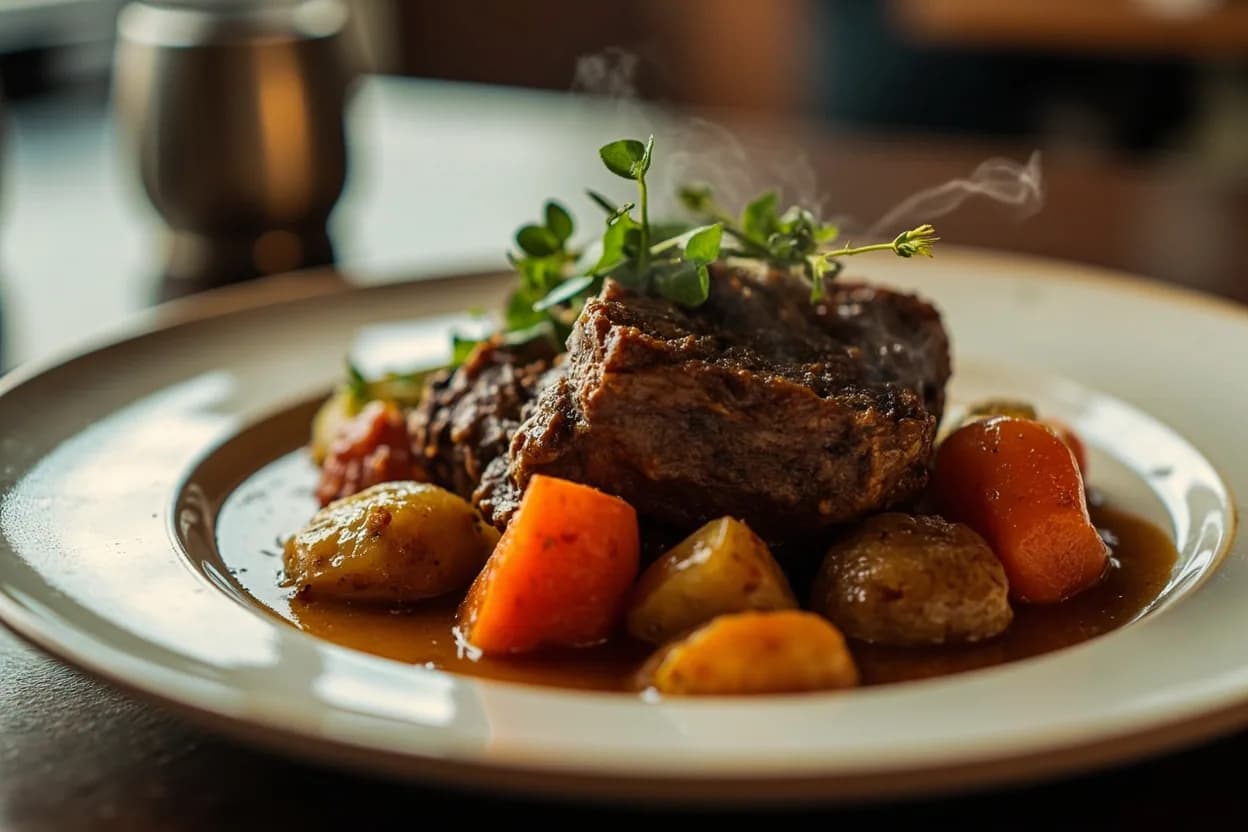
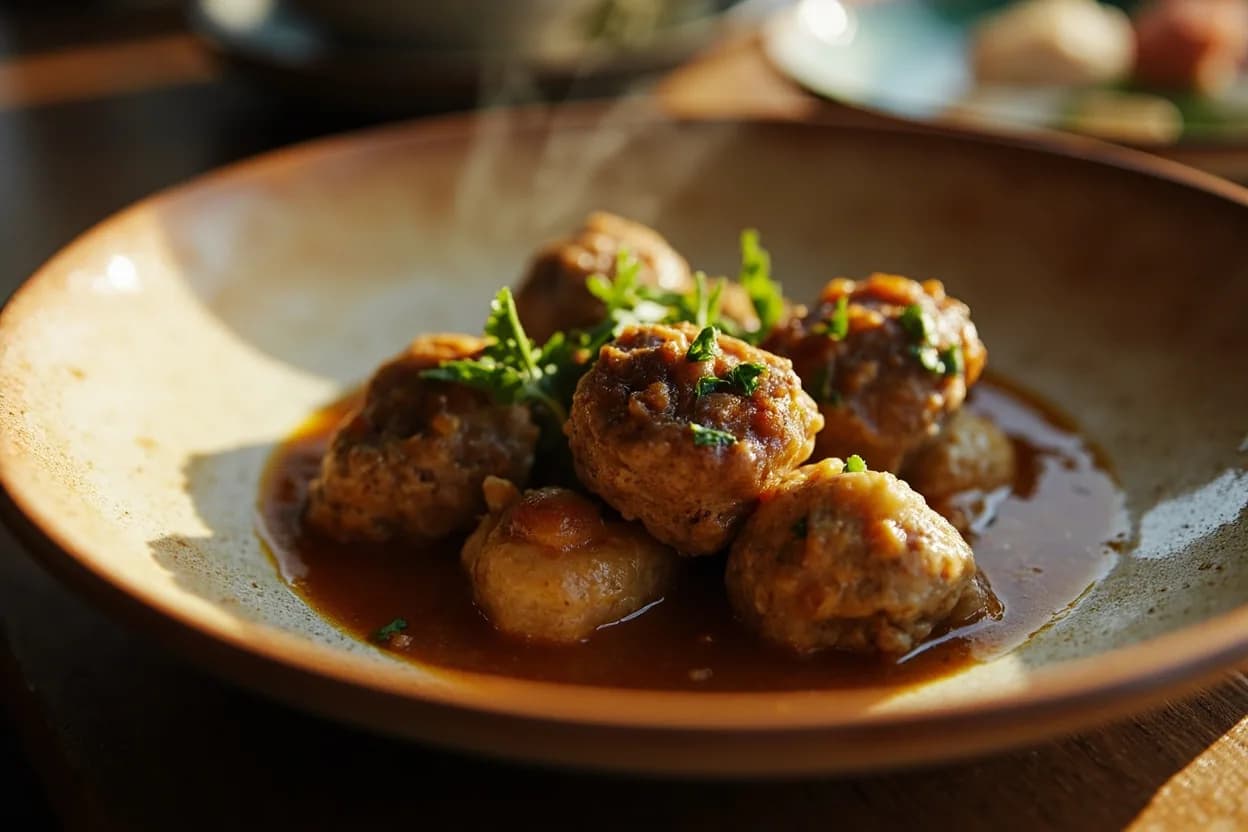
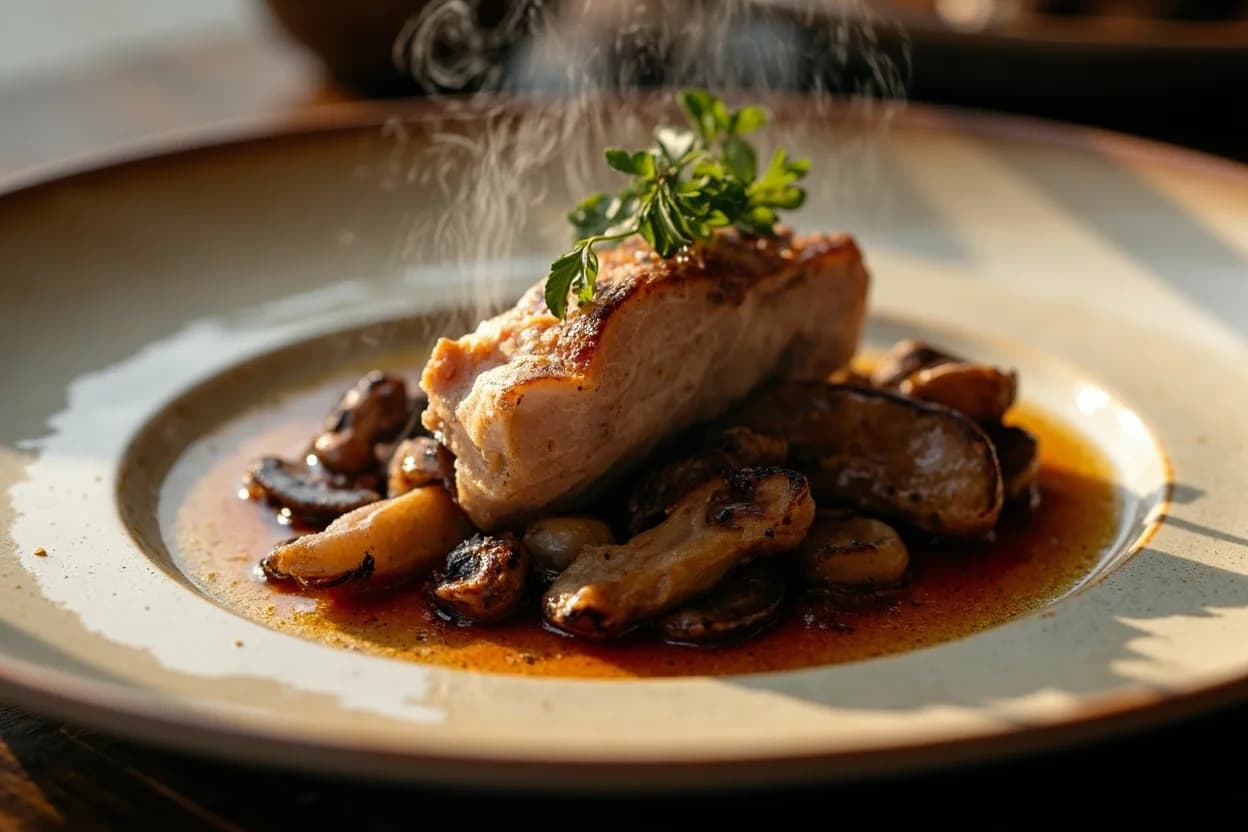
Dishes that rely on it
Related

Whisk
Beat ingredients smooth and aerated with a looping wire motion

Sift
Pass dry ingredients through mesh to aerate and remove lumps

Strain
Pour through mesh to separate solids from liquid for a smooth result

Filter
Pass liquid through fine material to clarify out the smallest particles

Rice
Press cooked potatoes through small holes for fluffy, lump-free texture

Mash
Crush soft cooked food into a rustic, creamy purée

Grind
Crush food into a coarse to fine texture, from spices to meat

Grate
Shred food into fine bits against a sharp-toothed surface