Transform & Preserve
Reducing
Simmering a liquid to evaporate water, concentrating flavor and thickening it.
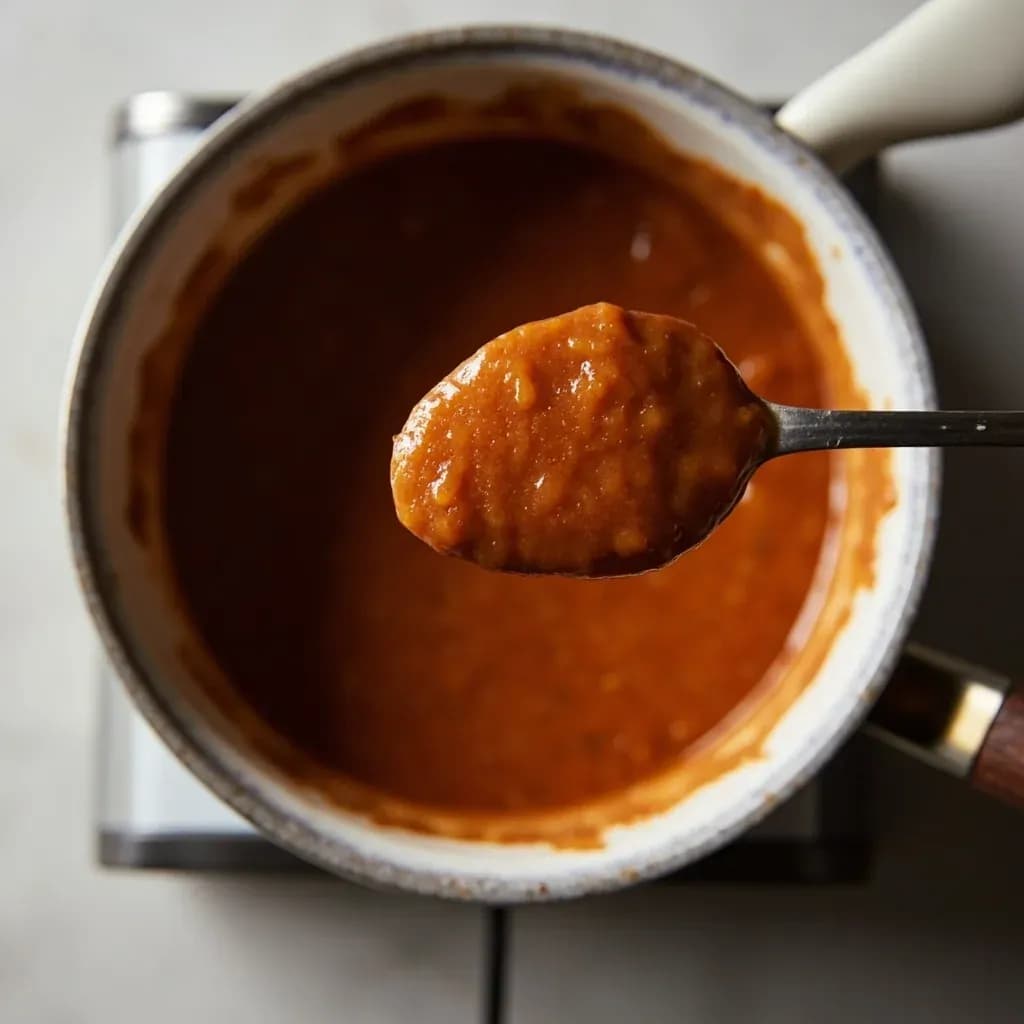
Reducing boils or simmers a liquid uncovered so water evaporates, concentrating its flavor and thickening its body. It is how sauces, gravies, and yogurt-based sauces gain depth and cling, and how some braises are cooked down until nearly dry. Watching closely near the end prevents over-reduction, which can turn a sauce salty or sticky.
Reduction is the deliberate evaporation of water from a liquid to concentrate its flavor, color, body, and viscosity. As water leaves the pan, everything dissolved or suspended in it — sugars, salts, acids, proteins, starches, and aromatic volatiles — becomes denser, so the same liquid tastes richer, glossier, and more coherent. It is one of the oldest and most fundamental techniques in the kitchen: a sauce made by reducing is fundamentally different from one that was merely thickened with flour, because reduction intensifies flavor rather than masking it.
The technique governs the structure of classical French cuisine, from the mother sauces and demi-glace of Escoffier's brigade to the deglazed pan sauces of the modern bistro, but the same logic applies to a curry paste simmered in coconut milk, a tomato sauce cooked down for ragù, or a pan of braising liquid tightened before serving. Reduction is not a thickening method in the starch sense — though a sauce that has lost half its volume certainly feels thicker — and a cook who understands the difference can build flavor with or without a liaison.
Three variables control the outcome: the intensity of the heat, the surface area of the pan, and the cook's attention in the final minutes, when the rate of change accelerates sharply. Gentle simmering gives clean, glossy results; a hard boil emulsifies fat, clouds stocks, and risks scorching. A wide pan evaporates liquid faster at lower heat than a narrow one at high heat, which is why every working sauce station has a saucier or wide rondeau within arm's reach.
- Difficulty
- Easy
Types & varieties
Classical French: wine or stock reduced almost to dryness to concentrate flavor before fresh liquid is added
Drippings or fond deglazed with wine, stock, or both, then reduced to a lightly coating consistency
Brown stock combined with espagnole sauce and reduced by roughly half; codified by Escoffier
Coating consistency that lightly clings to the back of a spoon — the classic sauce test
Stock or sauce reduced until syrupy, glossy, and intensely concentrated; coats a spoon heavily
Fruit juice, vinegar, or sugar-water boiled to syrup consistency (balsamic glaze, maple, simple syrup, gastrique)
Caramelized sugar deglazed with vinegar, then reduced to a syrupy sweet-sour base used to finish sauces
Shallots, wine, and/or vinegar reduced nearly dry, then emulsified with cold butter
How to do it
- 1
Choose and prepare the liquid
Strain the stock, wine, juice, or other liquid to remove solids. For a pan reduction, deglaze the roasting or sauté pan with wine or stock, lifting the fond into the liquid. Skim excess surface fat if a clean sauce is the goal.
- 2
Select the right pan
Use a wide, heavy-bottomed pan — a saucier or sauté pan for small volumes, a rondeau or stockpot for larger ones. More surface area speeds evaporation without needing violent heat.
- 3
Bring to a controlled simmer
Bring the liquid to a gentle, steady simmer with small bubbles breaking the surface. Use a hard rolling boil only for clear stocks or sugar work.
- 4
Maintain and skim
Hold the simmer, skimming foam, scum, and rising fat with a ladle or spoon. Swirl the pan occasionally rather than stirring vigorously, which can disturb the fond or cause splashing.
- 5
Monitor the reduction
Track volume visually or by weight. Test consistency by spooning a small amount onto a cold plate — it should coat the back of a spoon (nappé) for sauces, or hang in heavy droplets for a glaze.
- 6
Strain and finish
Strain through a fine mesh strainer or cheesecloth. Adjust seasoning — salt, acid (lemon, vinegar), and sometimes a knob of butter or splash of un-reduced stock — only now, after concentration has occurred.
- 7
Cool or serve immediately
Use right away, or chill rapidly in an ice bath to halt the reduction at the exact point you want. Remember: the sauce will thicken noticeably as it cools, so stop slightly looser than the final desired consistency.
The science of concentration
Reduction works because the liquids that carry flavor in cooking are almost all water-based, and water is the principal component lost as vapor at normal cooking temperatures — alcohol, when present, leaves even earlier. Every solute and suspended particle stays behind and becomes more crowded as the volume drops. Sugars (including pectins from fruit) give body and gloss, proteins contribute to the silky mouthfeel, salts sharpen perception, and acids brighten. Volatile aromatic compounds — the things you smell — are a different story: many of them evaporate early, which is why a properly reduced sauce smells deeper and more rounded than the liquid you started with, not louder. Ethanol leaves even faster, at about 78°C, well below simmering, so wine- or spirit-based reductions lose their raw alcoholic edge long before the water does.
- Surface area matters more than heat: a wide pan at a gentle simmer reduces faster and more evenly than a narrow pan at a hard boil.
- As volume drops, the rate of thickening accelerates, which is why the last 20% of cooking demands close attention.
- Reduction thickens the sauce, but a truly emulsified sauce (butter mounted into a reduction, or a pan sauce with a cold butter finish) gets body from fat as well as concentration.
Testing doneness
Cooks test reduction by appearance, by spoon, and by plate. The nappé test — coating the back of a cool spoon so the sauce clings in a thin film that runs cleanly when you draw a finger through it — is the standard for classical sauces. A cold-plate test (a few drops chilled on a saucer) gives a more accurate read on finished consistency because the sauce will gel slightly as it cools. For glazes, the goal is syrupy droplets that hang heavily from the spoon; for syrup reductions, the cold-plate test gives the most direct read on finished consistency, while a candy thermometer tracks temperature and the syrup's stage of concentration, which is useful but ultimately an indirect measure of texture.
Common uses
Tips & pitfalls
- Use a wide pan — more surface area means faster, more even evaporation, and lets you work at a gentler simmer.
- Hold a steady gentle simmer; a hard boil can emulsify fat into the sauce, cloud the result, or scorch dairy.
- Skim foam, scum, and rising fat as they appear; this is what gives a reduction its clean, glossy finish.
- Never salt at the start — sodium concentrates dramatically as the volume drops, so season only at the end.
- Watch the final minutes: the rate of concentration accelerates as volume shrinks, and a reduction can pass from nappé to over-reduced in moments.
- Finish slightly looser than you want the final sauce; most reductions thicken further as they cool.
- If a reduction becomes too acidic or sharp, balance with a touch of sugar, butter, or un-reduced stock rather than water, which would dilute the flavor you just built.
- For a glossy, professional texture, strain the finished reduction through a fine chinois before mounting butter or seasoning.
Good to know
- Origin
- Classical French technique codified in 19th- and early 20th-century brigade cuisine by Escoffier and his predecessors
- Principle
- Evaporating water from a liquid by simmering or boiling to concentrate flavor, body, color, and viscosity
- Heat
- Gentle simmer (about 85–95°C / 185–203°F) for sauces; rolling boil for stocks and sugar work
- Reduction ratio
- Light sauces ~25–50%; demi-glace and pan sauces ~50–75%; glazes 90%+
- Equipment
- Wide, heavy-bottomed pan — saucier, sauté pan, or rondeau — to maximize surface area and prevent scorching
- Time
- Minutes for pan sauces; one to several hours for demi-glace and glazes
- What concentrates
- Sugars, salts, acids, proteins, starches, and aromatic compounds; alcohol evaporates before water (ethanol boils at ~78°C / 173°F)
- Seasoning
- Salt, acid, and sugar are adjusted only at the end, since all concentrate as the liquid drops
Also called
Reduce · Réduire · Sauce Reduction
Dishes that rely on it

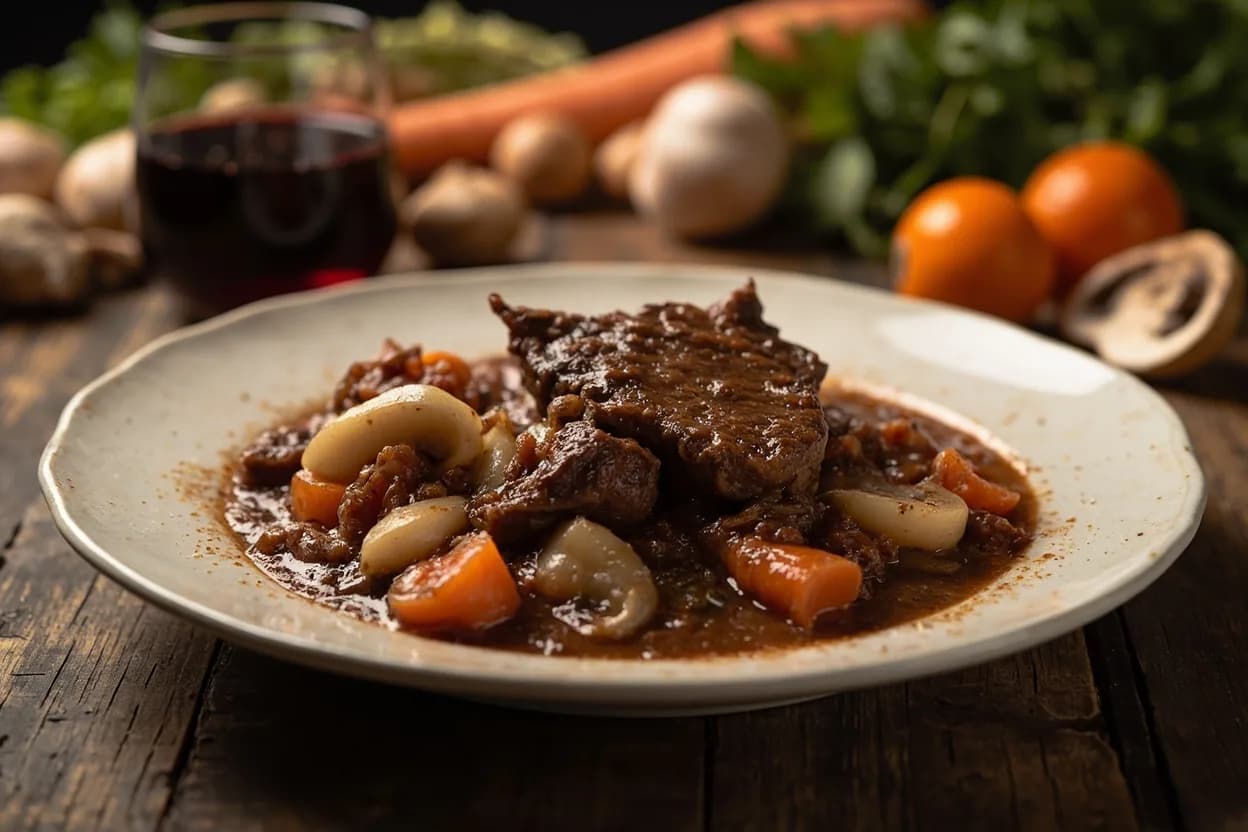
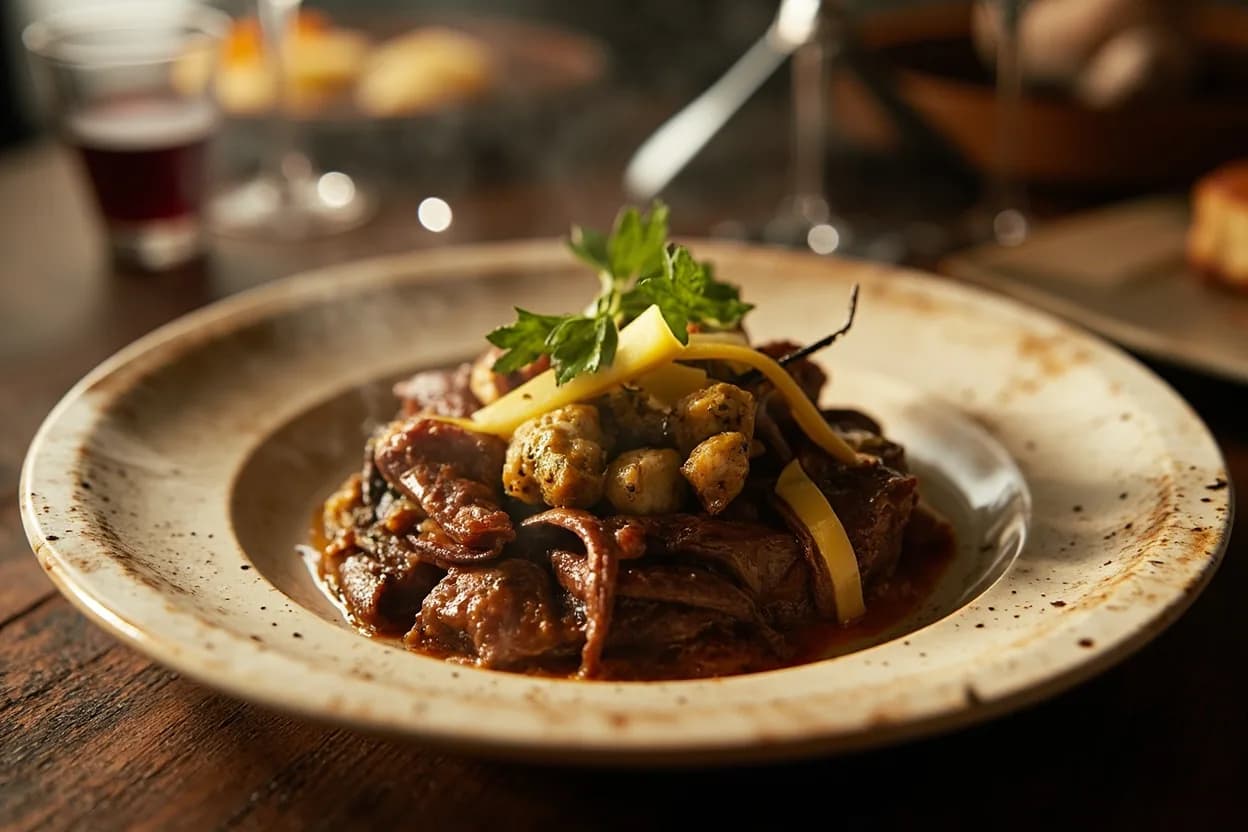
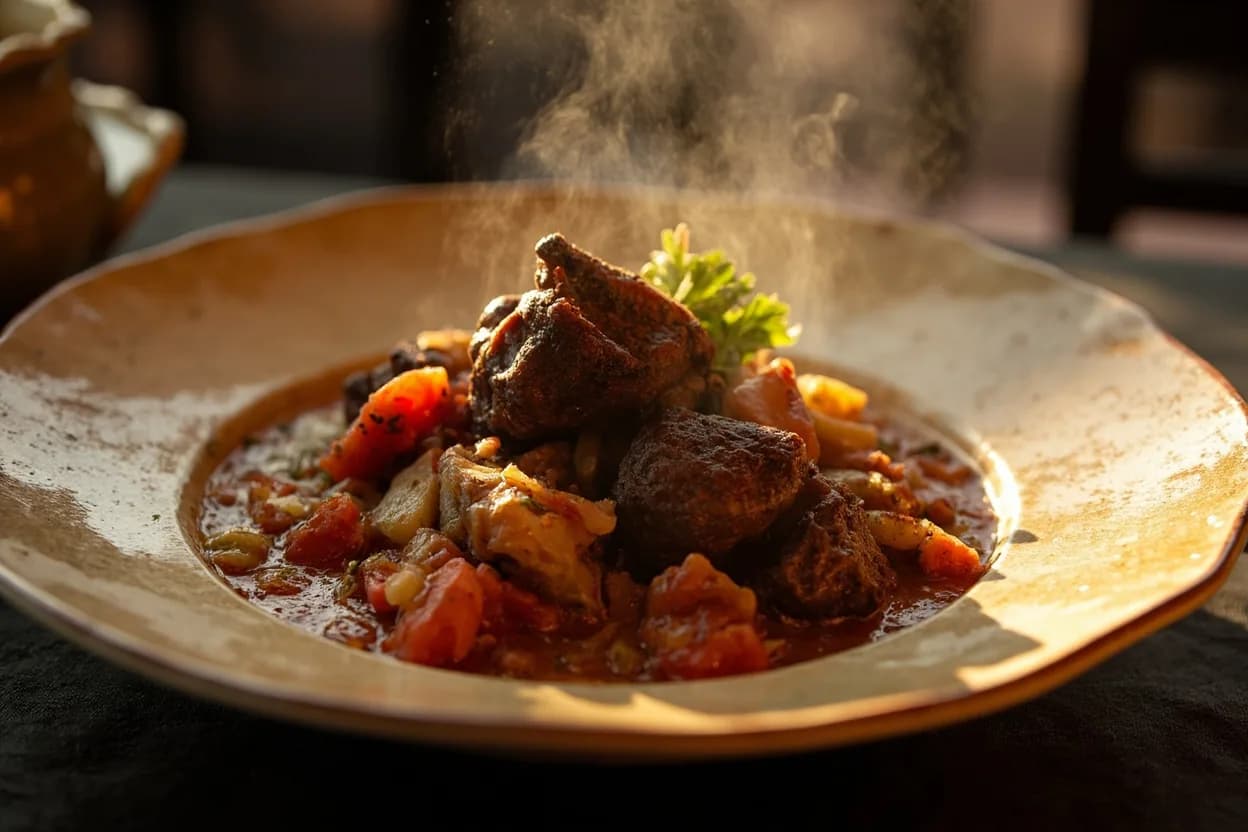
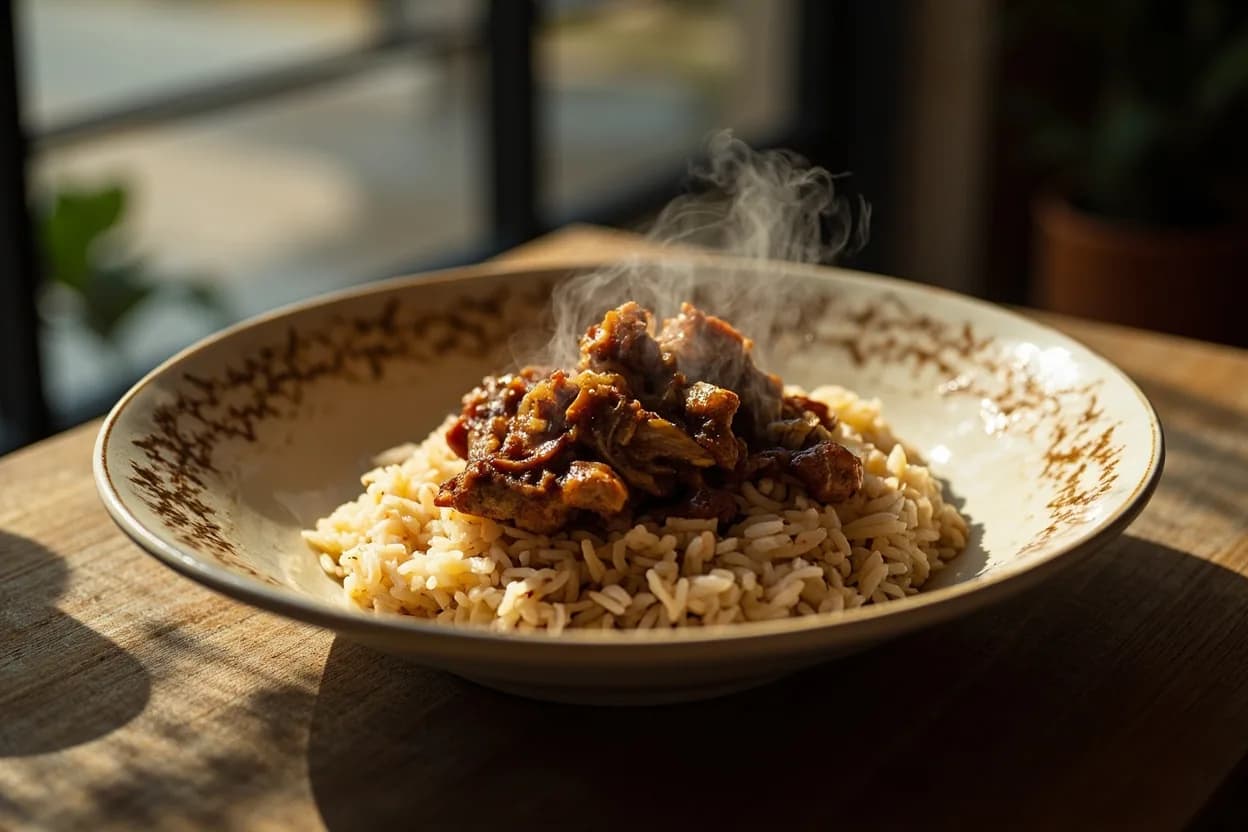
Related

Confit
Cook slowly submerged in fat for silky tenderness and keeping

Cure
Draw out moisture with salt and time to preserve and concentrate

Pickle
Steep in acidic brine for bright, tangy, crunchy preservation

Ferment
Let friendly microbes transform food into tangy, complex flavor

Marinate
Soak in a seasoned mix to flavor and tenderize before cooking

Brine
Soak in salt water so meat stays juicy and seasoned throughout

Dehydrate
Slowly dry out moisture to concentrate flavor and extend shelf life

Cold-Smoke
Perfume cured food with smoke without cooking it through