Water & Steam
Poaching
Gently cooking delicate food in barely-moving liquid for tender, moist results.
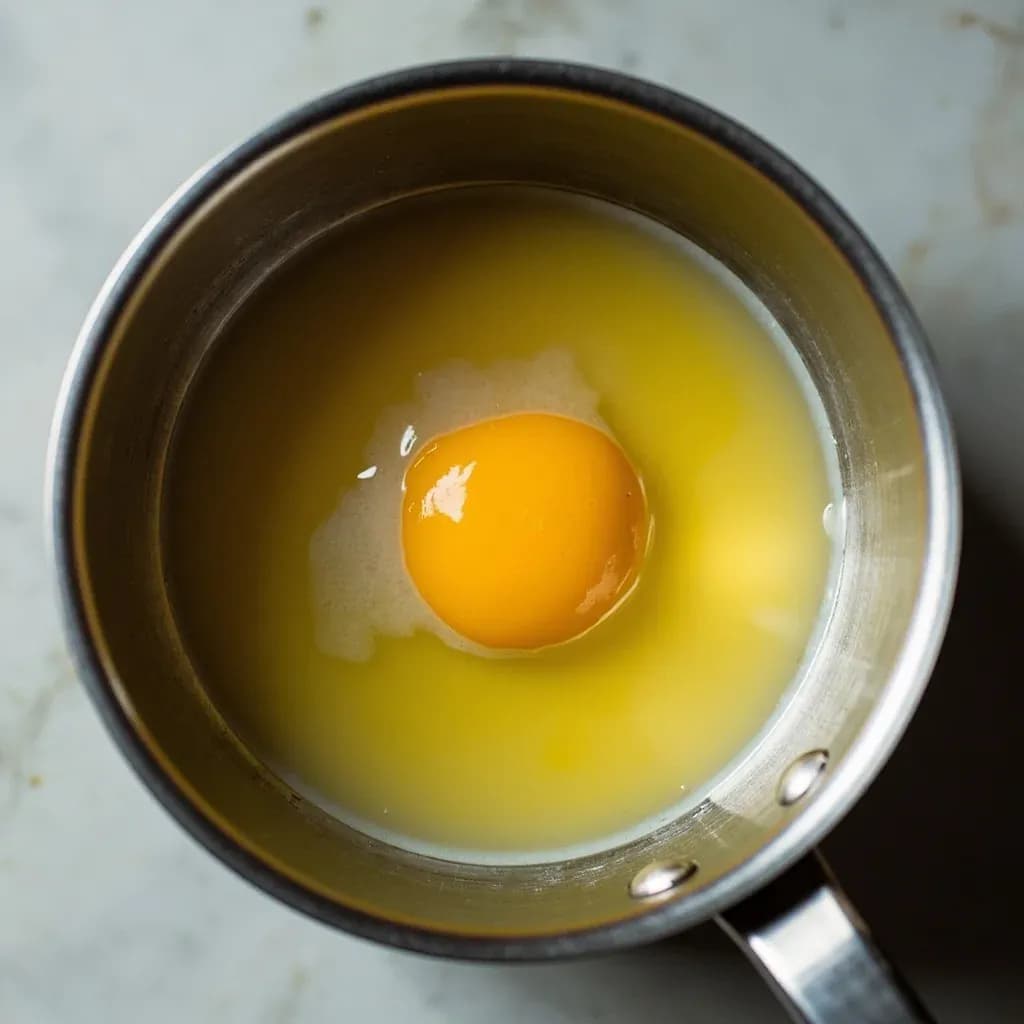
Poaching cooks food in liquid kept just below a simmer, around 70-85C, so delicate items stay tender and intact. It suits eggs, fish, poultry, and fruit, and in Chinese cooking a reusable master stock (lu) poaches meats while deepening over time. The gentle heat prevents the toughening and breakup that a vigorous boil would cause.
Poaching is the gentlest of the moist-heat cooking methods: food is cooked in a liquid held well below a boil, anywhere from 140 to 200°F (60–93°C), so that proteins coagulate slowly, sugars stay intact, and delicate structures never have to fight a roiling surface. Unlike boiling, which drives off flavor and toughens texture, poaching leaves fish silky, chicken juicy, eggs custardy, and fruit tender enough to cut with a spoon. The technique rewards patience and temperature control far more than equipment or skill, which is why it remains a backbone of cuisines from French court-bouillon fish to Japanese dashi-simmered cod and Chinese poached chicken (bai qie ji).
The choice of liquid matters as much as the temperature. Salted water is right for eggs so their flavor reads clearly; an aromatic court bouillon of wine, mirepoix, and herbs perfumes whole fish and shellfish; milk tenderizes lean white fish like cod and sole and slightly sweetens them; wine, cider, or light sugar syrup carries spice and citrus into poached pears, plums, and quinces. The line between poaching and simmering is cultural as much as scientific: French kitchens reserve the term for liquid that trembles but does not bubble (around 158–176°F / 70–80°C), while American cooks often call any sub-boil cook 'poaching.' Both are correct in context.
Done well, poaching is one of the most efficient methods in the kitchen. Weight loss on protein is typically under 10 percent, far below roasting or pan-frying, and the strained liquid becomes a free sauce base. A probe thermometer, a wide low-sided pan, and a willingness to pull the pot off the heat when the temperature creeps up are the only real prerequisites.
- Difficulty
- Medium
Types & varieties
Food fully immersed in a generous volume of seasoned liquid; the classic method for eggs, dumplings, and chicken breasts.
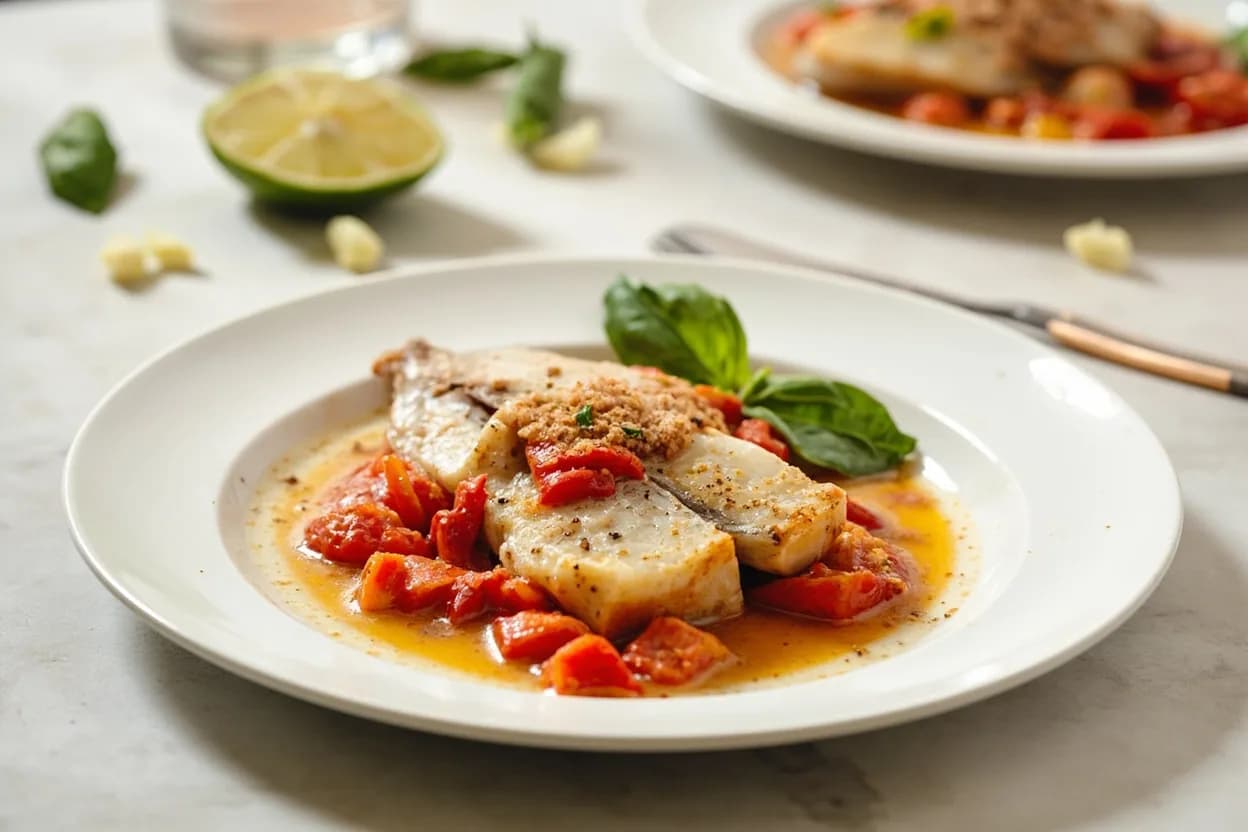
Food sits in a few millimeters of clarified butter or stock in a covered pan and cooks partly by steam; standard for fish fillets and quenelles.
Liquid held at a gentle bubble (180–200°F / 82–93°C); used for firmer proteins, poached fruit, and tougher cuts that need more heat.
Aromatic liquid of water, wine or vinegar, mirepoix, bouquet garni, and peppercorns; the standard medium for whole fish and shellfish.
Submerging fish (cod, sole) or chicken in milk; yields exceptionally tender, mild, slightly sweet protein, and milk solids help delicate fish hold together.
Fruit simmered in light sugar syrup often built with wine, spices, citrus zest, or vanilla; classic for pears, apples, plums, peaches, and quinces.
Seafood such as lobster tails, scallops, or white fish cooked in warm clarified butter at ~180°F (82°C); produces a velvety, rich texture.
Low-temperature cooking in flavored oil, the principle behind confit, herb- and garlic-infused oils, and gently cooked fish.
Whole fish or chicken cooked in a covered pan with a small amount of liquid in a moderate oven; sits on the border between poaching and braising.
How to do it
- 1
Choose and season the poaching liquid
Pick a liquid suited to the food: salted water for eggs; court bouillon (water, wine or vinegar, mirepoix, bouquet garni, peppercorns) for fish and shellfish; milk or stock for chicken; wine, cider, or light syrup with aromatics for fruit. Season the liquid aggressively — it should taste slightly over-seasoned, because only a small amount clings to the food.
- 2
Bring the liquid to target temperature
Heat the liquid to the correct holding temperature: 140–180°F (60–82°C) for true poaching (no bubbles, surface barely shivers), or 180–200°F (82–93°C) for simmer-poaching (occasional small bubbles). Use a probe thermometer; without one, the surface should just barely tremble when you blow on it.
- 3
Prepare the food for even cooking
Trim and portion for uniform thickness. Crack eggs into small ramekins. Scale, gut, and rinse fish, then pat dry. Brine chicken breasts for 1–2 hours if you want extra insurance. Peel fruit, core if needed, and leave stems on for presentation.
- 4
Add the food gently to the liquid
Lower items flat onto the surface without splashing. Slip eggs into a gentle whirlpool so the whites wrap the yolk. Use a cartouche (parchment round with a steam hole) on top of fish, chicken, or fruit to keep them submerged and evenly colored.
- 5
Hold the temperature steady
Adjust the burner so bubbles are small, sparse, and rising only from the bottom — never a rolling boil. If the liquid climbs above target, pull the pot off the burner for a moment; residual heat will finish most delicate items.
- 6
Cook to the proper internal temperature
Aim for: fish 130–145°F (54–63°C) for medium-flaky; chicken 155–165°F (68–74°C); egg whites set at 140°F (60°C) and yolks at 150°F (66°C); fruit until a paring knife slides in with no resistance. Test fish at the thickest part — it should show just-opaque layers and resist flaking fully, since it will finish on the plate.
- 7
Rest, drain, and finish
Lift with a slotted spoon, spider, or skimmer. Drain eggs on a clean kitchen towel or paper. Rest fish and chicken 1–2 minutes on a warm plate. Glaze with reduced cooking liquid, dot with butter, or finish with a sauce.
- 8
Strain and reserve the liquid
Strain the cooking liquid through a fine-mesh sieve and save it. Court bouillon freezes well in ice cube trays for future fish or shrimp; syrup can be reduced further into a dessert sauce; milk or stock left from poaching chicken becomes the base of a soup or pan sauce.
The thermometer is the real technique
Most poaching failures are temperature failures. A pot that 'looks like a simmer' can be 170°F on one stove and 205°F on another, and that 35-degree swing is the difference between silky fish and a tough, dry fillet. A probe or instant-read thermometer lets you hold the liquid in a narrow band and, more importantly, lets you pull the pot off the heat and use residual warmth to finish delicate work, which is how restaurant cooks get a perfect poached egg every time.
Choosing the right liquid
Match the liquid to the food, not the other way around. A poached egg is a vehicle for whatever you put on top, so plain salted water (with a splash of vinegar to set the whites) is the right choice. White fish and chicken carry enough of their own flavor to benefit from court bouillon, dashi, or stock. Fruit and tougher vegetables can stand up to sweetened, spiced, or acidic liquids. The strained cooking liquid is almost always a sauce base, so season it boldly from the start.
The cartouche trick
A cartouche is a round of parchment paper (often buttered) cut to fit inside the pan with a small steam hole in the center. Laid directly on the surface of the liquid, it keeps fish, chicken, or fruit submerged for even cooking and color, and it slows evaporation so the temperature stays stable. It is the single most useful piece of classical French technique in the poaching toolkit and trivially easy to make.
Common uses
Tips & pitfalls
- Salt the poaching liquid like pasta water — under-seasoned liquid produces bland food, no matter how carefully you cook it.
- Use a thermometer and don't trust the eye. Pull the pot off the heat once it hits the top of the target range and let residual warmth finish delicate items like eggs and fish fillets.
- For poached eggs, add 1–2 teaspoons of white vinegar per quart of water and slide the egg into a gentle vortex; the acid and motion help the whites wrap neatly around the yolk.
- Start fish in cold court bouillon, then bring it up to temperature. This cooks the flesh evenly and prevents the outside from drying out before the inside is done.
- Brining chicken breasts for 1–2 hours before poaching dramatically improves moisture and seasoning penetration, especially with lean supermarket birds.
- Don't overcrowd the pan — leave room between pieces so the liquid circulates and recovers temperature. Cook in batches if needed.
- Lift delicate items (eggs, dumplings, quenelles) with a slotted spoon or spider, not tongs, which can crush them.
- Strain and freeze leftover court bouillon in ice cube trays; it is the single biggest time-saver for future fish and shellfish dishes.
Good to know
- Temperature range
- 140–180°F (60–82°C) for true poaching; 180–200°F (82–93°C) for simmer-poaching
- Etymology
- From French pocher, from Old French pochier ('to put in a pocket'), referring to the way the yolk sits inside the set white of a poached egg
- Common liquids
- Water, stock, court bouillon, milk, wine, cider, dashi, light sugar syrup, or clarified butter
- Heat source
- Gentle stovetop control, occasionally a low oven (~275°F / 135°C) for whole fish or chicken
- Internal doneness
- Fish 130–145°F (54–63°C); chicken breast 155–165°F (68–74°C); egg yolk 150°F (66°C); egg white 140°F (60°C)
- Yield / shrinkage
- Minimal — typically under 10% weight loss for proteins, much less than dry-heat methods
- Skill level
- Beginner to intermediate; eggs are famously finicky, fish and fruit are forgiving
- Related French terms
- Poêlé (shallow poach in butter under a lid); poché à l'anglaise (plain water-blanch for offal); pochons (small poached quenelles of forcemeat)
Also called
Poach · Pocher · Master Stock Poaching
Dishes that rely on it
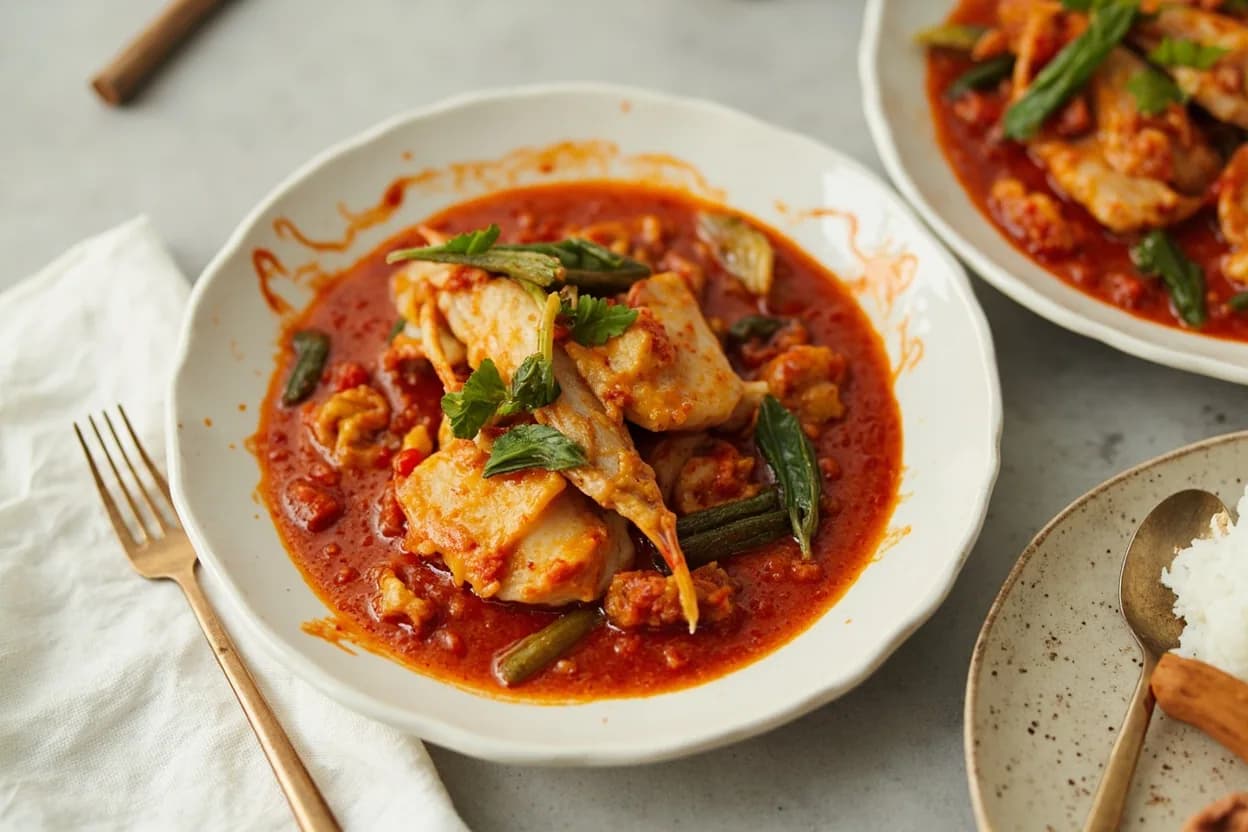
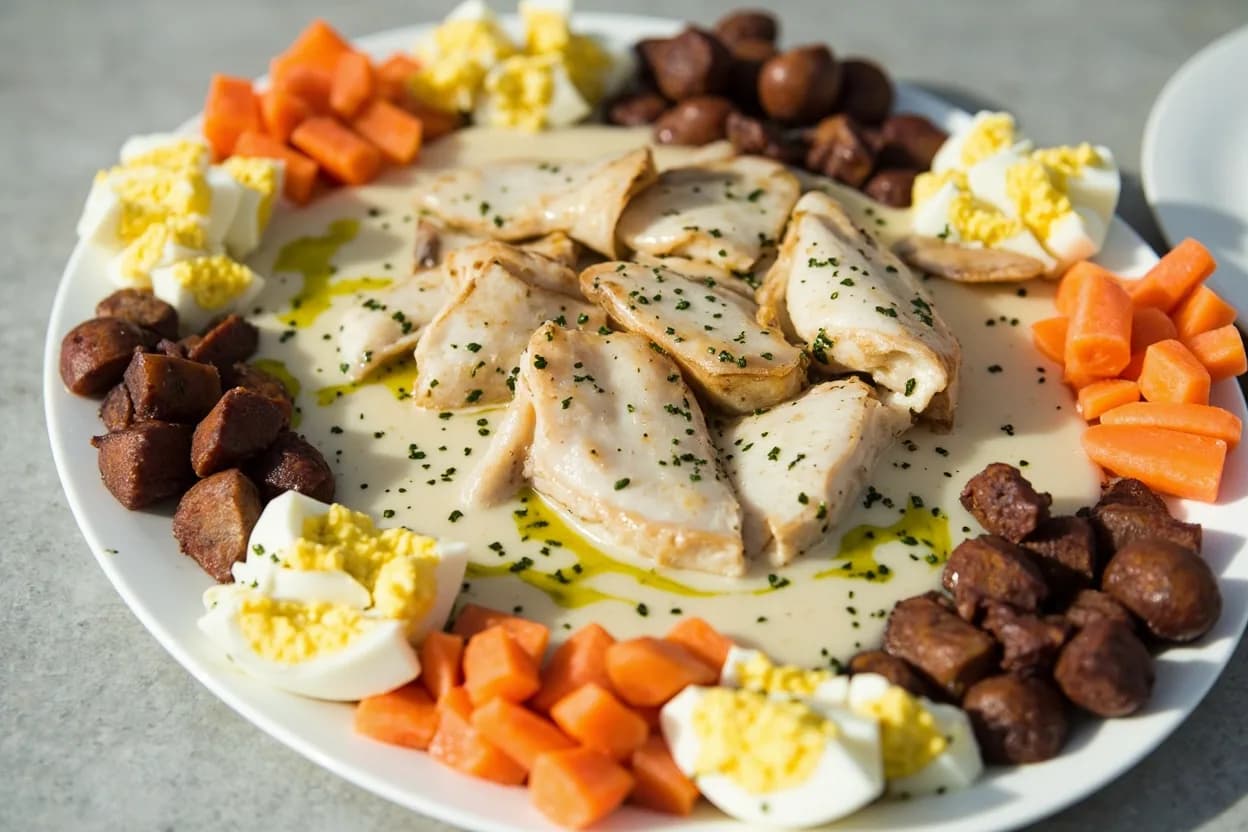
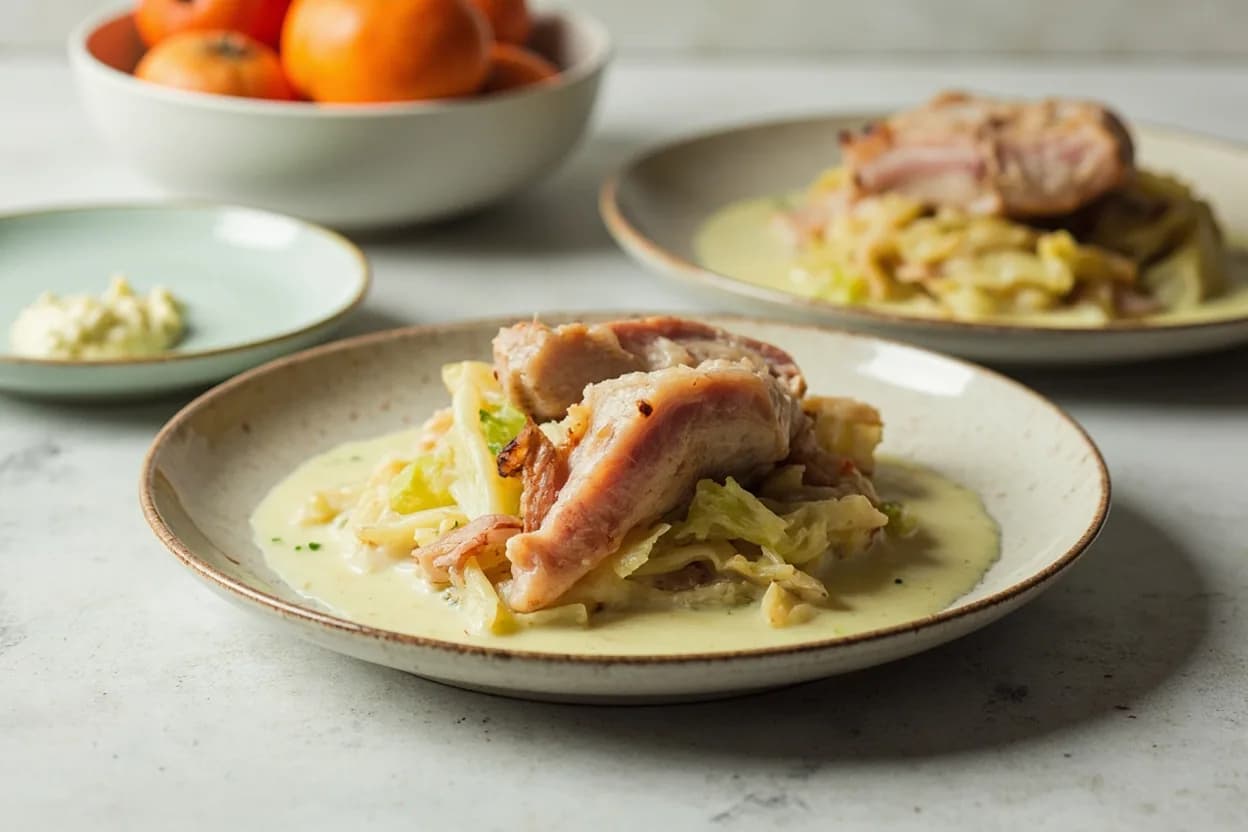
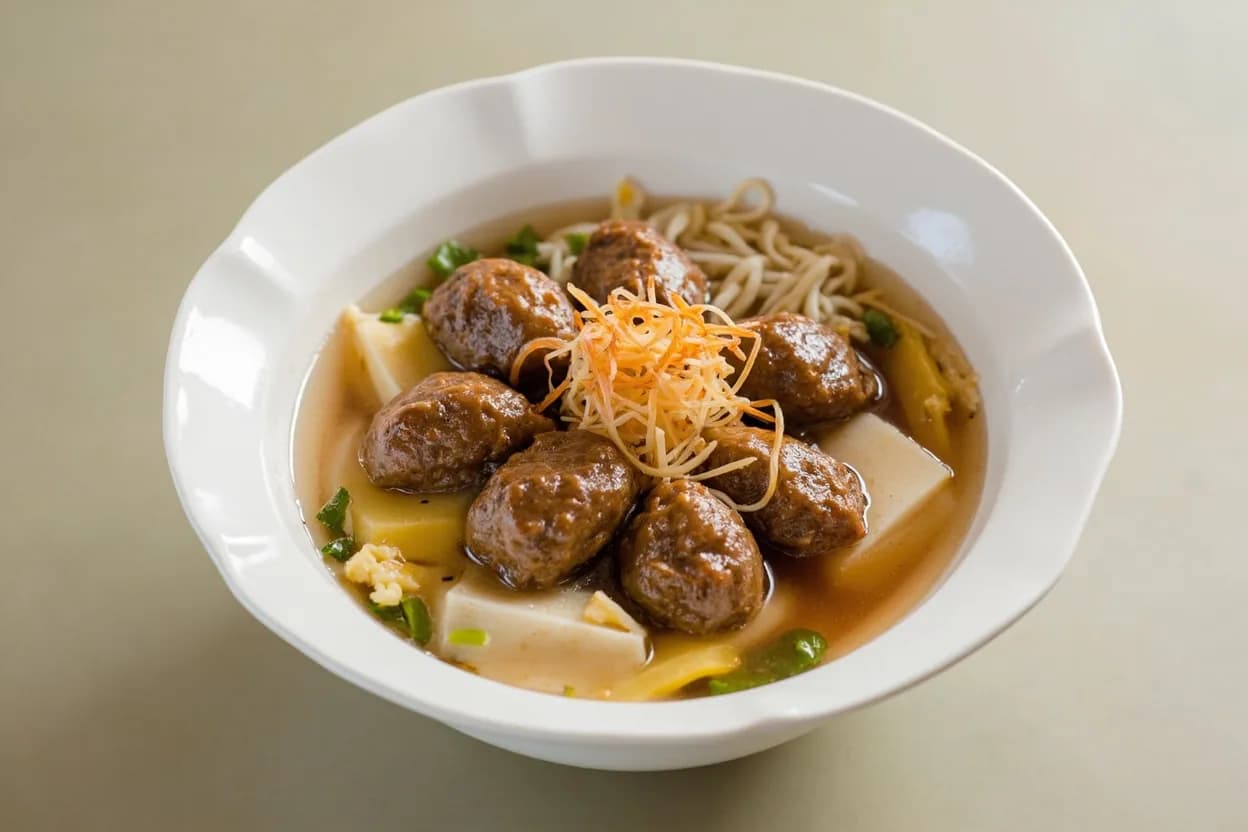
Related

Boil
Cook in vigorously bubbling liquid at full rolling heat

Simmer
Hold liquid at a gentle shimmer for tender, unhurried cooking

Poach
Cook gently in barely-trembling liquid for silky, tender results

Steam
Cook in rising vapor to keep color, nutrients, and shape intact

Blanch
Plunge briefly in boiling water, then shock cold to lock color

Braise
Sear, then cook slow in a little liquid until fall-apart tender

Stew
Simmer bite-sized pieces fully submerged into a rich, unified pot

Sous-Vide
Seal and cook in precise warm water for edge-to-edge doneness