Water & Steam
Poaching Eggs
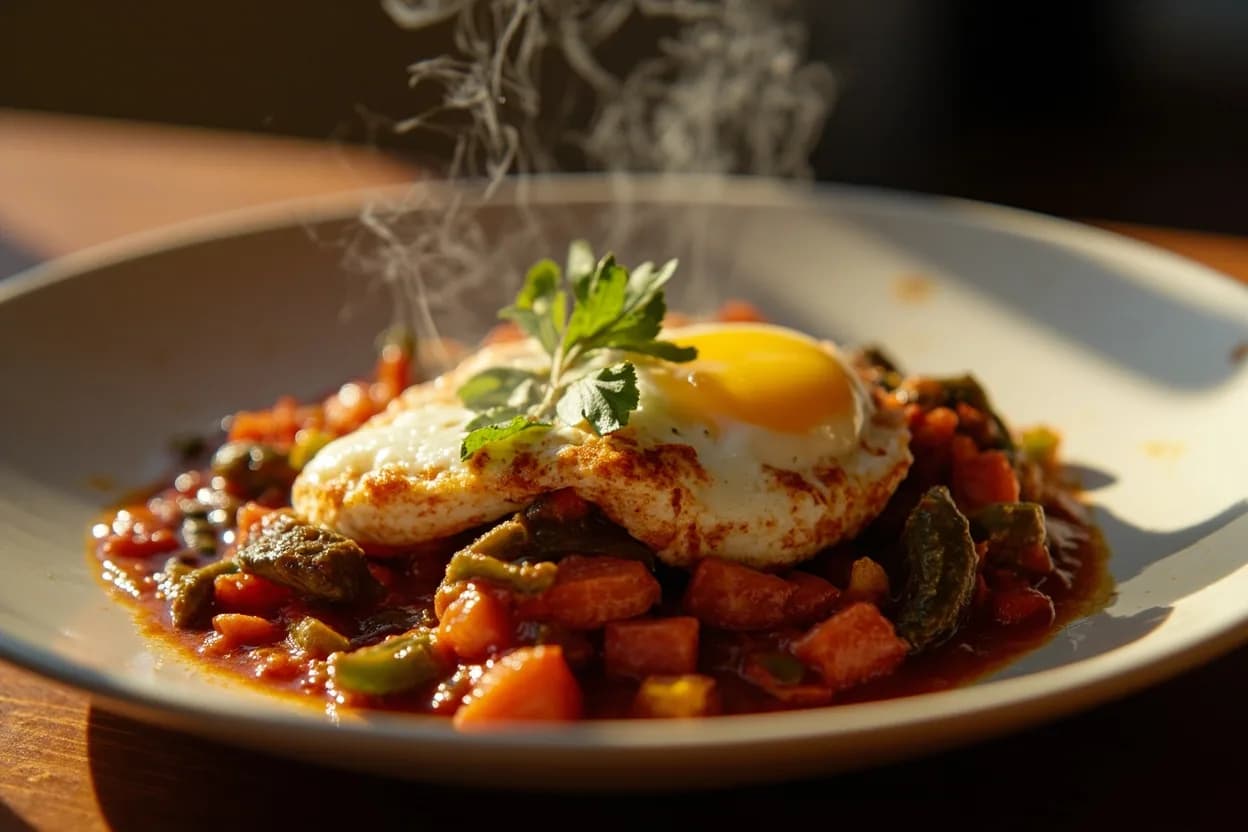
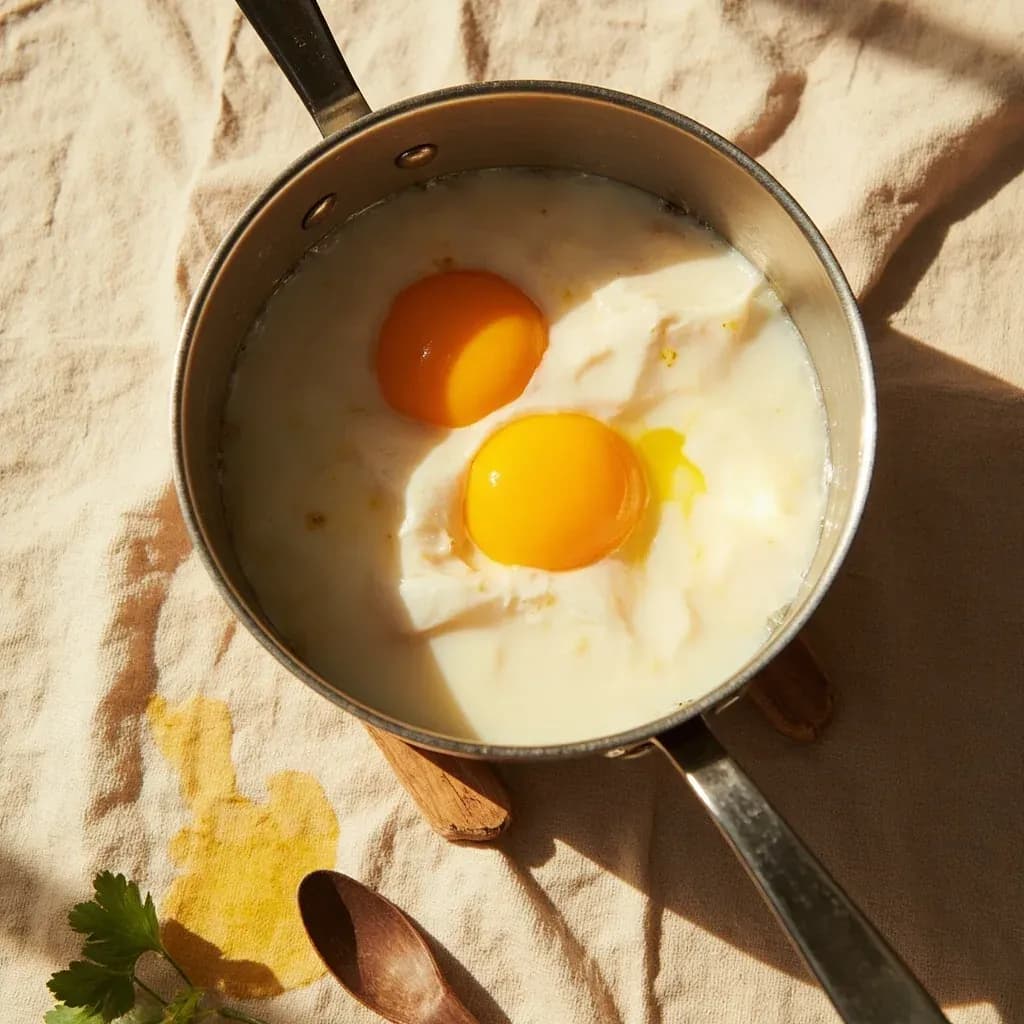
Slipping shelled eggs into barely simmering acidulated water so the whites set into a tender pouch around a still-runny yolk.
Poaching an egg is the art of cooking a shelled egg in water held just below a boil, so the white sets into a tender, silken pouch while the yolk stays liquid or only partly firm. With no shell to insulate it, the egg responds directly to the water's warmth, and the albumen coagulates into something noticeably more delicate than a boiled egg. The result is a neat oval with a glossy, almost translucent exterior and a yolk that breaks into a warm, sauce-like flow at the table — a texture no other method quite delivers.
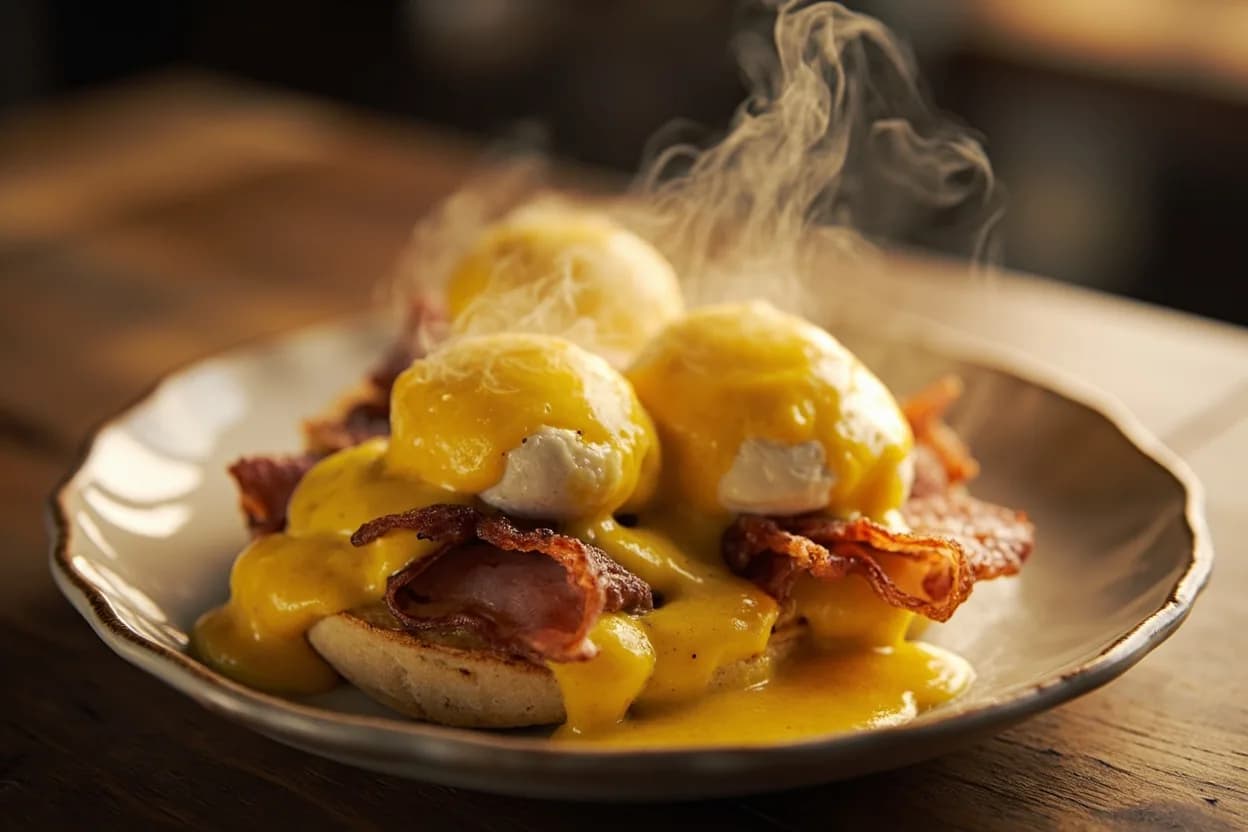
The technique is fast (three to five minutes per egg) but genuinely unforgiving. Temperature, egg freshness, and how you introduce the egg into the water all shape the outcome. Done well, a poached egg is a building block for some of the most satisfying dishes in the Western canon: eggs Benedict, salade Niçoise, asparagus with hollandaise, a humble piece of buttered toast. Done poorly, it becomes a stringy mess of feathered white and a sad, overcooked yolk.
- Difficulty
- Moderate
Types & varieties
White just set, yolk completely liquid; the classic for eggs Benedict and toast.
Yolk thickened at the edges but still flowing in the center; excellent over greens and grains.
Yolk fully set but never rubbery because it cooks gently without the shell insulating it.
Crack the egg into a ramekin, stir the water into a gentle vortex, and slide the egg into the center so the spinning water wraps the white around the yolk.
Crack each egg into a fine-mesh strainer so the thinnest white drains off, then slide the compact white and yolk into still water — the preferred route to a tidy oval.
Crack eggs into cold water and bring it up to a bare simmer; produces a softer, more uniform texture with a less precise shape.
Egg cracked into a greased ramekin and set in a water bath in the oven (around 350°F / 180°C) until set — a related, more foolproof method.
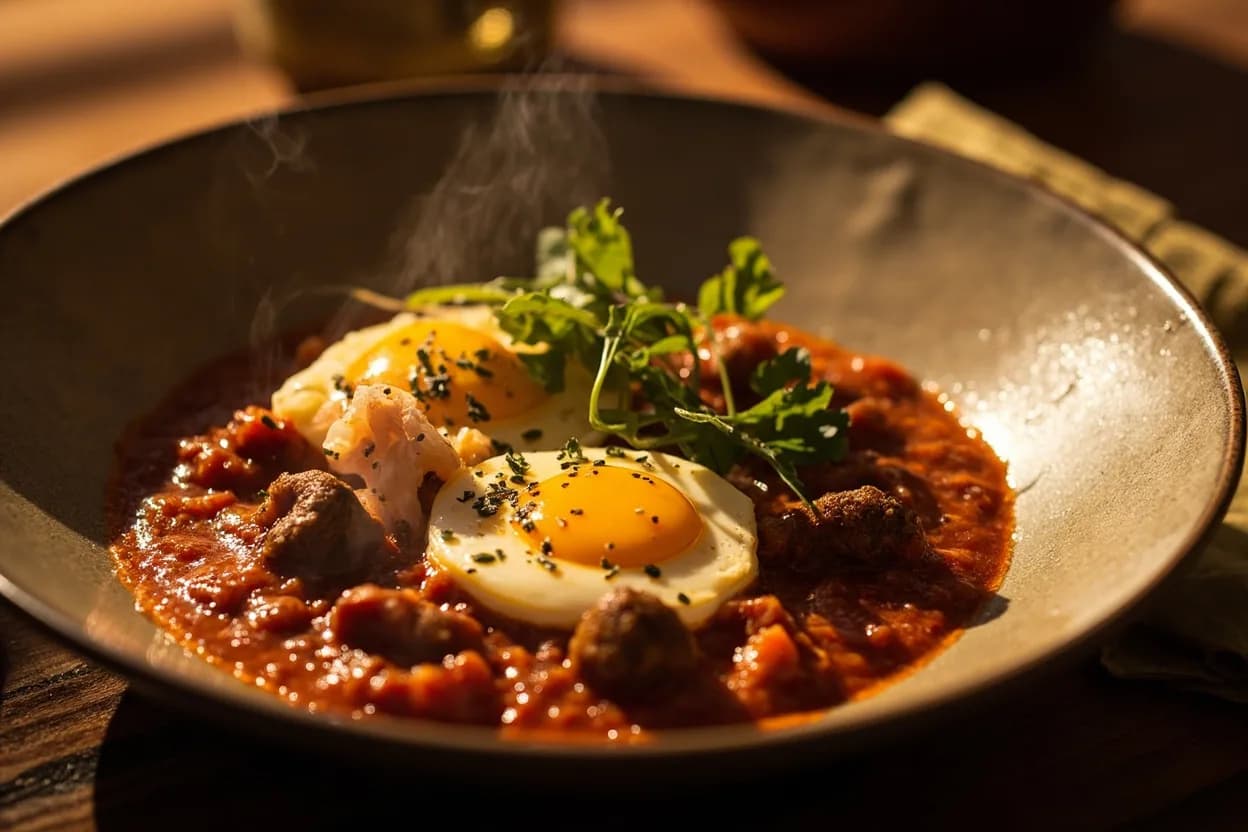
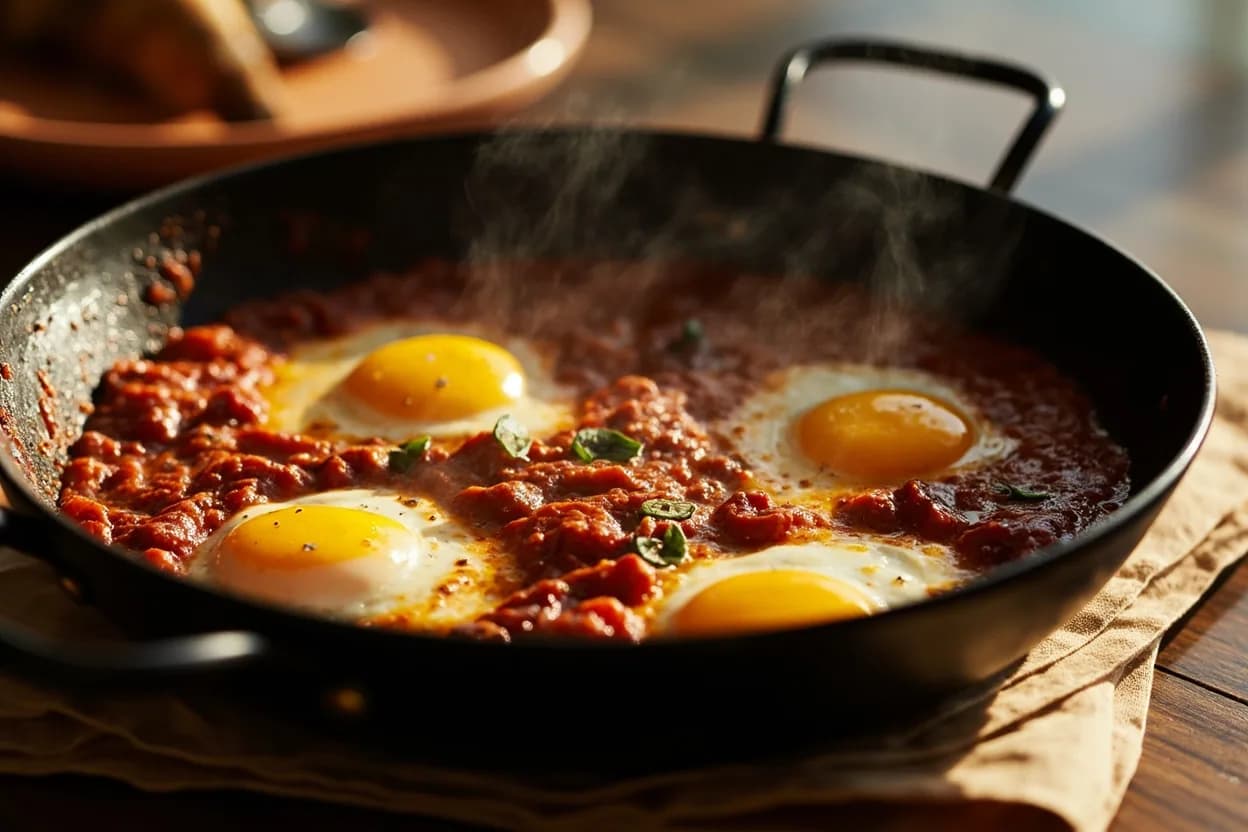
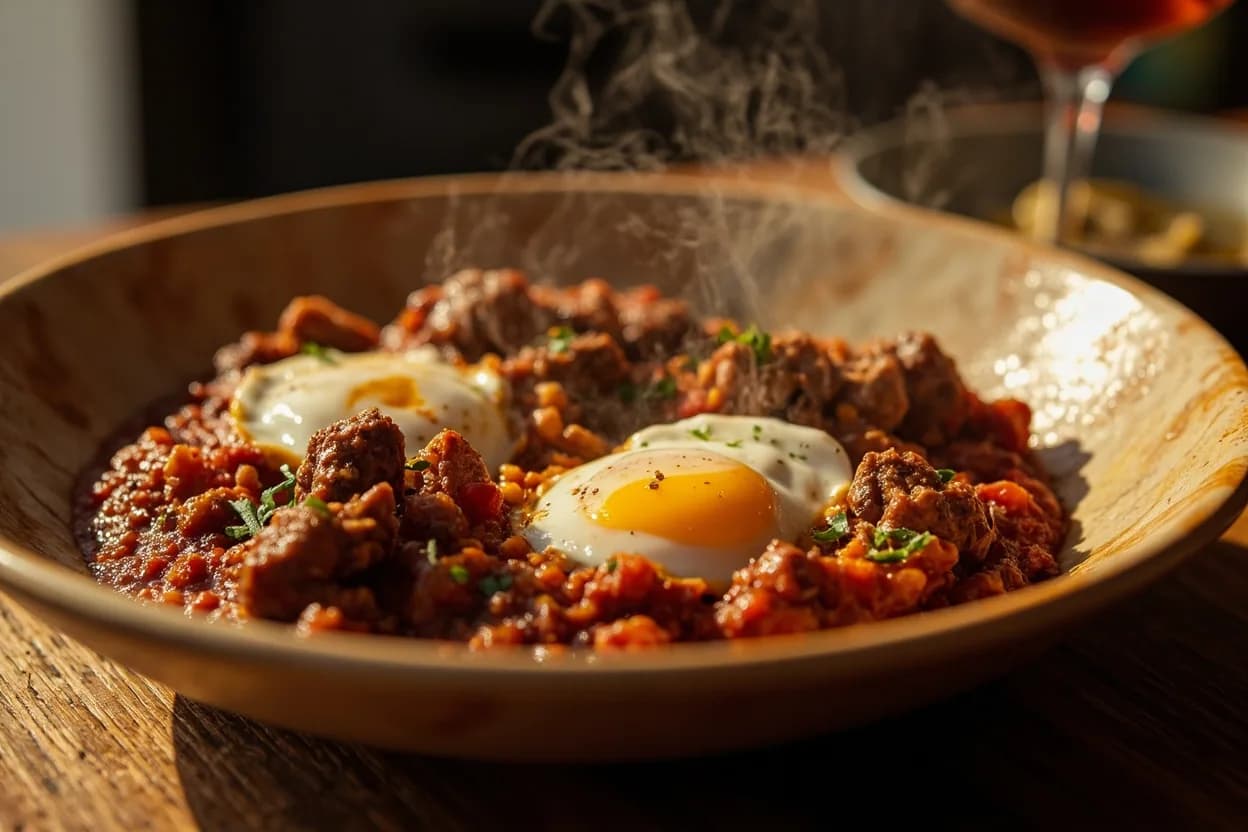
Egg poached directly in a flavored liquid (court bouillon, tomato sauce, dashi, ramen broth) so it absorbs that flavor; classic in Italian and Japanese cooking.
How to do it
- 1
Set up the pan and water
Fill a wide, shallow pan with 3–4 inches (7–10 cm) of water — deep enough for the egg to float, shallow enough to control. Add 1–2 teaspoons of white vinegar or lemon juice per quart/liter. Heat to 180–190°F / 82–88°C, where small bubbles just begin to break on the bottom but the surface is calm.
- 2
Ready the eggs
Crack each egg one at a time into a small ramekin, cup, or measuring cup, keeping the yolk intact. For neater eggs, pour the cracked egg into a fine-mesh strainer and let the loosest, watery white drain off for 20–30 seconds, then tip the compact white and yolk back into the cup.
- 3
Create a gentle vortex
Just before adding the eggs, stir the water with a spoon in a single direction to create a slow, steady whirlpool. This pulls the white around the yolk as the egg enters, giving you a tidy teardrop shape.
- 4
Slide the eggs in
Lower the lip of the ramekin to the surface of the water and let the egg slip in gently — do not drop it from height. Add 3–4 eggs at a time, spacing them so they don't collide. Turn the heat down so the water barely moves.
- 5
Cook to desired doneness
Poach for about 3 minutes for a runny yolk and just-set white, 3½–4 minutes for a jammy yolk, or 4½–5 minutes for a fully set yolk. The white should feel softly firm, not rubbery, when nudged with a spoon.
- 6
Lift, drain, and serve
Lift each egg out with a slotted spoon or spider, tilting it briefly to drain, then blot the underside on a clean kitchen towel or paper. Season with salt and pepper and serve at once over toast, hollandaise, salad, or broth.
- 7
Hold or refresh, if needed
If not serving within a minute or two, transfer the eggs to a bowl of ice water for up to a day. To reheat, lower them into a bowl of warm (not boiling) water for 30–60 seconds, then drain and serve.
Why temperature matters more than time
Egg proteins coagulate across a range of temperatures, and the white and yolk set at very different points. The white begins to set around 140°F / 60°C and is fully firm by about 150°F / 65°C; the yolk starts to thicken near 150°F / 65°C and only becomes fully set around 160–170°F / 70–77°C. The window for a poached egg is the narrow band in between — hot enough to set the white, gentle enough to leave the yolk flowing. A rolling boil pushes that window closed in seconds: the white toughens and the yolk catches up and turns mealy. Hold the water at a bare simmer and you can move through the soft, medium, and hard stages by the clock rather than by guesswork.
The role of acid
A small amount of vinegar or lemon juice in the poaching water is not about flavor at the levels you should use — a properly acidulated egg tastes clean. What the acid does is denature the albumen proteins faster, so the loose outer white that would otherwise drift off into the water coagulates almost on contact and clings to the thicker white around the yolk. The result is a neater, more compact egg. Too much acid will taste on the finished egg, so stay in the 1–2 teaspoon per quart range. Skip it entirely and the egg will still cook, but the shape will be looser and the white more prone to feathering.
Service notes for cooks and cafés
Poached eggs are best the moment they leave the water, but a busy kitchen cannot poach to order for every plate. The professional workaround: poach in small batches to the soft stage, lift the eggs into a bowl of ice water to stop the cooking, and hold them in the ice bath for up to 24 hours. To reheat, lower the chilled eggs into a bowl of warm water (around 140°F / 60°C) for 30–60 seconds, drain, and serve. Drain the eggs well on a clean towel before they meet any sauce, especially hollandaise, which breaks on contact with free-flowing water.
Common uses
Tips & pitfalls
- Use the freshest eggs you can find — fresher whites are thicker and wrap tighter; old eggs fan out into feathery ribbons.
- Acid is for shape, not flavor: 1–2 tsp of white vinegar per quart of water is plenty; more than that will taste on the finished egg.
- Hold the water at a bare simmer — small bubbles clinging to the pan bottom, not a rolling boil. A boil shreds the whites and overcooks the yolk.
- Crack each egg into a small ramekin first and never drop it into the pan from height — the fall breaks the yolk and scatters the white.
- Don't crowd the pan; cook 3–4 eggs in a 10-inch pan, more if using a fish kettle or roasting pan.
- Lift poached eggs out with a slotted or spider spoon and drain briefly on a clean kitchen towel — important for hollandaise, which breaks from free-flowing water pooling on the plate.
- Skip the microwave 'poached egg in a mug' for real cooking — it overcooks the yolk while leaving the white gummy and uneven.
- A pinch of salt in the water is fine and traditional; it does not noticeably season the egg but some cooks find it helps the white set evenly.
Good to know
- Definition
- Cooking a shelled egg in water held just below a boil so the white sets around a yolk that remains liquid or only partly set.
- Water temperature
- 180–190°F / 82–88°C — too cold and the white feathers and disperses; too hot and the white toughens and the yolk overcooks.
- Acidulation
- 1–2 tsp white vinegar or lemon juice per quart/liter of water lowers the pH, encouraging the albumen to coagulate faster and wrap neatly around the yolk.
- Cook time
- About 3 minutes for runny yolk, 3½–4 minutes for jammy, up to 5 minutes for a fully set yolk.
- Best eggs
- Very fresh eggs (within a few days of laying) hold a compact shape; older eggs spread into wispy, loose whites.
- Equipment
- Wide, shallow pan or sauté pan (≥8 in / 20 cm), slotted or spider spoon, small ramekins, fine-mesh strainer (optional but useful), thermometer (helpful but not essential).
- Origin
- Documented in Roman cookery — Apicius includes recipes for eggs poached in broth and water — and a standard preparation throughout medieval European cooking.
- Doneness shorthand
- Soft = runny yolk, barely set white. Medium = yolk that wobbles like soft caramel. Hard-poached (shell-less) = yolk fully set but still tender, distinct from a hard-boiled egg.
Also called
poached egg · egg poaching · oeufs poches