Water & Steam
Blanching
Briefly boiling then shocking food to set color, loosen skins, or pre-cook.
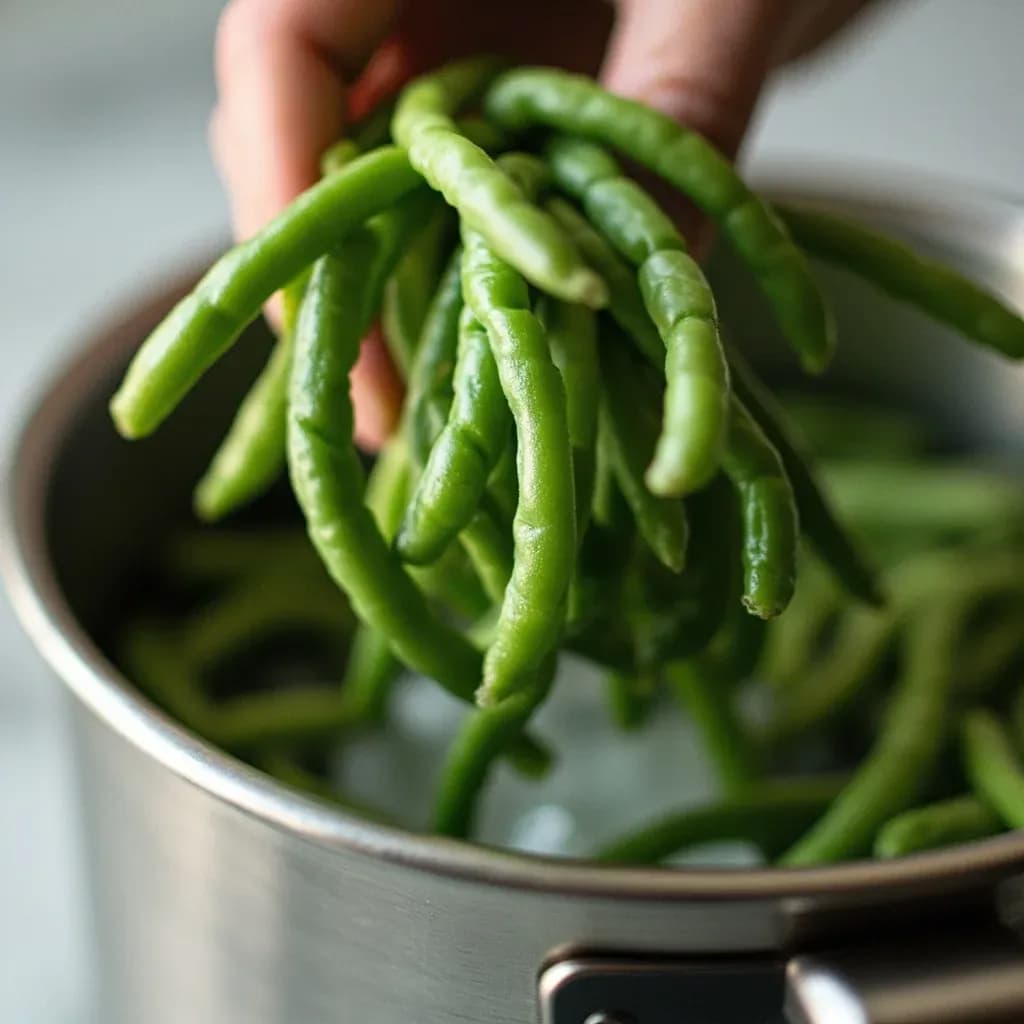
Blanching plunges food into boiling water for a short time, often followed by an ice-water shock, to fix bright color, ease peeling, or partly cook it before another method. It also cleans bones for clear stock and, in Chinese cooking, oil-blanching primes ingredients for a final stir-fry. The quick shock halts cooking so vegetables stay crisp-tender and vivid.
Blanching is the brief, deliberate dip of food into boiling water — or, less often, steam — followed by an immediate plunge into ice water. The word comes from the French blanchir, to whiten or make pale, after the softened, paler look that food takes on during the short boil. In practice the goal is rarely to whiten anything; it is to interrupt cooking at a precise moment, which lets the cook set color, loosen a skin, pre-cook a piece, or tame bitterness without surrendering the snap, the green, or the freshness of the raw ingredient.
The technique rests on a single physical idea: heat the outside of the food quickly, then arrest that heat just as quickly. The boiling water drives off intercellular gases, softens pectin just enough to make skins slip, and partially denatures the enzymes that would otherwise turn frozen vegetables khaki and hay-flavored within weeks. The ice bath stops the cook before cell walls collapse and the food goes limp, and it locks in the bright chlorophyll green of a fresh-picked bean. Skip the shock and the food keeps cooking on the way to the colander; skip the boil and you have simply made a salad.
In a professional kitchen, blanching is the workhorse step behind every composed salad, every vivid green vegetable side, and every cleanly peeled tomato. In a home kitchen it is the gateway to freezing summer produce properly, prepping for a stir-fry, and a long list of small tasks — slipping skins off peaches, peeling pearl onions, peeling chestnuts — that would otherwise be impossible to do cleanly. The cook who masters blanching has, in effect, added an on/off switch to the chemistry of the vegetable.
- Difficulty
- Easy
Types & varieties
The standard method: food is dropped into a rolling boil.
Food sits in a basket above boiling water, pot covered; used for broccoli, mushrooms, and leafy greens that would waterlog in water.
Two successive blanch-and-shock cycles, used for intensely bitter greens such as dandelion, mustard, and turnip greens.
A slightly longer or larger-cut blanch used to part-cook potatoes, leeks, artichokes, or beans before roasting, frying, or braising.
A 30–60 second dip to loosen skins on tomatoes, peaches, nectarines, apricots, and almonds.
Vegetable heated in a covered microwave-safe dish with a small amount of water; recognized by the NCHFP for some home-freezing applications.
Sweating aromatics in butter over gentle heat so they soften and become coated in fat; the older English meaning of 'blanch.'
How to do it
- 1
Prepare an ice bath
Fill a large bowl about halfway with cold water and add plenty of ice. Place it next to the stove, within arm's reach of the pot. The bath should sit at 0–4°C / 32–39°F.
- 2
Bring a large pot of water to a hard boil
Use at least 4 L / 1 gallon of water per 500 g / 1 lb of food. Add 1–2 tablespoons of salt per gallon. Cover the pot so it returns to a rolling boil quickly between batches.
- 3
Prepare the food
Trim, peel, and cut as needed. Aim for uniform size so pieces cook at the same rate. Pat leafy greens dry before they hit the water.
- 4
Blanch in small batches
Lower the food into the rolling boil, or set it in a steamer basket above the boil for steam blanching. Return the water to a full boil as fast as possible, then start timing. Do not crowd the pot.
- 5
Time precisely
Most green vegetables need 1–3 minutes. Asparagus 2–4 minutes depending on thickness; green beans 2–4 minutes; broccoli florets about 3 minutes. For peeling, 30–60 seconds is usually enough. For freezing, follow the per-vegetable times in the NCHFP blanching tables for home freezing.
- 6
Shock in the ice bath
Lift the food out with a spider, skimmer, or slotted spoon and plunge it straight into the ice water. Stir briefly so all pieces cool evenly. Leave in the bath for about the same length of time as the blanch, until completely cold to the bite.
- 7
Drain and dry
Lift the food from the ice bath and drain well. Spin leafy greens in a salad spinner, or pat dry with clean towels. Use immediately, refrigerate for service, or pack and freeze on a sheet tray before bagging.
- 8
Double blanch (for bitter greens only)
Refresh the ice bath if needed, bring the water back to a rolling boil, and repeat the full blanch-and-shock cycle. Two cycles pull out substantially more bitterness from dandelion, mustard, and turnip greens than one.
- 9
Blanch-and-peel (for tomatoes, stone fruit, almonds)
Score a small X in the base of tomatoes, peaches, or nectarines. Dip in boiling water for 30–60 seconds until the skin splits, then transfer to the ice bath. The skin will slip off in sheets with a paring knife.
The shock is half the technique
The ice bath is not an afterthought — it is what makes blanching blanching rather than parboiling. A vegetable that comes out of a 30-second boil is still warm all the way through and will keep cooking for another 30 to 60 seconds from residual heat. Plunged into 0–4°C water, that heat bleeds out in roughly the time it took to put it in, and the enzymes that drive softening, browning, and chlorophyll breakdown are chilled into near-dormancy. This is why a blanched-and-shocked green bean stays snappy and emerald, while a merely boiled one turns olive and limp by the time it reaches the plate. The bath should be colder than the food, larger than the food, and stirred so every piece meets it at once.
Blanching for the freezer
For long-term storage, blanching is not optional — it is the step that distinguishes frozen vegetables that taste like the garden from frozen vegetables that taste like cardboard. Raw vegetables carry active peroxidase and catalase, which continue to act in the freezer, breaking down pigments, volatiles, and cell walls over months. A precise blanch, timed to the second and then shocked, denatures those enzymes to the point where the freezer clock essentially stops. The USDA-affiliated National Center for Home Food Preservation publishes per-vegetable times for exactly this purpose, and they are the right reference when putting up corn, broccoli, greens, or green beans. Under-blanching leaves enzymes alive; over-blanching leaves you with cooked, nutrient-leached food that will not improve in storage.
The other 'blanch'
English translations of older French cookbooks use 'blanch' for a second, gentler technique: sweating aromatics — leeks, celery, onion, sometimes bacon — in butter over low heat until they soften and turn translucent. There is no water, no ice bath, no shock; the goal is to coat the food in fat and let it give up its harshness slowly. When a recipe calls for 'blanched leeks' in butter, this is the sense intended. The two techniques share a name because the food ends up pale in both cases, but the cook's hand and the result on the plate are entirely different.
Common uses
Tips & pitfalls
- Set up the ice bath before the water comes to a boil — the shock step is non-negotiable for color and texture.
- Use the largest pot you have; small volumes of water lose heat fast and produce mushy, dull vegetables.
- Salt the water generously; the chloride ion helps green vegetables hold their color and seasons the food as it goes in.
- Work in small batches. Overcrowding drops the temperature into a simmer and leads to grey, waterlogged food.
- Time strictly. Under-blanching won't stop the enzymes for freezing; over-blanching kills snap and leaches nutrients.
- For the brightest greens, keep the pot lid off so volatile acids can escape — trapped steam tends to yellow chlorophyll.
- Cool the food for about the same amount of time as the blanch, then drain and dry. Sitting in ice water for hours makes vegetables soggy and bland.
- A small pinch of baking soda (about ¼ tsp per gallon) brightens green color, but it also breaks down pectin and turns food mushy — use only when color is the priority.
- When blanching for freezing, follow a tested time chart such as the NCHFP tables; do not skip the step or the vegetables will not keep.
- Reserve the blanching water to cook pasta or to start a vegetable stock, provided no meat or strong aromatics were cooked in it.
Good to know
- Origin of term
- From French blanchir, to whiten or make pale, after the softened, paler look food takes on during the brief boil.
- Boiling water temperature
- 100°C / 212°F at a hard rolling boil.
- Ice bath target
- 0–4°C / 32–39°F.
- Typical duration
- 30 seconds to 5 minutes for most foods; up to ~11 minutes for dense items like corn on the cob prepared for freezing.
- Water-to-food ratio
- At least 4 L (1 gallon) per 500 g (1 lb) of food, to keep the pot from cooling into a simmer.
- Salting the water
- 1–2 tablespoons of salt per gallon / 4 L — the salinity of pasta water, not the sea.
- Standard equipment
- Large stockpot or rondeau, spider or slotted spoon, large bowl for the ice bath, tongs, and towels or a salad spinner for drying.
- Principal purposes
- Set color, loosen skins, pre-cook, draw out bitterness, clean produce, and inactivate enzymes before freezing.
Also called
Blanch · Blanchir · Par-Boiling · Parboiling · Oil-Blanching
Dishes that rely on it
Related

Boil
Cook in vigorously bubbling liquid at full rolling heat

Simmer
Hold liquid at a gentle shimmer for tender, unhurried cooking

Poach
Cook gently in barely-trembling liquid for silky, tender results

Steam
Cook in rising vapor to keep color, nutrients, and shape intact

Blanch
Plunge briefly in boiling water, then shock cold to lock color

Braise
Sear, then cook slow in a little liquid until fall-apart tender

Stew
Simmer bite-sized pieces fully submerged into a rich, unified pot

Sous-Vide
Seal and cook in precise warm water for edge-to-edge doneness