Water & Steam
Shocking (Ice Bath)
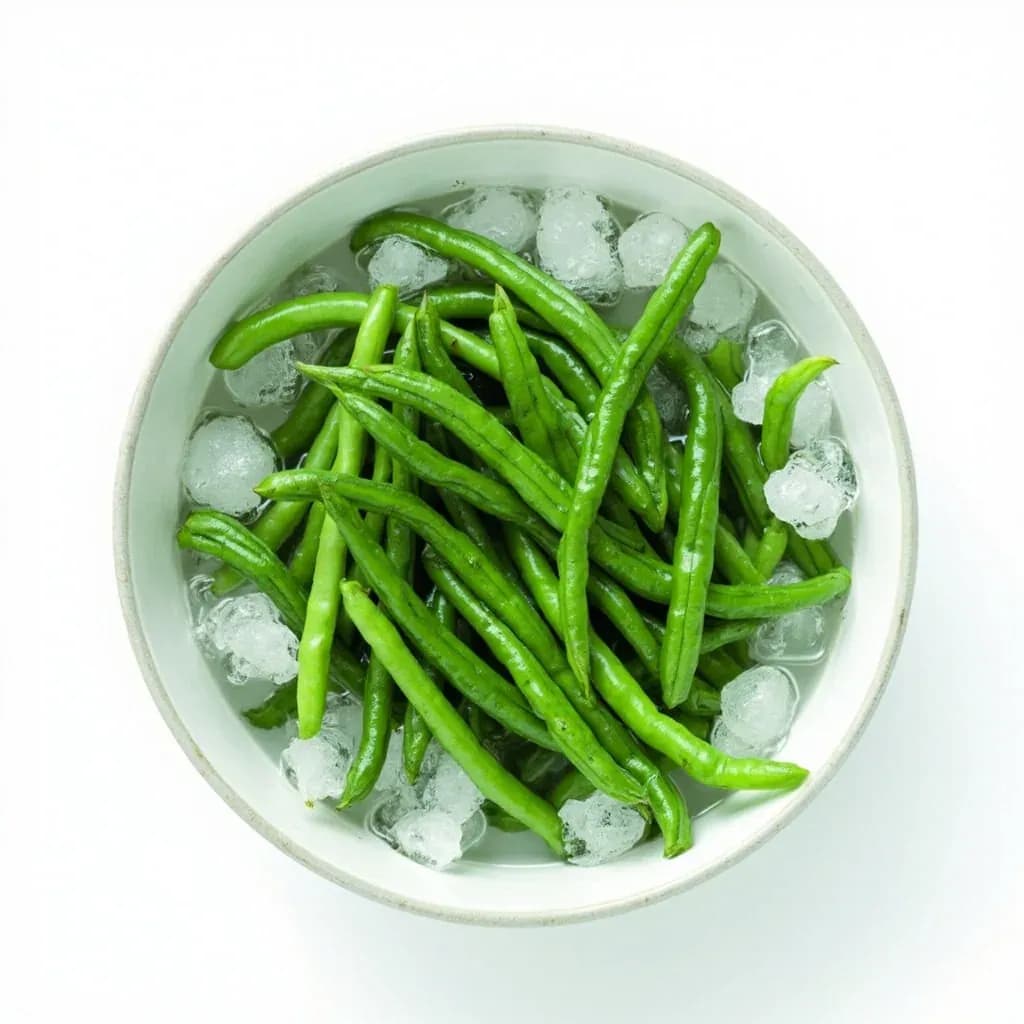
Plunging just-cooked food into ice water to halt cooking instantly and lock in bright color.
Shocking transfers blanched or boiled food straight into ice water to stop residual heat from overcooking it. It is used after blanching vegetables to fix vivid green color and crisp texture, and to peel tomatoes or eggs cleanly. The sudden temperature drop arrests enzyme activity that would dull color. Drain thoroughly afterward so the food does not stay waterlogged.
Shocking is the cold half of one of the most useful prep moves in any kitchen: plunging just-cooked food into ice water to drop its temperature fast and stop the cooking in its tracks. The hot side of cooking — blanching, poaching, boiling — never stops the moment you pull food from the heat; the residual warmth in the food itself keeps driving chemical reactions, softening cell walls, and dulling pigments. An ice bath cuts that carryover off, typically within seconds, so the food lands at exactly the doneness you intended.
The payoff is visible before the first bite. Green vegetables keep their chlorophyll-bright color rather than fading to olive. Soft- or medium-boiled eggs peel cleanly with a yolk set just past runny. Shrimp and lobster flesh tighten into that snappy, sweet texture instead of turning rubbery. It also buys you time: shocked food can sit in the fridge for days, ready to be reheated, seared, or tossed into a salad without losing its character.
Done well, it requires almost no equipment — a bowl, ice, water, and a slotted spoon — but it does demand organization. The ice bath has to be ready before the food hits the water, and the food has to go in the moment it leaves the pot. Skip either of those and the technique quietly fails, and most home cooks never realize why their "shocked" green beans still came out drab.
- Difficulty
- Easy
Types & varieties
Submerge cooked food in heavily iced water; the standard method for vegetables and eggs.
Drain and rinse under cold tap water; faster cleanup but less consistent cooling than a true ice bath.
Ice water with salt, or a splash of vinegar or lemon, used when you want to season or slightly acidify as you chill.
Brief ice bath finished with a pour of flavored liquid (e.g., court bouillon) for poached fish or lobster.
How to do it
- 1
Set up the ice bath first
Fill a large bowl or hotel pan with cold water and add a generous amount of ice, roughly equal parts by volume. For green vegetables, stir in salt (about 1 tablespoon per litre). Have a colander, slotted spoon, or spider within arm's reach.
- 2
Cook the food just to done
Blanch, boil, or poach the item only to the point of doneness — slightly under if anything, because carryover heat will finish it. Test with the tip of a knife or a tasting piece.
- 3
Transfer immediately to the bath
Lift the food out of the hot liquid with a spider or slotted spoon (reserving the cooking liquid if you want to reuse it) and plunge it straight into the ice water. Don't drain it slowly — every second counts.
- 4
Agitate so it chills evenly
Stir or move the food around gently so pieces don't clump and the cold water circulates against every surface. Dense items like ears of corn or whole artichokes may need a few extra minutes.
- 5
Test for cold
Pinch or bite a piece — the food should feel cold all the way to the center, not just on the surface. This usually takes 30 seconds for thin vegetables, 1–2 minutes for eggs, 2–3 minutes for lobster or large asparagus.
- 6
Drain and dry well
Lift the food into a colander, shake off water, then spread on a clean kitchen towel or paper towels and pat dry. Surface moisture will sabotage a final sear and dilute any dressing or sauce you add next.
- 7
Use, refrigerate, or finish
Use right away in a salad or composed dish, refrigerate in a sealed container for 2–3 days, or finish with a quick sauté, roast, or grill to heat through while keeping the color and snap locked in.
The science: what the cold is doing
The ice bath is not just cooling the food — it is interrupting several reactions at once, which is why a 60-second plunge can change color, texture, and flavor so dramatically.
- Carryover heat: food pulled from boiling water can keep rising several degrees internally before cooling begins. Without the bath, a blanched green bean finishes cooking on the way to the colander.
- Chlorophyll loss: heat (and any acidity in the cooking water) drives chlorophyll toward pheophytin, the dull olive pigment. Cold stops that conversion in its tracks and locks the bright green in place.
- Cell-wall softening: pectin continues to break down in residual heat. The shock freezes that process, so a snap pea stays a snap pea.
- Enzymatic browning: in cut fruit and some vegetables, polyphenol oxidase keeps working at warm temperatures. Cold slows it, which is why shocked basil stays vivid green for purées.
- Salt in the bath: lightly seasons the food by diffusion and is a traditional aid to keeping green vegetables crisp, though prolonged soaking will do the opposite.
Common uses
Tips & pitfalls
- Make the ice bath before you start cooking; a half-prepared bath is the most common reason shocking fails.
- Use at least as much ice as water — a slushy 4 °C bowl won't stop carryover cooking on a dense item.
- Salt the bath for green vegetables (about 1 tablespoon per litre); it seasons lightly and helps keep them crisp.
- Shock in small batches — crowding drops the bath temperature and leads to uneven cooling.
- Don't leave food in the bath longer than needed; cell walls absorb water and you'll get soggy texture and diluted flavor.
- Drain and dry thoroughly after shocking; lingering surface water dilutes dressings and prevents proper browning in a final sear.
- For herbs destined for purées, shock just until cold, then squeeze out water in a clean towel — excess water thins sauces and dulls color.
- For hard-boiled or jammy eggs, shock at least 1–2 minutes so the yolk sets and the shell releases cleanly.
- Replenish or refresh the ice bath between batches; once it warms past roughly 7 °C, it is no longer doing the job.
- Don't shock foods you plan to serve hot — finish them with a quick sauté, roast, or glaze instead.
Good to know
- Also called
- Refreshing; in French, "rafraîchir"
- Primary purpose
- Halt carryover cooking and lock in color, texture, and freshness
- Best for
- Blanched green vegetables, poached or soft-boiled eggs, boiled seafood, herbs for purées
- Ice-to-water ratio
- Aim for roughly 1:1 ice to cold water so the bath stays near 0 °C / 32 °F as long as ice remains
- Target bath temperature
- Below 4 °C / 40 °F; replenish ice as it melts
- Time on ice
- Usually 30 seconds to 3 minutes depending on item size; test with a pinch
- Equipment
- Large bowl or hotel pan, colander, slotted spoon or spider, plenty of ice
- Optional add-ins
- Salt (about 1–2% for vegetables), lemon juice or vinegar (for pale fruits/vegetables)
- Difficulty
- Beginner; requires timing and organization
- Storage after shock
- Drain well, dry on a clean towel, refrigerate up to 2–3 days or finish the dish
- Related technique
- Blanching (shock is the second half of a blanch-and-shock)
- Yield impact
- None on weight when done briefly; prolonged soaking waterlogs food
Also called
Ice Bath · Refresh
Dishes that rely on it
Related

Boil
Cook in vigorously bubbling liquid at full rolling heat

Simmer
Hold liquid at a gentle shimmer for tender, unhurried cooking

Poach
Cook gently in barely-trembling liquid for silky, tender results

Steam
Cook in rising vapor to keep color, nutrients, and shape intact

Blanch
Plunge briefly in boiling water, then shock cold to lock color

Braise
Sear, then cook slow in a little liquid until fall-apart tender

Stew
Simmer bite-sized pieces fully submerged into a rich, unified pot

Sous-Vide
Seal and cook in precise warm water for edge-to-edge doneness