Knife Skills
Peeling
Removing the outer skin from produce or shellfish with a peeler, knife, or by hand.
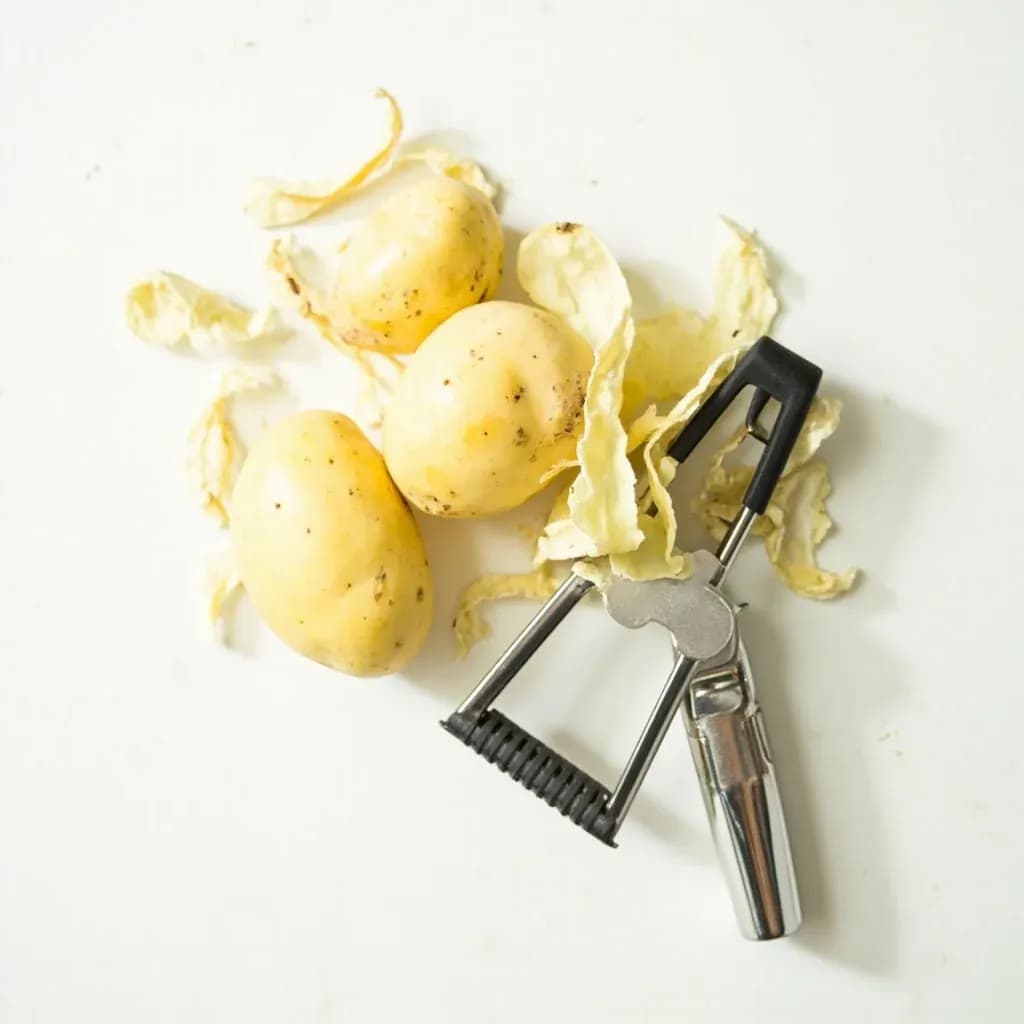
Peeling strips away the inedible or tough outer layer of fruits, vegetables, or shellfish using a peeler, paring knife, or fingers. It improves texture, appearance, and edibility, as with potatoes, asparagus, and crawfish. Light peeling preserves more of the nutritious flesh just beneath the skin.
Peeling is the act of removing the outer skin of a food — fruit, vegetable, shellfish, even egg — and it sits at the very front of nearly every recipe's prep. The skill looks trivial, but the decisions behind it shape the final dish: how clean a purée looks, how evenly a potato cooks, how tender a slice of cucumber feels on the tongue, and how much flavor stays in the pan. A sharp blade and a stable base are what stand between a clean, tissue-thin peel and a gouged, half-spent piece of produce.
The behavior of peeling changes with the food. Hard, waxy skins on butternut squash or rutabaga resist a dull peeler and demand a sturdy, sharpened blade. Soft, papery skins on ripe tomatoes or peaches slip off after a brief blanch, and at the other end of the spectrum, fibrous ginger yields best to the edge of a spoon rather than any knife. Shellfish and eggs have their own logic — shells are cracked and pulled away, sometimes with the help of heat or pressure. The right tool, the right grip, and a sense of when to leave the skin alone are the three things that separate efficient prep from wasted food.
- Difficulty
- Easy
Types & varieties
Skin removed entirely; standard for root vegetables, hard squash, apples for pie, and citrus segments.
Strips of skin left on for texture, color, or roasting — hasselback potatoes, striped carrots, grilled zucchini.
Long thin strips from a julienne peeler or channel knife; used as garnish or a quick sauté.
Wide translucent strips drawn with a vegetable peeler; used for salads, carpaccio, and garnish.
Brief boil followed by an ice bath so the skin slips off — tomatoes, peaches, nectarines, peppers, chestnuts.
Only the colored flavedo removed with a microplane, channel knife, or zester; the bitter white pith is left behind.
Smashing with the side of a chef's knife or the heel of the hand to loosen the skin — garlic, ginger, shallots.
Removing shells, vein, and joints from shrimp; cracking claws and tail shells on lobster and crab.
Shelling hard-boiled eggs, often starting from the wider air-pocket end after cracking and rolling.
Pulling back the silk and leaves from an ear of corn; easiest after a short soak in water.
How to do it
- 1
Choose the right tool
Match the tool to the job: a Y-peeler for control on round, firm items (apples, potatoes); a swivel peeler for long vegetables (carrots, cucumbers); a serrated peeler for soft skins (peaches, tomatoes); and a paring knife for tight curves (celeriac, artichokes, knobs of ginger).
- 2
Stabilize the produce
Cut a thin slice off the base of any round item so it sits flat on the board. For long vegetables, lay them down; for in-hand peeling, rest the tip on the board and grip firmly.
- 3
Set your grip
Hold the peeler like a screwdriver, with thumb and fingers wrapped around the handle. On the holding hand, curl the fingertips inward and tuck the thumb behind the produce, well clear of the blade's path.
- 4
Make the first stroke
Draw the blade away from your body and toward the base of the produce with even, light pressure. Let the blade skim the surface — pressing too hard digs into the flesh and wastes yield.
- 5
Rotate and overlap
Turn the item a quarter turn after each pass so the strokes overlap slightly and no strips of skin remain. Work from top to base, keeping a consistent thickness.
- 6
Handle tight spots
Carve a small V around potato eyes with the tip of a paring knife. For knobs and shoulders (ginger, celeriac, butternut), switch to a paring knife for the curves a peeler cannot follow.
- 7
Rinse and inspect
Run the peeled item under cold water to wash away loose skin, and check for missed patches. Pat dry if it will be roasted or fried so the surface browns instead of steaming.
- 8
Reserve or discard the peels
Drop trimmings into a stock bag (onion, carrot, leek tops, parsnip peel), a dehydrator, or the compost bin. Potato peels can be fried right away or blanched and crisped later.
- 9
Variant — blanch-and-peel
Score a small X in the base of tomatoes, peaches, or peppers. Lower into boiling water for 20–45 seconds, transfer to an ice bath, then pull the skin away with your fingers or the edge of a paring knife.
- 10
Variant — crush-and-peel
For garlic, lay the flat of a chef's knife over a clove and press firmly with the heel of your hand — the skin splits and slips off. For shallots, halve root-to-tip first, then repeat. For ginger, scrape the skin away with the edge of a spoon; it follows the contours and wastes almost nothing.
- 11
Variant — shellfish peel
For shrimp, peel off the shell — the legs usually come away with it — leaving the tail intact if the recipe calls for it, then slice along the back to lift out the dark vein. For lobster, twist off the claws and tail, crack the shells with a nutcracker or the back of a heavy knife, and pull the meat free.
- 12
Variant — egg peel
For hard-boiled eggs, start at the wider end where the air pocket sits: tap to crack, then roll gently under your palm to fracture the shell all over. Peel under cool running water, slipping the membrane away with the shell for a clean, intact white.
When Not to Peel
The most common peeling mistake is peeling at all. Many foods taste better, cook better, and hold more nutrients with their skin on. A cook's first question should be whether the recipe truly needs the skin removed — and if the answer is yes, whether only a portion needs to come off.
- New potatoes, fingerlings, and thin-skinned zucchini have tender skins that dissolve into a dish; leave them on for salads, roasts, and sautés.
- Ripe tomatoes, peaches, plums, and nectarines are often better unpeeled unless a smooth purée or clean presentation demands it.
- Apple skins carry meaningful pectin and flavor; strip them only for pies, sauces, or purées where a smooth texture matters.
- When a recipe asks for citrus peel, take only the colored zest — the white pith beneath is bitter and should be trimmed away with a paring knife.
Choosing a Peeler
A peeler is a small tool with a big effect on how much food ends up in the bin. Match the style to the produce and to your hand.
- Y-peeler (vertical blade): best control on round, firm produce — apples, potatoes, pears. Easier on the wrist for long prep sessions.
- European swivel peeler (horizontal blade): faster on long, straight vegetables — carrots, cucumbers, zucchini — and follows gentle curves well.
- Serrated peeler: a toothed blade that bites into soft, slippery skins (peaches, tomatoes, eggplant) without tearing the flesh.
- Julienne / channel knife: for garnish strips of citrus peel, carrots, or zucchini.
- Paring knife: the right answer for tight curves, potato eyes, knobs of ginger or celeriac, and any spot a peeler can't follow.
Common uses
Tips & pitfalls
- Use a sharp blade — a dull peeler tears flesh and removes far more than the skin, inflating yield loss and leaving ragged surfaces.
- Cut a thin flat base on round produce (potatoes, apples) so it sits still and you can peel with even pressure.
- Keep the thumb of your holding hand tucked behind the produce and curl your fingers out of the blade's path.
- Pull the peeler toward you in long, overlapping strokes rather than short chops; long strokes waste less flesh and leave a cleaner surface.
- Don't peel tomatoes, peaches, plums, or thin-skinned new potatoes unless the recipe demands it — flavor, color, and nutrients live in the skin.
- For citrus zest, take only the colored layer; the white pith beneath is bitter and will muddy any syrup, curd, or dressing.
- Save vegetable trimmings in a freezer bag for stock, and dry or candy citrus peels — peels carry real flavor and shouldn't go straight to the bin.
- Refresh a tired peeler by running the blade along fine wet sandpaper or a ceramic honing rod; most peelers can be sharpened several times before being replaced.
Good to know
- Category
- Knife Skills / Mise en Place
- Primary tools
- Y-peeler, swivel peeler, serrated peeler, paring knife, chef's knife, channel knife, microplane
- Two dominant peeler styles
- Y-shaped (vertical, more control) and European swivel (horizontal, faster on long vegetables)
- Typical yield loss
- Roughly 10–25% of item weight, depending on produce and blade sharpness
- Time per item
- 30 seconds to a few minutes; soft-skinned fruit in seconds
- Best for produce
- Potatoes, carrots, parsnips, butternut squash, apples, pears, stone fruit, ginger, citrus zest
- Also applied to
- Shellfish, hard-boiled eggs, corn husks, garlic, shallots, chestnuts
- Often unnecessary
- Thin-skinned new potatoes, ripe tomatoes, peaches, plums, cucumbers, young zucchini
- Safety note
- Always peel away from the body and keep the holding hand's thumb tucked behind the produce
Also called
Peel · Asparagus Peeling · Crawfish Peeling
Dishes that rely on it
Related

Chop
Cut into rough, irregular pieces — the everyday workhorse cut

Dice
Cut into uniform cubes for even cooking and a tidy look

Mince
Cut as fine as possible so flavor melts evenly into the dish

Slice
Cut into even, flat pieces for consistent cooking and presentation

Julienne
Cut into thin matchsticks for fast cooking and elegant garnish

Brunoise
Cut into tiny, precise cubes — the finest dice in the kitchen

Chiffonade
Roll and slice leafy greens into delicate ribbons

Batonnet
Cut into tidy sticks, thicker than julienne — think classic fries