Knife Skills
Deveining Shrimp
Removing the dark vein along a shrimp's back before cooking.
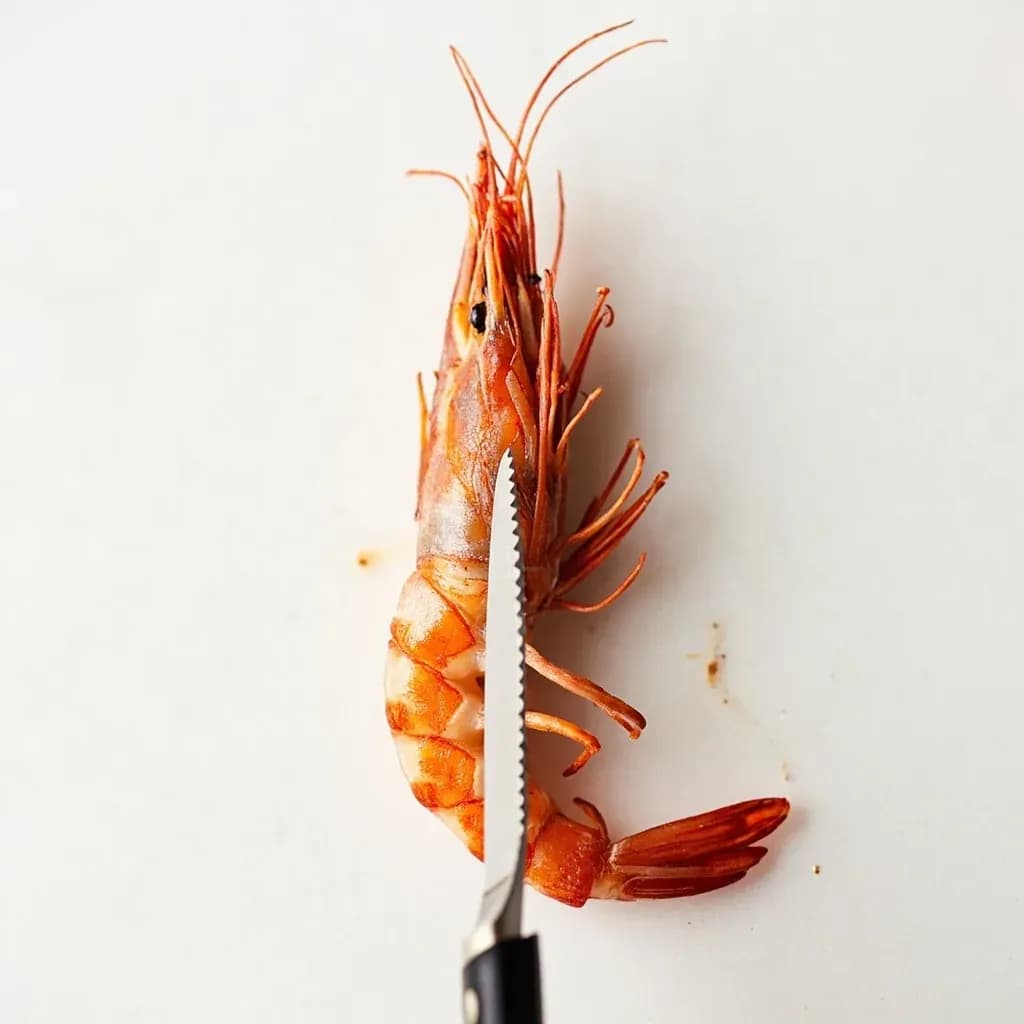
Deveining shrimp slits the back and lifts out the dark digestive tract that runs along it. It improves both appearance and taste, since the vein can be gritty and slightly bitter, especially in larger shrimp and prawns. A shallow cut with a paring knife exposes the vein, which pulls free in one piece, and the cut also butterflies the shrimp so it curls attractively when cooked.
Deveining is the small but consequential step of exposing and removing the dark intestinal tract that runs along a shrimp's curved back. Despite the name, it is not a vein — it is the shrimp's digestive tract, and its dark color comes from what the animal has been eating. On wild-caught shrimp that tract is often packed with fine sand and grit, and it can lend a muddy or iodine-like note to a finished dish; on farmed shrimp it is usually nearly empty and far less noticeable.
The practice is standard in Western kitchens but is not universal globally; many Asian recipes, particularly for heavily spiced or small shrimp, leave the tract in without complaint. The size of the shrimp is the best gauge for whether to bother: jumbo and larger specimens (roughly U-25 and bigger) almost always benefit from deveining, while small salad shrimp (41–60 count) are commonly cooked whole with no ill effect. Done well, deveining adds perhaps 15 to 30 seconds per shrimp and leaves the flesh intact for clean, even cooking.
- Difficulty
- Easy
Types & varieties
A shallow incision along the back with a small sharp knife; the most common restaurant method for control.
A small handheld tool with a pointed tip and trough; the tip pierces behind the tract and lifts it out in one motion.
Pierce through the shell and lift the tract out without slitting; useful when working shell-on for presentation.
Cut through the shell along the back without removing it; the shell is peeled after cooking or eaten around. Standard for grilling and shrimp cocktail.
Shell removed first, then the back is slit. The default for sautés, stir-fries, and pasta dishes.
Removing both the dorsal tract and the smaller ventral one. Usually reserved for the very largest shrimp (U-10 and bigger).
How to do it
- 1
Rinse and chill the shrimp
Rinse the shrimp briefly under cold water and keep them on ice or refrigerated until you are ready. Cold, just-firm flesh cuts cleanly and tears far less than shrimp that have warmed to room temperature.
- 2
Decide shell-on or peeled
For presentations like shrimp cocktail or grilling, leave the shell on and cut straight through it. For sautés, stir-fries, and pastas, peel the shell and tail first — though leaving the final tail segment attached helps the shrimp hold its shape in the pan and on the plate.
- 3
Make the back cut
Hold the shrimp belly-down with the curve facing you. With a small, sharp paring knife, make a shallow lengthwise incision along the back, from just behind the head end to the start of the tail, about 1/8 inch (3 mm) deep. The dark tract should be clearly visible at the bottom of the cut.
- 4
Lift out the tract
Use the tip of the knife — or a dedicated deveiner tool — to gently pry the tract up and pull it out in one motion, working toward the tail. If it snaps partway, fish out the remaining piece with the knife tip rather than leaving fragments behind.
- 5
Address the underside tract (large shrimp only)
For the very largest shrimp (U-10 and bigger), repeat the lift on the smaller tract running along the belly. For medium and small shrimp, leave it — the effort rarely pays off.
- 6
Rinse and dry
Give the deveined shrimp a quick rinse under cold water to flush any loosened grit, then spread them on a paper-towel-lined tray and pat very dry. Dry shrimp sear, bread, and marinate far better than wet ones.
When to skip deveining
The size and provenance of the shrimp are the two signals that matter most. Tiny shrimp — the 41–60 count range common in cold salads, fried rice, and egg foo young — are usually cooked whole, because the tract is barely visible and impossible to remove cleanly. Farm-raised white shrimp from controlled tanks or ponds are often so clean that deveining is a cosmetic choice. Conversely, wild-caught, head-on, or shell-on shrimp almost always carry grit, and skipping the step will reveal it in the finished dish. If in doubt, make the cut on a single shrimp and taste a small piece raw — a clean, sweet flavor means you can keep moving; a sandy or iodine-tinged note means it's worth the extra time.
- Small (41–60 count) shrimp: skip the cut; rinse briefly in a colander.
- Farmed, headless, shell-off shrimp: often clean enough to leave whole.
- Wild, head-on, or shell-on jumbo: always devein, and rinse thoroughly.
Common uses
Tips & pitfalls
- Keep the shrimp cold and firm until you cut — warm, soft flesh tears and the tract snaps in pieces.
- Use a freshly sharpened paring knife; a dull blade drags and shreds the flesh rather than slicing it.
- Stop cutting the moment the dark tract is visible — going deeper splits the shrimp and ruins the presentation.
- Pull the tract toward the tail; it slides out in one piece rather than breaking halfway.
- Always devein wild-caught, head-on, or shell-on shrimp — that is where grit hides most.
- Skip the cut on very small shrimp (41–60 count); a quick rinse in a colander is enough.
- Pat the deveined shrimp thoroughly dry before seasoning — excess water causes steaming in the pan and dangerous oil splatter.
- Do not devein hours ahead and leave the shrimp sitting in liquid; flavor and texture degrade. Devein just before cooking.
Good to know
- What the 'vein' actually is
- The shrimp's intestinal (digestive) tract, not a true blood vessel. The dark color is from its contents, not the tissue itself.
- Where it runs
- A larger tract sits along the curved back (dorsal side); a smaller, often lighter tract runs along the belly (ventral side).
- Why remove it
- It can hold sand or grit, contribute a muddy or iodine-like off-flavor, and look unappealing in clean presentations like shrimp cocktail.
- Edibility
- Completely safe to eat. Many cooks skip it on small or farm-raised shrimp without consequence.
- Size threshold for bothering
- Worth the effort on U-25 and larger (fewer than 25 per pound). Smaller shrimp are commonly left whole.
- Wild vs. farmed
- Wild-caught shrimp almost always show a visible, gritty tract; farmed shrimp are often nearly clean and may not need deveining.
- Cut depth
- About 1/8 inch (3 mm) — just deep enough to expose the tract without splitting the shrimp in half.
- Difficulty
- Beginner-friendly. The technique is about consistency and a sharp knife, not practiced hand skill.
Also called
Deveining Prawns · Shrimp Deveining
Related

Chop
Cut into rough, irregular pieces — the everyday workhorse cut

Dice
Cut into uniform cubes for even cooking and a tidy look

Mince
Cut as fine as possible so flavor melts evenly into the dish

Slice
Cut into even, flat pieces for consistent cooking and presentation

Julienne
Cut into thin matchsticks for fast cooking and elegant garnish

Brunoise
Cut into tiny, precise cubes — the finest dice in the kitchen

Chiffonade
Roll and slice leafy greens into delicate ribbons

Batonnet
Cut into tidy sticks, thicker than julienne — think classic fries