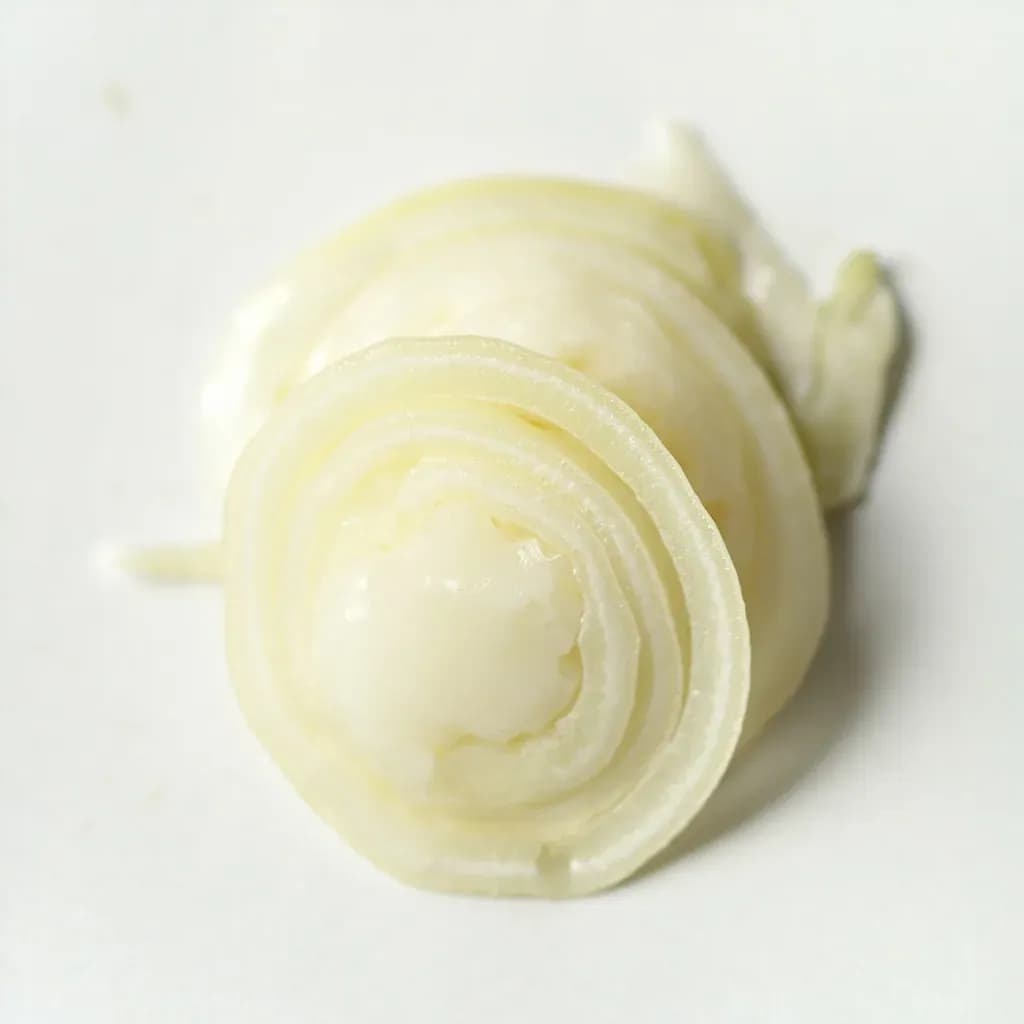
Knife Skills
Slicing
Cutting food into flat, even pieces with a drawing motion of the knife.
Slicing is the fundamental knife skill of cutting food into thin, flat, uniform pieces by drawing the blade through in a smooth stroke rather than pressing straight down. Even thickness is what makes ingredients cook at the same rate and look clean on the plate, whether it's onions, meat for stir-fry, or sashimi-thin fish. Cooks across cuisines vary the angle, thinness, and grain direction to suit the dish.
Slicing is the foundational cut from which nearly every other knife task in the kitchen grows. It is defined less by the shape of the food than by the motion of the blade: a long, controlled drawing or pushing stroke that lays the edge through the food and separates it into thin, even, flat pieces. Those pieces may appear as coins, ovals, planks, or elongated ovals cut on the bias, but in every case the goal is the same — uniform thickness, clean edges, and minimal crushing of the cells beneath the blade.
The cut matters because uniform slices cook at the same rate, look composed on the plate, and behave predictably in the next step of the recipe. A julienne begins with a thin plank cut again into matchsticks; a brunoise is a fine dice built from a julienne; a chiffonade is a stack of leaves sliced into ribbons. Tender proteins are tender precisely because the cook has shortened the muscle fibers by cutting across them. A roast that looks ragged at service was almost always carved with a dull knife or with the wrong motion, not by an inattentive cook.
Slicing is also a family of motions, not a single technique. The knife may draw toward the body (the Japanese approach with a yanagiba or sujihiki), push forward (the Western default), or rock on the board with the tip anchored (the technique used for herbs and small aromatics). The angle can be perpendicular for clean roundels or steeply tilted for bias slices that expose more surface area and cook faster. Mastery of slicing is what makes every other foundational cut feel natural, and it is the single skill that most quickly improves a cook's confidence at the board.
- Difficulty
- Easy
Types & varieties
Knife held perpendicular to the food; yields even coins and roundels, the default for cucumbers, carrots, lemons, sausages, and potatoes.
Knife tilted 30–45°; produces longer, thinner slices that cook faster and present elegantly, common in Chinese, Japanese, and French vegetable work.
A diagonal cut made while rotating the food 90° between strokes, producing angled wedges with two cut faces; classic for scallions, leeks, eggplant, and daikon.
Knife introduced into the side of the food and pushed through parallel to the board; used to open chicken breasts, butterfly pork chops, split a layer cake, or open a pocket for stuffing.
Blade drawn toward the body as it cuts; the technique of Japanese yanagiba and sujihiki, prized for clean cuts on fish and roast meats.
Blade pushed away from the body, edge leading; the standard Western stroke for vegetables and roasts and the action of a mechanical slicer.
Tip remains planted on the board while the knife rocks up and over; efficient for herbs, garlic, and small aromatics where many quick slices are needed.
Direction of cut relative to muscle fibers in meat; slicing perpendicular shortens fibers for tenderness, while slicing parallel preserves long fibers for clean-roast presentation.
How to do it
- 1
Set up the station
Place a stable board on a damp towel or non-slip mat. Position a bench scraper and a damp cloth within reach. Lay out only the food to be sliced — crowding the board leads to rushed, unsafe cuts.
- 2
Stabilize the food
Trim a flat base on round items (onions, tomatoes, potatoes, lemons) so the food sits flush against the board without rocking. Stand long items (carrots, zucchini, scallions) on end or lay them flat in a tidy row.
- 3
Grip the knife
Pinch the blade between thumb and index finger just forward of the bolster. Wrap the remaining three fingers around the handle. On the guiding hand, curl the fingertips inward into a claw so the knuckles face the blade.
- 4
Establish the first slice
Set the knife where the cut should start. Lower the spine so the edge meets the food, then draw or push the blade through in one smooth stroke. Let the tip or heel stay in contact with the board depending on the food's height and length.
- 5
Set the rhythm
Move the knife in a continuous, fluid stroke — forward and back for vegetables and roasts, a single forward draw for fish. With each stroke, slide the guiding hand back along the food so the next slice is the same thickness as the last.
- 6
Finish and reset
Transfer sliced food away from the board with the bench scraper or your knife blade (spine turned toward you). Pause to wipe the board clean if juices pool. Re-check the food's flat base and the knife's edge after every few inches cut.
Slice geometry and what it does to cooking
Every slicing decision — thickness, angle, orientation to the grain — changes how the food behaves once heat is applied. Thinner slices expose more surface area to the pan, so they brown faster, lose moisture sooner, and finish in seconds; thicker slices hold their juices and need more time to cook through. This is why a stir-fry calls for thin bias-cut vegetables and a gratin asks for thick, even planks — the slice is the recipe's hidden timer.
- Bias cuts expose more surface area per slice and tend to cook faster than straight cuts of comparable thickness, especially in quick, high-heat methods.
- Round, dense vegetables (onions, potatoes, beets) tolerate straight cuts; long, fibrous vegetables (carrots, scallions, leeks) benefit from bias or roll-cuts.
- For proteins, slicing perpendicular to the grain is what makes a flank steak feel tender at the table; the same cut parallel to the grain will chew like rope regardless of how it was cooked.
- Thin slices (under 3 mm) read as delicate and elegant — appropriate for carpaccio, raw fish, and herbs in a chiffonade — while slices over 1 cm feel rustic and substantial, the right scale for gratins and stews.
Choosing a knife for the slice
Slicing is the cut that most rewards matching the blade to the food. A long, thin blade makes long, even strokes on a roast or a fillet without sawing; a shorter, taller blade gives knuckle clearance and leverage for round vegetables; a serrated edge is reserved for foods with a tough exterior and soft interior, where a smooth edge would crush before it cuts. Working against the wrong knife is the most common reason slices tear, drag, or come out uneven.
- Long slicing knives and sujihiki (9–12 in) for whole roasts, hams, and large fish — the length finishes a slice in a single stroke.
- 8–10 in chef's knife or santoku for everyday vegetable and boneless protein slicing — the height of the blade gives knuckle clearance.
- Yanagiba for sashimi and other raw fish work — the single-bevel edge pulls cleanly through flesh without tearing the muscle.
- Serrated bread knife for crusty loaves and for tomatoes, citrus, and other items where a smooth edge would crush the skin.
Common uses
Tips & pitfalls
- Sharpen before you slice. A dull edge crushes cell walls, drags on the food, and is the single most common cause of kitchen cuts — knives slip most often when they are not sharp enough.
- Let the knuckle of your guiding hand ride the side of the blade; the knuckle, not the finger pad, is the real gauge for slice thickness and the real safety guard.
- Pinch the blade just past the bolster, not on the handle. Gripping the handle makes the knife feel heavy at the tip and tires the wrist within minutes.
- Use one long stroke whenever the food allows it. A sawing motion is reserved for crusty bread and firm root vegetables with tough skin — not for tomatoes, herbs, or fish.
- For bias cuts, hold the angle of the knife steady and rotate the food between cuts; turning the wrist distorts the angle and produces slices of varying thickness.
- Brace round items by cutting a small flat side first. An onion, lemon, or potato that rocks is an onion, lemon, or potato that will slip.
- Slice meat across the grain for tenderness. The 'grain' is the direction of the long muscle fibers; cut perpendicular to them and each slice breaks those fibers short.
- Don't press straight down on the heel. Let the edge do the work — pressure flattens the slice, tears the edges, and forces more juice out of the food.
Good to know
- Skill family
- Knife skills — foundational cut
- Defining motion
- A drawing or pushing stroke in which the blade travels through the food rather than chopping down through it
- Typical thickness
- 2–6 mm (about 1/16–1/4 in) for general work; thinner for carpaccio and cold plates, thicker for stews and gratins
- Primary knives
- Chef's knife, slicing/carving knife, santoku, yanagiba, sujihiki, utility knife, serrated bread knife
- Difficulty
- Beginner — the entry point for almost all knife work
- Distinguished from
- Chopping (irregular, vertical), dicing (cubes), mincing (very fine), julienning (matchsticks)
- Cuts produced
- Roundels, oblique/bias slices, shards, escalopes, scallops, planks
- Common on
- Onions, tomatoes, citrus, potatoes, carrots, cabbage, roast meats, poultry, fish, bread, terrines
- Key hand position
- Claw grip on the guiding hand; pinch grip on the blade just forward of the bolster
Also called
Thin Slicing · Fine Slicing · Slice (Affettare) · Slicing Onions
Dishes that rely on it
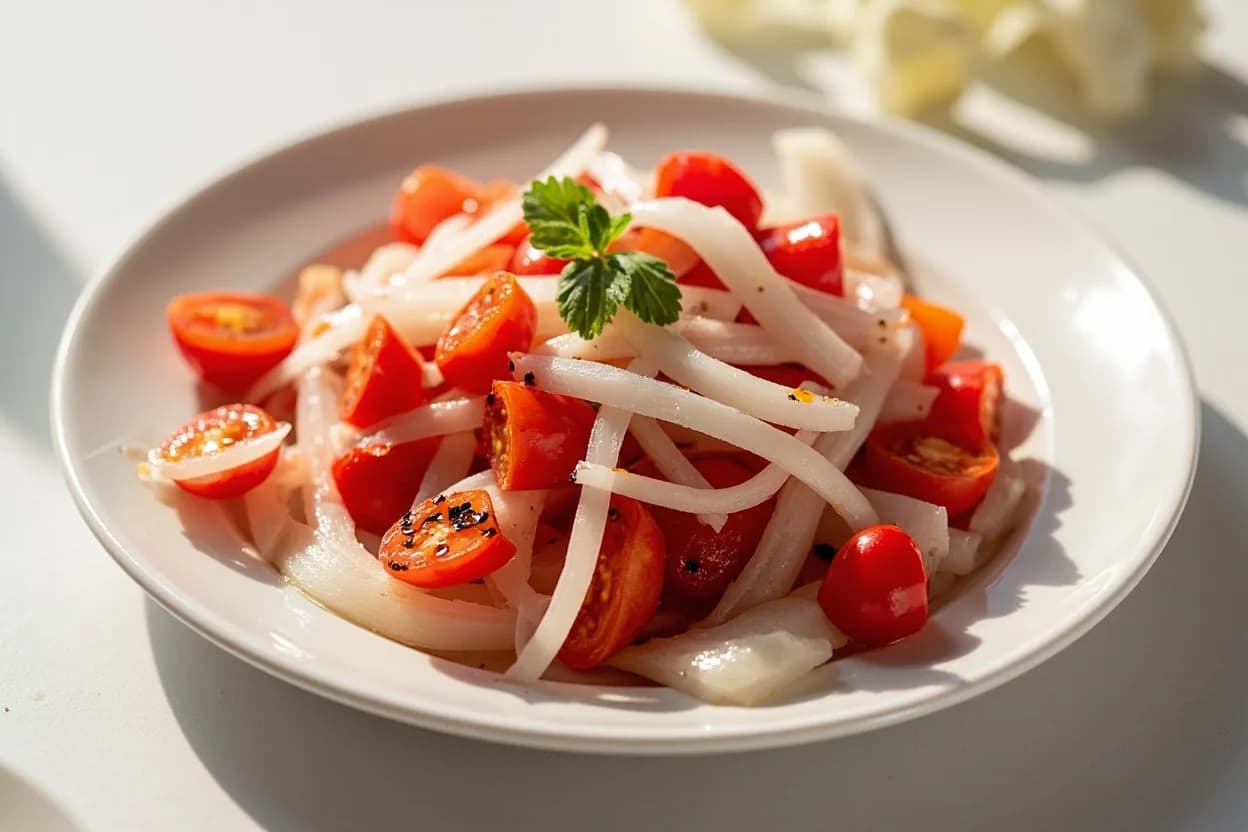
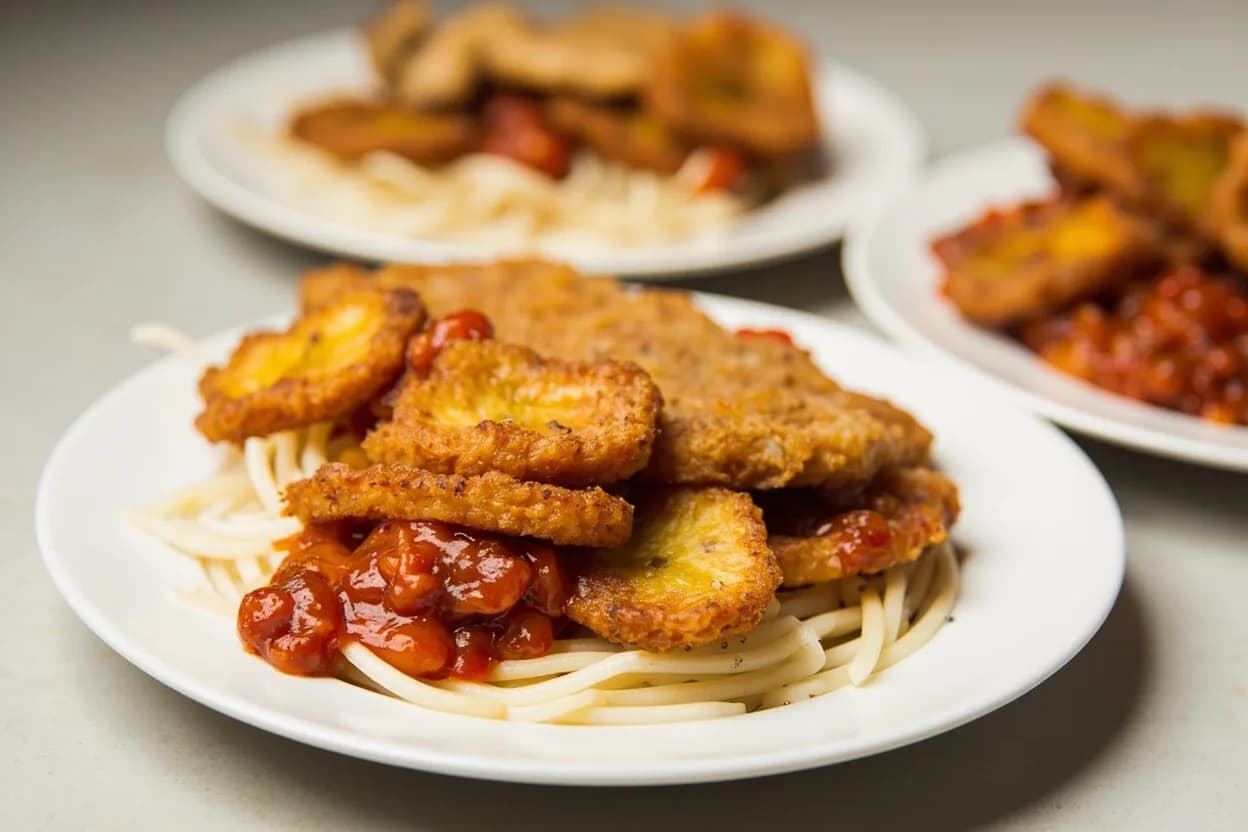
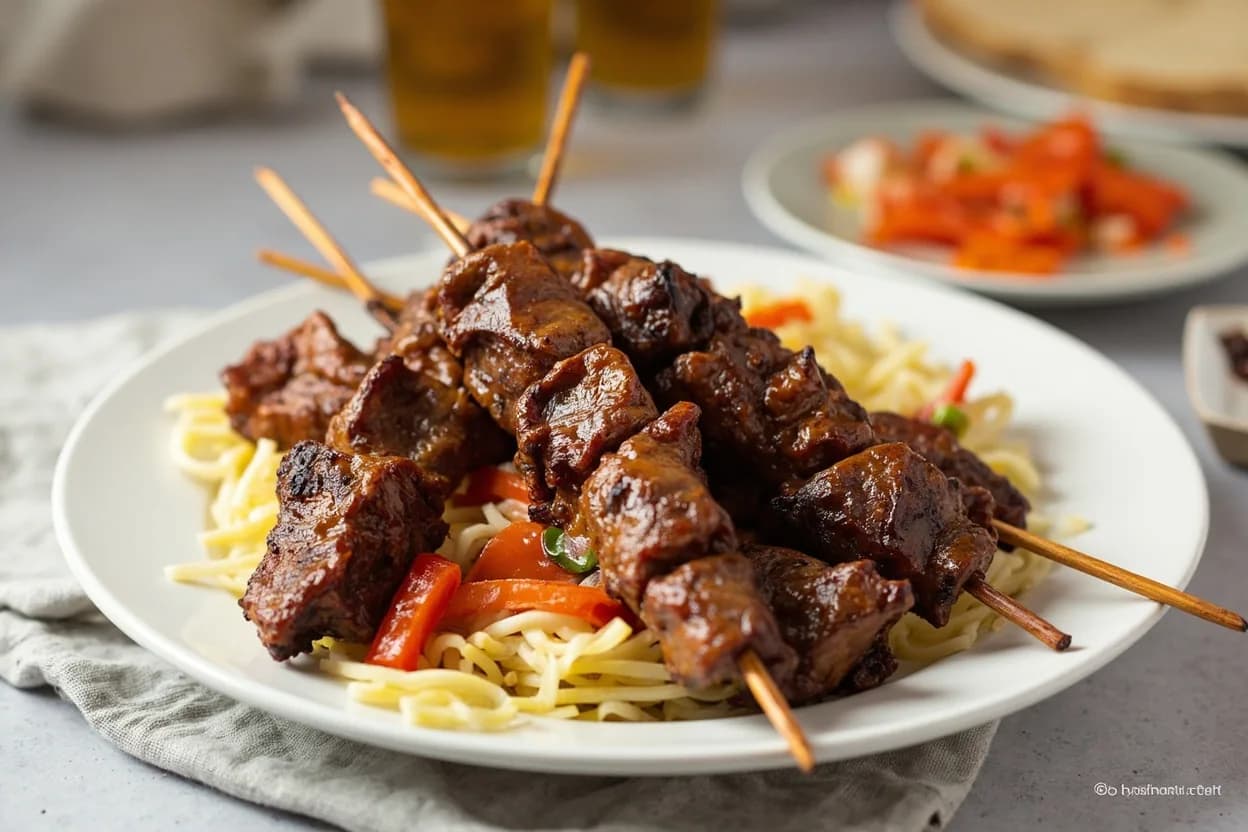
Related

Chop
Cut into rough, irregular pieces — the everyday workhorse cut

Dice
Cut into uniform cubes for even cooking and a tidy look

Mince
Cut as fine as possible so flavor melts evenly into the dish

Slice
Cut into even, flat pieces for consistent cooking and presentation

Julienne
Cut into thin matchsticks for fast cooking and elegant garnish

Brunoise
Cut into tiny, precise cubes — the finest dice in the kitchen

Chiffonade
Roll and slice leafy greens into delicate ribbons

Batonnet
Cut into tidy sticks, thicker than julienne — think classic fries