Prep & Assembly
Stuffing
Filling a cavity in meat, vegetables, or dough with a seasoned mixture before cooking.
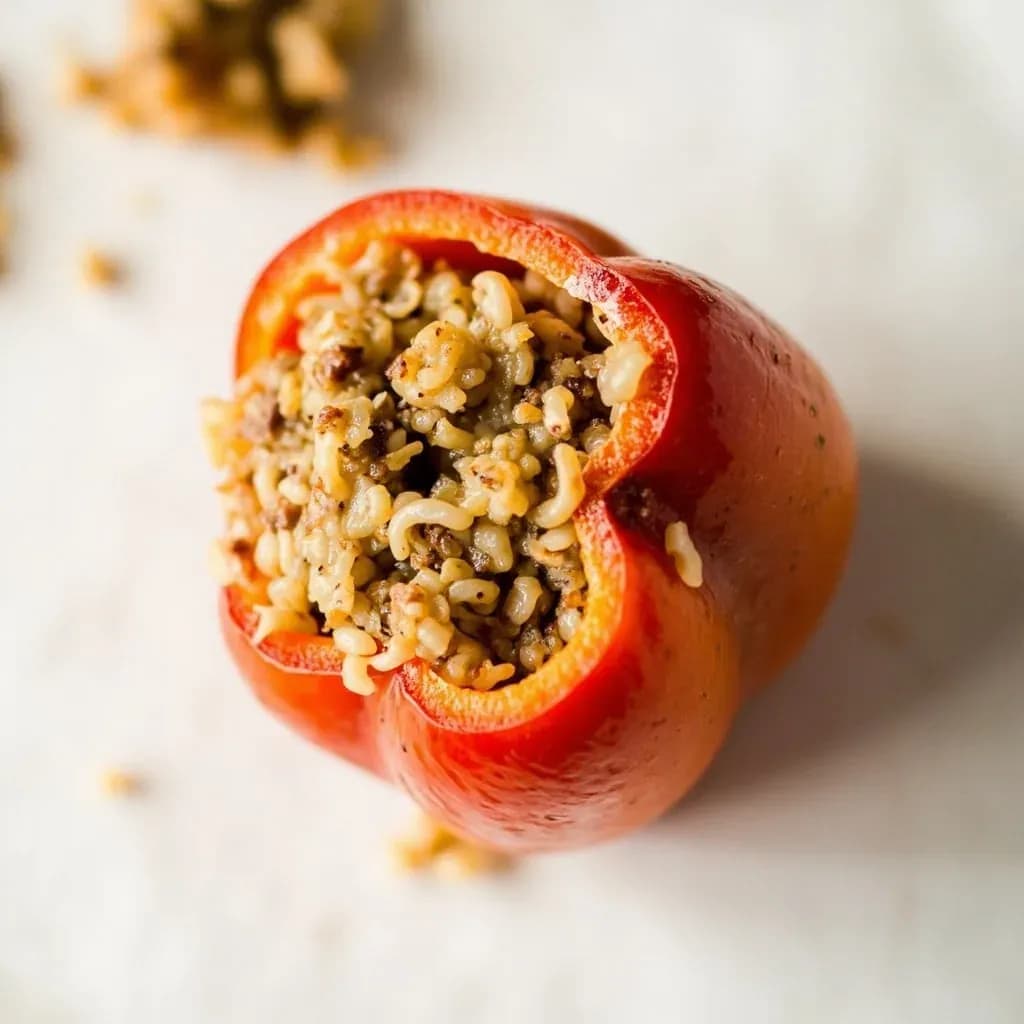
Stuffing packs a seasoned filling into a hollow or pocket, such as a deboned bird, a vegetable, or rolled meat, before cooking so the flavors meld. Classic examples include stuffed dolma, peppers, fish, and poultry. The filling should be packed snugly but not so tightly that it cannot expand, and it must reach a safe temperature when meat is involved.
Stuffing is the technique of packing a seasoned mixture into a cavity — inside a bird, a roast, a whole fish, a vegetable shell, or a piece of dough — and cooking the two together so the filling absorbs the surrounding juices and the surrounding food absorbs the filling's flavor. What makes it a technique rather than a recipe is that the principle is constant: an edible hollow, a binder (bread, grain, ground meat, cheese, or dough), aromatics, moisture, and a long enough cook for heat to penetrate the filling. The variation comes from the binder and the cuisine, not from the method.
Two practical decisions drive almost every result. The first is moisture in the binder: bread, rice, and grain all swell as they cook, so the mixture must start moist enough to steam through but not so wet that the center turns to paste. The second is packing density. A loosely packed filling lets steam circulate and cooks evenly; a tamped-down filling resists heat and emerges raw or gummy in the middle. Getting these two right matters more than the specific recipe.
Stuffing is also a food-safety exercise. A cavity full of bread, meat drippings, and warm poultry is an ideal breeding ground for bacteria, so the modern rule is to treat the bird and the filling as one cooked item: the center of the stuffing must reach 165°F (74°C) for poultry, which is why a stuffed bird takes 30–50% longer to roast and why many cooks now bake the filling separately in a dish (the same preparation, called dressing in much of the U.S. South).
- Difficulty
- Medium
Types & varieties
The default in North American and British cookery: dried or toasted bread cubes, onion, celery, butter, stock, and herbs.
Southern U.S. tradition built on crumbled cornbread, often with sage, andouille, or oysters.
British classic of dried or fresh sage with sautéed onion, the standard partner for roast poultry and pork.
French, Italian, and Northern European; chestnuts add sweetness and a coarse, meaty texture.
Italian or country sausage browned and crumbled into the base, common on Italian-American holiday tables.
Chopped cooked turkey or chicken heart, gizzard, and liver stirred into the base, traditionally packed into the neck cavity.
Mediterranean and Middle Eastern; spans Greek, Levantine, and Persian styles with herbs, nuts, and dried fruit.
Fine-ground meat, fat, and seasoning emulsified into a paste; the binder for ballotines, galantines, terrines, and boned poultry.
Toasted buckwheat groats with onion, schmaltz, and egg; Eastern European Jewish tradition, sharing its flavor profile with the pasta-and-buckwheat side dish kashe varnishkes.
Pine nuts, walnuts, apricots, or cranberries bound with rice or bread; festive roasts across the Mediterranean and Levant.
Alliums and umami-rich mushrooms, a vegetarian-friendly base for roasts and stuffed vegetables.
How to do it
- 1
Prepare the base
Cut bread into ½-inch (1.25 cm) cubes and dry in a low oven (250°F/120°C) until they feel like stale bread, 20–30 minutes. For rice or grain stuffings, cook to just under al dente — the filling will finish inside the cavity.
- 2
Cook the aromatics and any meat
Sweat diced onion, celery, and garlic in butter or rendered fat until soft and translucent, 6–8 minutes. Add fresh herbs in the last minute to preserve their flavor. Brown sausage, giblets, or mushrooms separately, drain excess fat, and stir them in once they have released their liquid and cooked it off.
- 3
Build the mixture
Combine the dry base with the aromatics in a large bowl. Pour warm stock — and any pan drippings, wine, or beaten egg for binding — over the top in stages, tossing gently until evenly moistened. The mixture should clump loosely when pressed but not feel soggy or release liquid.
- 4
Season and balance
Add salt, pepper, dried spices, and any sweet elements (dried fruit, a touch of sugar or maple) now. Taste a pinch and season more assertively than the finished dish should taste, because the filling has to season the surrounding meat.
- 5
Stuff the cavity
Spoon the filling loosely into the main cavity and, for poultry, the neck cavity as well, leaving about 1 inch (2.5 cm) of headspace for expansion. Tuck the neck skin under and secure with skewers or twine; close the body opening by trussing the legs or tying it shut.
- 6
Cook to a safe temperature
Roast or bake as directed, allowing more time than the unstuffed item would need. Confirm with an instant-read or leave-in probe that the center of the filling reaches 165°F (74°C) for poultry, 155°F (68°C) for pork, and 145°F (63°C) for fish and stuffed vegetables.
- 7
Rest and serve
Rest the stuffed item 15–30 minutes before carving; the stuffing temperature will climb another 5–10°F and the juices will redistribute. Stir the cavity filling to even out the juices and recheck the temperature. If baking stuffing in a separate dish, cover for 30 minutes and uncover for 15 to set the inside and crisp the top.
The two decisions that decide the result
Most stuffing problems — soggy middles, raw cores, pasty texture, bland flavor — come from one of two misjudgments: the moisture content of the binder, or how tightly it is packed. The binder matters because the filling is not just heated, it is essentially steamed inside the cavity. Bread needs to be dry going in (stale or toasted) and to absorb stock in stages, not all at once. Rice and grains should be cooked to just under al dente, since they will finish inside the bird. Packing matters because density controls how fast heat moves through; a loose filling cooks evenly with the surrounding meat, a tamped one resists heat and forces the whole bird to stay in the oven longer than it should.
- Dry the binder before it meets the liquid — stale bread, day-old rice, toasted cornbread.
- Moisten in stages, tossing gently; the mixture should clump when pressed but not drip.
- Spoon, don't pack; leave 1 inch (2.5 cm) of headspace for expansion.
- Season slightly more assertively than taste suggests — the filling has to season the meat around it.
Stuffing versus dressing: same technique, different word
In British and most American kitchens the filled cavity is called stuffing. Across much of the U.S. South, and in many modern holiday kitchens, the same mixture baked in a separate dish is called dressing. The technique is identical; only the vessel and the food-safety profile differ. Baking the filling outside the bird removes the cavity as a potential cold spot, frees you to crisp the top under direct heat, and shortens the bird's roasting time. Many cooks do both: a small amount of stuffing inside for flavor, a larger pan of dressing alongside for safety and crispness.
Beyond the holiday roast
The cavity principle extends well past poultry. Stuffed vegetables — bell peppers, tomatoes, zucchini, eggplant, mushrooms, onions, cabbage leaves, and grape or vine leaves — are the daily expression of the technique across the Mediterranean, Levant, and Balkans (gemista, dolma, yaprak sarma, mahshi). Stuffed doughs — brioche, focaccia, calzone, stromboli, khachapuri, pide, and stuffed pasta like ravioli, tortellini, and agnolotti — apply the same idea to a wheat-based cavity. Whole fish take herb, fennel, or lemon stuffings. Boned and rolled meats (ballotines, galantines, porchetta) are an entire discipline built on the technique.
Common uses
Tips & pitfalls
- Dry your bread first — fresh bread collapses into paste the moment it meets stock. Cube it and dry it in a 250°F (120°C) oven, or use day-old loaves.
- Pre-cook the aromatics and any raw meat. Raw onion and raw sausage will not finish cooking in the time the stuffing needs to set, and they will leave the filling raw-tasting in the center.
- Pack loosely, never tamp. Steam has to move through the filling; a packed cavity leaves a gummy core and forces the whole bird to overcook on the outside.
- Bring the bird to room temperature for 30–45 minutes before roasting. A cold bird with cold stuffing will not cook evenly and will sit too long in the danger zone.
- Use a probe thermometer in the deepest part of the cavity. Color is not a reliable cue — stuffing can brown on top while the center is still below 165°F (74°C).
- Do not stuff a bird the night before. Salt pulls moisture out of the bread, the cavity becomes a bacterial breeding ground, and the bird's interior takes on a raw, cured texture. Assemble and stuff just before roasting, or cook the filling separately as dressing.
- Tie or truss the opening — or roast the bird breast-down for the first half — so the filling stays inside the cavity instead of spilling into the pan and drying out.
- For stuffed vegetables, undercook the shells by 2–3 minutes before filling so the filling and the shell finish tender at the same moment.
Good to know
- Etymology
- 'Stuffing' appears in English cookery by the 16th century; 'dressing' rose to prominence in 19th-century American cookbooks, especially in the South, partly to distinguish the noun from the verb.
- Earliest written record
- Stuffed recipes appear in the Roman cookbook Apicius (late 4th–early 5th century), including stuffed dormice, chicken, and vegetables.
- Safe internal temperature
- 165°F (74°C) — required by the USDA whether the stuffing is baked inside poultry or in a separate dish.
- Bread-to-liquid guideline
- About 4 cups (200 g) dried bread cubes absorb 1 to 1½ cups (240–360 ml) stock; exact amount depends on bread age and density.
- Effect on bird cooking time
- A stuffed whole turkey or chicken can take 30–50% longer to cook than an unstuffed bird of the same weight.
- Packing density
- Loosely packed, the filling steams evenly. Tightly packed, the center stays dense and gummy and the whole bird cooks more slowly.
- Yield from a 12–14 lb turkey
- Roughly 8–10 cups (1.5–2 kg) of prepared stuffing fills the cavity and neck.
- Storage
- Refrigerate assembled uncooked stuffing separately from the bird for no more than 1–2 days. Cooked stuffing keeps 3–4 days refrigerated or up to 1 month frozen.
Also called
Stuffing Vegetables · Dolma · Japrak · Stuffing Fish · Filling
Dishes that rely on it
Related

Whisk
Beat ingredients smooth and aerated with a looping wire motion

Sift
Pass dry ingredients through mesh to aerate and remove lumps

Strain
Pour through mesh to separate solids from liquid for a smooth result

Filter
Pass liquid through fine material to clarify out the smallest particles

Rice
Press cooked potatoes through small holes for fluffy, lump-free texture

Mash
Crush soft cooked food into a rustic, creamy purée

Grind
Crush food into a coarse to fine texture, from spices to meat

Grate
Shred food into fine bits against a sharp-toothed surface