Heat & Fire
Strategic Undercooking
Stopping cooking short so carryover heat or a later step finishes food at the ideal doneness.
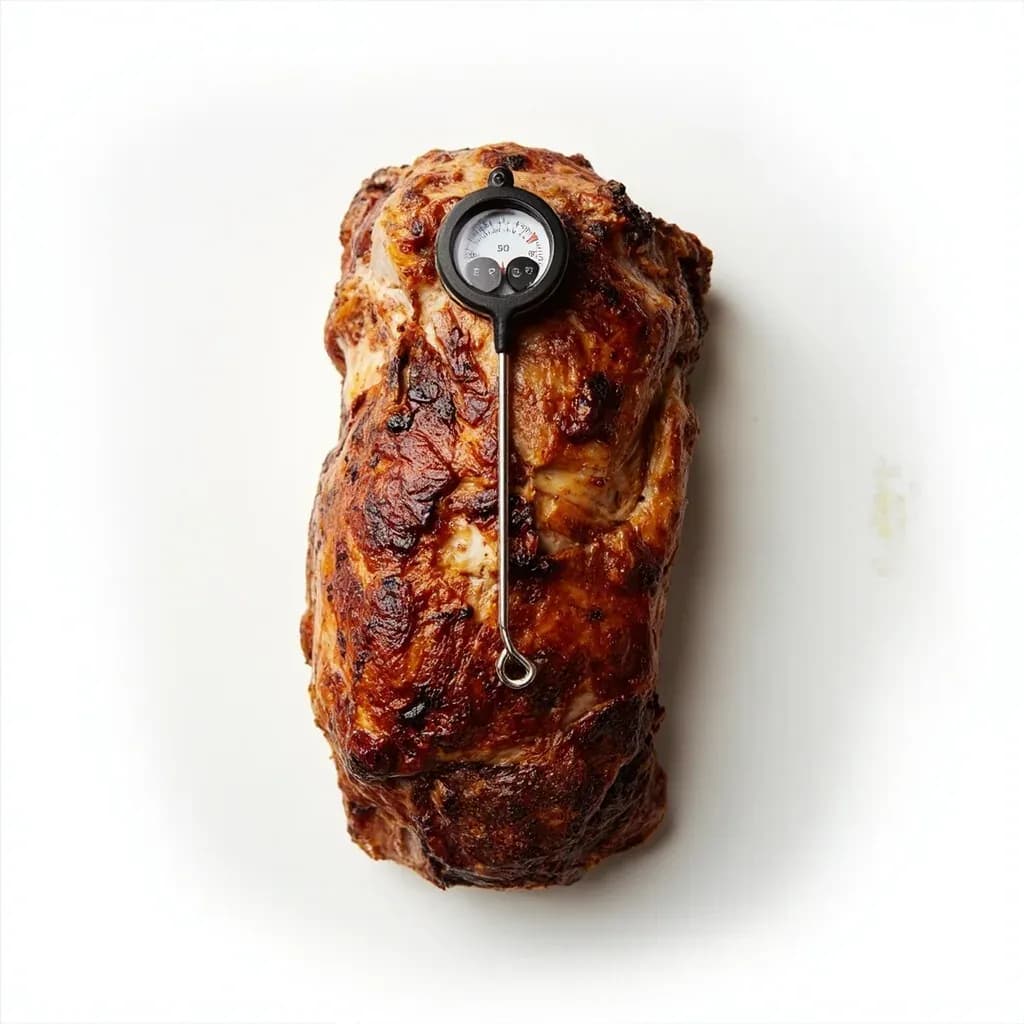
Strategic undercooking means deliberately removing food from heat before it is fully done, anticipating that residual heat (carryover) or a subsequent step will finish it. It prevents overcooking in proteins like roasts and steaks, and keeps pasta al dente for a final toss in sauce. Knowing exactly when to pull each item is a core mark of an experienced cook.
Strategic undercooking is the discipline of removing food from active heat while it is still shy of its final target, knowing that the heat already inside it will coast the rest of the way. It is not laziness or inattention — it is a deliberate calculation that turns the temperature gradient between a food's surface and its core into a finishing tool. Used well, it converts the chaotic last few degrees of a cook — the ones that most often push food from perfect to overdone — into a controlled rest.
The effect is universal, but the magnitudes vary. A thick roast pulled from a hot oven will climb 8–15°F internally before settling; a steak only a few degrees; a lean fish fillet barely at all. Pasta pulled a minute shy of al dente finishes firm and sauce-coated instead of waterlogged; rice cooked in a covered pot with no flame under it finishes via trapped steam without scorching the bottom layer. In every case the principle is identical: the heat that finishes the food is heat the cook no longer has to supply.
The technique requires two things — a target number to aim at, and a thermometer to track it. Without a pull temperature, undercooking is just a guess; with one, it becomes one of the most reliable moves in the kitchen. It is also one of the most transferable: the same discipline that lands a perfect medium-rare rib roast is the one that keeps a frittata custardy, finishes pasta in its sauce, and prevents a stir-fry from turning into mush.
- Difficulty
- Medium
Types & varieties
Residual internal heat continues to cook meat, poultry, or fish after it leaves the heat source. The single most common form of strategic undercooking.
Cooking a food partway through, then finishing later. Used for blanched vegetables, fries, beans, rice for fried rice, and braised roots.
Pulling pasta 1–2 minutes shy of done so it finishes in the sauce, absorbing flavor and using its surface starch to bind.
Bringing a thick steak or roast up to a temperature well below target in a low oven or sous-vide bath, then searing for crust. Ensures even edge-to-edge doneness.
Searing or browning first, then finishing gently in liquid; many root vegetables and tougher cuts are only partially cooked during the sear step.
Briefly par-cooking vegetables in boiling water, then arresting the cook in ice water to hold them for a later sauté, salad, or stir-fry.
Cooking rice or grains in measured liquid, then turning off the heat and letting trapped steam finish them off-heat so the bottom doesn't scorch.
How to do it
- 1
Set a target final doneness
Decide where the food should end up: an internal temperature for proteins, a specific texture for pasta or vegetables, a target doneness for a custard. Anchor every later decision to this number — it is the destination, not the moment you remove the food from heat.
- 2
Estimate carryover for the specific item
Subtract the expected post-heat rise from the target: 5–10°F for a whole bird, 8–15°F for a large roast, 3–7°F for a steak or chop, only 1–3°F for a thin fish fillet. Larger mass and higher starting temperature both raise the number; a 6-lb roast pulled at 140°F coasts further than the same roast pulled at 115°F.
- 3
Cook to the pull temperature, not the target
Bring the food to the lower pull temperature using the right method — oven, pan, water bath, or low-and-slow. With a leave-in probe, pull on the way up, not after the probe has already hit your final target. The goal is to be off the heat a few degrees early, not on it a few degrees late.
- 4
Remove from the active heat source
Take the food off the burner, out of the oven, or off the grill. Transfer a roast to a rack over a sheet pan so air circulates underneath; move a thin steak or fillet to a warm plate so it isn't sitting on a cold surface that pulls heat out of it. For pasta, go straight from the pot into the waiting sauce.
- 5
Hold or rest as the food needs
Rest meats 5–20 minutes so juices redistribute and carryover finishes; 5 minutes for a steak, 10–15 minutes uncovered for a whole bird, 10–20 minutes for a 3–6 lb roast. Transfer pasta directly into sauce. Shock blanched vegetables in ice water or hold them warm. Don't skip the hold — it IS the finish, not a pause before the finish.
- 6
Verify and serve
Check the final temperature with an instant-read thermometer at the thickest point, avoiding bone. The food should be at target or a hair under — never over. Slice meat against the grain, plate pasta the moment it reaches al dente in the sauce, and serve immediately.
The physics behind carryover
Carryover exists because heat moves from hot to cold, and the food you just pulled from the oven is hotter at the surface than at its core. Removing it from active heat does not stop that gradient — it simply stops adding new heat from the outside. The hot exterior keeps feeding warmth inward, and the internal temperature climbs until the gradient equalizes. Larger and thicker foods carry more thermal inertia, so they coast longer and rise further; lean, thin, or watery foods (white fish, a thin chicken cutlet, blanched greens) coast very little. Bone-in cuts complicate the picture further: bone conducts heat more slowly than muscle, so the meat near the bone heats last but retains heat longest.
- Mass and thickness: a 6-lb prime rib coasts far more than a 1-inch steak pulled from the same oven.
- Starting internal temperature: hotter items carry more, so a roast pulled at 140°F coasts further than one pulled at 115°F.
- Bone-in vs boneless: bone conducts heat slowly, so the meat near the bone finishes last but retains heat longest.
- Shape: a long, thin roast of given weight coasts less than a compact, squat one because more surface area sheds heat faster.
Common uses
Tips & pitfalls
- Use a leave-in probe thermometer on roasts so you can pull at an exact temperature without opening the oven door and losing heat.
- Carryover is roughly proportional to mass and starting internal temperature: a 6-lb prime rib coasts far more than a 1-inch steak pulled from the same oven.
- Carryover is greater at higher internal temperatures — a roast pulled at 140°F will coast further than the same roast pulled at 115°F.
- Don't tent large roasts tightly with foil; it traps steam against the surface and softens the crust you worked to build. Tent loosely, or skip foil entirely for smaller cuts and let them rest on a rack.
- Rest meat on a wire rack set over a sheet pan, not directly on a board — a flat board traps steam underneath and softens the bottom crust.
- For whole poultry, pull the breast earlier than the thighs. Breast overcooks fast and the bird's residual heat brings the two up together during rest, so staging the pull keeps both parts tender.
- For fish, carryover is small (1–3°F), so pull closer to target — but the muscle tightens quickly off heat, so rest fish only 1–2 minutes and serve warm, not hot.
- Carryover happens whether you rest the food or not. Resting doesn't create carryover — it gives carryover time to finish and juices time to redistribute.
Good to know
- Type
- Heat-management technique
- Also known as
- Carryover cooking, pull-temperature management, par-cooking
- Carryover rise (large roast)
- 8–15°F (4–8°C) internal after removal from heat
- Carryover rise (steak or chop)
- 3–7°F (2–4°C)
- Carryover rise (whole poultry)
- 5–10°F (3–6°C)
- Carryover rise (lean fish fillet)
- 1–3°F (under 2°C) — minimal
- Carryover rise (dense root vegetables)
- Negligible in pan-frying; meaningful in large oven-roasted pieces
- Primary tool
- Instant-read or leave-in probe thermometer
- Failure mode
- Overcooking, gray band on meat, dry poultry breast, mushy pasta or vegetables
Also called
Strategic Undercooking · Carryover Cooking · Undercooking
Related

Sear
Blast the surface hot for a deep-browned, savory crust

Sauté
Cook quickly in a little fat over lively heat, tossing as you go

Stir-Fry
Toss bite-sized pieces over roaring heat for fast, smoky cooking

Pan-Fry
Crisp food in a shallow layer of hot fat, turning once or twice

Deep-Fry
Submerge in hot oil for an all-over crackling crust

Roast
Cook uncovered in dry oven heat for browned edges and tender centers

Bake
Cook with steady, surrounding oven heat — the soul of bread and pastry

Broil
Hit food from directly above with fierce overhead heat