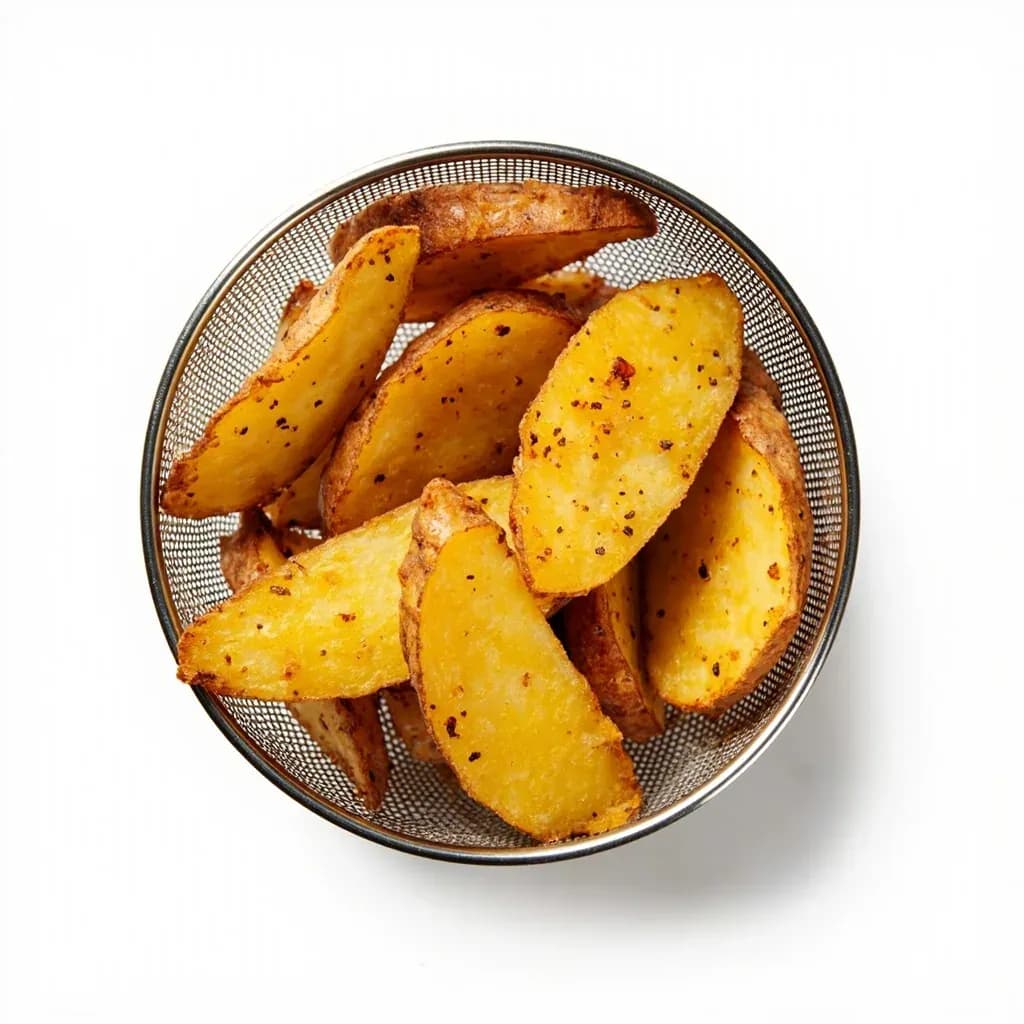
Water & Steam
Par-Cooking
Partially cooking food in advance so it finishes quickly and evenly at service.
Par-cooking means cooking an ingredient only partway, then cooling and holding it to be finished later. It is used to manage timing on busy lines, to par-boil potatoes or rice, or to blanch vegetables so they need only a quick reheat or sear before serving. Par-cooked items are usually shocked in ice water to stop carryover cooking and lock in color and texture.
Par-cooking is the professional kitchen's answer to speed. The cook partially transforms a raw ingredient — softening fibers, setting starch, driving off raw flavor — then holds it cold or warm until a brief, high-heat finish at service. The payoff is dramatic: a vegetable that would take 25 minutes from raw hits the plate in three, a potato that needs 45 minutes of roasting finishes in 12, a fry that was par-cooked hours ago is back in the oil for 90 seconds and out crisp. Behind every brisk banquet and tight table turn is a line cook firing food that someone, hours earlier, quietly prepped to the threshold of done.
The principle rests on carryover heat. The moment food leaves the stove, oven, or fryer, its internal temperature keeps climbing — usually 5–15°F (3–8°C) for most items — because the exterior is hotter than the center and heat is still migrating inward. A par-cook stops at roughly 70–80% of full doneness precisely so that this residual rise, plus the final finish, carries the item across the line without overshooting. Miss this math and you serve mush. Get it right and the food tastes freshly cooked, because the final sear, fry, or roast is what built the crust, color, and last layer of flavor.
Modern cook-chill programs, sous-vide baths, and banquet prep lines all run on par-cooking logic. The historical brigade system formalized it: a separate mise en place cook prepared components so the line cook could assemble and fire with no waiting. The technique is older than that — every cook who boils potatoes in the morning to roast at dinner is running the same play. What separates a confident par-cook from a sloppy one is judgment at the moment of pulling: read the food, anticipate the finish, and err on the early side, because you can always cook more but you can never un-cook.
- Difficulty
- Easy
Types & varieties
Partially boiling in salted water; standard for vegetables, potatoes, grains, legumes, and pasta.
Brief par-cook followed by ice shock to set color and halt enzymes; common for green vegetables before stir-fry or freezing.
Short fry at lower temperature (often 275–325°F / 135–165°C) to cook through before a final high-heat fry at service; standard for French fries, fried chicken, and croquettes.
Partial bake of breads, tart shells, or pizza crusts to set structure, finished later with toppings or final browning.
Roasting meats or vegetables to roughly 70% doneness, rested and held, then finished in a hot oven to develop crust at service.
Partial steaming — used for dumplings, tamales, and fish that will be finished by pan-searing or in broth.
How to do it
- 1
Identify the finish
Decide the final cooking method (roast, sauté, fry, bake) before you start. The par-cook medium and target doneness are chosen to leave the item well-suited to that final step — water for a roast finish, oil for a fry finish.
- 2
Cut for even cooking
Size the food so each piece cooks uniformly. Carrots and potatoes for a roast finish should be cut slightly larger than for an immediate roast; vegetables for stir-fry should be smaller and uniform so they finish in seconds.
- 3
Bring water to a rolling boil (for par-boil)
Use at least 6 quarts of water per pound of food. Salt heavily — it should taste like sea water. A rolling boil prevents sticking and slows leaching of flavor and color.
- 4
Cook to 70–80% doneness
Test by fork, knife, or instant-read thermometer. Vegetables should be crisp-tender and still hold their shape; potatoes should give slightly with a knife but not crumble; grains should be al dente with a chalky core; pasta should be 2–3 minutes shy of al dente.
- 5
Drain and shock (for vegetables and pasta)
Drain immediately and plunge into an ice bath until cold. This stops carryover cooking, sets color, and prevents mushiness. Drain again thoroughly so the item isn't waterlogged at the finish.
- 6
Hold or chill
Toss par-cooked items with a light film of oil to prevent oxidation, spread on sheet pans, cover, and label. Hold cold at 40°F (4°C) or below, or hold hot above 135°F (57°C). Use within 24 hours chilled, 1–2 hours hot.
- 7
Finish at service
Reheat or finish using the planned method — typically a high-heat oven (400–450°F), a screaming-hot pan, or a fryer at 350–375°F. Most par-cooked items finish in 1–5 minutes once the line fires them.
Matching the par-cook to the finish
The par-cook is not a standalone step — it is the first half of a two-act play, and the finish dictates the opening. A potato destined for a 450°F oven roast wants a par-boil that leaves the interior dense and dry, so the oven can drive off surface moisture and build a crust. The same potato destined for mash wants a longer par-boil until fully tender, because the finish is mechanical, not thermal. Vegetables headed for stir-fry should be par-cooked just to crisp-tender, cut small, and shocked hard, because they have 60 seconds of wok heat left in them. Vegetables headed for gratin can be par-cooked a stage further, since a 400°F bake will push them through gently.
The same logic governs fats. Par-frying works because oil at 275–325°F drives moisture out of the food gently, cooking the interior without aggressively browning the exterior — leaving a dry, starch-set surface that crisps when it returns to 350–375°F oil. A single high-temperature fry would brown and seal the outside long before the inside cooks, leaving a greasy or underdone center. The lower-temp pass is not laziness; it is the only way to make a French fry that is cooked through and shatter-crisp. Always pick the par-cook medium to complement, not duplicate, the finish.
Carryover and the art of pulling early
Carryover is the variable that separates a kitchen that par-cooks well from one that does not. Dense proteins and large pieces climb more after leaving heat; small, wet, or already-hot items climb less. The practical habit is to pull food when it looks and feels about 80% done, then let residual heat close the gap. A par-cook that finishes the food in the pot is already overcooked — there is no service method that walks it back. Train your hand on the knife: a potato that gives slightly with a paring knife but does not fall apart is the right pull point. Train your eye on color: a green vegetable that has deepened but not gone olive is the right pull point. Pulling early is the only error that fixes itself; pulling late never does.
Common uses
Tips & pitfalls
- Salt par-cook water generously (about 1–2% by weight, like sea water) — seasoning only at the finish leaves food flat.
- Pull food BEFORE it looks done. Carryover heat will push it across the line; an over-par-cooked item cannot be rescued at service.
- Shock green vegetables in an ice bath immediately after par-boiling to lock in color and stop enzymatic softening.
- Label every hotel pan with item, time, and date — par-cooked food passes through many hands and spends longer in the danger zone than most items, making clear labeling essential for safety and waste control.
- Reheat par-cooked items on a sheet pan in a 400–450°F (200–230°C) oven, not a steamer, when you want browning and crust.
- Don't par-cook delicate items (soft herbs, fish, custards) — the texture collapse is too severe; finish these to order.
- For par-fried potatoes, par-cook and cool completely on sheet pans before the final fry; surface dryness is what gives the final crisp.
- Reuse par-cook water only for similar items (corn for corn, potato water for potato starch) — flavors and starches cross over quickly.
- Track hold time. Most par-cooked proteins lose quality after 90 minutes hot-held; refresh batches small and often.
Good to know
- Etymology
- From Latin 'par' (equal); in culinary usage 'par-' is a prefix meaning 'partially,' as in par-boil, par-bake, par-fry.
- Core principle
- Cook food to roughly 70–80% of full doneness, then chill or hold until a final, faster finishing step.
- Carryover cooking
- Internal temperature typically rises 5–15°F (3–8°C) after heat is removed; par-cooks must account for this or food overcooks at service.
- Most common method
- Par-boiling in salted water — used for vegetables, potatoes, grains, legumes, and pasta.
- Holding temperature (hot)
- Above 135°F (57°C) in a steam table or holding cabinet; typically held no longer than 1–2 hours for quality.
- Chilling target
- Blast-chill or ice-bath to 40°F (4°C) or below within 2 hours (food-safety guideline for later reheating).
- Equipment
- Stockpot, slotted spoon or spider, ice bath, perforated hotel pans, steam table, or blast chiller.
Also called
Parboiling · Partial Cooking · Par-Boiling
Dishes that rely on it
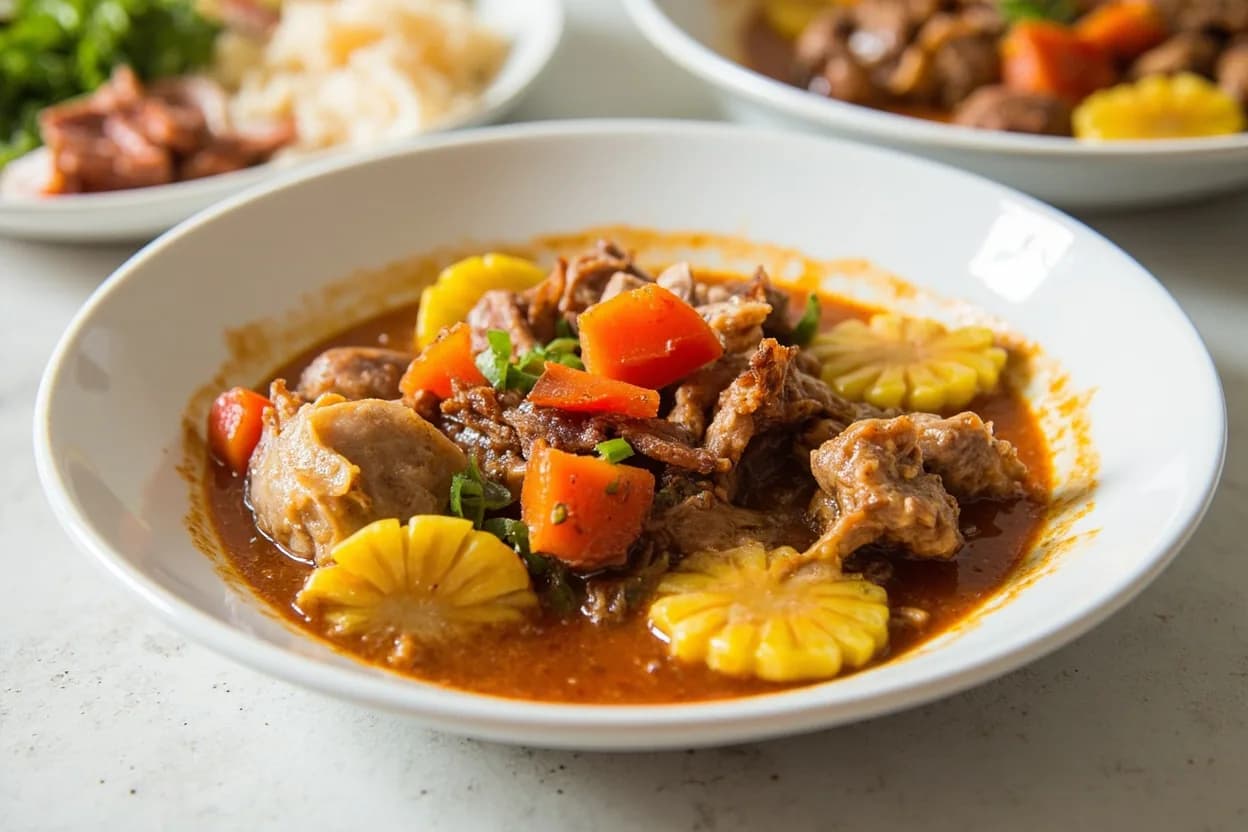
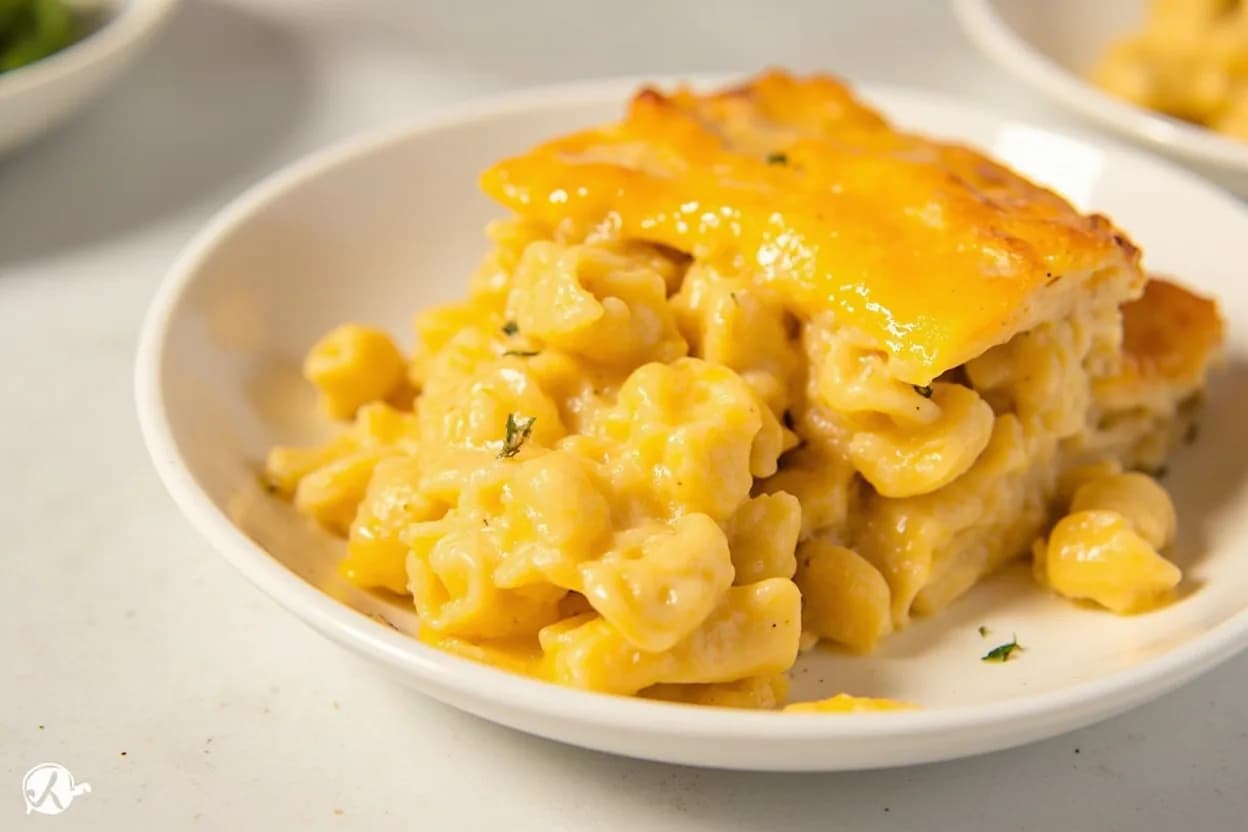
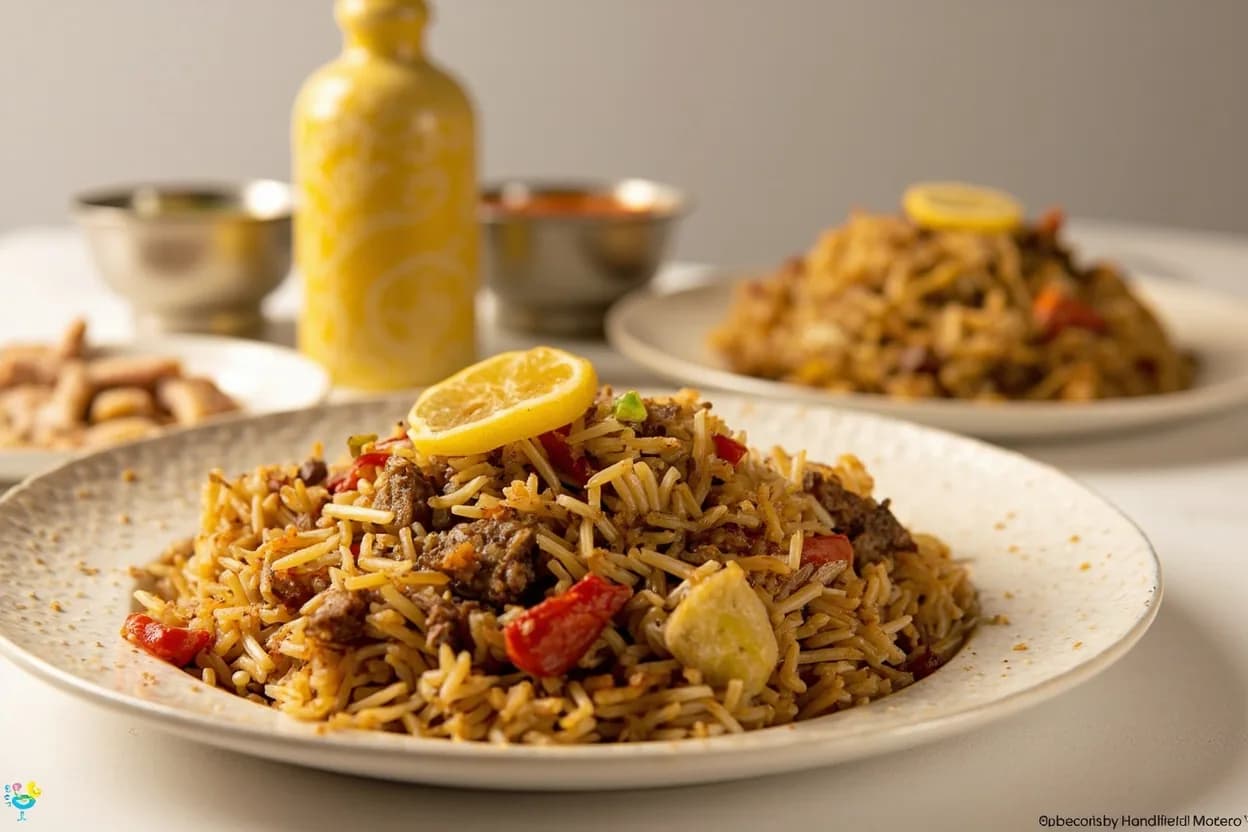
Related

Boil
Cook in vigorously bubbling liquid at full rolling heat

Simmer
Hold liquid at a gentle shimmer for tender, unhurried cooking

Poach
Cook gently in barely-trembling liquid for silky, tender results

Steam
Cook in rising vapor to keep color, nutrients, and shape intact

Blanch
Plunge briefly in boiling water, then shock cold to lock color

Braise
Sear, then cook slow in a little liquid until fall-apart tender

Stew
Simmer bite-sized pieces fully submerged into a rich, unified pot

Sous-Vide
Seal and cook in precise warm water for edge-to-edge doneness