Prep & Assembly
Mold Scraping
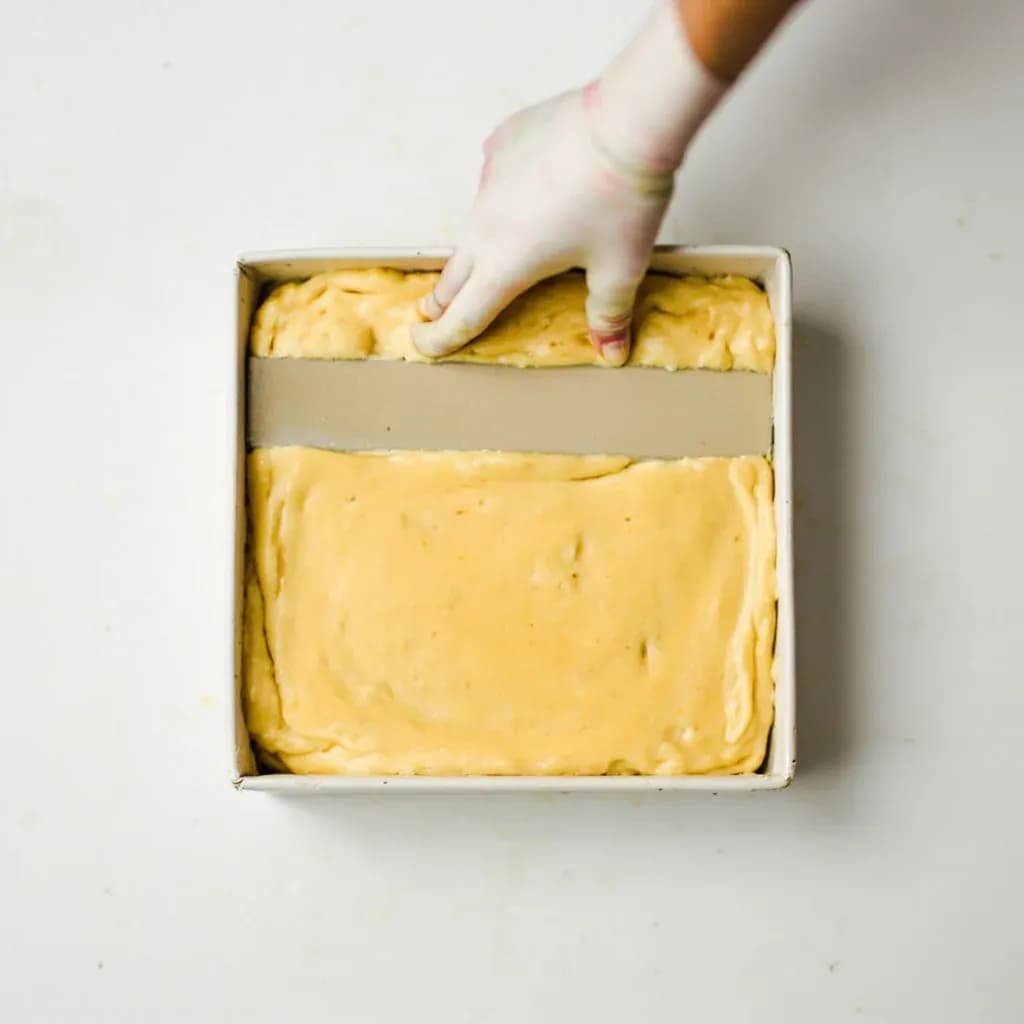
Scraping excess off the top of a filled mold for a flat, clean surface.
Mold scraping draws a flat tool or bench scraper across the top of a packed mold to remove excess and leave a level, clean surface. It is used for cheese, terrines, confections, and set desserts so they unmold with crisp, even edges. The flush top also ensures consistent thickness and portioning.
Mold scraping — the French araser — is the single decisive stroke that turns a mounded, overfilled mold into a perfectly level preparation ready to bake, chill, or unmold. In practice it is almost absurdly simple: a flat blade is drawn across the rim of a filled mold so that everything above the rim is carried away, leaving a flush, even top. In pastry, charcuterie, confectionery, and frozen-dessert work that flushness is not cosmetic. It determines whether a tart bakes with a clean visible rim, whether a terrine compresses evenly under its weight, whether a bonbon releases from a polycarbonate mold without a thickened base, and whether twelve financiers rise to identical heights. A skilled cook can scrape a mold in one or two seconds; a beginner takes longer and produces a ridged or hollowed surface that telegraphs in the finished product.
The technique behaves differently depending on what is being scraped and what it is being scraped with. Soft, warm mixtures (ganache, cake batter) smear and drag if the tool is the wrong temperature or the wrong flexibility. Firm, chilled mixtures (semifreddo, set pâté, tempered chocolate) respond to a rigid blade and a confident single pass. Temperature is the hidden variable: chocolate and fatty preparations want a warm, dry blade so the fat doesn't seize on the metal, while delicate batters want a cool, clean blade so they don't stick and tear. Mastering mold scraping is largely a matter of matching the tool to the state of the filling.
The choice of blade matters more than most cooks appreciate. A flexible offset spatula rides the contour of the mold and leaves a slightly crowned surface — useful when the preparation will dome further in the oven. A rigid metal bench scraper or a long, flat knife gives a dead-level top, which is what you want for terrines, ice cream cakes, and any preparation that will be unmolded and displayed. In a professional pastry shop or charcuterie the technique is taught on day one; in a home kitchen it is usually improvised, which is why so many homemade terrines and financiers have uneven tops.
- Difficulty
- Easy
Types & varieties
Done with an offset spatula held flat against the rim; used for tart rings, cake pans, dariole molds, and individual timbales.
Done with a bench scraper or long knife; common for terrines, loaf pans, financiers, and multi-cavity trays.
Used when filling chocolate bonbon shells or tablet bars to remove excess chocolate from the mold surface before it sets.
A long knife is dipped in hot water and wiped dry between passes to slice cleanly through layered or fatty preparations without dragging.
Applied to semifreddo, parfait, and ice cream terrines once the mixture is firm enough to support the tool without tearing.
A bench scraper is dragged across the cavities of a flexipan or metal tray to leave each well evenly filled and flush with the surface.
How to do it
- 1
Fill the mold generously
Pile the filling, batter, or chocolate slightly above the rim of the mold. Trying to scrape a level that is already at or below the rim leaves gaps and an uneven base. For terrines, overfill by a few millimeters and let the weight of subsequent layers or the pressing weight compress it down.
- 2
Choose the right tool
Use an offset spatula for round molds and any curved rim; use a flat metal bench scraper or long thin knife for straight-sided loaf pans, terrines, and multi-cavity trays. For chocolate, a rigid plastic or polycarbonate strike-off works best. For fatty terrines and foie gras, have a tall container of hot water and a clean towel at hand.
- 3
Set the tool flat across the rim
Rest the blade on the top of the mold so both ends sit on the rim. The cutting edge should be parallel to the work surface — not angled up toward the handle and not pressed down into the filling. The blade tip should just clear the inside edge of the mold.
- 4
Draw across in one motion
Pull the tool toward you in a single, smooth stroke, keeping the blade flush with the rim the entire way. Do not lift at the end — let the excess ride off the opposite side of the mold onto the bench or into a scrap bowl. Do not saw back and forth; sawing drags filling out of the mold and leaves a hollowed surface.
- 5
Wipe and repeat if needed
Wipe the blade clean with a damp cloth, or dip in hot water and wipe dry for terrines and foie gras. Make a second pass only if the first left ridges or hollows; a clean second pass is usually enough. More than two passes generally makes the surface worse, not better.
- 6
Clean the rim and finish
Run a fingertip or a small offset spatula around the inside edge of the mold to lift away any smeared filling, then proceed with the recipe — chill, bake, freeze, or unmold as directed. A clean rim gives the unmolded preparation a sharp, professional edge.
Choosing the right tool
The blade you reach for should match the shape of the mold and the nature of the filling. The general rule is flexibility for curves and rigidity for straight edges, with a few exceptions worth knowing.
- Offset spatula (4–6 in.): the default for round molds, tart rings, dariole molds, and curved timbales. The offset keeps your knuckles clear of the mold rim.
- Metal bench scraper (dough scraper): the standard for straight-sided loaf pans, terrines, financier trays, and any multi-cavity sheet. A straight, stiff edge gives the truest level.
- Long thin knife (8–10 in., preferably with slight flex): used for terrines and pâtés, dipped in hot water and wiped between passes to prevent fat from seizing on the blade.
- Rigid plastic or polycarbonate strike-off: preferred for chocolate molds, where metal can disturb the chocolate's temper, leave faint streaks, and scratch the polished polycarbonate surface.
- Flexible palette knife: useful for delicate batters and custards where a rigid blade would gouge; gives a slightly crowned finish that suits cakes intended to dome further in the oven.
Scraping in chocolate work
Scraping chocolate molds is its own discipline, sitting between filling and unmolding. It is not a substitute for tapping or for working the chocolate through the mold — it is the step that finishes the surface.
- Scrape once firmly across the top, then tap the mold flat on the bench two or three times to release trapped air and settle the chocolate against the shell.
- Use a rigid plastic strike-off or the back of a bench scraper; cold metal can shock tempered chocolate and dull the polish of a polycarbonate mold.
- Work quickly — tempered chocolate begins to set within a minute at room temperature, and a thickening surface drags and leaves ridges.
- Scrape, do not press: the weight of the blade is enough; pressing displaces chocolate from the shell and thins the base.
Common uses
Tips & pitfalls
- Hold the tool flat and parallel to the mold — tilting it up at the handle or down into the filling will dig in or leave a concave surface.
- Draw across in one continuous pass; back-and-forth sawing drags filling out of the mold and creates ridges.
- For round molds, sweep an offset spatula from one side to the other with the blade tip resting on the rim; let the natural curve of the mold guide the blade.
- For terrines and foie gras, dip a long knife in hot water, wipe dry, and reheat and wipe between every pass — fat sets instantly on a cold blade and will tear the surface on the next stroke.
- Use a metal bench scraper (not plastic) for long straight runs; it gives a truer edge than a flexible spatula and won't bow in the middle.
- Chill the filled mold briefly (10–20 minutes) if the filling is very soft; scraping is dramatically cleaner once the top has just set.
- Wipe the tool completely between passes — any buildup on the blade will redeposit on the surface and leave visible streaks.
- Do not press down hard. The weight of the tool plus a light guiding pressure is enough; excess force displaces filling and thins the walls of the preparation.
- For chocolate molds, scrape once and then tap the mold firmly on the bench to release trapped air and settle the chocolate against the shell.
- Keep the outside rim of the mold clean before scraping — overflow that hardens on the edge will catch the blade and tear the surface as you draw across.
Good to know
- Technique family
- Leveling / strike-off; in French, araser
- Primary tools
- Offset spatula, metal bench scraper, long flat knife, or specialty strike-off blade
- Motion
- A single smooth, perpendicular pass across the top of the filled mold
- Used in
- Pastry, charcuterie, confectionery, and frozen-dessert work
- Working temperature
- Filling is often chilled or partially set for cleanest results; a hot-water-dipped knife is used for fatty preparations like terrines and foie gras
- Related French terms
- Araser (to level), dresser (to dress/finish), lisser (to smooth)
- Difficulty
- Beginner; precision and consistency improve quickly with practice
- Time required
- Seconds per mold once the technique is mastered
Also called
Leveling Molds · Striking Off
Dishes that rely on it



Related

Whisk
Beat ingredients smooth and aerated with a looping wire motion

Sift
Pass dry ingredients through mesh to aerate and remove lumps

Strain
Pour through mesh to separate solids from liquid for a smooth result

Filter
Pass liquid through fine material to clarify out the smallest particles

Rice
Press cooked potatoes through small holes for fluffy, lump-free texture

Mash
Crush soft cooked food into a rustic, creamy purée

Grind
Crush food into a coarse to fine texture, from spices to meat

Grate
Shred food into fine bits against a sharp-toothed surface