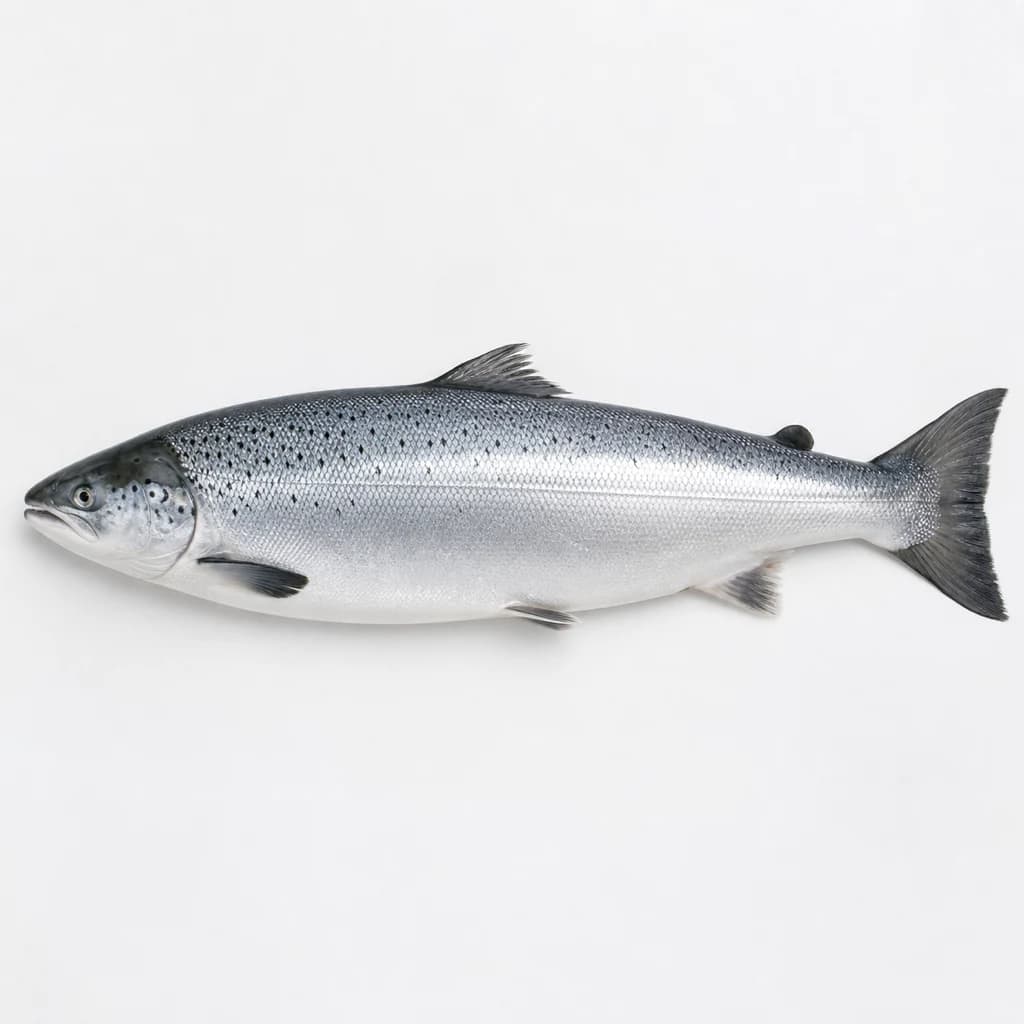
Natural form
Whole Atlantic salmon showing streamlined silver body, spotted back, and forked tail.
Shows readers the complete fish so they can identify salmon by its shape, size, scale pattern, and characteristic coloring before any processing.
Proteins
Salmon
Rich, rosy fish that roasts, grills, or cures beautifully
Buttery and full-flavored, salmon takes to a hot pan, a low oven, or a citrus cure. Buy it bright and firm, keep it cold, and cook within a day or two.
Salmon is the rich, rosy fish that taught a generation of home cooks to love seafood — forgiving, fast, and luxurious in a way that belies how easy it is to cook. Its color and richness come from a high content of healthy omega-3 fats, which also keep the flesh moist and give it that buttery, almost meaty quality on the fork. Cooks love it because it takes equally well to a screaming-hot pan (for crisp, lacquered skin), a low oven (for silky, just-set flesh), a grill, a smoker, or a citrus-and-salt cure that needs no heat at all. The one rule worth tattooing on your hand: salmon goes from perfect to dry in about a minute, so pull it early and let carryover heat finish the job.
- Measured in
- g
- Storage
- Refrigerate
- Shelf life
- 2 days
Allergens
Find it in
Types & varieties
The most common, available year-round — fatty, mild, evenly marbled, very forgiving to cook.
The largest and richest Pacific salmon; highest fat, prized for its silky texture and big flavor.
Deep red, leaner, robustly 'salmony' — wild Pacific; overcooks fast, great cured or seared.
Milder and a touch leaner than king; an all-purpose wild option.
Smaller, leanest, lightest-colored — common canned and good for cakes and patties.
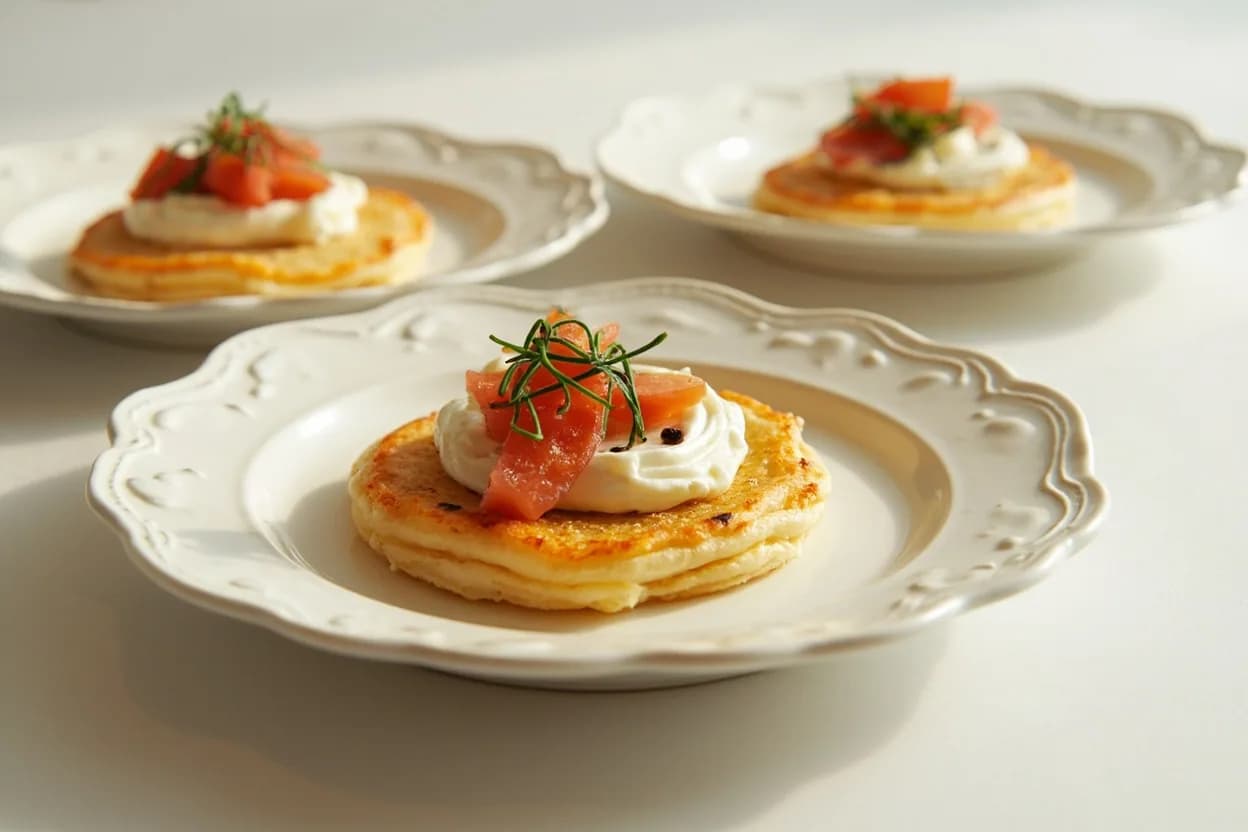
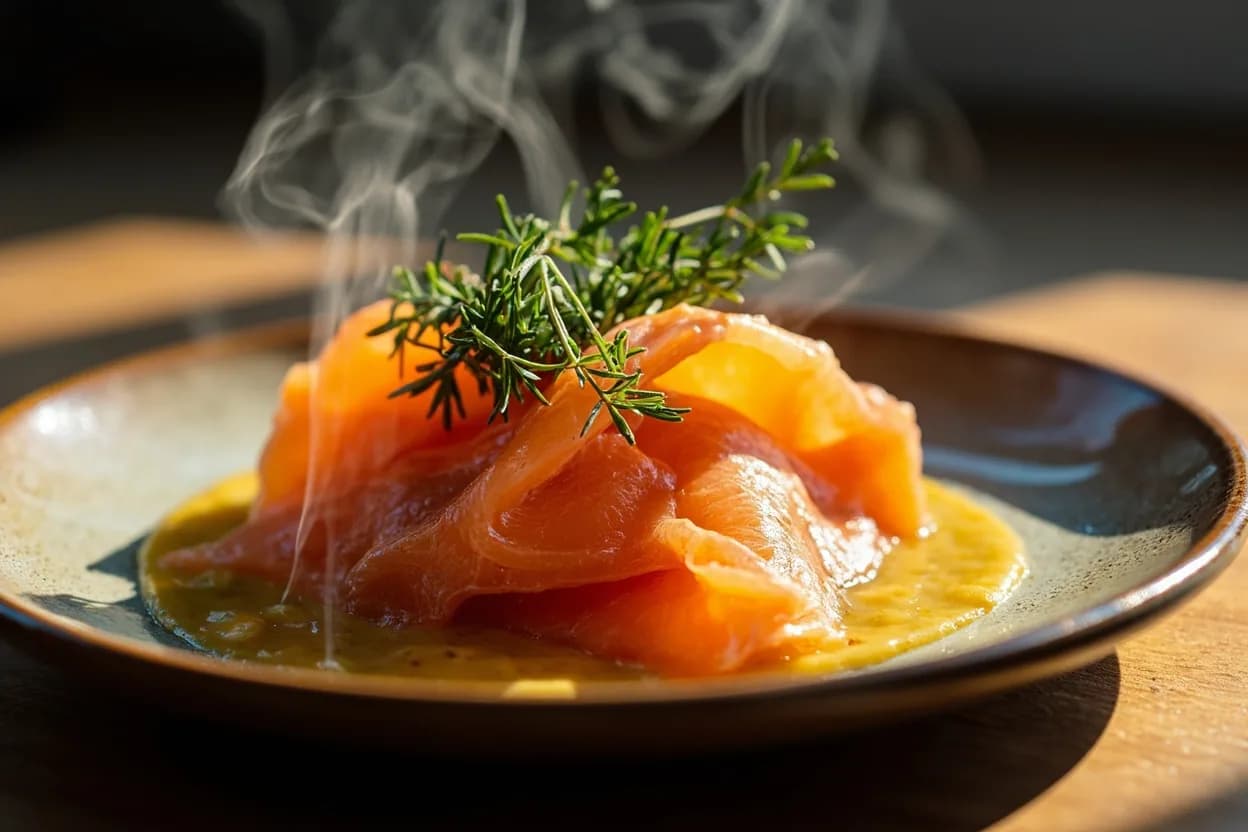
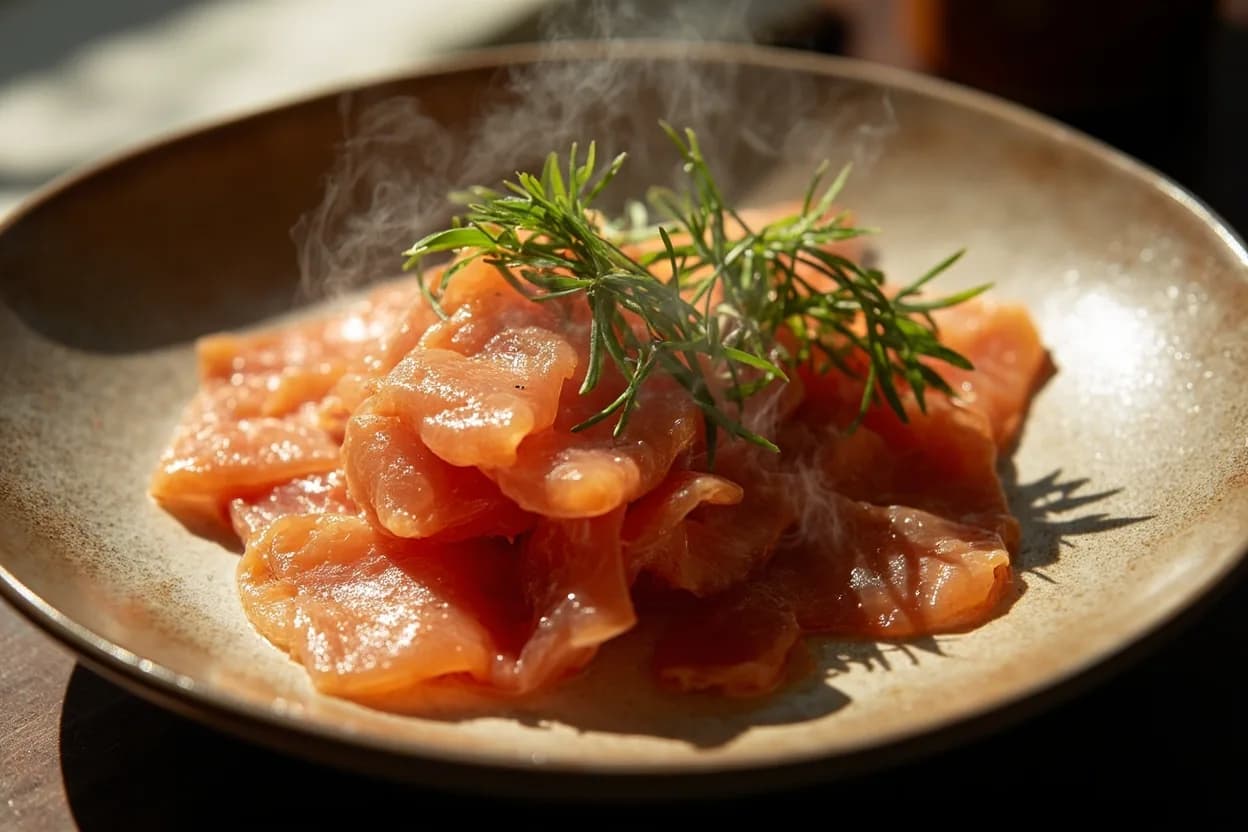
Cold-smoked lox, hot-smoked flakes, and gravlax — ready to eat, no cooking required.
Wild Pacific salmon with deep red, lean flesh and a firm, robust flavor; lower fat than king means it cooks fast and dries quickly, so keep it just to medium.
The fattiest, richest salmon, with marbled buttery flesh that stays moist and forgiving; ideal for searing, grilling and curing where its high oil shines.
Large, glossy salmon eggs that burst with briny, savory pop. Used as a sushi and donburi topping or garnish; serve cold and unheated to keep the pop.
How to choose
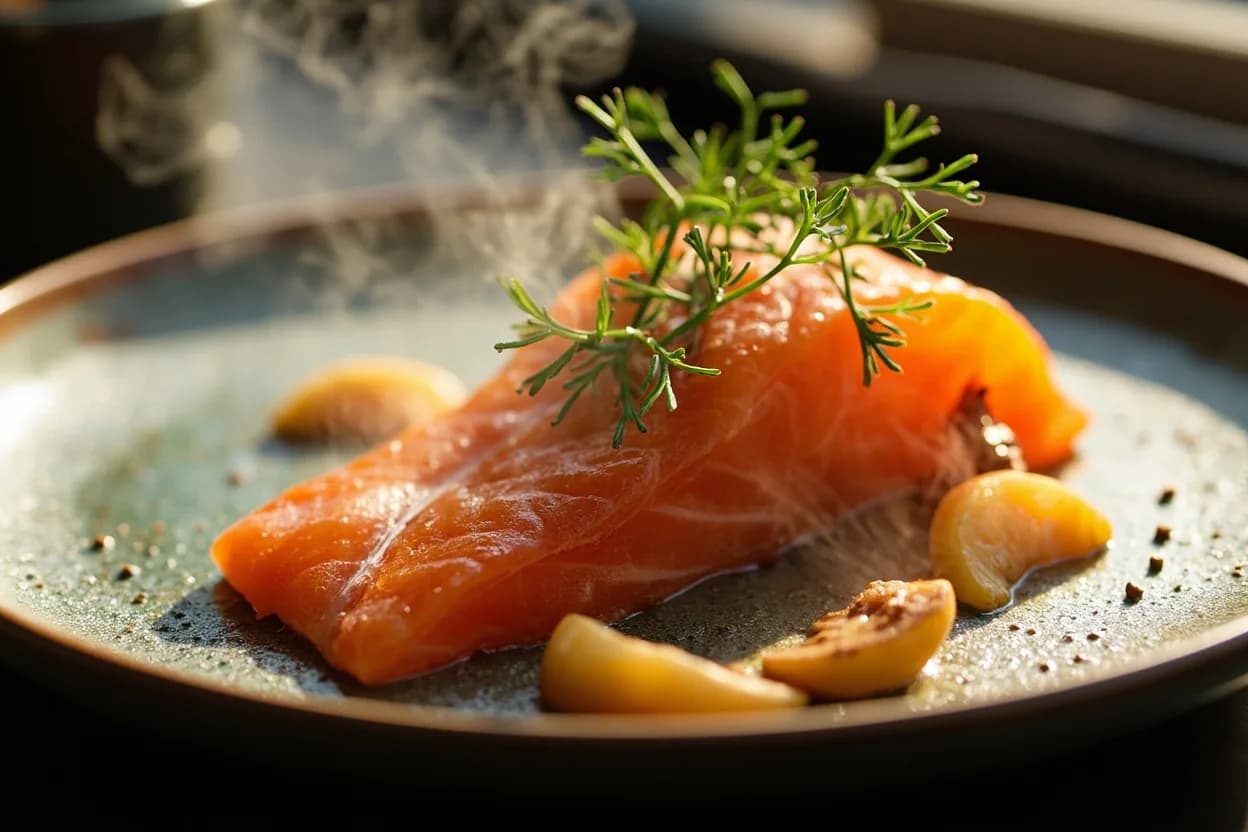
Fresh fillets should look glistening and translucent (not dull or chalky), feel firm and spring back when pressed, and smell clean and briny — never strongly 'fishy', which signals age. Ask whether it's been previously frozen if you plan to serve it raw.
- Wild (sockeye, king) is leaner and more flavorful; farmed Atlantic is fattier and milder — choose by dish.
- For even cooking, buy center-cut fillets of consistent thickness rather than tapering tail pieces.
How to store & safety
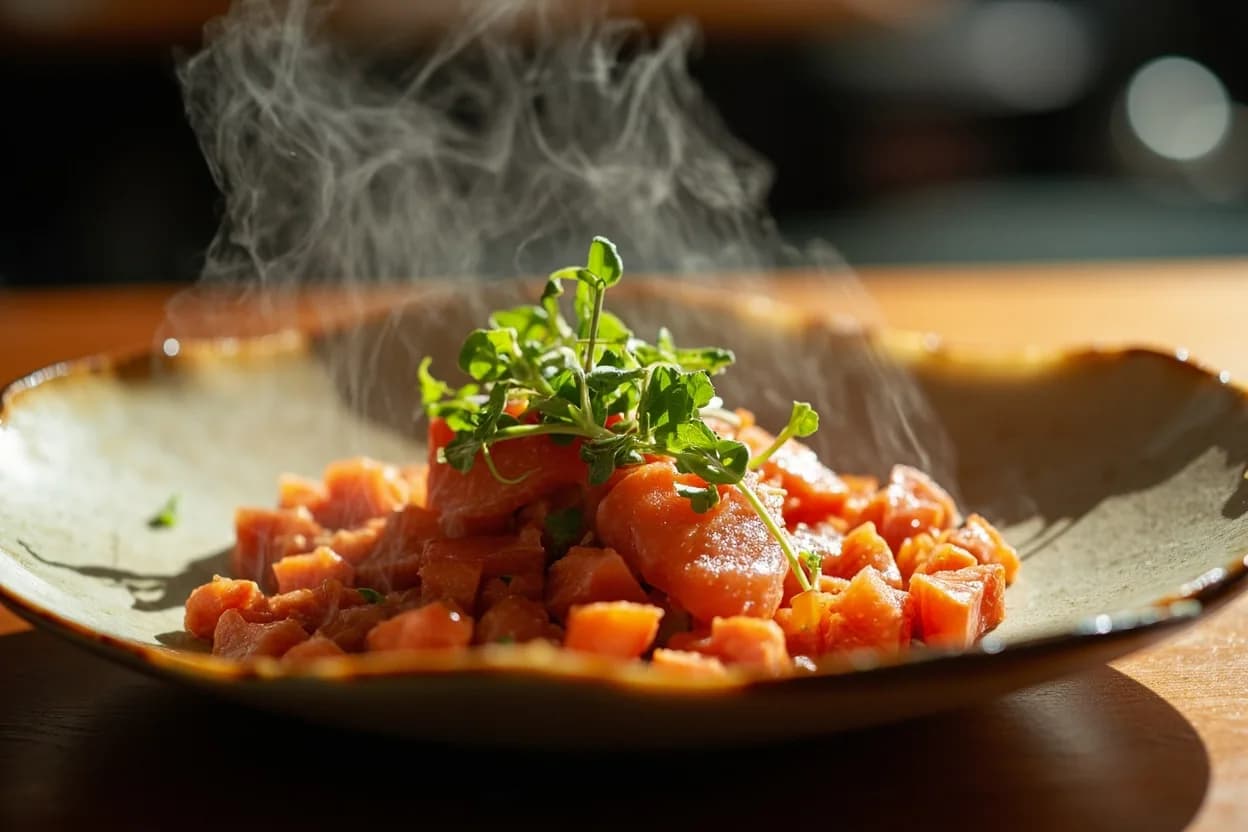
Keep it on the coldest part of the fridge over ice and cook within a day or two; freeze for longer storage. To eat it raw (crudo, tartare, sushi), use sushi-grade fish that's been commercially frozen to kill parasites — don't improvise raw salmon from a standard fillet.
How to cook
Start skin-side down in a hot, oiled pan and press flat for crisp skin; most of the cooking happens from that side. For roasting, a low-and-slow oven (~120–150°C) gives the most forgiving, silky result. Whichever method, pull it just before it looks done — it carries over and flakes on the plate.
Common uses
Tips & pitfalls
- Dry the skin thoroughly and salt it before searing — wet skin steams instead of crisping.
- Pull salmon at ~50°C internal for a moist medium; the white 'albumin' that oozes out is overcooked protein, a sign to cook gentler.
- Score the skin lightly and weight the fillet for the first minute so it stays flat and crisps evenly.
- A quick 15-minute brine (1 tbsp salt per cup of water) firms the flesh and seasons it through.
- Bring fillets to room temperature for 15 minutes before cooking so they cook evenly.
- Acid is your friend — finish with lemon, capers, or a yogurt-dill sauce to cut the richness.
Nutrition
Energy
749 kJ · per 100 g
Where the calories come from
Protein
19.9g
40% DV
Carbs
0g
0% DV
Fat
10.4g
13% DV
Fiber
0g
0% DV
Sugars
0g
of which
Sodium
47mg
2% DV
Source · USDA FoodData Central · approx. Fish, salmon, chinook, raw
View on FDC →In the shops
Matched grocery products
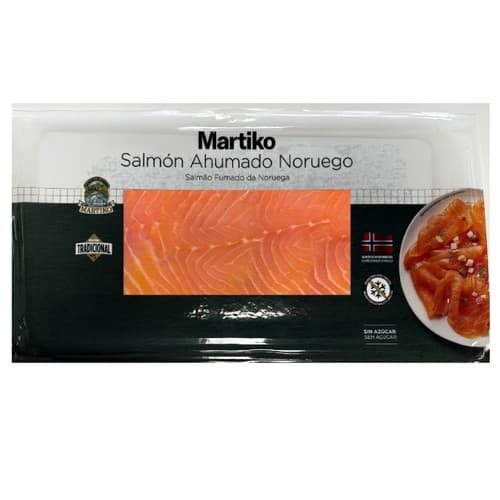 €11.99
Smoked Atlantic Salmon
MARTIKO · kg · Bonpreu
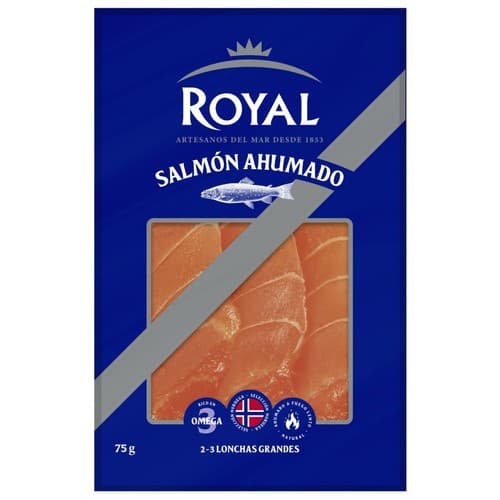 €5.49
€5.49Royal Smoked Atlantic Salmon
ROYAL · kg · Bonpreu
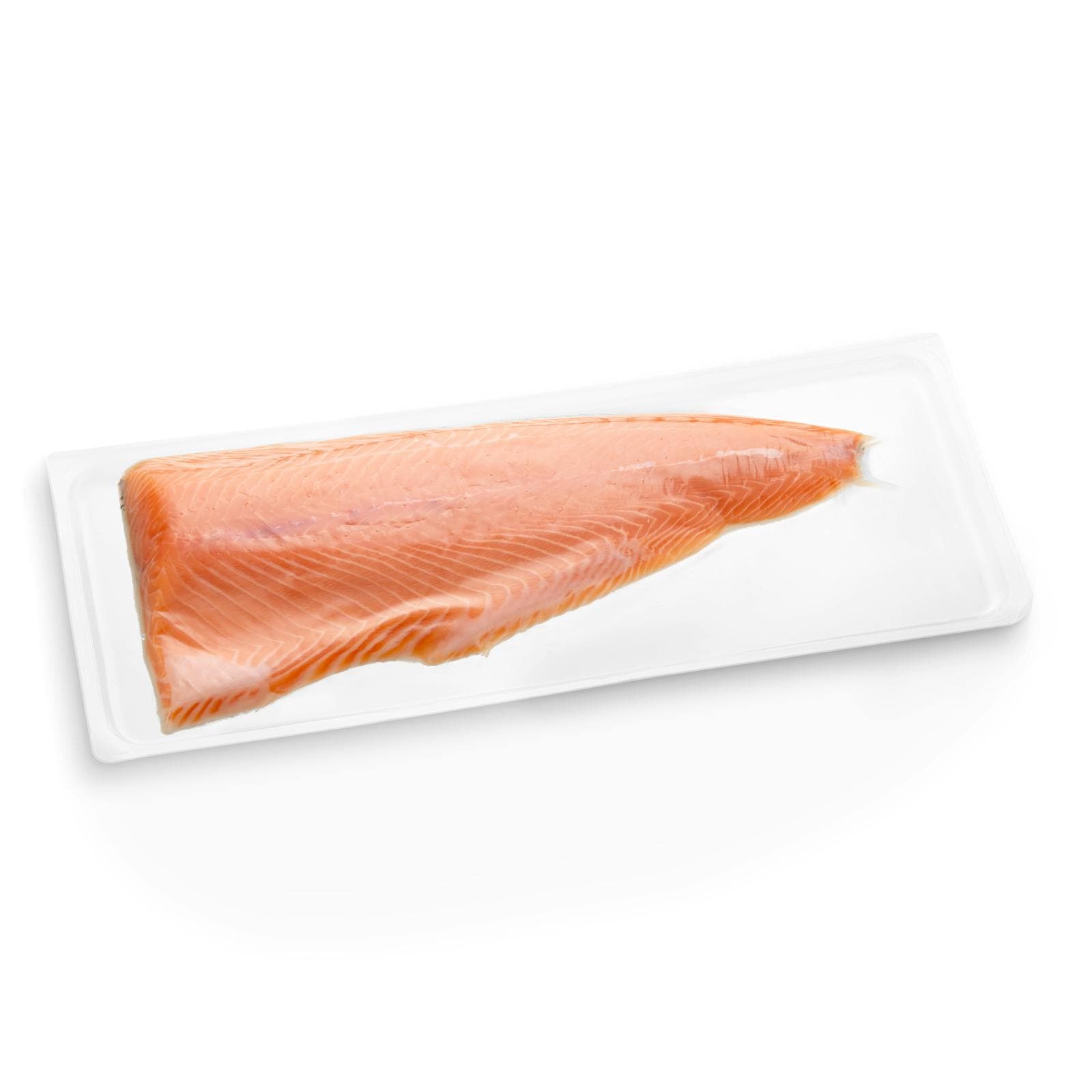 €17.85
Half Salmon
850 g · Mercadona
 €3.80
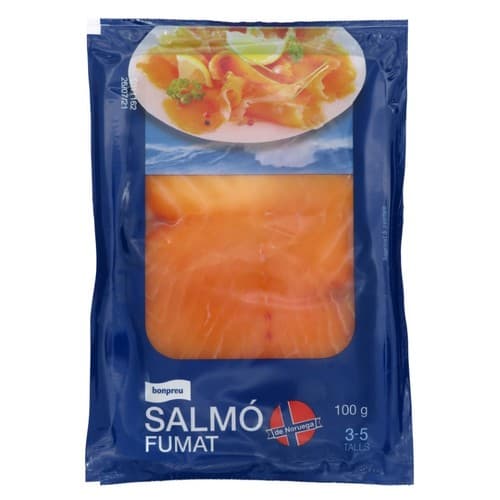
€3.80Smoked Salmon
BONPREU · kg · Bonpreu
 €4.69
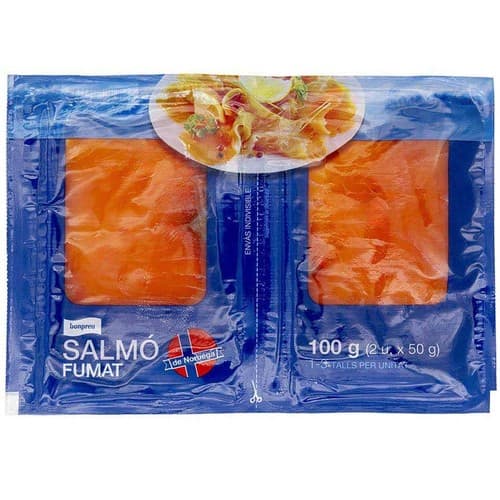
€4.69Smoked Salmon
BONPREU · kg · Bonpreu
 €5.29
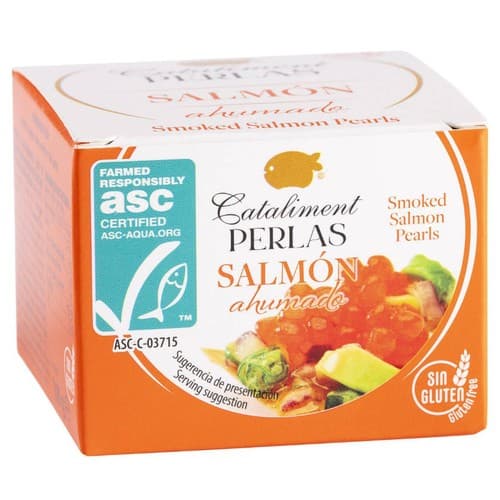
€5.29Salmon Pearls
CATALIMENT · kg · Bonpreu
Good to know
- Flavor
- Rich, buttery, mildly oceanic, faintly sweet
- Type
- Atlantic (mostly farmed) and Pacific (wild) species
- Origin
- North Atlantic & Pacific; major farming in Norway, Scotland, Chile
- Nutrition
- ~208 kcal/100g; ~20g protein; high omega-3s and vitamin D
- Doneness
- Pull at ~50°C internal (medium); flakes but still moist
- Buy
- Firm, glistening, no fishy smell; bright translucent flesh
Substitutes
- Trout (rainbow / steelhead) — Closest swap — similar fat, color, and flavor; cooks the same way.
- Arctic char — Near-identical rich, rosy flesh; treat exactly like salmon.
- Mackerel or sardines — For an oily-fish profile on a budget, though much stronger in flavor.
Also called
atlantic salmon · fresh salmon · salmón · salmón fresco
Appears in these dishes
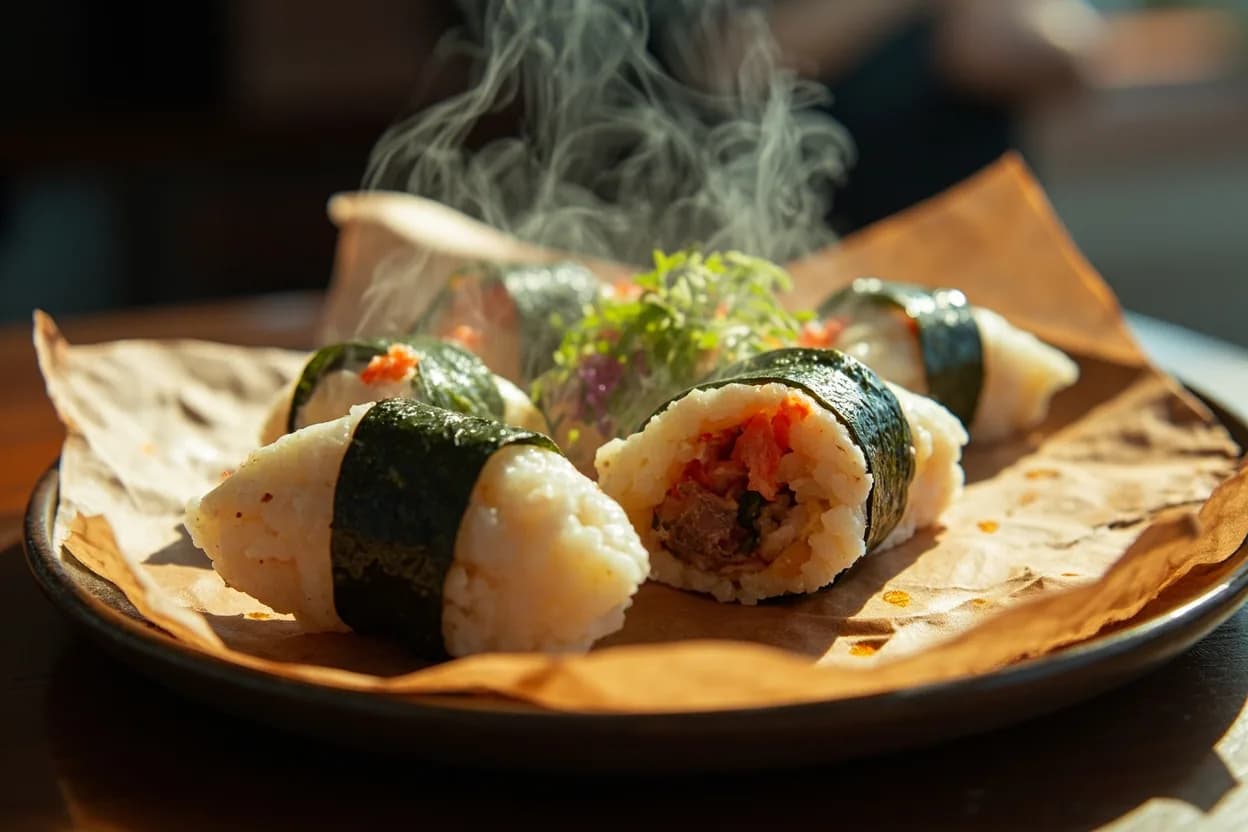
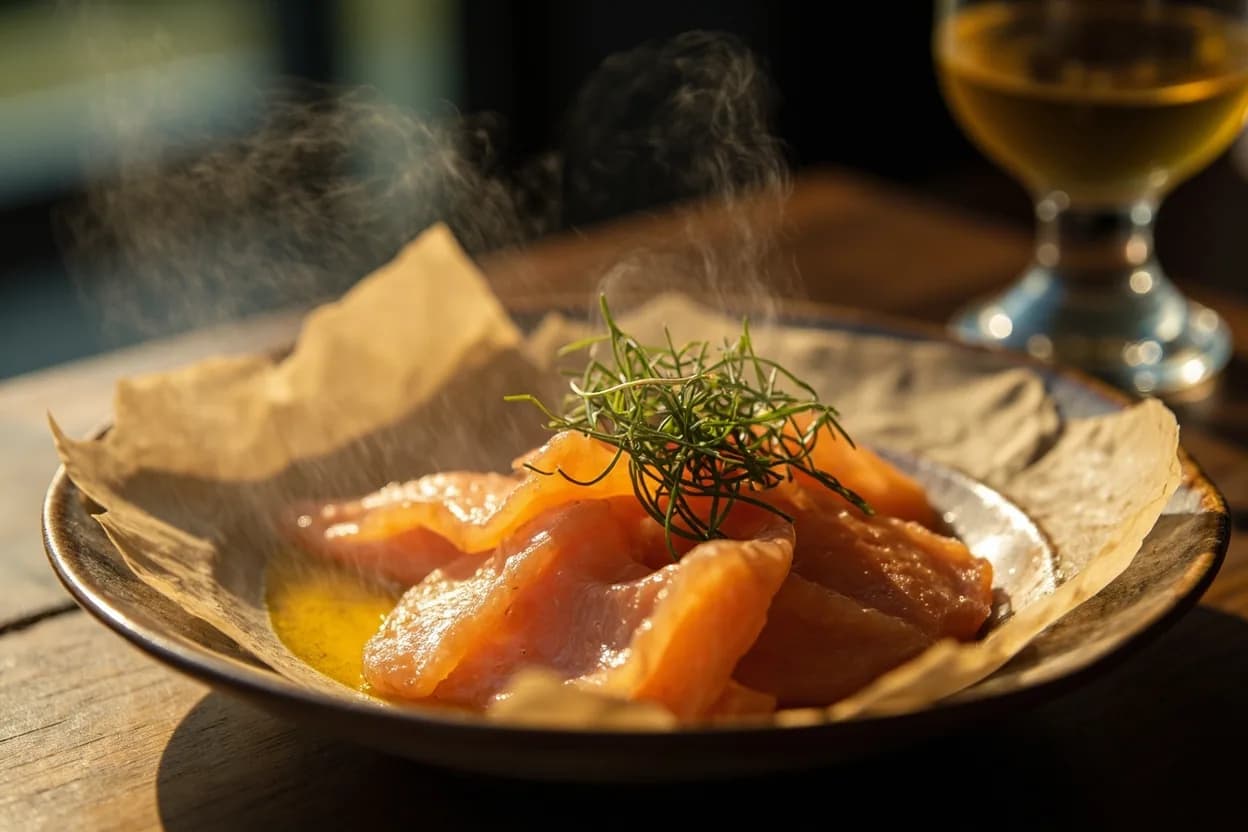
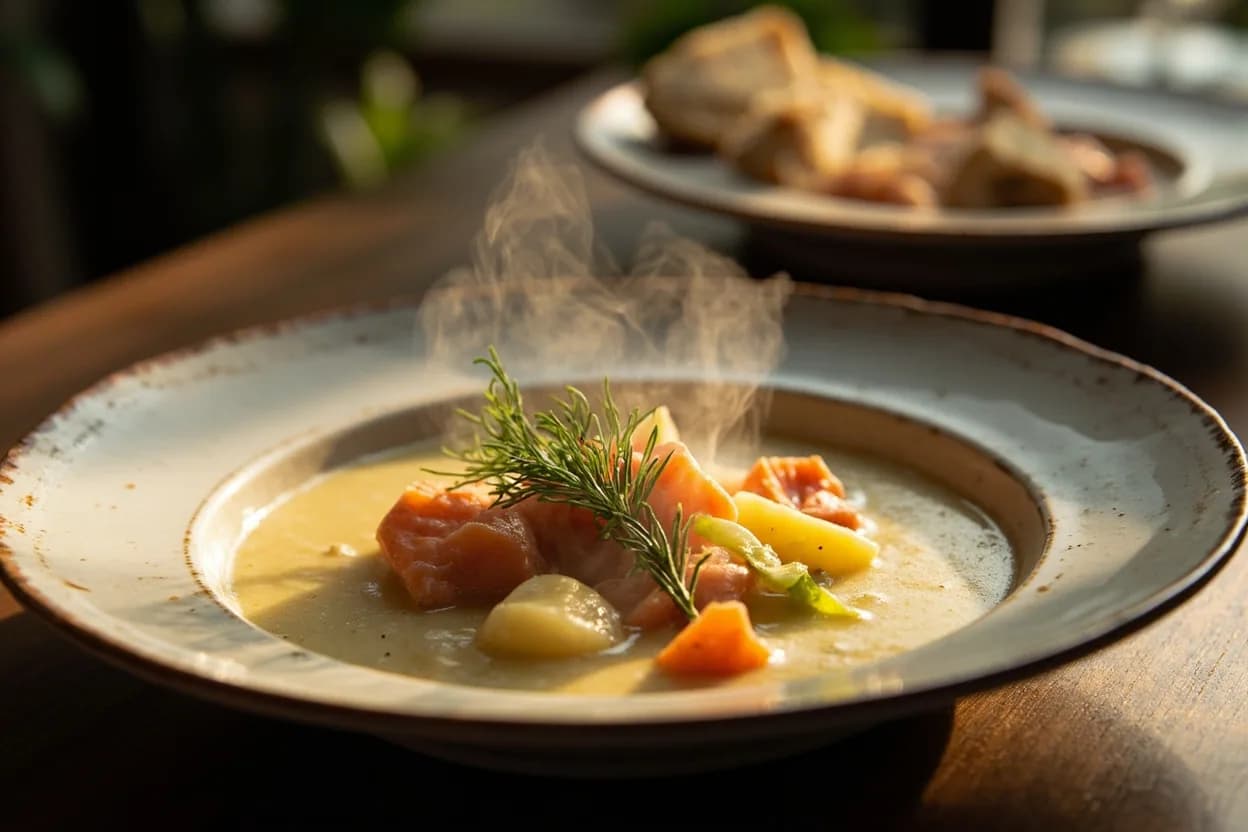
Related
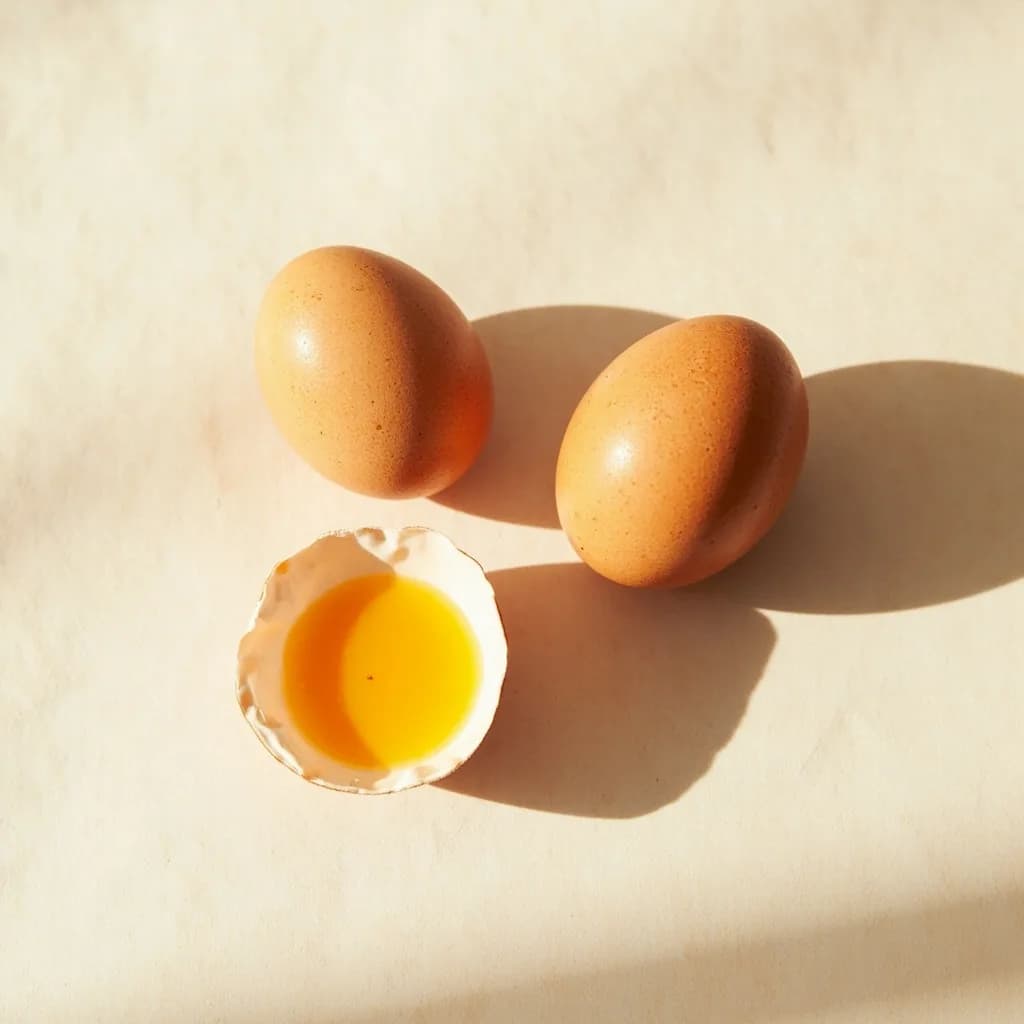
Egg
The kitchen's everything ingredient — bind, leaven, enrich, or fry
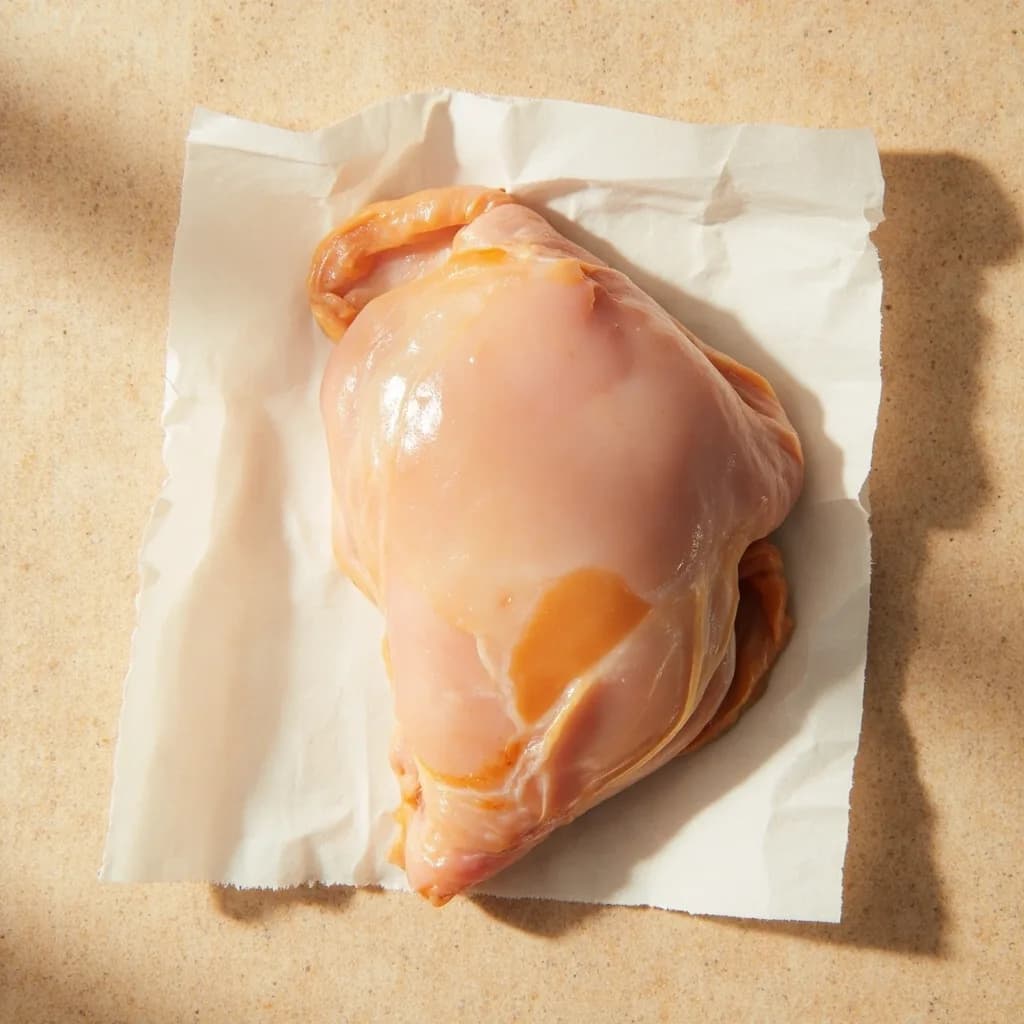
Chicken Breast
Lean, quick-cooking white meat for everyday dinners

Ground Beef
Versatile minced beef for burgers, ragù, tacos, and meatballs
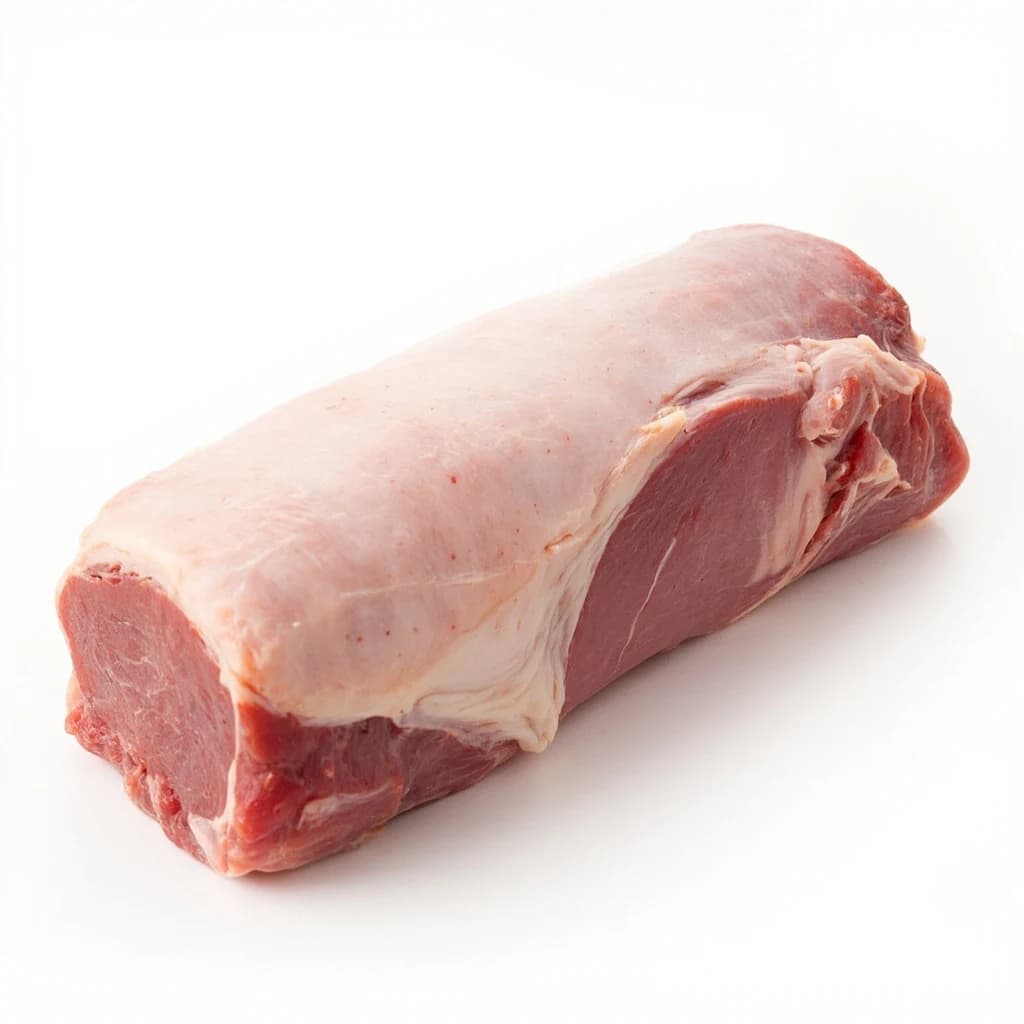
Pork Loin
Lean, tender roasting cut that stays juicy with care

Egg White
Pure protein that whips to airy peaks for meringue and more
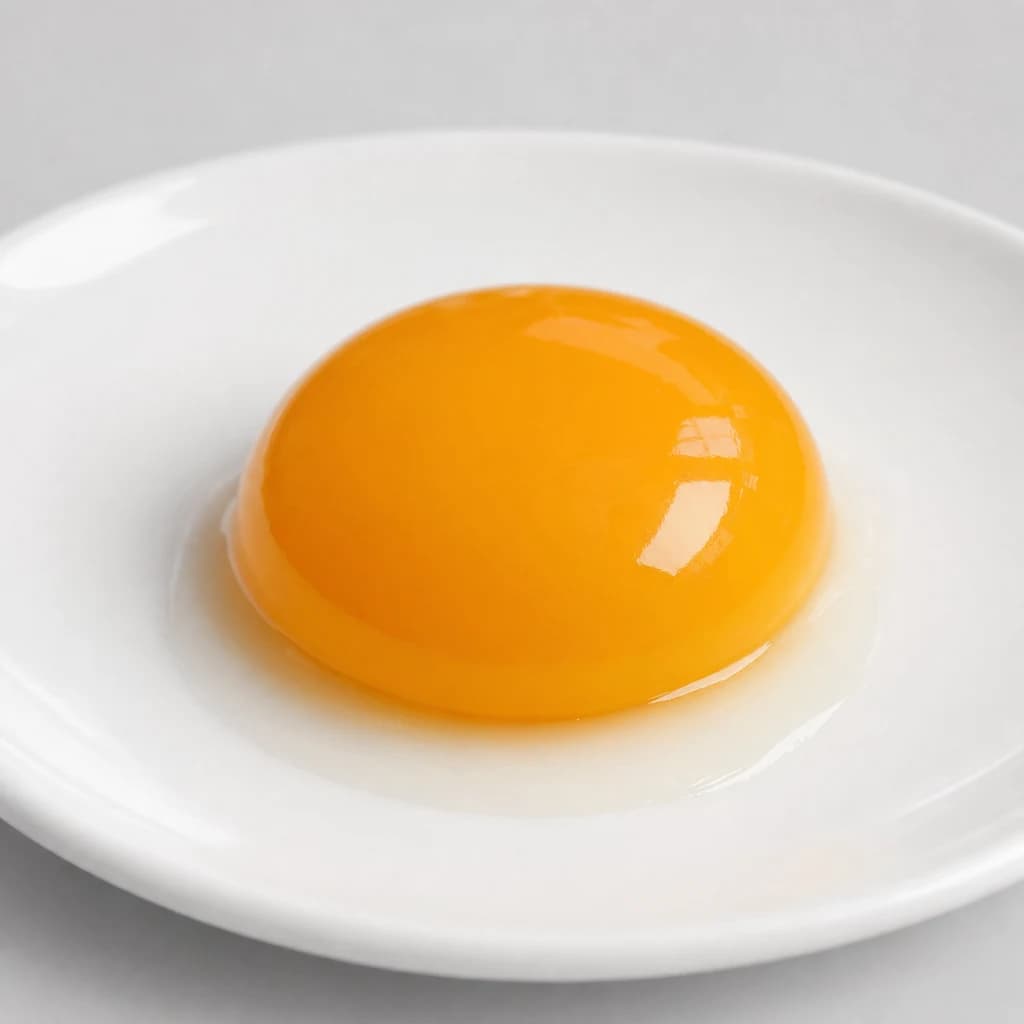
Egg Yolk
Rich, golden yolk for custards, mayonnaise, and pasta

Quail Egg
Tiny, speckled eggs for garnishing and elegant bites
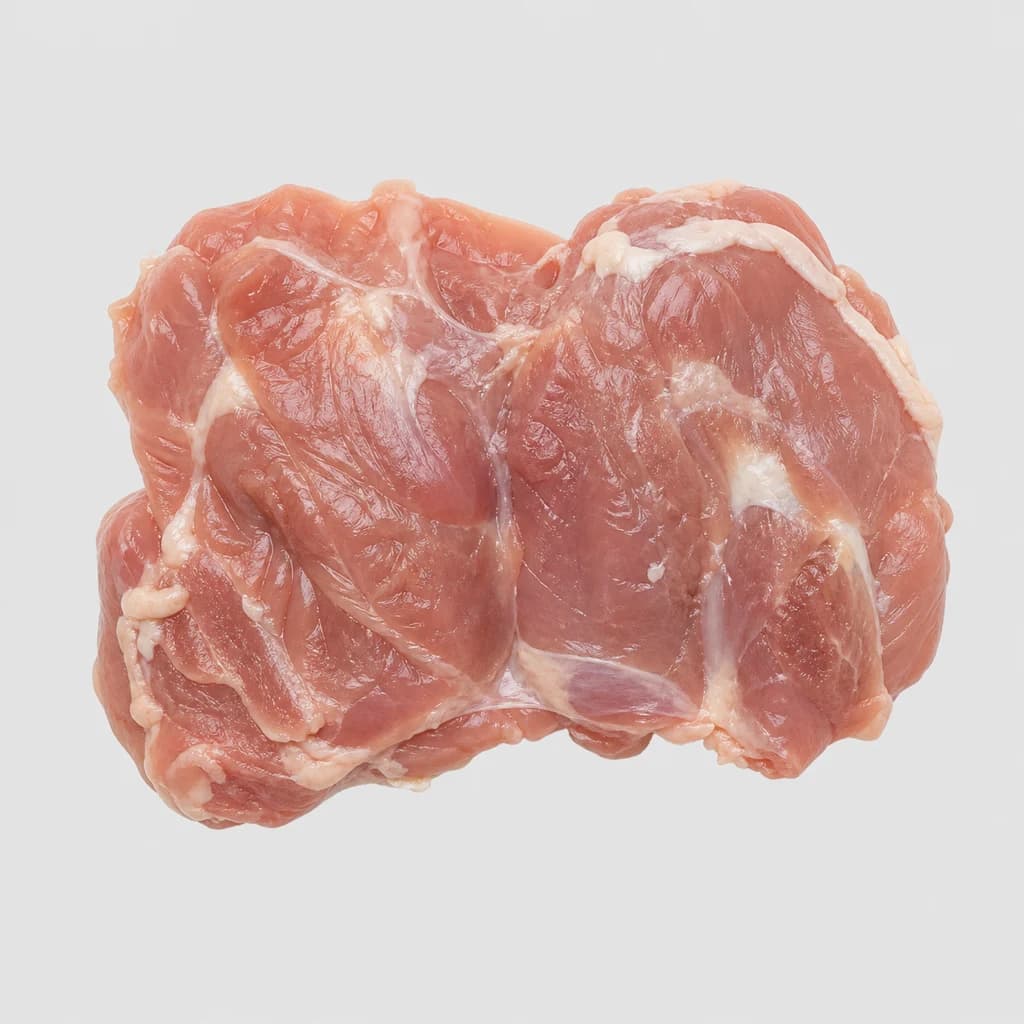
Chicken Thigh
Juicy, forgiving dark meat for braises, roasts, and grills