Proteins
Sockeye (Red) Salmon
Wild Pacific salmon with deep red, lean flesh and a firm, robust flavor; lower fat than king means it cooks fast and dries quickly, so keep it just to medium.
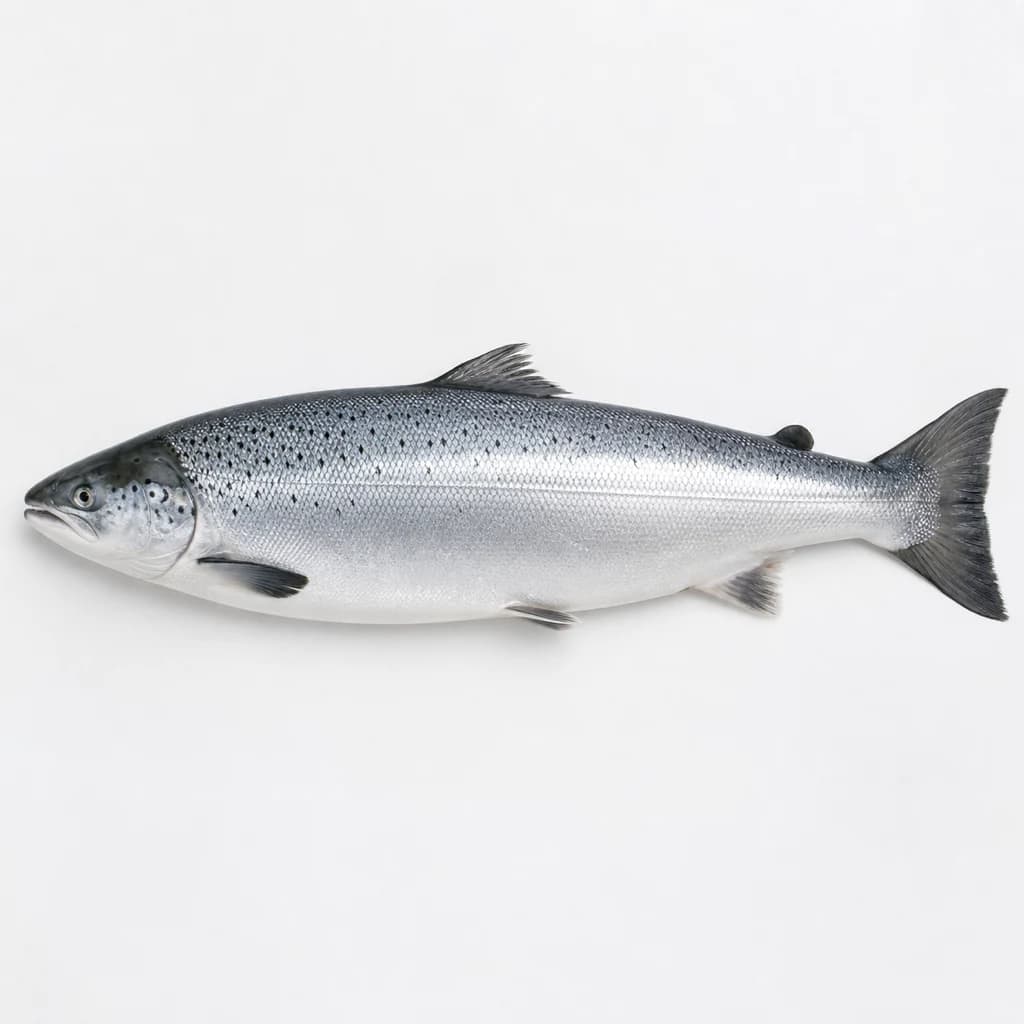
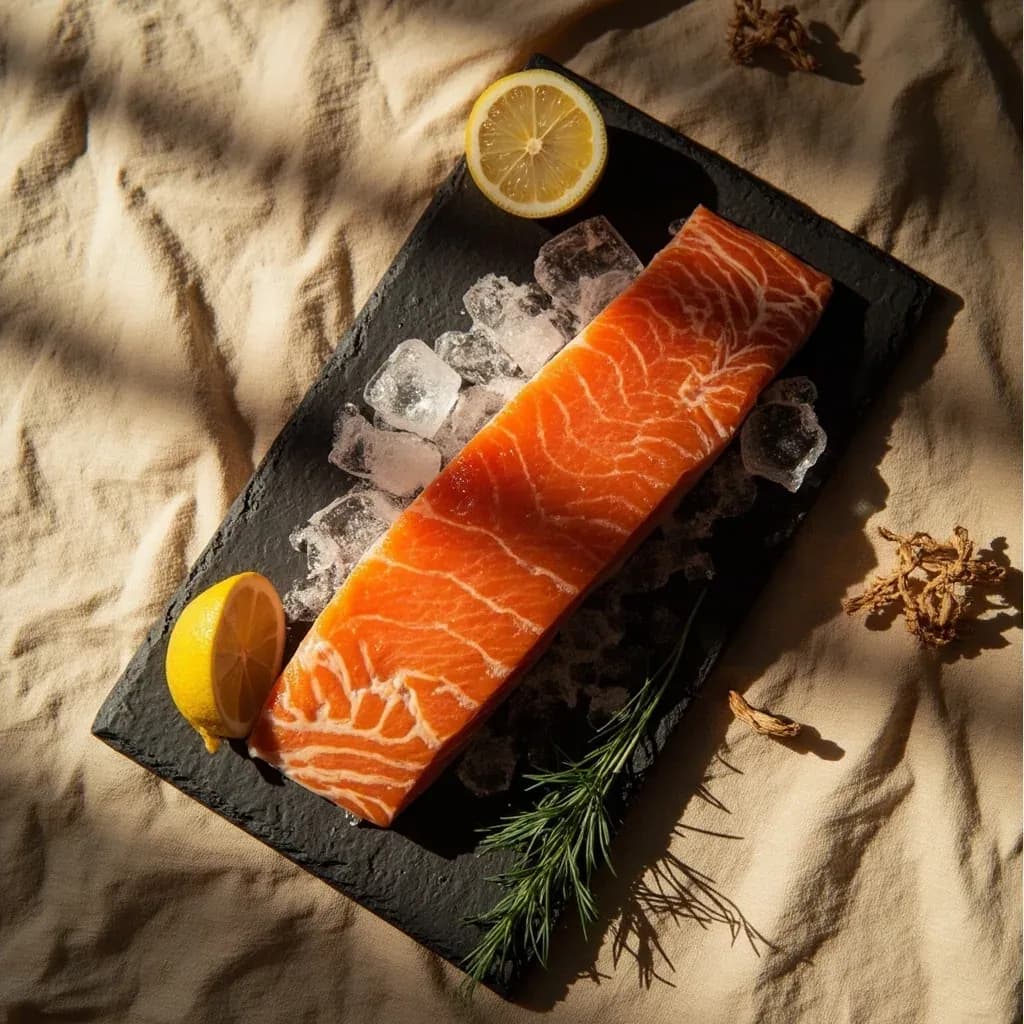
Sockeye (Oncorhynchus nerka) is the wild salmon — almost entirely so. The species' life cycle requires a freshwater lake for its juveniles, which is why commercial aquaculture has never developed it the way it has Atlantic salmon and trout. Adult sockeye spend two to three years at sea feeding on krill and shrimp, and that diet deposits the deep crimson pigment (astaxanthin) that makes sockeye the only truly red-fleshed Pacific salmon. Two practical facts follow: the fish is lean (roughly 4–7% fat, well under the 10–15% of chinook), and the color is a reliable signal of diet and ocean residence, not handling.
In the pan, sockeye behaves like a cross between wild trout and lean beef — firm, fine-flaked, and assertive in flavor. It rewards short, hot cooking and punishes overcooking more harshly than any other salmon. Pull it at 120–125°F and the flesh stays moist and silky; push it past 140°F and it turns chalky and dull. This is a fish built for grilling, smoking, canning, curing, and cedar-plank roasting — not for long braises or rich cream sauces.
Sockeye is also the salmon of canneries, smokehouses, and Indigenous foodways. Bristol Bay alone processes tens of millions of fish each summer, and Alaska Native and Pacific Northwest communities have eaten it smoked, dried, fermented, and wind-cured for millennia. Understanding that history matters in the kitchen: sockeye wants salt, smoke, acid, and restraint, not butter and cream.
- Measured in
- g
- Storage
- Refrigerate
Allergens
Find it in
Types & varieties
The largest sockeye fishery in the world (Alaska); the canning standard; 4–8 lb fish, peak run late June–early July
Smaller, oilier early-run fish; rare and prized; May–June
Smaller, leaner fish (3–5 lb); traditionally canned or dried by Alaska Native communities
Southcentral Alaska runs; 5–8 lb, firm flesh
British Columbia's main run; includes the famous late-run Adams and Stellako stocks
Mostly endangered or threatened runs (e.g., Snake River sockeye); rarely in market; Okanogan stock still fished
Landlocked freshwater form of the same species; 8–14 in, paler flesh, eaten whole or smoked; not commercially common
Males turn bright red with a hooked jaw and prominent hump; flesh is paler and softer; traditional for smoking and drying
Reading the 'fresh' label
Most sockeye sold as 'fresh' in grocery stores, restaurants, and fish counters in the lower 48 was flash-frozen on the processing vessel within hours of harvest. Tenders at sea carry blast freezers that drop the fish to well below 0°F almost immediately after bleeding and gutting; the fish is then thawed at the destination before display. This is not a euphemism or a downgrade — it is a quality-preservation step. A fish frozen within two hours of leaving the water and thawed properly will have better texture and color than one that spent four days on ice. If you want never-frozen sockeye, you generally have to live near a salmon run or buy direct from a fisherman during the May–August season. Otherwise, previously-frozen sockeye is the more reliable choice.
Canning and smoking: the traditional uses
Sockeye is the salmon of canneries because its biology makes it ideal for retort cooking. The deep red astaxanthin is a stable pigment that does not fade to gray the way chinook's does, and the firm, low-fat flesh holds its shape through the long sterilization cycle. Bristol Bay has canned sockeye since the 1880s, and most of the world's canned salmon is still sockeye for that reason. The same characteristics — firm flake, dense muscle, mineral flavor — make it the preferred species for cold-smoking into lox and for hot-smoking into kipper. When you see 'wild Alaskan sockeye' on a label of smoked salmon, you are seeing the species' traits exploited exactly as canneries have exploited them for more than a century.
Common uses
Tips & pitfalls
- Cook to 120–125°F internal and pull 5°F below target — carryover will finish it. The window from moist to dry is narrow, and sockeye crosses it faster than any other salmon.
- Brine fillets 10–15 minutes in 4% salt and 2% sugar before high-heat cooking; the salt helps the lean protein retain moisture and seasons it evenly.
- Score the skin in ¼-inch strips before grilling to prevent curling and to render the skin crisp.
- Skin-on is mandatory for grilling and broiling — the skin shields the flesh from direct heat and keeps it from drying out.
- If searing, get the pan ripping hot and sear the flesh side first, not the skin side, for a clean crust, then flip briefly to crisp the skin.
- Don't read 'fresh' as a quality guarantee — most sockeye sold fresh in the lower 48 was blast-frozen at sea and thawed, and that is not inferior to never-frozen fish.
- The single biggest mistake is treating sockeye like farmed Atlantic salmon — overcooking it, drowning it in cream, or braising it. It is built for salt, smoke, and acid, not butter.
- Save the collar, head, and bones for stock; they simmer into a deeply colored, intensely flavored broth.
- Wild Pacific salmon can carry anisakid worms; freeze to -4°F for 7 days or -31°F for 15 hours before any raw service such as sashimi, crudo, or ceviche.
Nutrition
Energy
548 kJ · per 100 g
Where the calories come from
Protein
22.3g
45% DV
Carbs
0g
0% DV
Fat
4.7g
6% DV
Fiber
0g
0% DV
Sugars
0g
of which
Sodium
78mg
3% DV
Source · USDA FoodData Central · Fish, salmon, sockeye, raw
View on FDC →In the shops
Matched grocery products
 €11.99
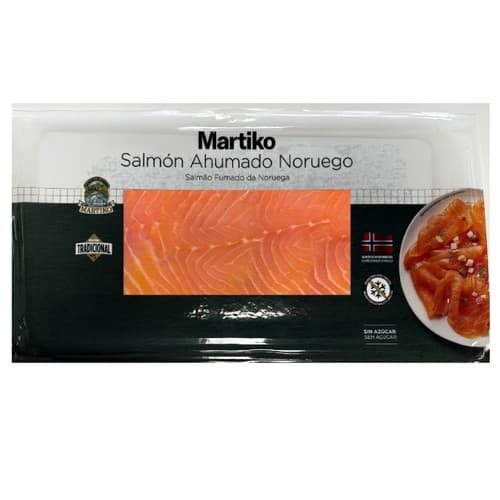
Smoked Atlantic Salmon
MARTIKO · kg · Bonpreu
 €5.49
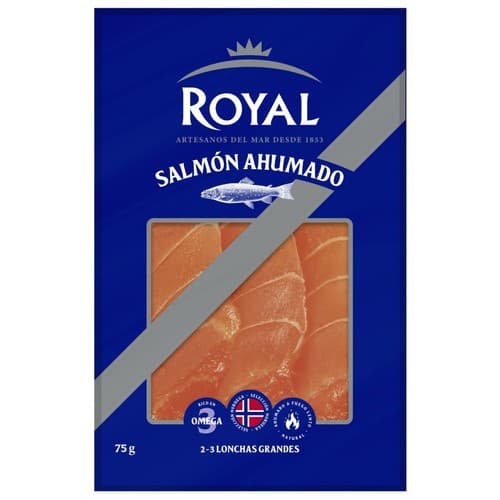
€5.49Royal Smoked Atlantic Salmon
ROYAL · kg · Bonpreu
 €17.85
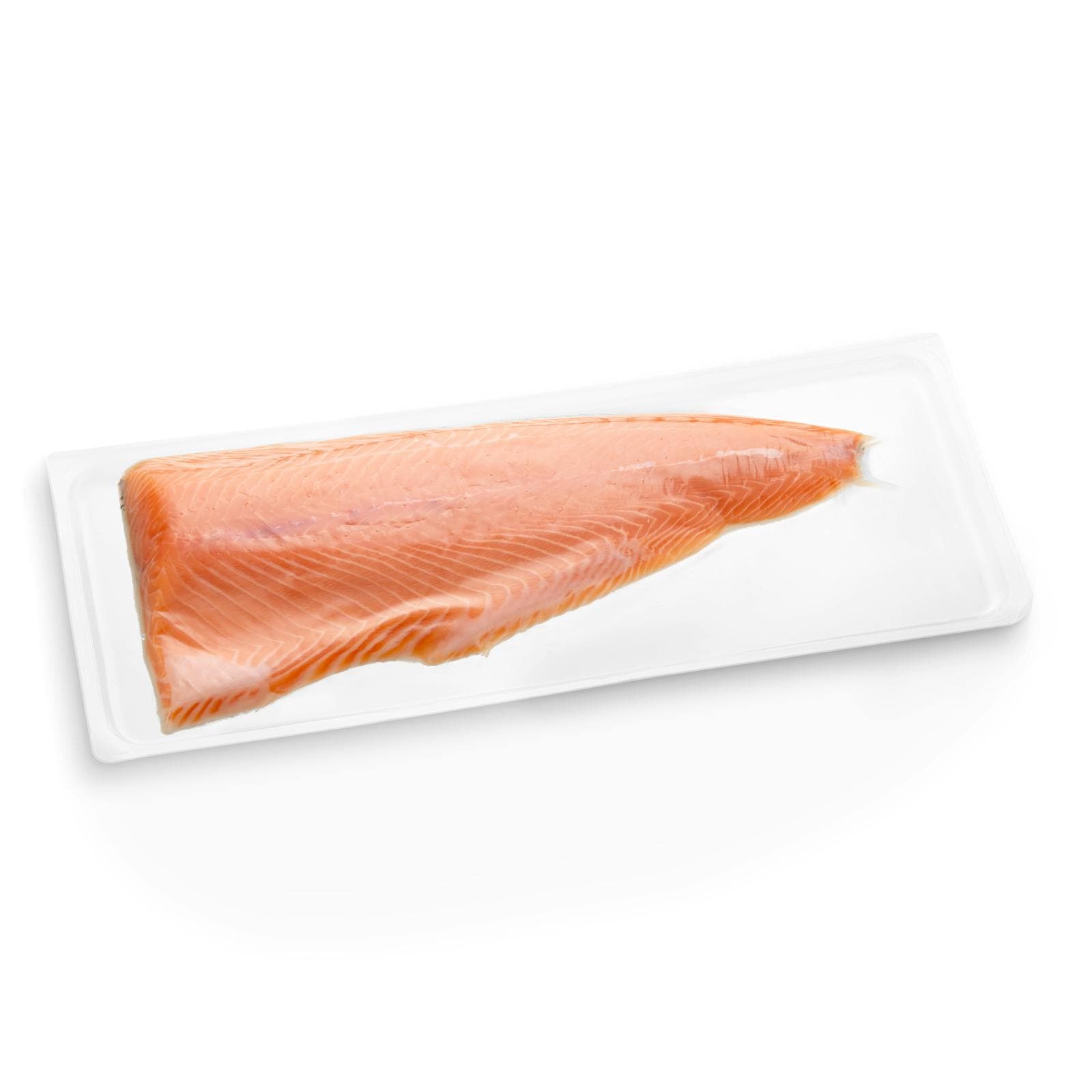
Half Salmon
850 g · Mercadona
 €3.80
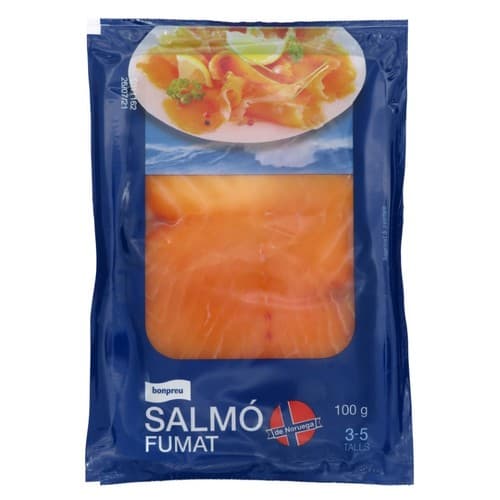
€3.80Smoked Salmon
BONPREU · kg · Bonpreu
 €4.69
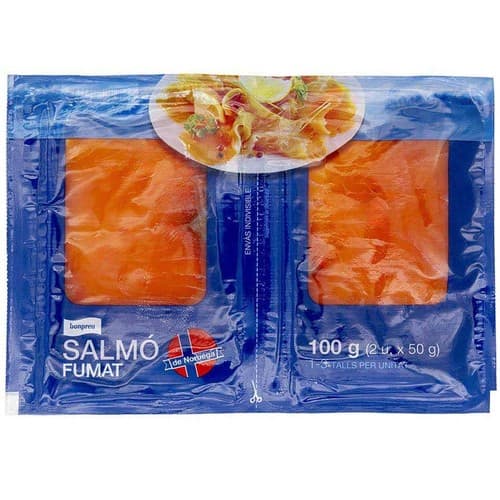
€4.69Smoked Salmon
BONPREU · kg · Bonpreu
 €5.29
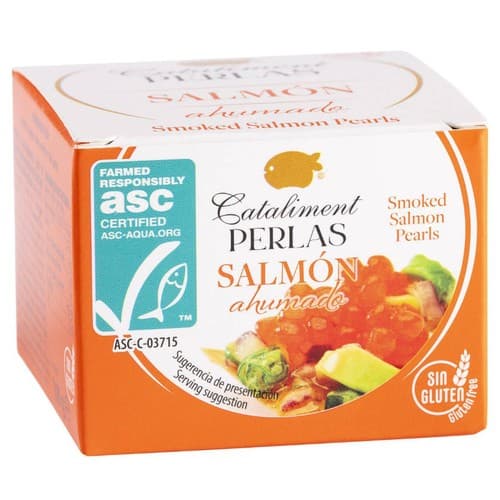
€5.29Salmon Pearls
CATALIMENT · kg · Bonpreu
Good to know
- Species
- Oncorhynchus nerka
- Other names
- Red salmon, blueback salmon
- Wild vs. farmed
- Almost entirely wild — the species' lake-dependent life cycle has kept commercial aquaculture negligible
- Fat content
- 4–7%, the lowest of the five Pacific salmon (chinook runs 10–15%)
- Flesh color
- Deep crimson from dietary astaxanthin (krill and shrimp); the only truly red-fleshed Pacific salmon
- Texture
- Firm, dense, fine-flaked; holds shape well when cooked
- Flavor
- Robust, full 'salmon' flavor; more assertive than coho, far less rich than king
- Omega-3 content
- High (roughly 1.0–1.3 g EPA+DHA per 100 g) despite low total fat
- Season
- May through August; Bristol Bay peaks late June–early July
- Typical size
- 4–8 lb average; ocean-phase adults run 4–15 lb; Yukon River fish smaller (3–5 lb)
- Yield
- About 60–65% skinless, boneless fillet from whole fish
- Storage (fresh)
- 1–2 days on ice; best cooked the day bought
- Storage (frozen)
- Up to 6 months at 0°F for best quality; most sockeye sold 'fresh' in the lower 48 was frozen at sea and thawed
- Mercury
- Low — short 2–3 year ocean life keeps bioaccumulation minimal
- Sustainability
- Most U.S. sockeye (especially Bristol Bay) is MSC-certified and considered well-managed
Substitutes
- Coho (silver) salmon — Closest match in texture and clean wild flavor; slightly higher fat makes it more forgiving — the easiest 1:1 swap
- Chinook (king) salmon — Richer and fattier; tolerates more overcooking; trim excess fat and reduce added oil in the recipe
- Pink salmon — Lighter color, softer texture, more delicate flavor; works in canning, patties, and pasta but lacks the punch of sockeye
- Wild steelhead or rainbow trout — Lean with firm pink flesh; the trout analog; cook the same way and do not overdo it
- Arctic char — Lean, fine-flaked, mild; a good cold-water substitute for poached or grilled dishes
- Atlantic salmon (wild, if available) — Almost always farmed; not equivalent in flavor but similar in texture — adjust fat expectations
Pairs with
Also called
red salmon · sockeye · Oncorhynchus nerka