Proteins
King (Chinook) Salmon
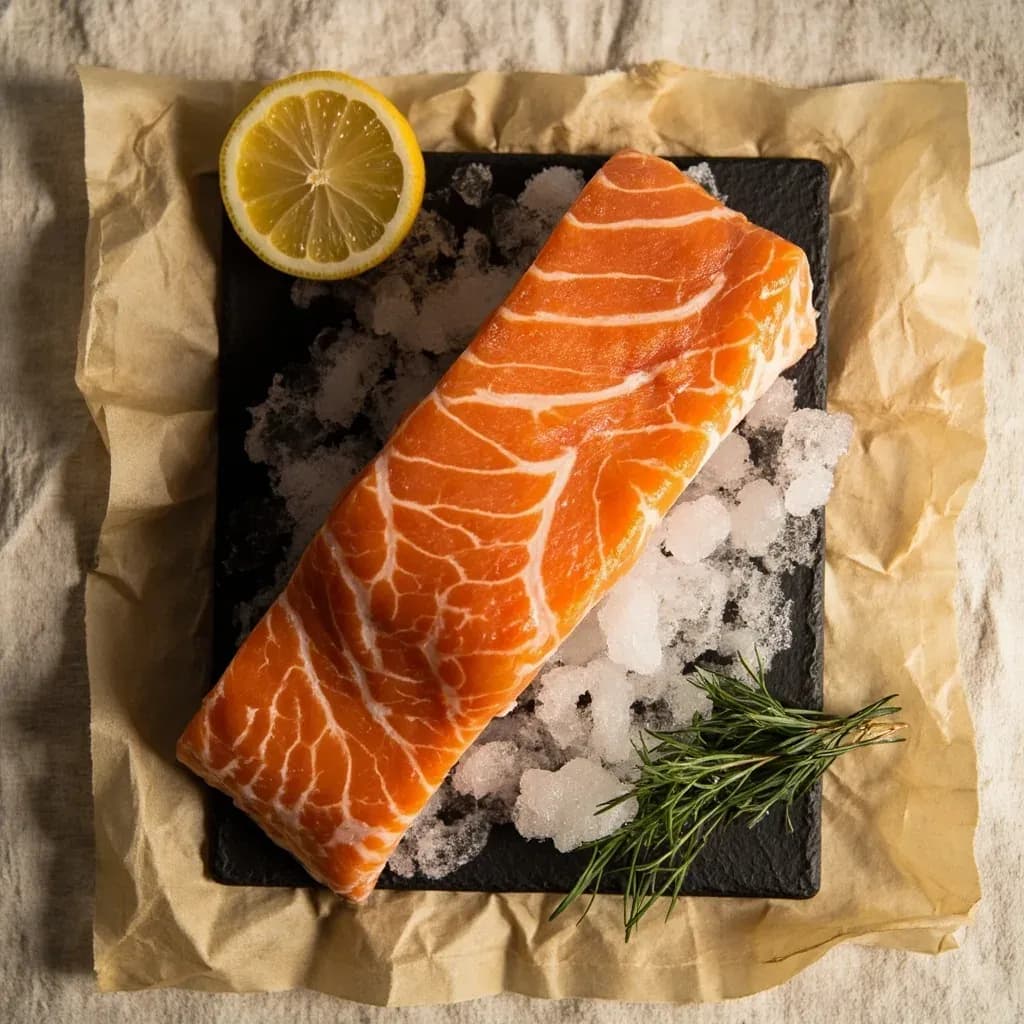
The fattiest, richest salmon, with marbled buttery flesh that stays moist and forgiving; ideal for searing, grilling and curing where its high oil shines.
King salmon is the largest of the Pacific salmons and the richest eating fish in the salmonid family. Its flesh is densely marbled with oil—roughly 10–15% in wild specimens and considerably more in well-fed farmed fish—which gives the cooked meat a buttery, almost steak-like succulence and a flavor often described as sweet and umami-dense rather than overtly fishy. That same oil is what makes the fish behave so differently from leaner cousins like sockeye or coho: it tolerates aggressive heat, forgives a few degrees of overcooking, and carries smoke, cure, and seasoning with unusual grace.
In the kitchen, king behaves more like a fatty bluefin tuna than a delicate white fish. The skin crisps aggressively on a hot pan, the flakes are large and tender, and the high moisture means a center cut stays juicy even when cooked past medium. That same fat also buffers acid and salt, which is why the fish is the historical standard for Pacific Northwest hot-smoked sides and a strong choice for cold-smoked lox and gravlax, and why it shines raw as crudo, tartare, and sashimi when handled to sushi-grade protocol.
Sourcing matters more with king than with most salmon. Alaska bans salmon aquaculture by state law, so any Alaskan king is wild and seasonal (roughly May through September depending on the run); the rest of the year—and most of the world's supply—comes from marine farms in New Zealand, Tasmania, Chile, Norway, and the Faroe Islands. Wild king is typically two to three times the price of sockeye or coho, but the flavor depth and buttery texture justify the premium in any application where the fish is the star.
- Measured in
- g
- Storage
- Refrigerate
Allergens
Find it in
Types & varieties
Bright red flesh, very high oil, premium price. Copper River, Yukon, Kenai, Taku, and Situk are the most famous fisheries.
First wild kings of the season (May); exceptionally high oil from the long, energy-intensive migration upriver.
Early-run British Columbia fish; called Tyee when over 30 lb. Smaller average than Alaskan but prized for delicate flavor.
Rare wild variant (~1 in 20) with pale flesh from a fish-and-squid diet; sought for crudo and sashimi.
Largest marine King salmon industry; uniformly rich, consistent, available year-round. Brands include Ōra, Regal, King Salmon.
Often mislabeled 'Tasmanian Atlantic'; most Australian farm-raised 'salmon' is actually King/Chinook.
Mainstream foodservice supply; lower price, fattier flesh, milder flavor. Check ASC/BAP certifications.
Premium niche product with very high oil content.
The Best Cuts and How to Use Them
Not all sections of a king salmon fillet behave the same way. Fat distribution changes from the thick loin down through the belly, and the most prized pieces in Japanese and Pacific Northwest markets reflect that.
- Center-cut loin: the thickest, most uniform section; ideal for portion-controlled searing, roasting, and grilling.
- Belly flap (harami): the richest, most marbled piece; reserved for crudo, tartare, and the robatayaki grill.
- Collar (kama): the curved cut just behind the gills and pectoral fin; high fat, often grilled whole and shared with a squeeze of lemon.
- Tail section: thinner and more delicate; cooks in seconds, suited to a fast sear or gentle curing.
- Trim and bones: simmer for stock, chowder bases, or pan sauces—the high oil builds a velvety body.
Wild vs. Farmed: What Changes in the Pan
Wild and farmed kings are the same species but cook and taste differently. Knowing which is on your board affects salting, cook time, and sauce choice.
- Wild king: denser flesh, brighter color from astaxanthin, more pronounced oceanic flavor; sear hot and serve medium-rare to medium.
- Farmed king: higher oil content, paler and more uniform flesh, milder and more buttery; forgiving on heat but benefits from skin scoring to render excess fat.
- Sourcing tip: in Alaska, all king is wild by law; in winter and off-season, most US supply is farmed from New Zealand or Chile.
- Parasite control: farmed fish has negligible parasite risk; wild king intended for raw must be frozen to -4°F for 7 days or -31°F for 15+ hours (FDA sushi-grade protocol).
Common uses
Tips & pitfalls
- Cook to 120–125°F (49–52°C) for medium-rare and pull 5–8°F early—carryover heat will finish the job; above 140°F the flesh dries out and the fat renders off unpleasantly.
- Pat the fillet completely dry and preheat the pan until shimmering before adding skin-side down; press flat for the first 30 seconds to prevent curling.
- Score thick farmed fillets in three parallel lines through the skin and into the flesh to render fat and crisp the surface evenly.
- Salt at least 10–15 minutes ahead (or dry-brine up to 1 hour) for better crust and seasoning depth; salting immediately before searing draws out surface moisture and prevents browning.
- Don't baste with butter during the sear—the fish has plenty of its own fat. Reserve butter for finishing or a pan sauce after the fish rests.
- For gravlax or lox, reduce the salt by roughly 15% compared with leaner salmon; the natural oil carries flavor and salt differently than sockeye or coho.
- Alder is the traditional Pacific Northwest smoke wood—mild and clean. Cedar adds a resinous, slightly sweet note; apple and cherry are gentler still.
- Pull pin bones with needle-nose pliers or tweezers before plating; they run in a single line along the lateral line above the midline of the fillet.
Nutrition
Energy
749 kJ · per 100 g
Where the calories come from
Protein
19.9g
40% DV
Carbs
0g
0% DV
Fat
10.4g
13% DV
Fiber
0g
0% DV
Sugars
0g
of which
Sodium
47mg
2% DV
Source · USDA FoodData Central · Fish, salmon, chinook, raw
View on FDC →In the shops
Matched grocery products
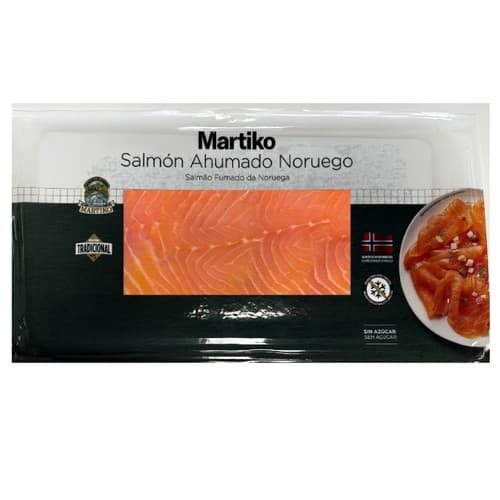 €11.99
Smoked Atlantic Salmon
MARTIKO · kg · Bonpreu
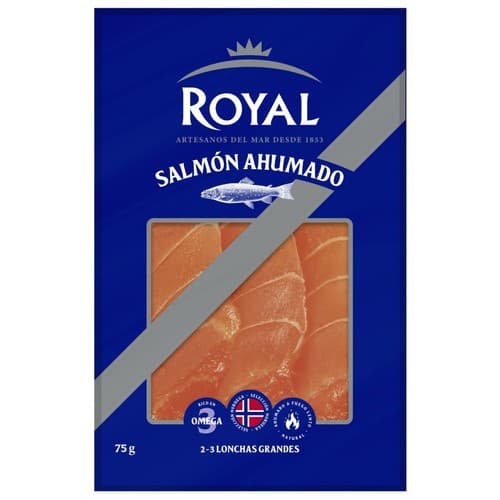 €5.49
€5.49Royal Smoked Atlantic Salmon
ROYAL · kg · Bonpreu
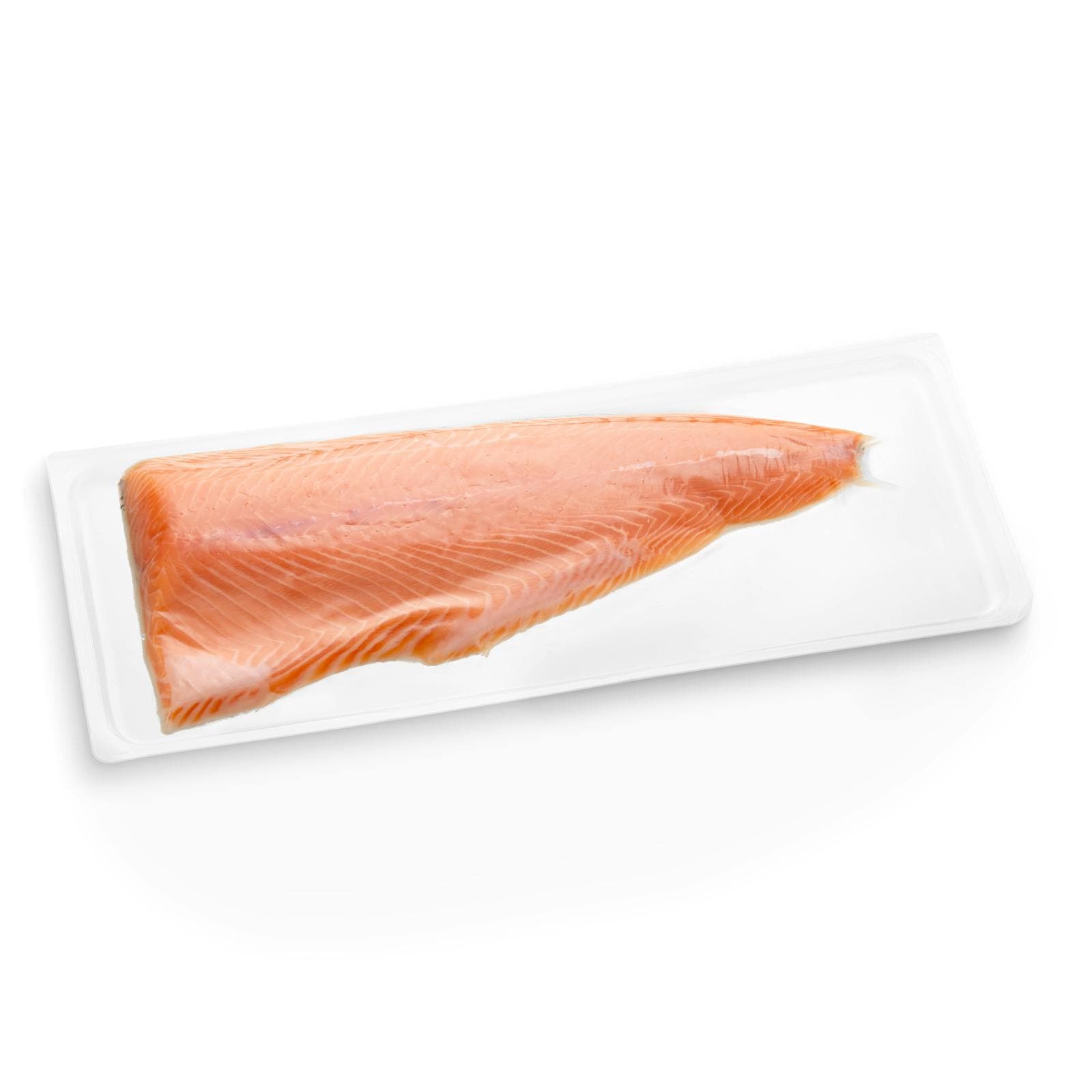 €17.85
Half Salmon
850 g · Mercadona
 €3.80
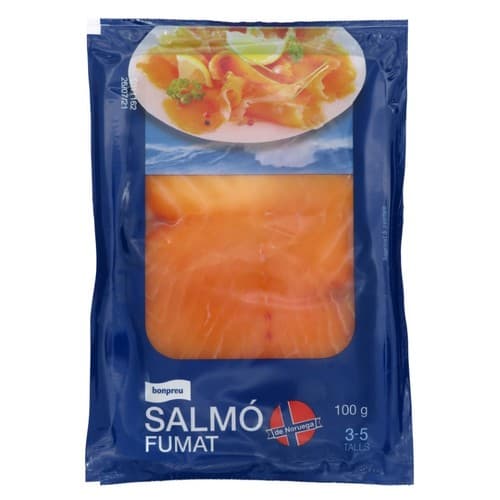
€3.80Smoked Salmon
BONPREU · kg · Bonpreu
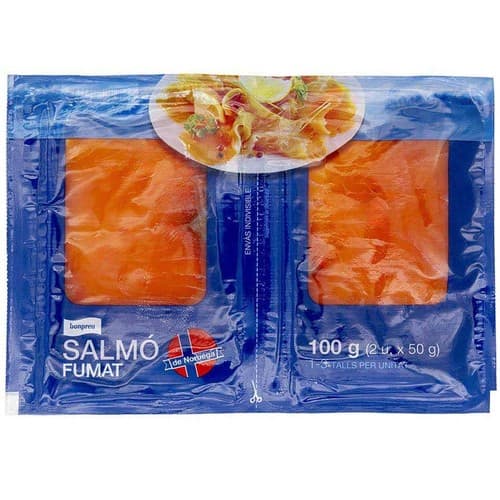 €4.69
€4.69Smoked Salmon
BONPREU · kg · Bonpreu
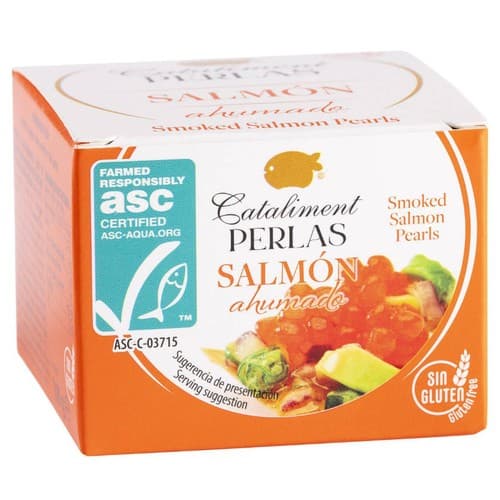 €5.29
€5.29Salmon Pearls
CATALIMENT · kg · Bonpreu
Good to know
- Other names
- Chinook, Quinnat, Tyee, Spring Salmon, King
- Scientific name
- Oncorhynchus tshawytscha (family Salmonidae)
- Fat content
- 10–15% in wild fish, up to ~18–22% in well-fed farmed fish—highest of any Pacific salmon
- Typical market weight
- 8–30 lb common; trophy specimens reach 50–80 lb
- Omega-3 content
- Roughly 1.5–2.4 g per 100 g (3.5 oz) raw fillet
- Flesh color
- Pale ivory to deep red-orange; deep red from astaxanthin in a krill- and shrimp-rich diet; rare 'White King' from fish-and-squid feeders
- Storage
- Fresh: 1–2 days on ice, 3–4 days at 32–38°F. Vacuum-sealed frozen: 6–9 months for best quality
- Yield
- About 60% skin-on fillet from a whole fish; pin bones lie along the lateral line and pull easily
Substitutes
- Arctic Char — Closest match—similar fat level and delicate flavor, smaller flake. Best 1:1 substitute for roasting and pan-searing.
- Steelhead Trout — Same family, comparable fat, slightly sweeter and more delicate; excellent raw and for gentle cooking.
- Atlantic Salmon — Readily available, similar fat (especially farmed), more uniform in size; milder and less complex flavor.
- Coho (Silver) Salmon — Mid-fat and more delicate; works in most applications but has a softer texture and milder flavor.
- Sockeye Salmon — Leaner and more intensely flavored—not ideal for raw, but good for smoking and grilling; reduce cook time to avoid drying.
- Large Farmed Rainbow Trout — Closest non-salmonid option; similar fat and flake.
- Halibut — Cooked applications only; much leaner—add butter or oil to compensate for the missing richness.
Pairs with
Also called
chinook salmon · king salmon · spring salmon · Oncorhynchus tshawytscha
