Tying & Fastening
Cedar Grilling Plank
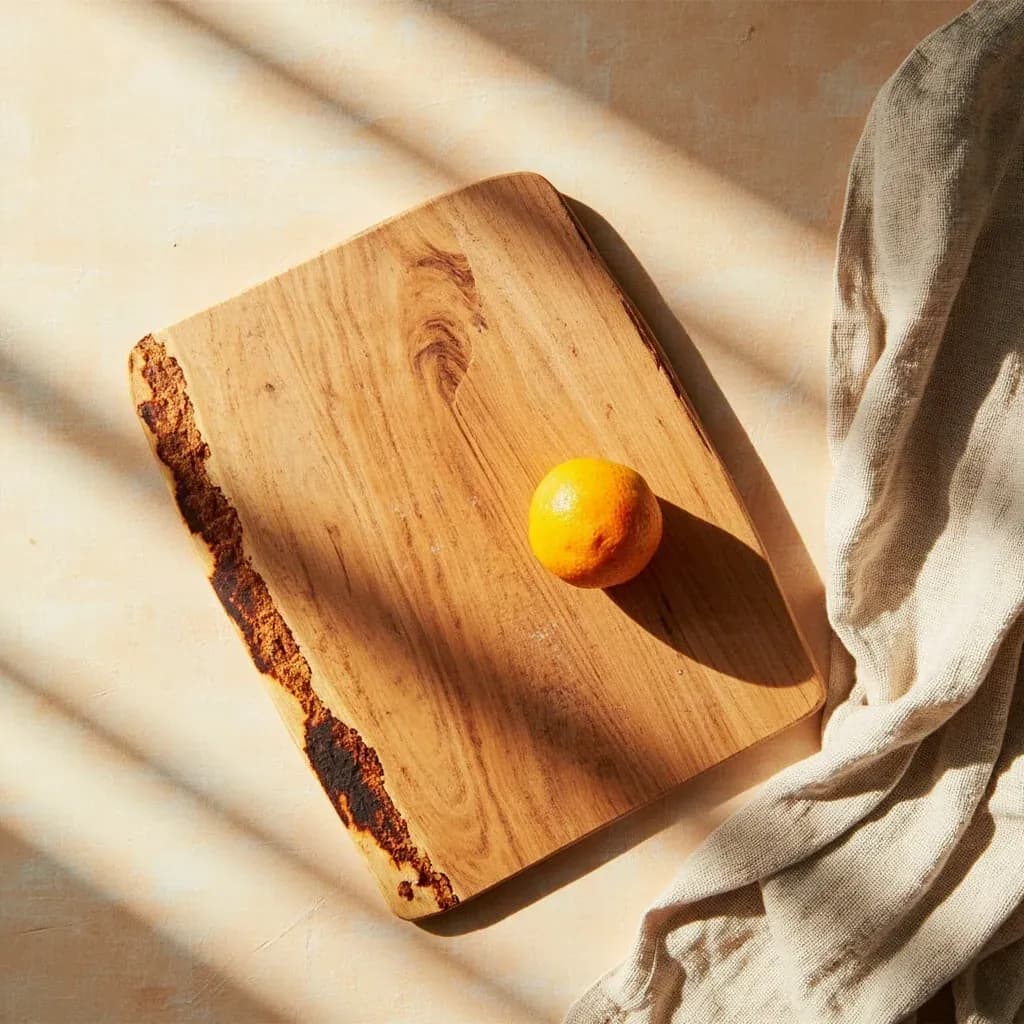
Soaked cedar board that cradles fish or chicken over the grill, steaming and perfuming the food with woodsmoke while shielding it from direct flame; single-use as it chars through.
A cedar grilling plank is a thick, untreated board of Western Red Cedar (Thuja plicata) — sometimes Alaskan or Yellow cedar — that is soaked in water, preheated on a grill until it begins to smolder, and then used as a cooking surface for fish, poultry, vegetables, and even cheese. The wet wood does two jobs at once: it shields delicate food from harsh radiant heat, and as its surface temperature climbs past the boiling point of water, it releases a fragrant, slightly sweet woodsmoke that penetrates whatever is laid on top. The result is a finished dish gently steamed in its own juices and perfumed with a resinous, almost tea-like aroma that no other cooking method quite replicates.
The technique has deep roots in the Pacific Northwest, where Coast Salish, Tlingit, and Haida communities slow-cooked salmon on cedar boards set beside open fires long before "plank grilling" entered cookbooks. Today the plank is sold as a single-use accessory — once it has blackened through and cracked, it is finished, though the spent wood makes excellent fire-starter or compost. Because the plank itself is discarded after cooking, what you are really buying is a method of flavor delivery: a controlled smoke chamber and a forgiving, nonstick surface in one piece of wood.
Cedar sits in the middle of the smoke-flavor spectrum, more assertive than alder but gentler than mesquite or hickory, and it pairs especially well with oily, fatty fish whose richness can stand up to the resinous perfume. A standard 5-by-11-inch board handles one salmon fillet; full sides of salmon, whole trout, or a pork tenderloin call for the 15-to-17-inch versions sold for the purpose.
Types & varieties
The classic grilling plank: dense grain, full aromatic perfume, the traditional choice for Pacific Northwest salmon
Tighter grain and a more restrained smoke; sold as a subtler, less resinous alternative
Vacuum-sealed in water so they are ready for the grill straight from the package — skip the soaking step
About 5 × 11 in, sized for one salmon fillet or two chicken breasts
15–17 in or longer, built for a full side of salmon (2–3 lb) or a pork tenderloin
The plank's life cycle
A cedar plank has three working phases: dry storage, a long soak, and a single smoking cook. In storage it is just a piece of kiln-dried wood in a sealed bag, but once it has been immersed in water for an hour or more the cells become saturated, and that absorbed water is what keeps the plank from igniting during cooking. On the grill the wet surface slowly evaporates and chars, releasing cedar volatiles that flavor the food. By the time the food is done, the plank's top face is blackened and may have cracked; that is normal, and the board is now spent. Cooled, fully charred cedar can be broken up for fire-starter or composted; never relight a partially burned plank for a second cook.
Selecting and storing planks
Buy planks labeled specifically for grilling — they have been cut to food-safe dimensions and are free of finishes. Keep the unused planks in their original sealed packaging in a dry cupboard so they do not absorb ambient moisture unevenly before you are ready to soak. A dry plank will drink water faster and more uniformly than one that has been sitting in a humid garage.
Flavor pairing
Cedar's resinous, slightly sweet smoke is assertive, so it shines with bold, fatty, or plainly seasoned foods and is easily smothered by heavy marinades. Salt, pepper, brown sugar, soy, miso, maple, lemon, and dill all sit comfortably alongside it. Acidic tomato-based sauces and strongly spiced rubs can mute the wood's character — save those for direct-heat grilling instead.
Common uses
Tips & pitfalls
- Soak the plank weighed down under water for at least an hour, longer for thicker boards — a plank that floats dry will ignite within minutes on the grill
- Use only untreated, food-grade cedar sold for cooking; construction lumber may be pressure-treated with arsenic or other toxic preservatives
- Set the plank over indirect heat rather than directly over the flames to slow charring and avoid flare-ups
- Preheat the empty, soaked plank on the grill for 5–10 minutes until it begins to smoke before laying food on it — this is when the flavor is released
- Lightly oil the food (or the plank's cooking surface) so delicate fish does not stick and tear apart when flipped or served
- Close the lid while cooking to trap cedar smoke against the food; an open grill lets the aroma escape up and away
- Trim any overhanging salmon tail or thin edges of fish so they don't hang past the plank and catch fire
- Don't reuse a charred plank — once it cracks or burns through, it is finished and will not hold another cook
- If the edges flame up, spritz with a water bottle rather than dousing with a cup, which can wash ash onto the food
- Keep seasonings simple — salt, pepper, brown sugar, lemon, dill — so the cedar perfume is not overwhelmed by a heavy marinade
- Save the spent, fully cooled plank as fire-starter kindling, or compost it once it has charred to ash
Good to know
- Material
- Western Red Cedar (Thuja plicata), the traditional species; Alaskan/Yellow cedar is a subtler alternative
- Typical thickness
- Roughly 3/4 inch (about 1.9 cm); thinner 3/8-inch planks char faster and burn through sooner
- Common sizes
- From about 5 × 11 in (single salmon fillet) up to 15–17 in (whole side of salmon or large roast)
- Soak time
- 1–4 hours submerged in water; many cooks soak 2 hours or longer, and overnight is common
- Grill temperature
- Medium heat, around 350–400 °F (175–200 °C), with the lid closed to trap smoke
- Origin
- Indigenous Pacific Northwest tradition — Coast Salish, Tlingit, and Haida peoples cooked salmon on cedar over open fires
- Reusability
- Single-use; once the plank has charred through or cracked, discard it
- Safety
- Must be food-grade, untreated wood — never use construction lumber, fence boards, or stained/preservative-treated cedar
Also called
grilling plank · cedar grill board · smoking plank · wood plank