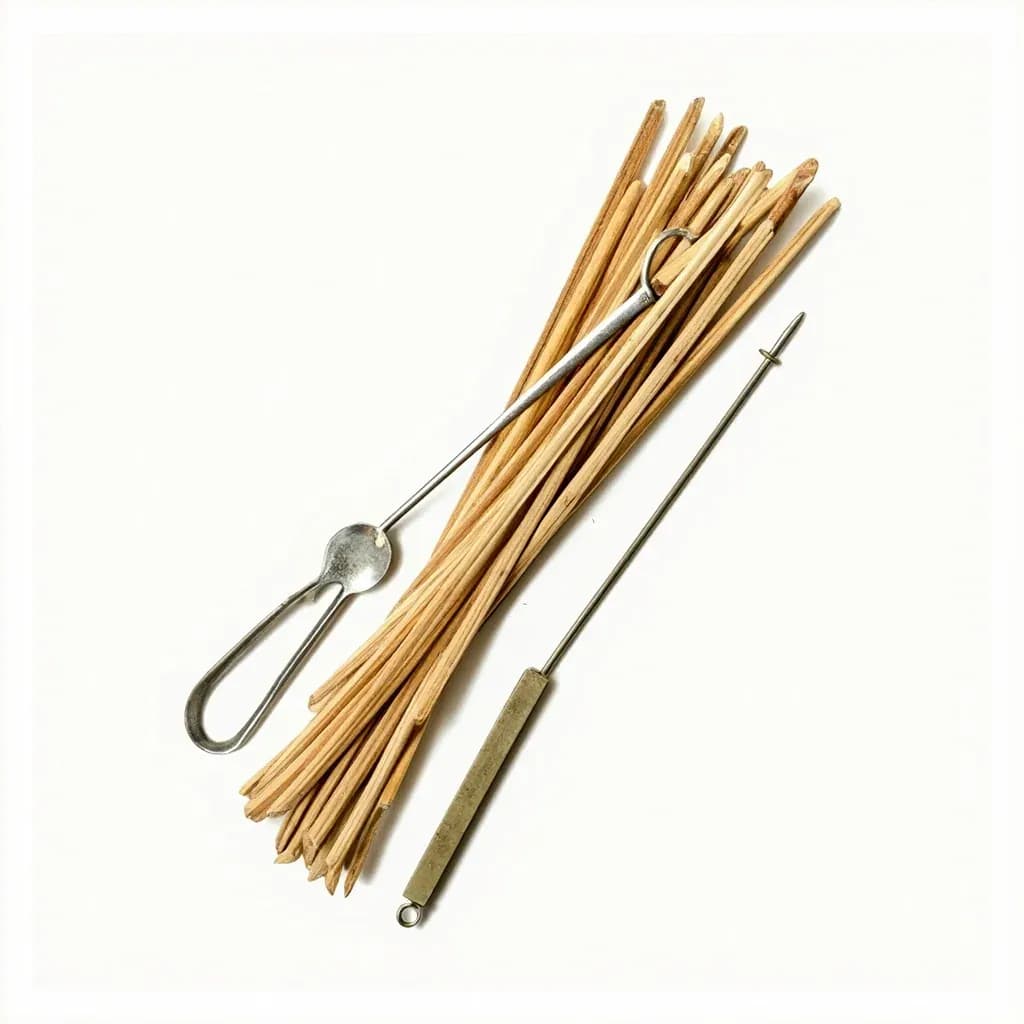
Tying & Fastening
Skewer (Metal / Wooden / Bamboo)
Thin pointed rod that threads meat and vegetables for grilling, roasting, or testing doneness.
A skewer is a thin, pointed rod of metal, wood, or bamboo used to thread chunks of meat, fish, and vegetables for grilling, roasting, or pan-cooking kebabs. It holds food together over direct heat and lets it turn evenly, and a single skewer also works to test cakes or potatoes for doneness. Wooden and bamboo skewers are usually soaked in water first so they don't scorch on the grill.
A skewer is a thin, pointed rod designed to thread food for cooking over direct heat, in an oven, or under a broiler. It is one of humanity's oldest cooking tools, with documented use across the Middle East, Southeast Asia, and the Mediterranean since antiquity. The skewer transforms irregular cuts of meat and vegetables into compact, manageable packages that cook quickly and evenly, while allowing fat and marinade to drip away from the food. Whether fashioned from a green twig held in a campfire or a precision-engineered stainless steel spit, the fundamental function remains unchanged: impale food, apply heat, achieve controlled, even cooking.
Material choice defines a skewer's behavior. Bamboo and wooden skewers are disposable, lightweight, and do not conduct heat into the food—making them suitable when you want the food to char at the surface without the metal drawing internal temperature upward. Metal skewers, typically stainless steel, are permanent tools that actively transfer heat along their length and into the food's center, which can help promote more uniform doneness in thicker cuts but may cause surface overcooking in delicate proteins before the interior reaches temperature. Flat or square metal profiles grip food firmly, preventing it from spinning when you turn the skewer; round metal skewers allow free rotation, which can frustrate even experienced cooks. This distinction matters enormously for tasks like grilling chicken breast, where orientation affects browning, or for rotisserie work, where balance on the spit is critical.
Beyond grilling and kebabs, the skewer serves as a versatile kitchen tool: it holds stuffed items shut during cooking, tests doneness in baked goods, prevents shrimp from curling, and secures rolled roasts into uniform shape for even heat penetration. Understanding when to reach for bamboo versus metal, flat versus round, is the practical difference between a tool that fights you and one that performs the way you intend.
Alternatives
Types & varieties
Economical and disposable; prone to splintering if not soaked; scorches above 400°F (204°C); standard choice for casual kebab cooking
Typically birch or similar hardwood; flat profile resists rotation during grilling; requires soaking; cleaner than bamboo for some users
Reusable, typically 12–18 inches; flat profile locks food orientation during turning; dishwasher safe; resists rust with proper drying
Reusable, cylindrical profile; food may spin freely when you try to turn the skewer; available with handles for high-heat use
Two parallel prongs sandwich food securely; ideal for chicken breast, fish fillets, and thick vegetables; prevents wobbling or rotation
Thin bamboo, typically 8–12 inches; designed for small meat cubes; traditional in Indonesian, Thai, and Malaysian cuisines; cooks rapidly over high heat
Thin bamboo or wooden, 6–9 inches; Japanese style for grilled chicken and vegetables; traditionally cooked over binchōtan charcoal
Japanese-style long (15+ inch) flat bamboo skewer; designed for batch grilling; the flat profile prevents food rotation during high-heat cooking
Long metal spit with holding forks; used for whole poultry, large roasts, and pork loins; attaches to a rotisserie motor for continuous turning
Soaked cedar board that cradles fish or chicken over the grill, steaming and perfuming the food with woodsmoke while shielding it from direct flame; single-use as it chars through.
A flat-bladed steel skewer that grips meat and stops chunks spinning when you turn a kebab, reusable and heat-conducting so it helps cook the center, unlike round wooden sticks.
Choosing Between Metal and Bamboo/Wooden Skewers
The decision hinges on cooking method, food type, and whether you value reusability or convenience. Metal skewers are investments: a set of flat stainless steel skewers costs more upfront but lasts a lifetime with basic care. They conduct heat into the food, which means a metal-skewered piece of chicken cooks slightly more evenly than one on bamboo, because the metal acts as a secondary heat source drawing warmth toward the center. For delicate fish, however, this conduction can cause the surface to overcook before the interior reaches temperature. Bamboo and wooden skewers do not conduct heat, so the food cooks solely from the outside in, giving you finer control over delicate proteins.
For open-flame grilling over charcoal or wood, bamboo skewers are traditional and forgiving—scorching is expected and acceptable. For indoor roasting or oven kebabs where you want even browning without blackened skewer ends, metal is the clear choice. If you grill frequently, keep both on hand: metal for tasks where heat conduction and precise orientation matter, bamboo for quick weeknight kebabs where cleanup speed outweighs longevity.
- Use metal skewers for oven roasting and precise grilling tasks
- Use bamboo or wooden skewers for open-flame grilling and disposable convenience
- For delicate proteins like fish, bamboo prevents surface overcooking from conducted heat
- For thick cuts like chicken thigh, metal promotes more uniform interior cooking
Threading Technique for Even Cooking
Proper skewering technique prevents common frustrations: food that spins when you try to turn, pieces that fall off, and uneven cooking where some items char while others stay raw. The governing principle is uniformity: cut all food pieces to similar dimensions, and thread them with minimal gaps between items. Gaps of about 1/4 inch allow heat and smoke to circulate freely, but larger gaps mean exposed skewer surface cooks the food's interior unevenly, leaving a band of undercooked material adjacent to the gap.
For ground meat kebabs (seekh kebab), the technique differs: wet your hands and pack the meat firmly around the skewer, compressing it to eliminate air pockets. Air pockets cause the meat to slide off in strips during grilling. For items prone to curling—shrimp, thin fish fillets—threading through the tail and body or using a double-prong skewer keeps them flat against the grill grates for even browning. When skewering vegetables with widely different densities (dense potatoes versus quick-cooking zucchini), partially cook the denser items first, then combine them on the skewer so everything finishes simultaneously.
- Cut all pieces to similar size for uniform cooking times
- Leave 1/4-inch gaps between pieces for heat and smoke circulation
- Wet your hands when forming ground meat around skewers to prevent sticking
- Thread shrimp through the tail and body to prevent curling
- Pre-cook dense vegetables like potatoes before assembling on skewers
Common uses
Tips & pitfalls
- Always soak bamboo and wooden skewers in room-temperature water for at least 20–30 minutes before grilling to prevent charring and splintering into food
- Use flat-sided metal skewers when food must stay oriented—round skewers allow food to spin freely when you try to turn them, making even browning nearly impossible
- Thread food consistently: cut all pieces to similar size, and slide them onto the skewer with minimal gaps for even heat distribution across the entire length
- Leave a small gap (about 1/4 inch) between food pieces to allow heat and smoke circulation, but avoid larger gaps that create uneven cooking zones
- For double-prong skewers, insert the second prong after the first to avoid pushing food off the skewer during assembly
- Use two parallel skewers (about 1 inch apart) for large items like whole chicken breast or thick pork chops—this provides stability and more even cooking throughout
- When grilling ground meat kebabs (seekh kebab), wet your hands and pack the meat firmly around the skewer to prevent it from sliding off during cooking
- Clean metal skewers immediately after use—marinade residue is acidic and will corrode the metal surface, causing pitting and discoloration over time
- Store metal skewers lightly oiled to prevent surface oxidation, even if they appear dry
- For crowded skewers containing dense vegetables, partially pre-cook dense items like potatoes or carrots before threading to ensure everything finishes cooking simultaneously
- Never force a skewer through food; if it meets resistance, pierce a pilot hole with a thin knife first to avoid crushing the food and creating an unattractive, unevenly shaped piece
- For rotisserie cooking, balance the load by placing weight evenly on both sides of the spit—unbalanced rotisserie turning creates vibration that stresses the motor and causes uneven browning
Good to know
- Common Materials
- Bamboo, birch/oak/maple hardwood, stainless steel, nickel-plated steel, cast iron (rotisserie)
- Standard Lengths
- 6–24 inches (15–61 cm); 12-inch (30 cm) most common for standard kebabs
- Standard Widths
- 1/8"–1/4" (3–6 mm) for bamboo/wood; 3/16"–3/8" (5–10 mm) for metal
- Origin
- Used since antiquity across the Middle East, Southeast Asia, and the Mediterranean for open-fire roasting
- Soaking Requirement
- Bamboo and wooden skewers require 20–30 minutes minimum soaking in room-temperature water before high-heat cooking
- Heat Conductivity
- Metal skewers conduct heat into food interiors; bamboo and wood do not transfer meaningful heat
- Reusability
- Metal skewers last indefinitely with proper care; bamboo and wood are single-use/disposable
- Maintenance
- Wash metal skewers immediately after use—marinade residue is acidic and causes pitting—and store lightly oiled to prevent rust
Also called
metal-skewer · metal-skewers · wooden-skewer · wooden-skewers · bamboo-skewer · bamboo-skewers · bbq-skewer · shashlik-skewer · shashlik-skewers · souvlaki-skewer · toothpick-skewer · kebab-skewer
Related

Skewers
Thread meat and vegetables for kebabs and grilling

Toothpicks
Pin rolls shut and test cakes for doneness

Kitchen Twine
Food-safe string for trussing roasts and tying bundles

Butcher Paper
Breathable wrap for resting barbecue and storing meat
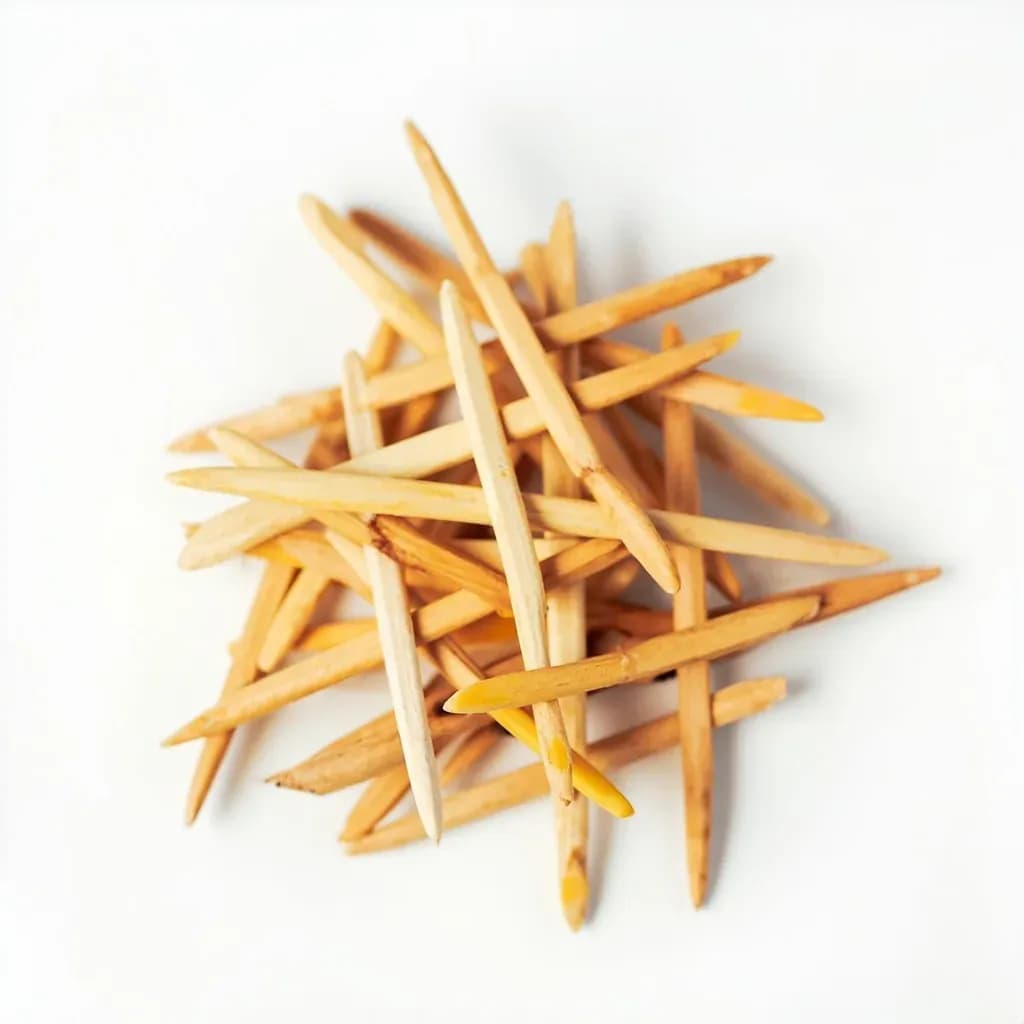
Toothpick
Small pointed wooden pick that pins rolled food shut and tests baked goods for doneness.
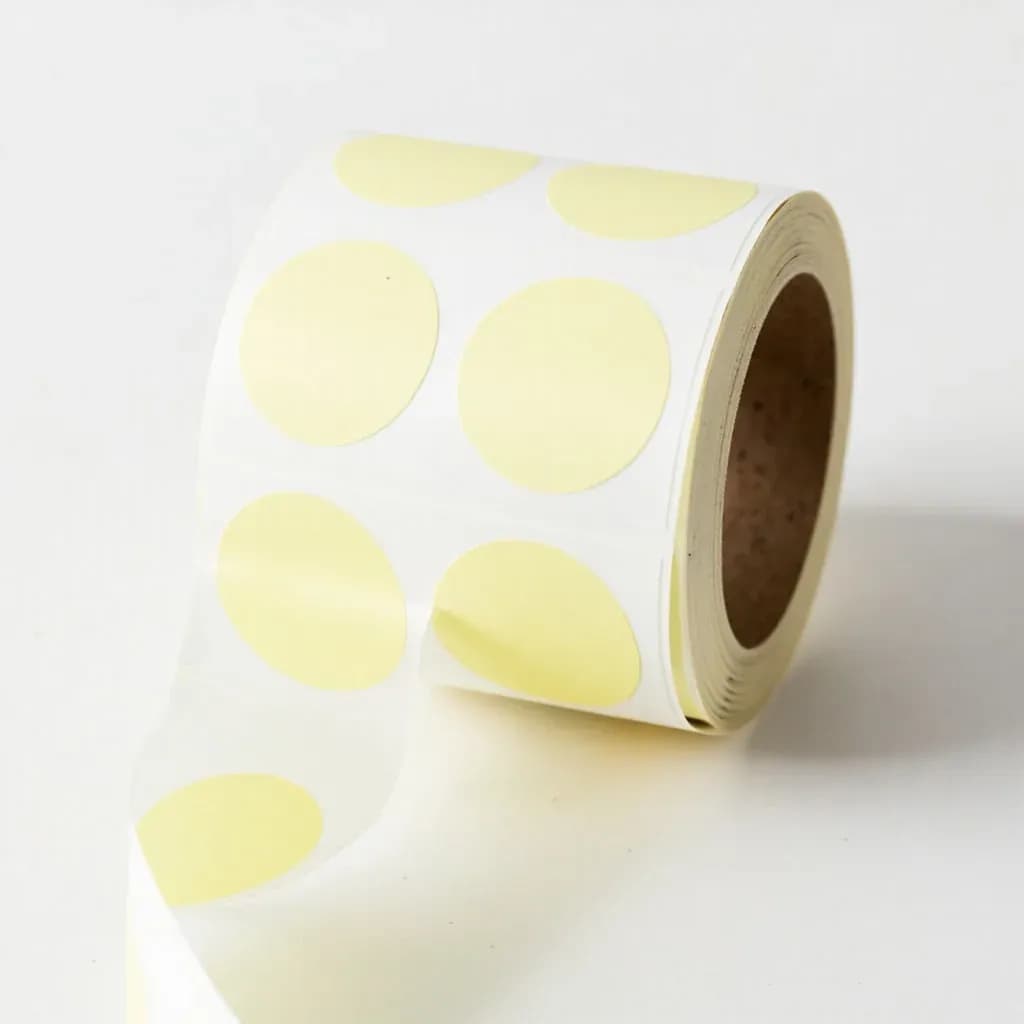
Food Storage Label (Day-Dot)
Stick-on label marking date, contents, or batch info for safe stock rotation.
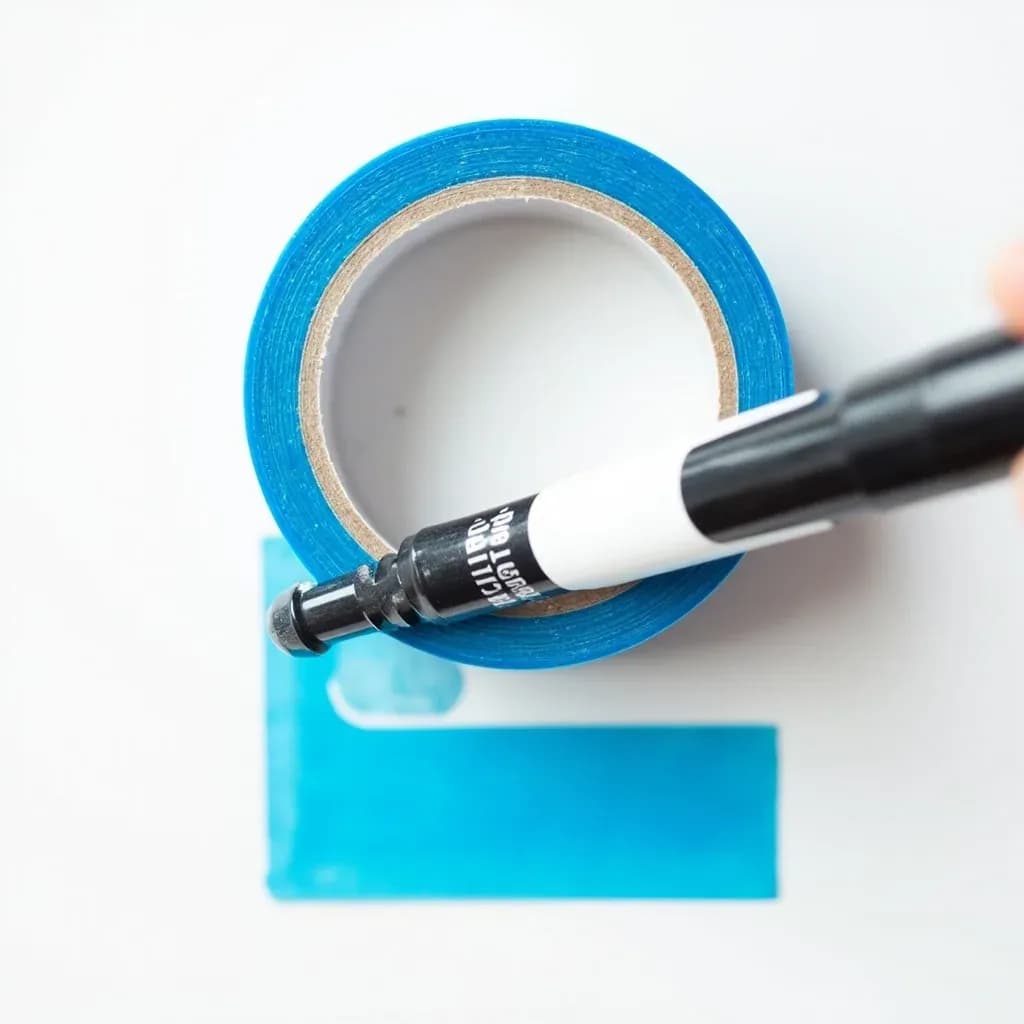
Labeling Tape
Write-on tape for marking containers with contents and dates, peeling off cleanly later.
Canning Jar Lid
Sealing lid that closes a canning jar and forms a vacuum seal for preserving.