Tying & Fastening
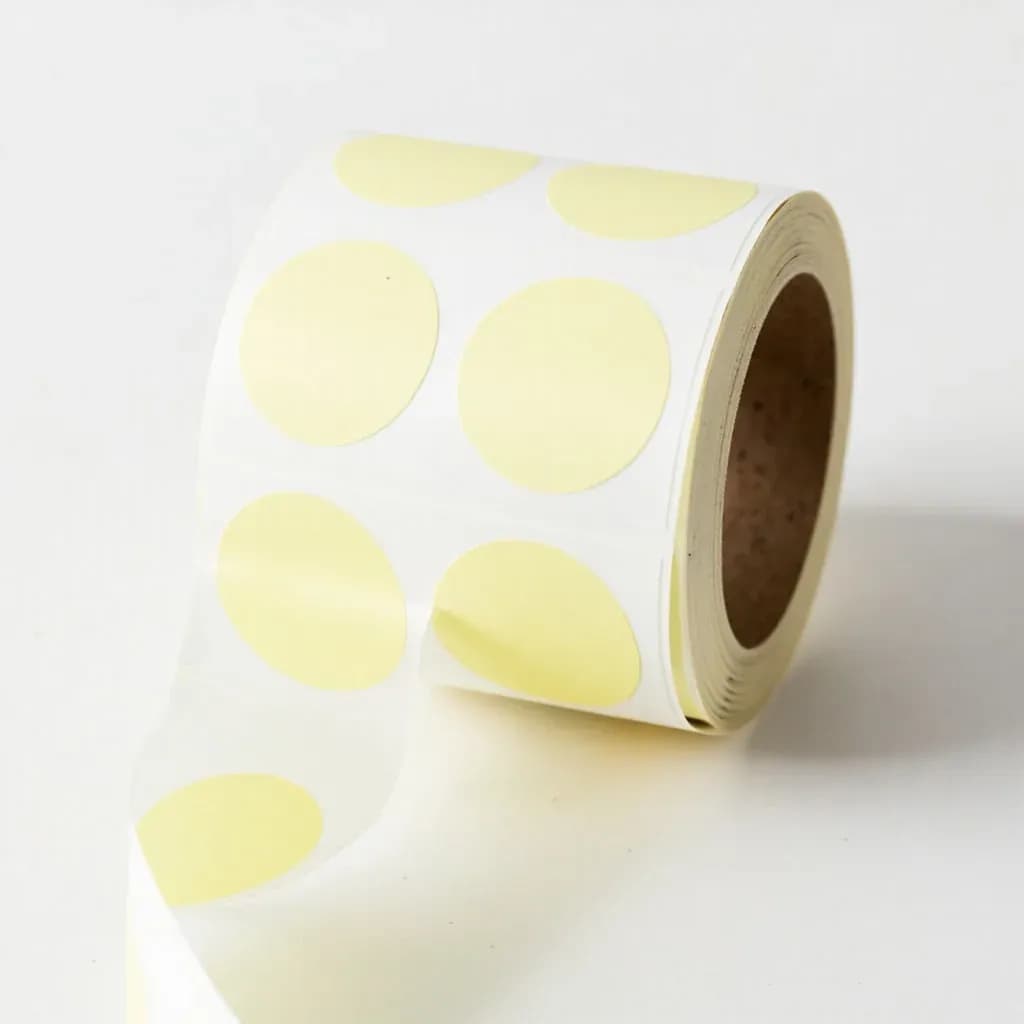
Food Storage Label (Day-Dot)
Stick-on label marking date, contents, or batch info for safe stock rotation.
A food storage label, often a round day-dot, is a stick-on label used to mark a container with its contents, prep date, and use-by so kitchens can rotate stock first-in-first-out. Cooks apply them to deli tubs, jars, and trays during prep to track freshness and meet food-safety rules. Dissolvable versions wash off cleanly in the dish machine, leaving no sticky residue behind.
Food storage labels—commonly called day-dots after the dominant commercial brand—are small adhesive markers applied to containers to record the preparation date, contents, batch number, or relevant handling information of stored food. They evolved from the HACCP food safety protocols adopted by commercial kitchens in the 1990s, when the circular format became standard for rapid visual scanning during rotation checks. The label's core function is preventing the dangerous confusion between freshly prepared items and foods held beyond safe holding periods. In any kitchen, labeled and dated items are instantly distinguishable from undated ones—and that clarity is the difference between a safe rotation system and one that relies on memory and guesswork. Day-dots serve as a permanent, hands-free record attached directly to the container, surviving the condensation, temperature shifts, and handling that would erase chalk marks, whiteboard entries, or written-on-bag dates.
The materials range from standard paper face stock with pressure-sensitive adhesive for everyday room-temperature use, to synthetic polyester or vinyl for freezer and high-humidity environments. Adhesives come in three formulations: standard removable (which releases cleanly after days or weeks), permanent (for items that won't be relabeled), and freezer-grade (formulated to bond at low temperatures without peeling). Writing surfaces vary—pre-printed circular labels show abbreviated days of the week, blank writable surfaces accept handwritten details, and pre-formatted date fields accommodate month and day entries. The format matters less than consistency: any legible marking system for ready-to-eat temperature-controlled-for-safety (TCS) foods held longer than 24 hours satisfies FDA Food Code date-marking requirements. What matters is that the label is applied correctly, positioned consistently, and checked reliably.
In practice, day-dots transform abstract food safety rules into concrete kitchen habits. They make First In, First Out (FIFO) rotation automatic rather than a cognitive exercise—staff can see at a glance which batch to use first without digging through containers. They create accountability by linking batches to shifts or individual cooks. They prevent waste by clearly showing when items have passed their use-by window. And in a kitchen that serves guests with allergens, they provide a visible, unavoidable reminder of dietary restrictions attached to every stored item. The label is a simple tool, but it replaces a dozen mental calculations with a single glance.
Alternatives
Types & varieties
Circular pre-printed labels showing abbreviated days (Mon, Tue, Wed, etc.) for quick visual rotation; most common in commercial kitchens
White or colored labels with no pre-printing; staff writes date, contents, and relevant info with marker
Labels with month and day fields pre-formatted; user fills in the year or specific batch number
Different color backgrounds for each day of the week (e.g., red=Monday, blue=Wednesday); aids rapid identification at a glance
Polyester or vinyl face stock; water-resistant, tear-resistant, suitable for cold storage and high-humidity environments
Pre-printed labels indicating common allergens (gluten, dairy, nuts) or dietary notations (vegan, kosher); used alongside date information
Label Placement: The Hidden Variable
Even the most diligent labeling fails if labels end up where nobody can see them. Placing labels on container bottoms—where they are invisible during rotation checks—is the single most common placement mistake. Train staff to apply labels to the side of containers or the edge of lids, always in the same position. Consistency creates a scannable pattern: staff learn to look in one spot on every container, and rotation becomes reflex rather than investigation. For round containers, place labels at the 2 o'clock position; for square containers, the upper-right corner works well. The goal is visibility without obstruction—labels should be read without moving the container.
- Side placement: Labels visible without lifting or rotating the container
- Lid edge: Works well for covered containers; readable before the lid is removed
- Consistent position: Staff develop scanning habits when placement is predictable
When Labels Fail: Adhesion Problems and Solutions
Premature label lifting is almost always traceable to surface contamination or temperature shock. Standard paper labels require clean, dry surfaces—grease from handling, moisture from condensation, or the temperature change when taking containers directly from the refrigerator all compromise adhesion. Before applying, wipe the container surface with a dry cloth if wet, or a clean towel if greasy. For containers coming from the freezer, let them warm slightly (30 seconds to a minute at room temperature) before labeling, or use freezer-grade synthetic labels designed to bond at low temperatures. In walk-in refrigerators with persistent condensation, consider applying labels inside the door where temperature fluctuations are less extreme, or switch to waterproof synthetic labels that resist moisture damage.
- Clean, dry surfaces only: Grease and moisture are the primary causes of premature failure
- Temperature equilibration: Let frozen containers warm briefly before labeling
- Synthetic alternatives: Waterproof labels eliminate condensation-related failures in humid environments
Common uses
Tips & pitfalls
- Apply labels to clean, dry container surfaces only—grease, moisture, or condensation prevents proper adhesion and causes premature lifting
- Use a fine-tip permanent marker (Sharpie-style) or dedicated food-safe marker; ballpoint pens skip, and washable markers smear when wet
- Write or place labels on the container's side or lid edge, never on the bottom where they are invisible during rotation checks
- Apply the label immediately after prepping or portioning, before the item goes into storage—never after the fact
- Position labels consistently (same location on every container) so staff can scan without hunting during service rushes
- For freezer storage, use synthetic or freezer-grade labels designed for cold temperatures—standard paper labels peel off and ink can freeze-run
- Replace labels that show signs of lifting, smearing, or water damage immediately; illegible dates are worse than no label at all
- Train all staff to check and verify labels on every item every time they access storage—this enforces accountability and prevents oversights
Good to know
- Common Names
- Day dot, day-dot label, food date label, prep label, rotate label
- Typical Material
- Paper or synthetic face stock with pressure-sensitive adhesive backing
- Standard Size
- Circular, typically 1 to 1.5 inches (25–38 mm) diameter; square and rectangular versions also common
- Adhesive Types
- Standard removable, permanent, or freezer-grade adhesive formulations
- Temperature Range
- Standard paper labels: room temperature to moderate heat; synthetic labels: freezer-safe and some dishwasher-safe options available
- Writing Surface
- Pre-printed day-of-week circles, blank writable surfaces, or pre-printed date fields
- Origin
- Evolved from HACCP food safety protocols in commercial kitchens during the 1990s; circular format became standard for visual scanning during rotation checks
- Regulatory Context
- Recommended under FDA Food Code for date marking ready-to-eat TCS foods held longer than 24 hours; supports FIFO inventory management
Also called
food-labels · Dissolvable Food Labels · Date/Day-Dot Label · day-dot · Date/Batch Label Tags · Dissolvable Day-Dot Date Labels · Date / Ingredient Labels · Cheese Labels · Jar Labels · Spice Jar Label · Lot / Mill-Date Label · Price / Weight Label · Price Label Roll · PLU Sticker · Bottle Labels · Tea Sample Bags Labels · Steak Marker Flag
Related

Skewers
Thread meat and vegetables for kebabs and grilling

Toothpicks
Pin rolls shut and test cakes for doneness

Kitchen Twine
Food-safe string for trussing roasts and tying bundles

Butcher Paper
Breathable wrap for resting barbecue and storing meat
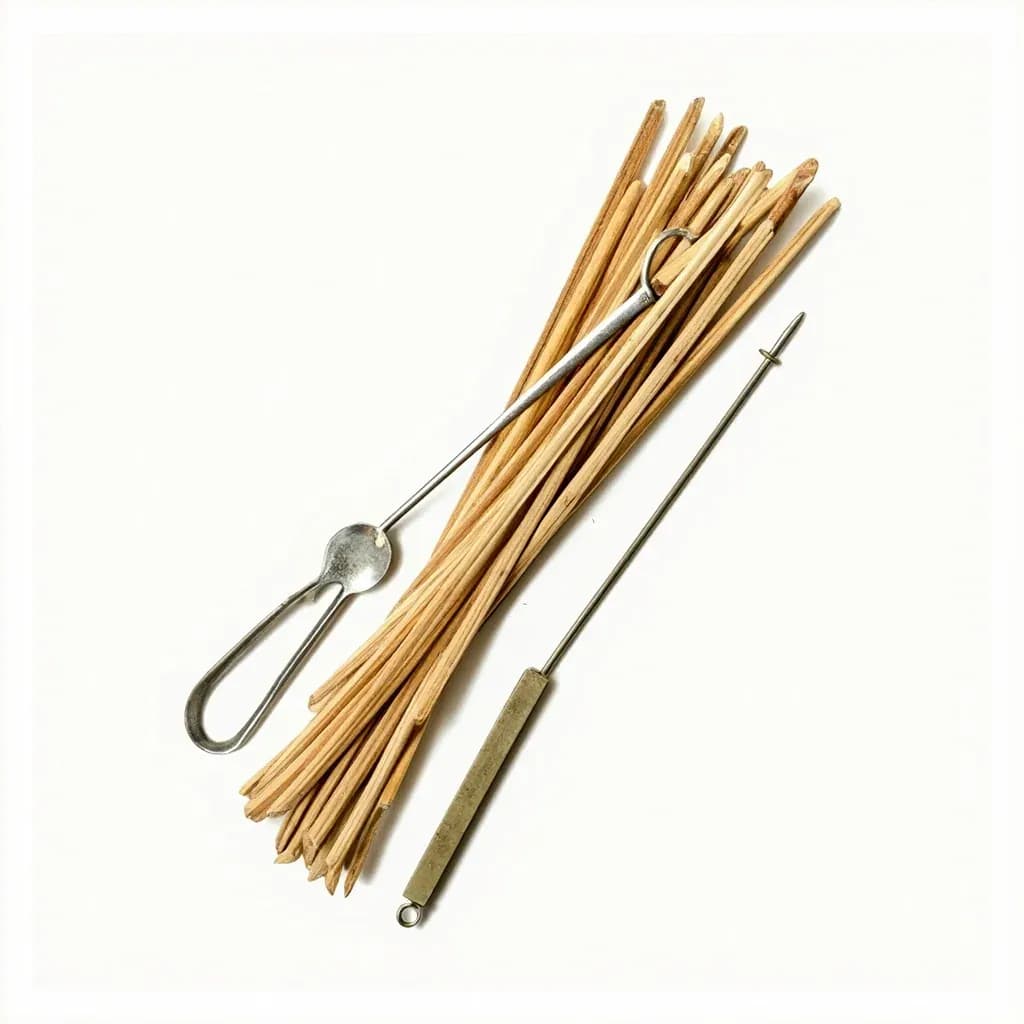
Skewer (Metal / Wooden / Bamboo)
Thin pointed rod that threads meat and vegetables for grilling, roasting, or testing doneness.
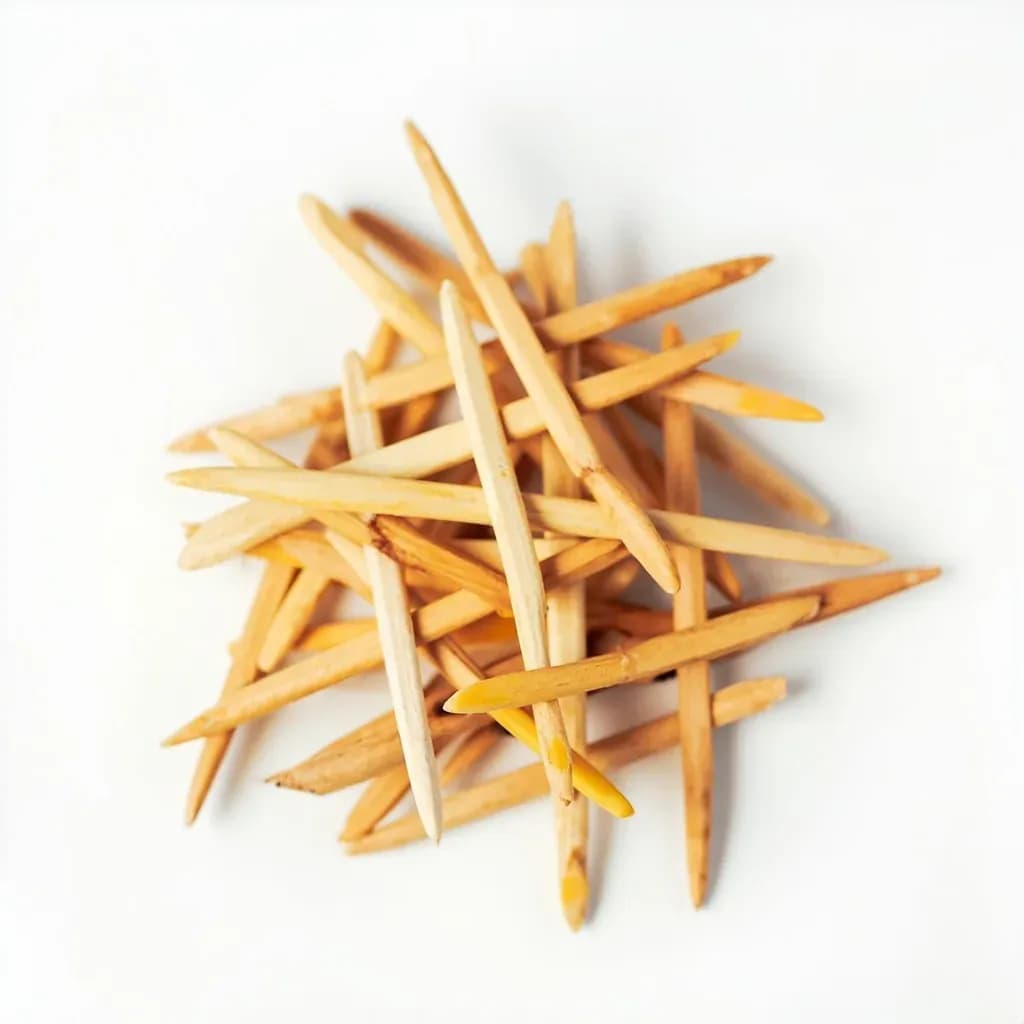
Toothpick
Small pointed wooden pick that pins rolled food shut and tests baked goods for doneness.
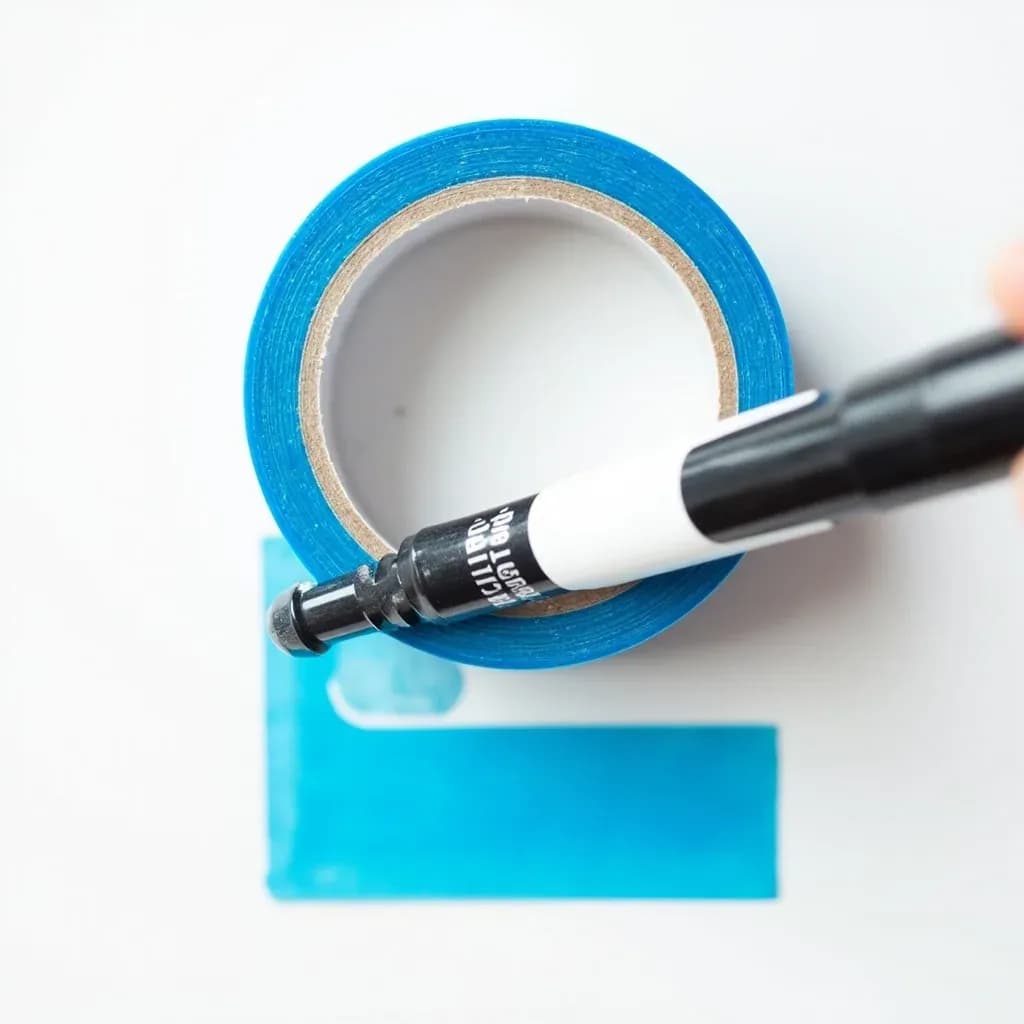
Labeling Tape
Write-on tape for marking containers with contents and dates, peeling off cleanly later.
Canning Jar Lid
Sealing lid that closes a canning jar and forms a vacuum seal for preserving.