Proteins
Duck Confit
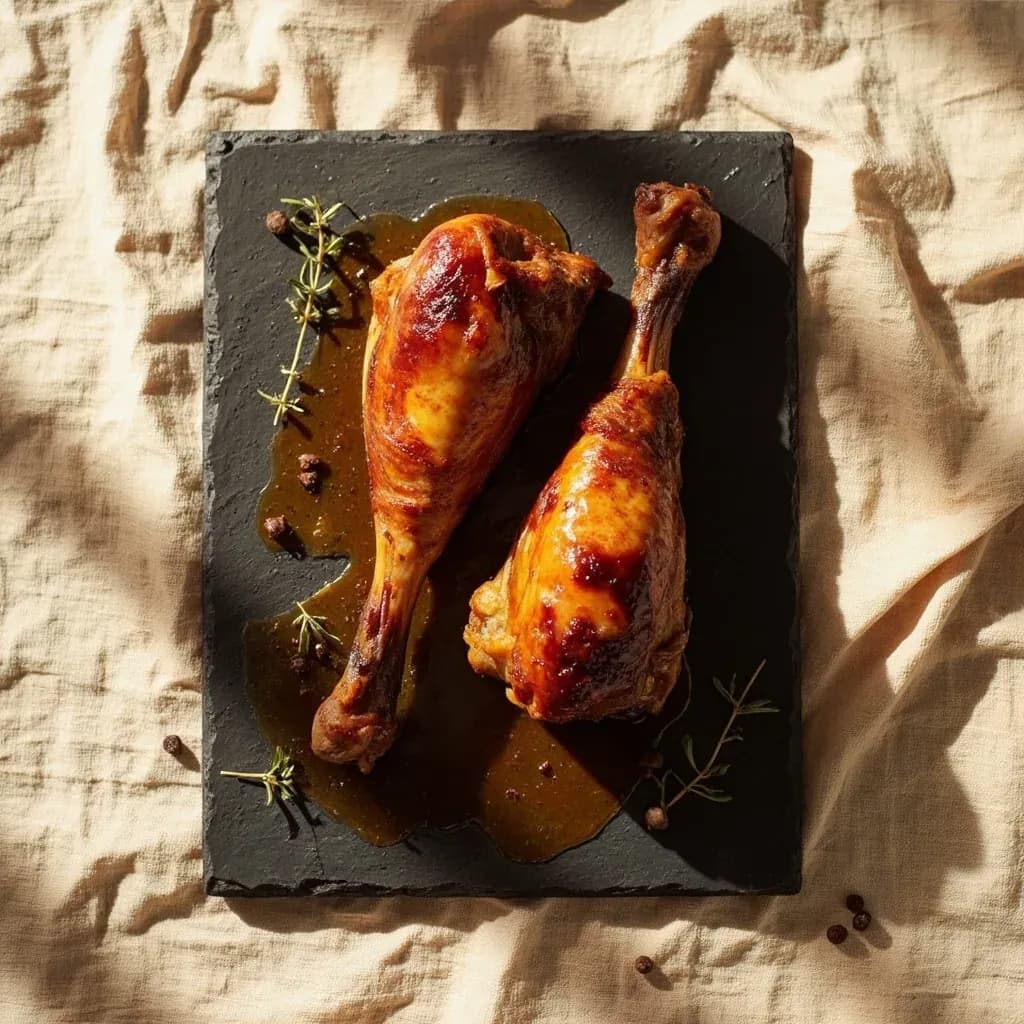
Duck legs salt-cured then poached slow in their own fat until fall-apart tender; crisp the skin in a hot pan to serve. Rich, savory and already cooked.
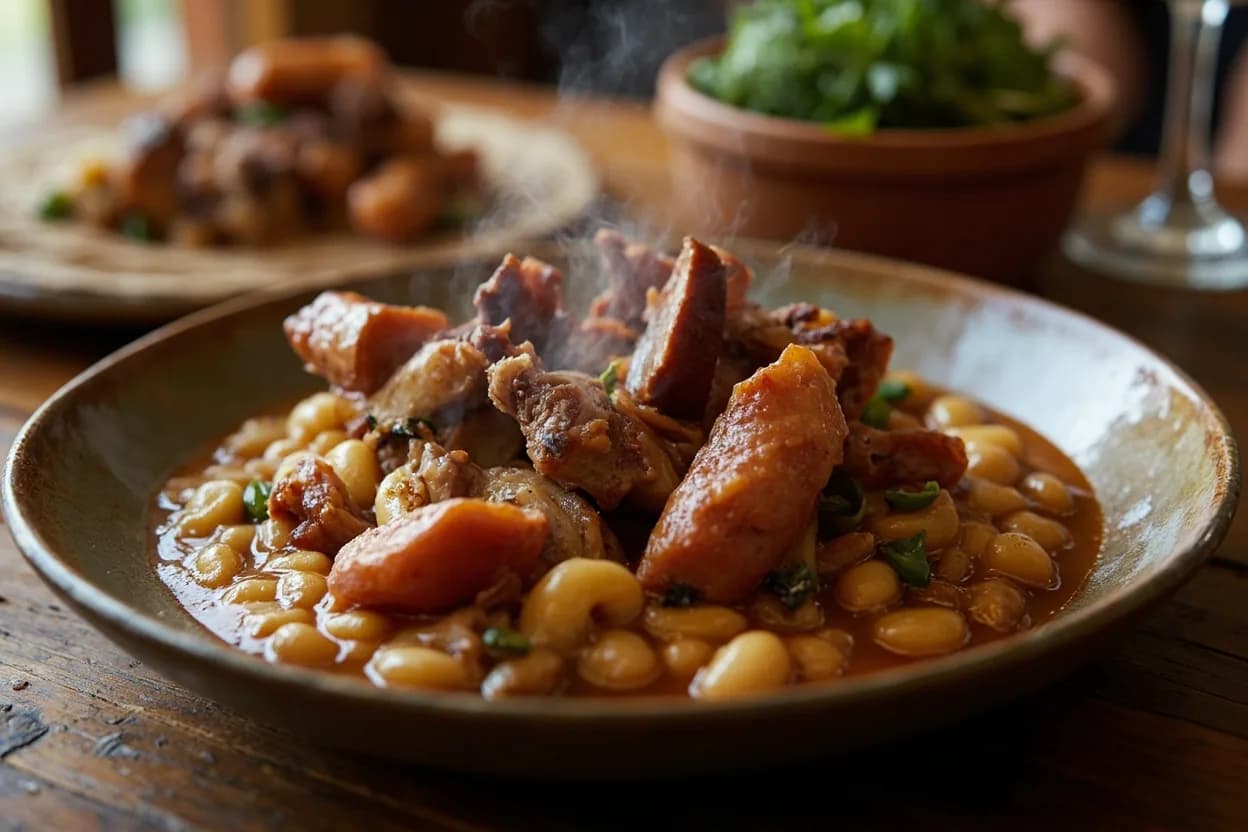
Duck confit is one of the great preserved meats of southwest France — a duck leg that has been salt-cured, then slowly poached submerged in its own rendered fat until the meat is silky and fully cooked. The technique comes from Gascony, the Landes, and Périgord, where ducks were abundant and refrigeration was not; the layer of solidifying fat sealed the meat from the air and let it keep for months. The result is something more than a method of preservation: the cure seasons the meat through, the gentle poach keeps it impossibly moist, and the fat carries the flavor of garlic, thyme, and bay deep into the muscle.
For a cook, the single most useful thing to know about confit is that it arrives already cooked. The job at service is to warm it through gently and crisp the skin until it shatters — not to cook it again. Treated properly, the meat pulls cleanly from the bone, the skin crisps into an amber crust, and the salty, mellow richness anchors everything from a composed cassoulet to a weeknight lentil salad. The cooking fat is not waste: strained and saved, it is a prized medium for roasting potatoes, confiting garlic, or sautéing greens, and a well-stocked jar of confit is essentially two ingredients in one.
- Measured in
- g
- Storage
- Refrigerate
Find it in
Types & varieties
The classic duck leg confit and the standard reference for the term.
Goose confit made the same way; richer and fattier, traditional around Périgord and the Dordogne.
Made from Moulard (mule) ducks, prized for their large, fatty legs and deep flavor.
Pork version, often shoulder or trotter, central to cassoulet alongside duck.
Commercially heat-preserved confit in tins; shelf-stable and ready to crisp and serve.
Refrigerated vacuum-packed legs from butchers and charcuteries; needs crisping before serving.
Bringing confit from jar to plate
Confit is unforgiving only if you forget that it is already cooked. The goal at service is twofold: warm the meat gently and crisp the skin. Anything more aggressive — a microwave, a hard boil, a long roast — drives off the fat, toughens the protein, and leaves you with rubbery skin and dry meat.
- Lift the legs from their fat and let them stand skin-side up at room temperature for 15–20 minutes so the solidified fat under the skin relaxes.
- Pour off the packaging fat into a jar (save it) and place the legs skin-side down in a cold, dry skillet — no added oil — over medium heat.
- Render briefly so the fat on the skin melts and the leg sits in its own lubrication, then increase the heat to crisp.
- Press the leg flat with a spatula for even contact; sear 4–6 minutes skin-side down until the skin is mahogany and crisp.
- If the meat is still cool in the center, flip and finish in a 200°C oven for 5–10 minutes, or tent loosely and let it rest; do not blast it.
- Rest 3–5 minutes before serving so the juices settle back into the meat rather than running onto the plate.
The duck fat
The fat in which confit is packed is part of the gift, not a byproduct. Properly strained, it keeps for months in the fridge and is one of the most flavorful cooking fats in the kitchen.
- Strain the warm fat through a fine sieve into a clean jar once it has cooled slightly; discard any dark, milky bits at the bottom.
- Use it to confit garlic, sauté greens, fry eggs, or roast potatoes — duck fat potatoes are the iconic match.
- Solidify it in the fridge for easier storage; a layer of clarified fat on top of the confit in its jar helps reseal the surface.
Common uses
Tips & pitfalls
- Treat confit as already cooked: warm gently and crisp the skin, never cook it 'through' again.
- Let legs stand skin-side up at room temperature for 15–20 minutes so the fat softens before searing.
- Render off excess fat in a cold pan before crisping to avoid greasy skin; reserve that fat for potatoes or greens.
- Sear skin-side down in a dry, hot skillet (no added oil), pressing the leg flat for even contact, 4–6 minutes.
- If the center is still cold after crisping, finish in a 200°C oven for 5–10 minutes; tent loosely and rest before serving.
- Taste before adding salt anywhere else in the dish — confit is already well seasoned, and most accompaniments need very little.
- Strain and save every bit of the duck fat; it is a prized cooking medium, not waste.
- Avoid microwaving (skin turns rubbery), boiling (drives off flavor and dries the meat), discarding the fat, or overseasoning the rest of the dish. A pale gray tint on cold meat is normal oxidation from the cure, not spoilage.
Nutrition
Energy
569 kJ · per 100 g
Where the calories come from
Protein
18.7g
37% DV
Carbs
3.5g
1% DV
Fat
4.6g
6% DV
Fiber
0g
0% DV
Sodium
140mg
6% DV
Source · USDA FoodData Central · approx. Duck, domesticated, liver, raw
View on FDC →In the shops
Matched grocery products
 €1.90
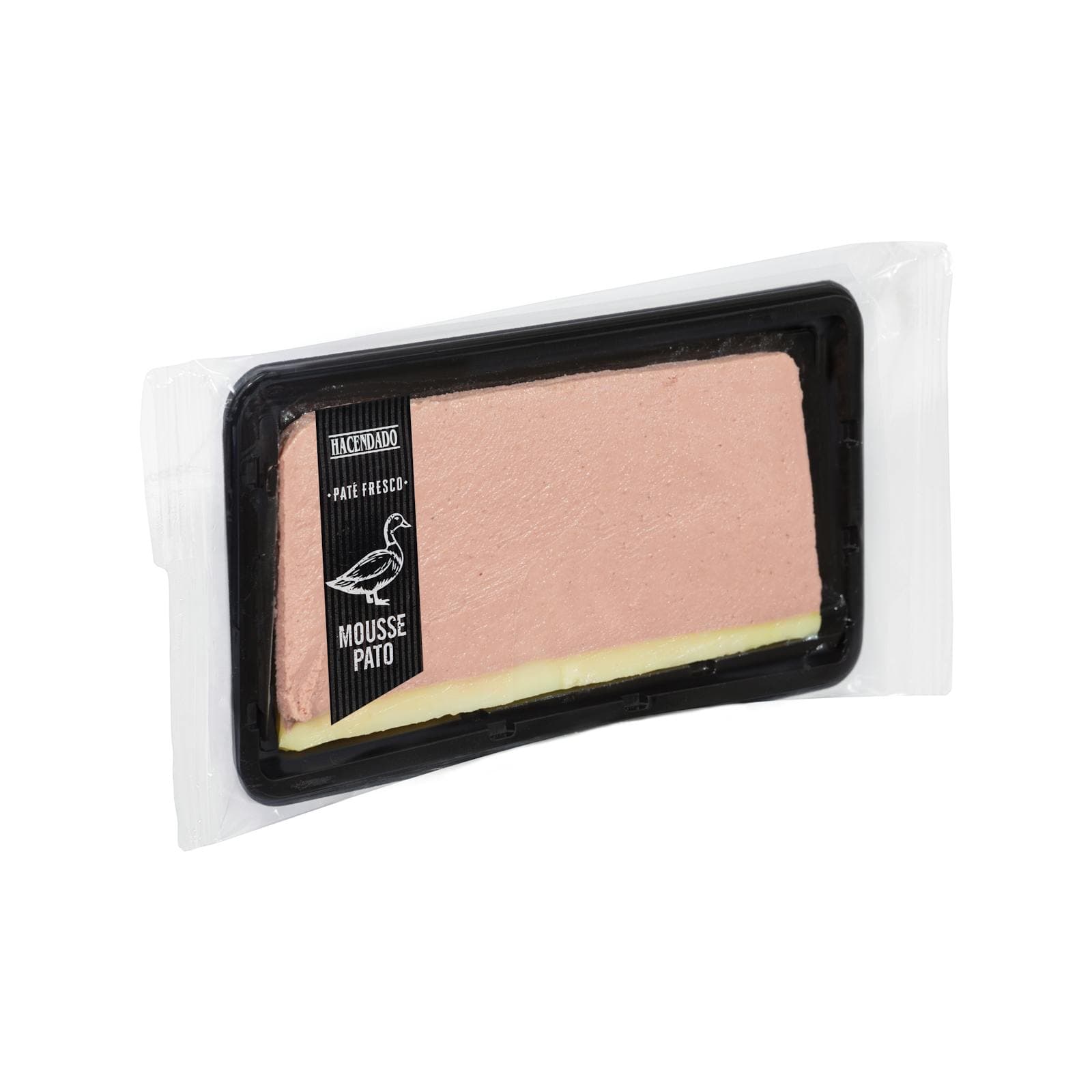
€1.90Duck Mousse
Hacendado · 100 g · Mercadona
 €8.85
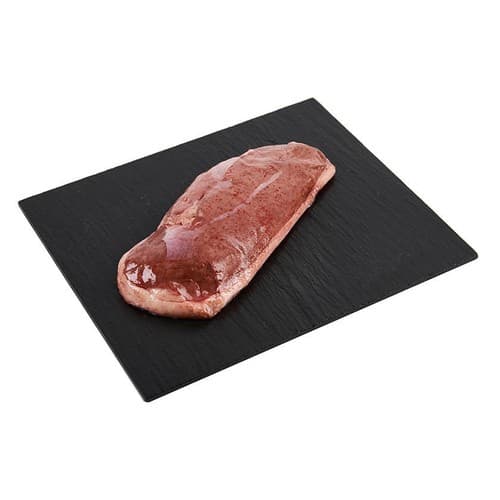
€8.85Duck Breast
BONPREU · kg · Bonpreu
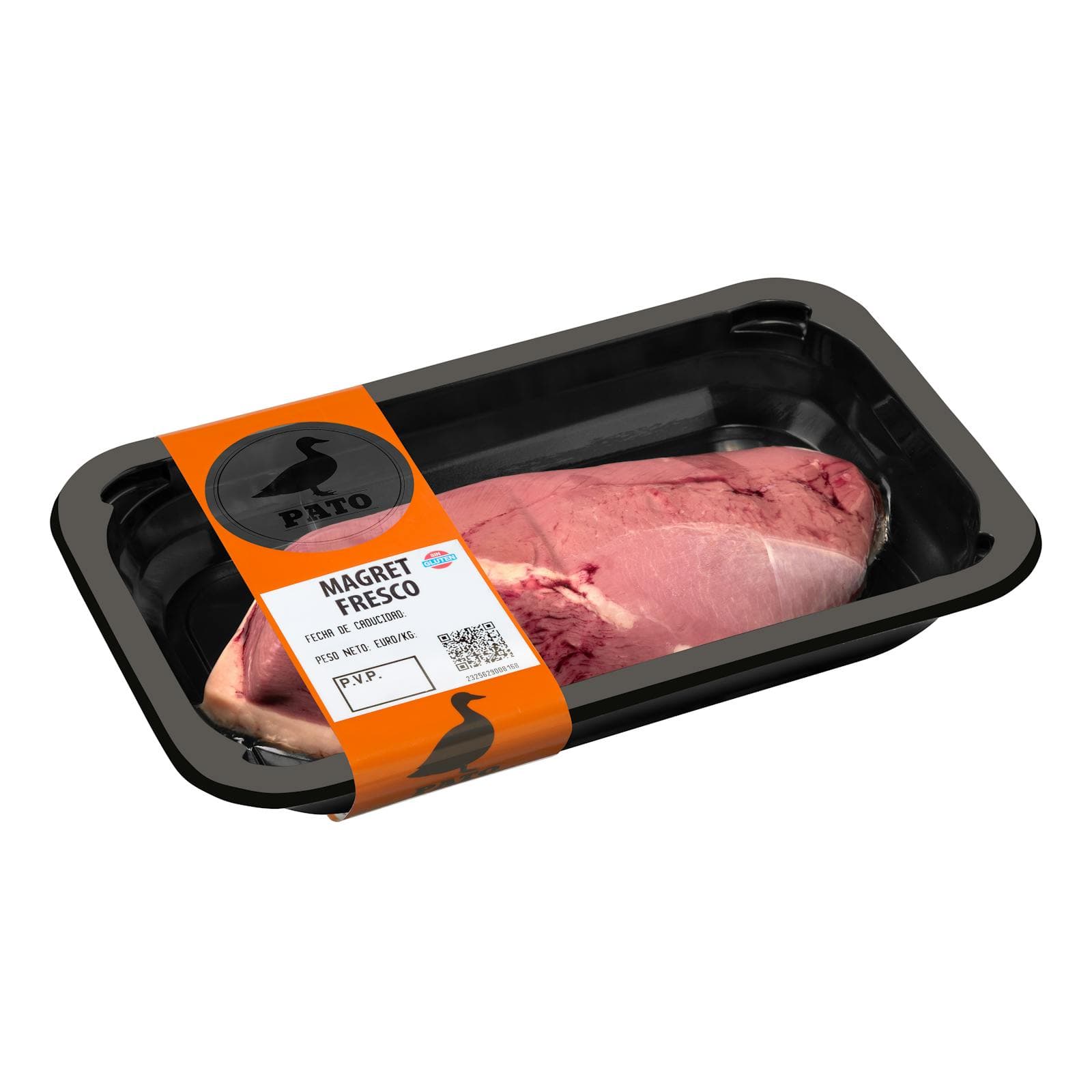 €9.12
€9.12Duck Magret
380 g · Mercadona
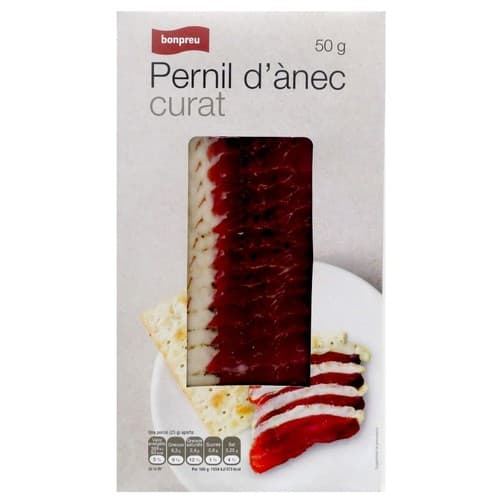 €3.99
€3.99Cured Duck Ham
BONPREU · kg · Bonpreu
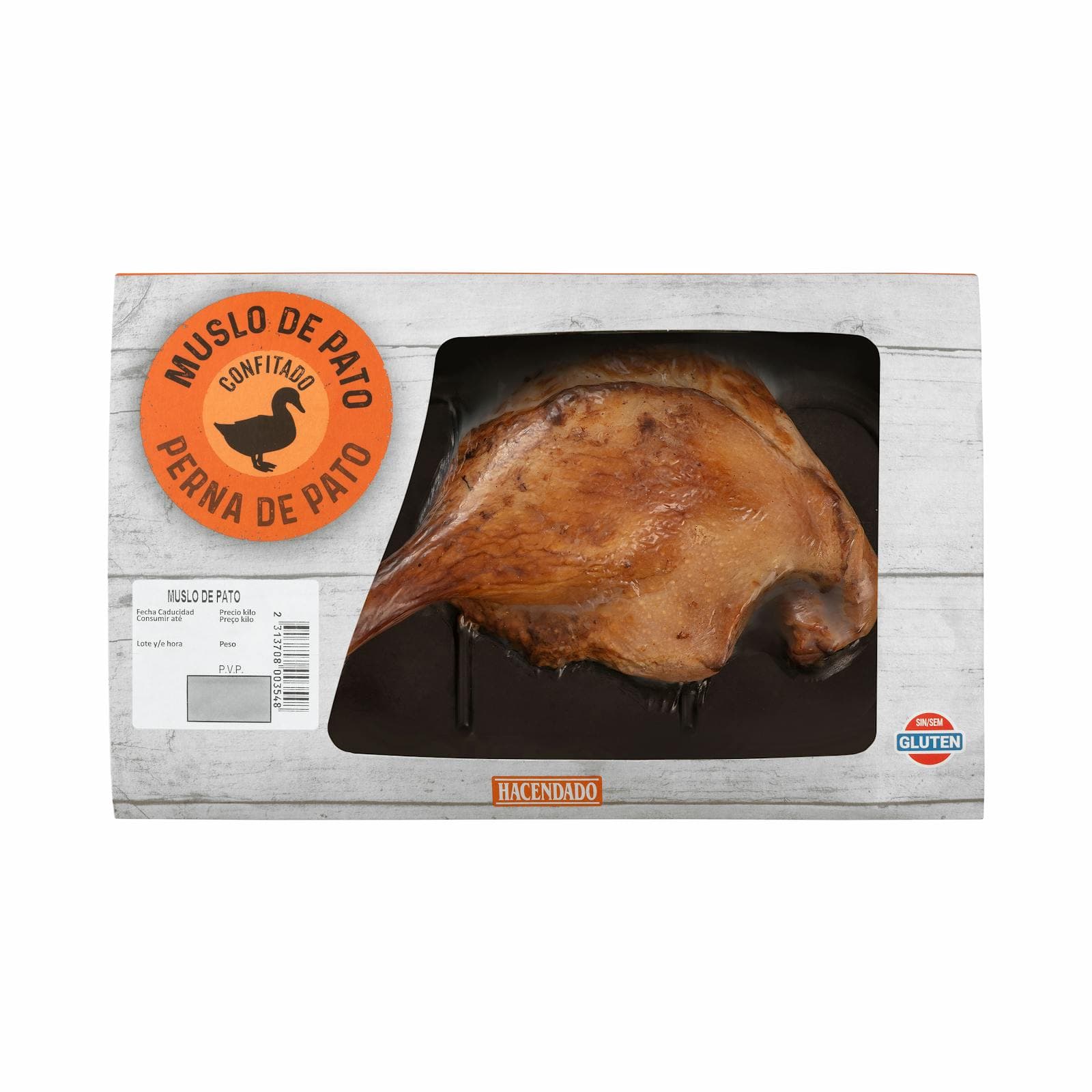 €6.30
€6.30Confit Duck Thigh
Hacendado · 300 g · Mercadona
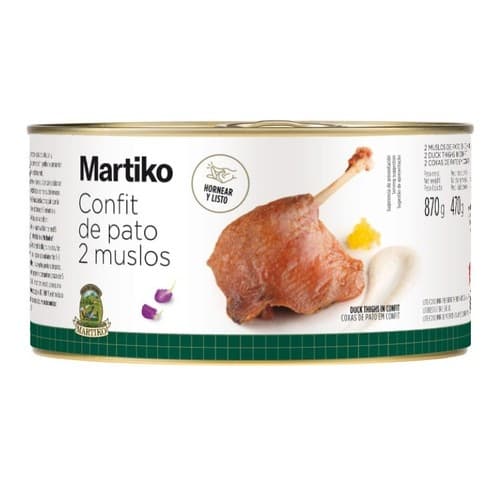 €17.99
MARTIKO Duck Legs
MARTIKO · kg · Bonpreu
Good to know
- Origin
- Southwestern France, especially Gascony, the Landes, and Périgord
- Cure
- 12–36 hours with salt plus aromatics (garlic, thyme, bay, pepper, sometimes juniper)
- Cooking
- Slow poach submerged in rendered duck fat at 75–95°C / 165–200°F for 4–8 hours
- Doneness
- Fully cooked when finished; meat should pull cleanly from the bone
- Storage
- Submerged in its own fat and refrigerated for roughly 2–6 months; canned confit is sterilized and shelf-stable for years
- Yield
- About 1 cooked leg per person as a main, 2 legs per person for cassoulet portions
- Difficulty
- Low to moderate if bought ready-made; high if you cure and render the fat from scratch
Substitutes
- Slow-braised duck legs — Closest substitute; braise in stock and a little fat at low heat until tender, then crisp the skin.
- Confit goose legs (confit d'oie) — Same technique and uses; even richer and fattier than duck.
- Crisp-roasted duck legs — Less forgiving but works in salads and with lentils; lacks the silky, cured character.
- Duck rillettes — Use when the dish calls for shredded, spreadable confit on toast or in a tart.
- Pork confit (confit de porc) — Authentic swap in cassoulet when duck is unavailable.
Pairs with
Also called
confit de canard · confit duck leg · preserved duck