Proteins
Gravlax
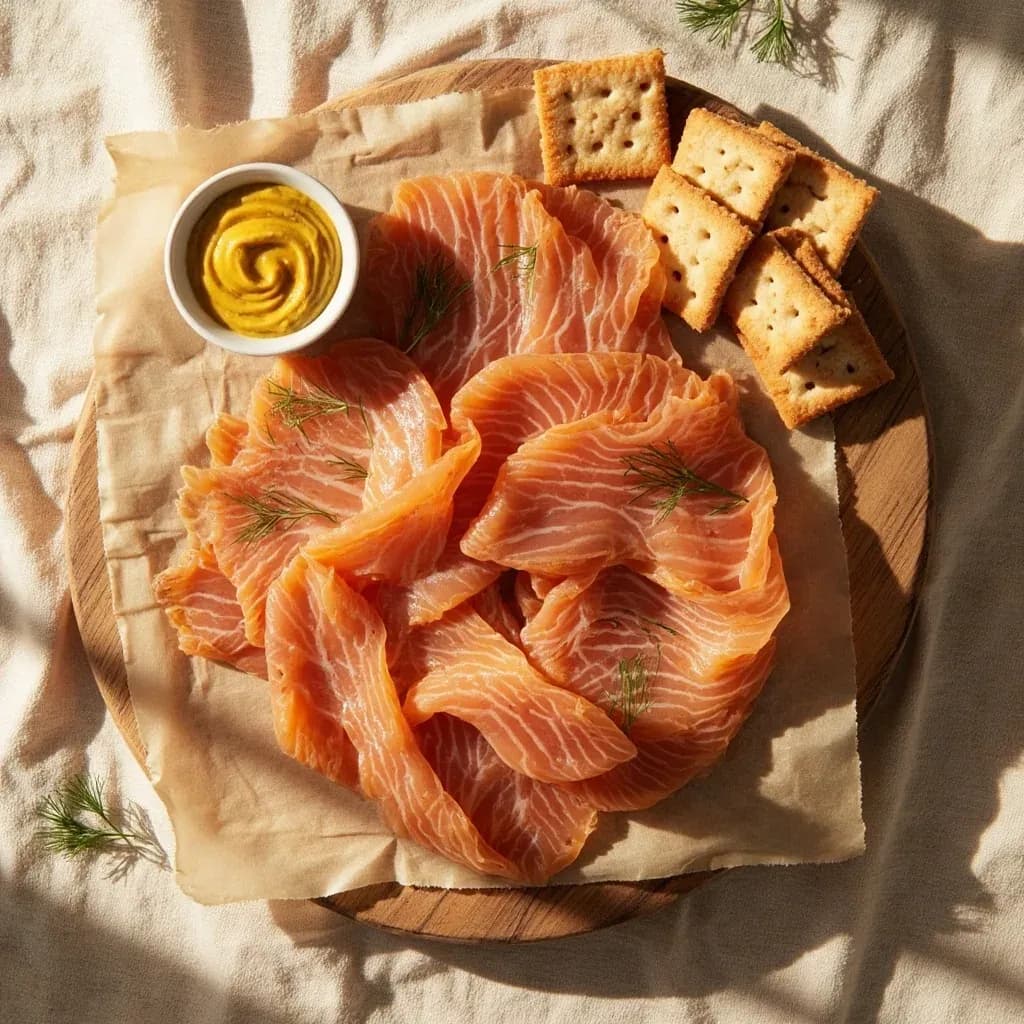
Nordic salmon cured raw in salt, sugar and dill rather than smoked; firm, sweet-savory and herbaceous. Sliced thin and served with mustard-dill sauce on rye.
Gravlax is salmon cured, not smoked or cooked: fillets are buried in a dry mix of salt, sugar and dill for two to three days under refrigeration, after which the flesh takes on the silky, slightly translucent texture of a gently poached fish while remaining vividly raw-pink inside. The salt does the heavy lifting, drawing moisture out of the cells and denaturing the surface proteins so the flesh firms up and slices cleanly; sugar balances the salinity and softens the muscle fibers, while fresh dill lends the unmistakable herbal signature that defines the dish. Although it is eaten raw, gravlax behaves on the plate like a poached or lightly cured fish — soft, fatty, gently sweet — and pairs with the same supporting cast of dairy, acid, soft herbs and alliums.
Beyond flavor, gravlax is one of the most forgiving projects in the home kitchen: the cure predates refrigeration, requires no special equipment and is essentially time-and-temperature management. It rewards good knife work more than any other variable; a long, freshly sharpened blade produces the thin, drape-like slices that make the dish feel luxurious, while a dull knife tears the flesh and makes it read as overcooked. The classic Scandinavian presentation — paper-thin slices with hovmästarsås (a sweet mustard-dill sauce), dark rye or knäckebröd, and a wedge of lemon — has carried the dish into fine-dining buffets and casual brunches alike.
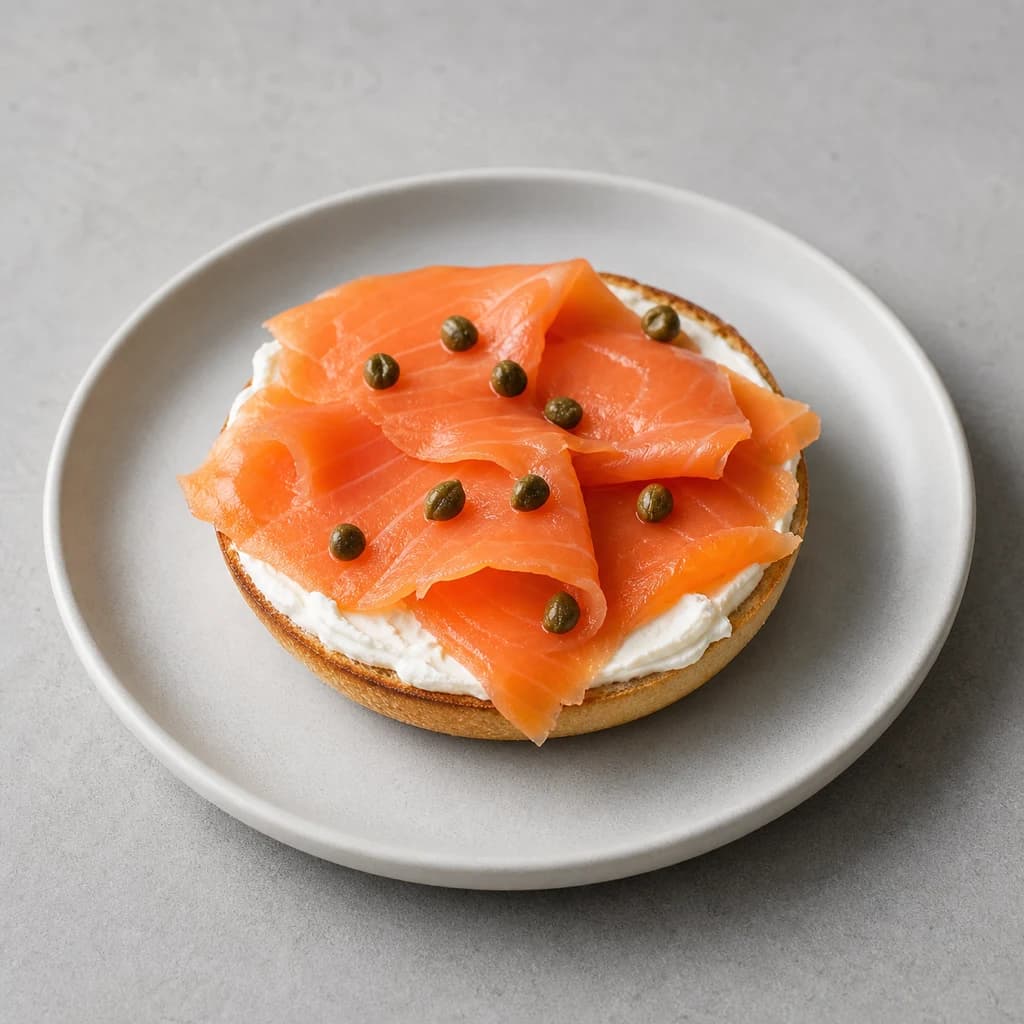
It also matters as a building block. Gravlax can stand in for smoked salmon on a bagel, crown a green salad, anchor a potato salad, fold into egg salad, or be the centerpiece of a holiday smörgåsbord. Because the cure is essentially a controlled dehydration with seasoning, it concentrates flavor and extends the usable life of a fresh fillet by several days.
- Measured in
- g
- Storage
- Refrigerate
Allergens
Find it in
Types & varieties
Salt, sugar, white pepper and dill; the reference version served at midsommar and julbord
Grated raw beetroot packed onto the fillet; deep ruby-red color and an earthy sweetness
A splash of aquavit in the cure for caraway and fennel notes; the traditional midsommar version
Modern British and Scandinavian spin; vodka is neutral, gin brings citrus and juniper
Crushed juniper berries folded into the salt-sugar mix for a resinous, piney edge
Lemon or orange zest plus a little juice in the cure for brightness
Modern North American fusion version; lime and tequila in the cure
Same cure applied to rainbow or sea trout; milder, slightly more delicate
Nordic alternative; paler flesh, faintly sweeter flavor
How the cure actually works
A dry salt-sugar cure is a controlled dehydration: salt draws water out of the muscle cells by osmosis, the dissolved salt then denatures the surface proteins so they coagulate into a firmer, more opaque layer, and sugar slows the process and balances the flavor. The fish is never heated, but its surface behaves almost as if it had been — translucent at the very center, pearly and firmer toward the outside. The cure is not sterilization; salmon destined for gravlax should already be sushi-grade or frozen to −20 °C / −4 °F for at least seven days to neutralize parasites.
- Skin-on, pin-bone-out fillets are easiest: the skin protects the flesh during the cure and gives you a handhold for slicing.
- Weigh the fillets down with a board and a few cans so the curing mix makes even contact and the flesh stays compact.
- Flip and re-pack the fillets every 12 hours for even color, cure penetration and flavor distribution.
- Cure only as long as the thickness demands; over-curing makes the flesh chalky and overly salty rather than more 'done.'
Slicing and serving
Slicing is where most home cooks lose the plot. A freshly sharpened, long, thin-bladed knife — a slicing knife, carving knife or yanagiba — produces the translucent, drape-thin slices that signal quality, while a dull blade compresses the flesh and leaves ragged edges that read as overcooked. Always slice on a long bias, against the grain, leaving the skin behind.
- Wipe the blade with a damp cloth between cuts; sticky slices are the first sign of a knife that needs cleaning.
- Temper the fillet 5–10 minutes out of the fridge before slicing so the fat softens and flavor opens.
- Serve cold but not icy — straight-from-the-fridge gravlax tastes muted and the fat feels waxy.
- Pat the surface dry before slicing if there is any residual brine; wet gravlax slides on the board and tastes briny.
Common uses
Tips & pitfalls
- Use only sushi-grade or previously frozen wild salmon; the dry cure is not sterilization and does not neutralize parasites.
- Avoid reactive metals: cure in glass, ceramic or food-safe plastic rather than bare aluminum or copper.
- Rinse the fillets very thoroughly after curing, then pat dry; residual brine makes the fish taste harsh and prevents clean slicing.
- If a finished fillet comes out too salty, soak the slices in cold milk for 10–15 minutes, then pat dry before serving.
Nutrition
Nutrition
No USDA FoodData Central match for Gravlax yet. We surface a per-100 g profile once a generic whole-food entry is matched and verified.
In the shops
Matched grocery products
No matched grocery products for Gravlax yet.
Good to know
- Origin
- Scandinavia; traditional Swedish dish (gravad lax), now common throughout the Nordic countries
- Etymology
- From Swedish 'grav' (grave/buried) and 'lax' (salmon); originally buried in sand above the high-tide line to ferment
- Form
- Raw salmon (typically skin-on fillet) cured dry in salt, sugar and dill; never cooked or smoked
- Cure ratio
- Roughly 1:1 salt to sugar by weight, plus a generous handful of fresh dill; white pepper and juniper are common additions
- Cure time
- 48–72 hours refrigerated, about 1 hour per 0.5 cm (¼ in) of thickness at the thickest point
- Yield loss
- Fillets lose roughly 10–15% of weight in liquid and salt during curing; surfaces are patted dry before slicing
- Texture & color
- Silky, slightly firm and translucent in the center; natural rosy-orange flesh, deepening to magenta when beetroot joins the cure
- Storage
- Wrap tightly and refrigerate 4–5 days; freezes well for 2–3 months once rinsed, dried and sealed
- Sourcing note
- Use sushi-grade or previously frozen wild/Pacific salmon to address parasites; farmed Atlantic is the most common choice
- Difficulty
- Easy; the work is mostly waiting, with knife work the single biggest quality variable
Substitutes
- Cold-smoked salmon (lox, Nova) — Closest ready-made substitute; silkier and more smoky/buttery, less herby — add fresh dill and a squeeze of lemon to bridge the gap
- Cured ocean trout — Same technique applied to sea trout; near-identical eating experience with slightly milder flavor
- Cured arctic char — Slightly sweeter and paler; works in any gravlax application
- Sashimi-grade salmon crudo — Use when you need raw salmon texture with no time to cure; finish with salt, sugar, dill and olive oil to mimic gravlax flavor
- Salt-cured mackerel or kingfish — Same dry-curing method on oily fish; stronger, more assertively flavored
- Citrus-cured hamachi or yellowtail — Not Nordic, but a similar salt-sugar-citrus cure; a credible stand-in for salads and canapés
Pairs with
Also called
gravadlax · graved salmon · dill-cured salmon