Grains & Rice
Instant / Quick Oats
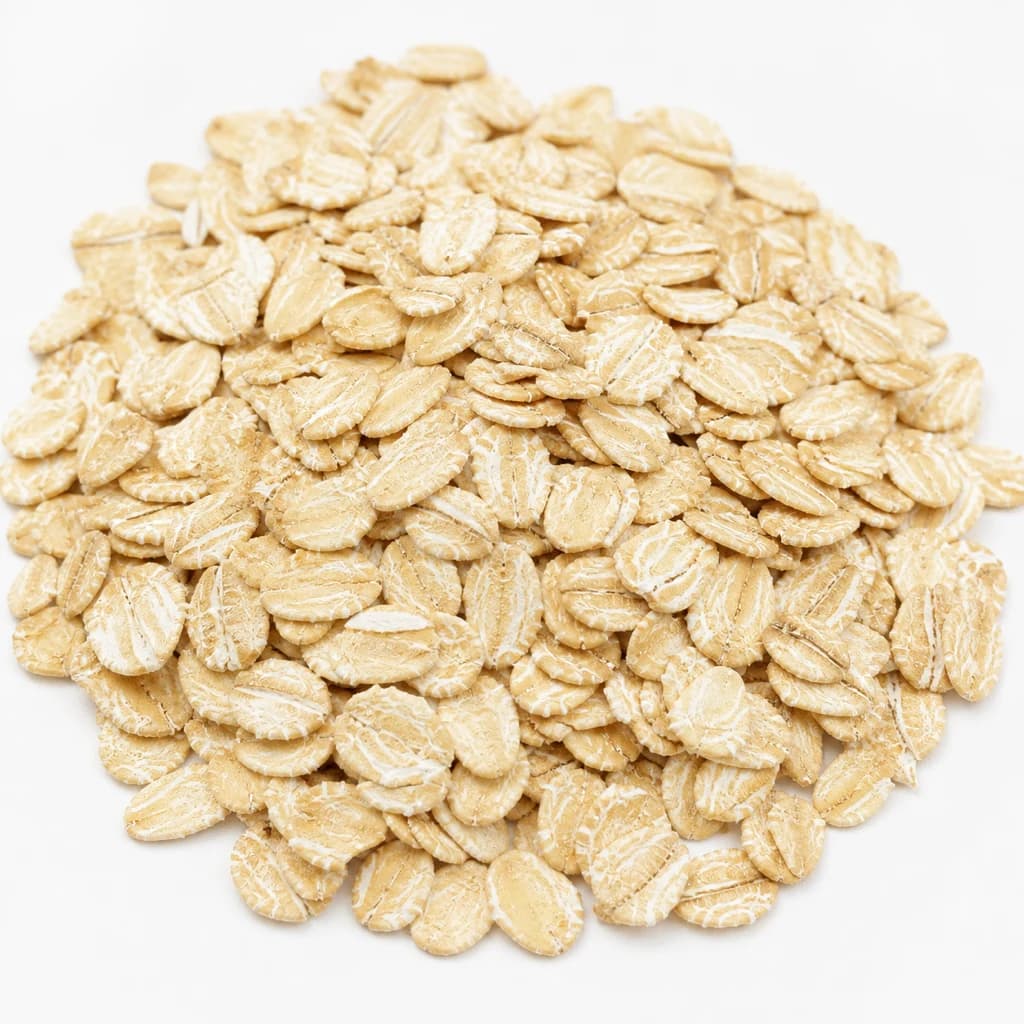
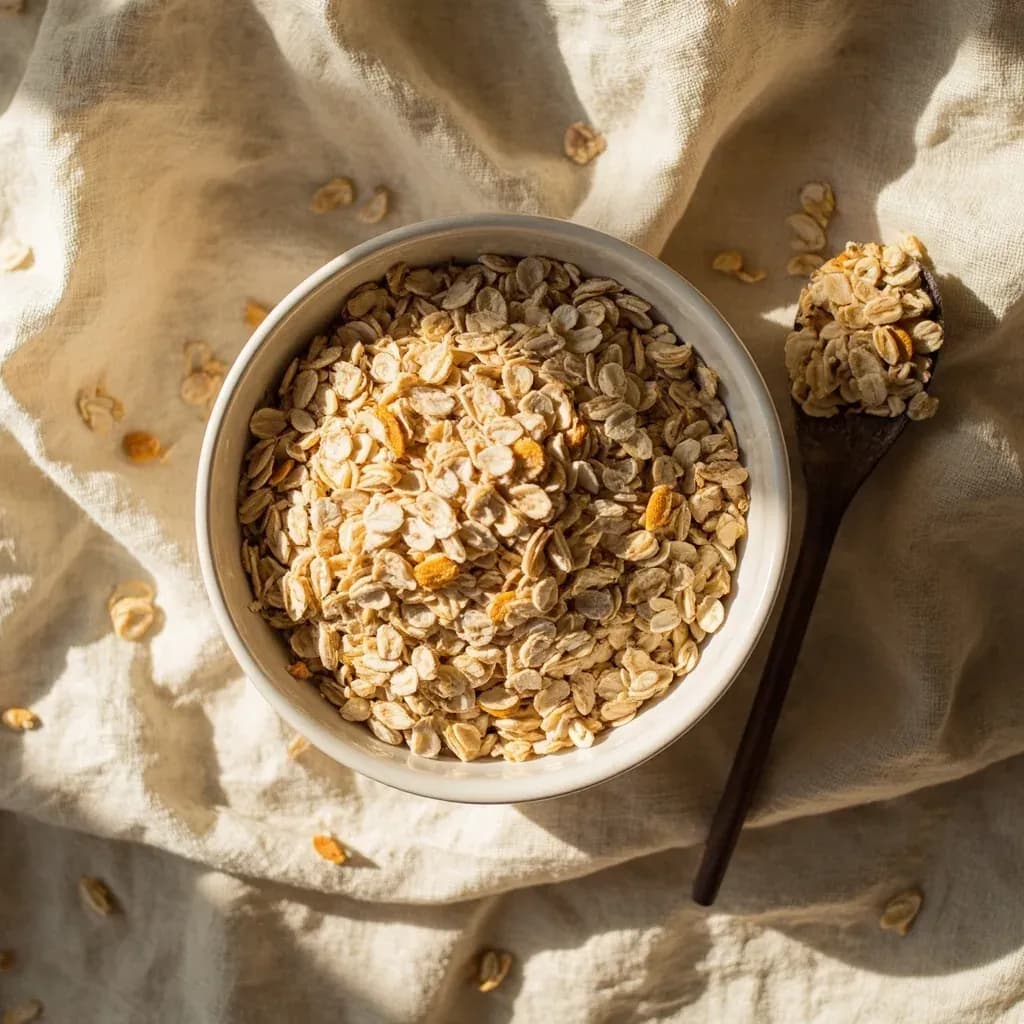
Rolled oats steamed and pressed thinner so they cook in a minute or two and turn creamy; ideal for fast porridge and binding meatballs, but too soft for chewy granola.
Instant and quick oats are the speed demons of the oat family: rolled oats that have been steamed further and pressed into thinner, smaller flakes so they hydrate in a minute or two rather than five. That extra processing is a deliberate trade — you sacrifice the chewy, nutty bite of old-fashioned or steel-cut oats in exchange for a soft, creamy texture that comes together almost instantly on the stove or in a bowl of hot water. In the kitchen, that single distinction shapes nearly every choice you'll make with them.
Because the flakes are thin and partially pre-gelatinized, they break down fast once they meet liquid. This makes them ideal for smooth porridge, no-cook smoothie thickeners, and finely textured binders in meatballs and veggie burgers, but it also means they turn gummy if overcooked and disintegrate entirely in chunky granola. They absorb roughly twice their volume in liquid, so a half-cup of dry flakes yields about a cup of cooked porridge — though the exact ratio depends on whether you want a thick spoonable bowl or a looser, more pourable one.
The category spans more than one product. Plain quick oats (sometimes labeled 1-minute) are minimally processed and behave predictably in recipes. Instant oats, particularly the single-serve packets, are often fully pre-cooked before drying and almost always carry added sugar, salt, and flavorings — a meaningful difference the moment you reach for them in a savory dish or a baked good where you control the sweetness.
- Measured in
- g
- Storage
- Store In An Airtight Container In A Cool, Dry Pantry.
Find it in
Suits
Types & varieties
Rolled oats cut into smaller pieces and pressed thinner; cooks in about 1 minute; closest in flavor to old-fashioned and the most versatile in recipes
More heavily processed — fully cooked, dried, and rolled very thin; reconstitutes with just hot water and is often the basis for single-serve packets
Pre-sweetened with sugar, brown sugar, maple, or honey and fortified with salt, fruit pieces, and spices; not interchangeable with plain oats in savory or controlled-sweetness recipes
Some brands add iron, B vitamins, and calcium; check the label if the recipe's salt or mineral balance matters
Quick vs. instant: a distinction that matters
The two terms get used interchangeably at the grocery store, but they are not the same product, and the difference shows up the moment you cook. Quick oats are rolled oats that have simply been cut finer and pressed thinner — they still need a minute or so of stovetop simmering and behave much like old-fashioned oats in baked goods and binders. Instant oats are a step further along: the groats are fully cooked before drying, then rolled into very thin flakes. This is what allows them to reconstitute with nothing more than hot water, and it is also what makes them turn pasty almost immediately if you walk away from the pot.
In practice, this means:
- Use plain quick oats when you want oat flavor and some body, in meatballs, pancakes, or porridge where you control the sweetness.
- Reserve instant oats (especially packets) for portable breakfasts, smoothies, and recipes where added sugar and salt are welcome.
- If a recipe calls for 'quick oats' and you only have instant packets, reduce or skip any added sugar and salt; if it calls for 'instant' and you have plain quick oats, add 2–3 minutes of cooking time and a splash more liquid.
Why they turn gummy (and how to stop it)
The same thin, pre-gelatinized flake that makes quick oats cook fast is what causes them to go gluey the moment you overdo it. Their starches are already partially swollen, so any extra heat or agitation releases more starch than the same volume of old-fashioned oats would. A few habits keep them in the zone between creamy and wallpaper paste.
- Stir constantly over medium heat; the flakes scorch on the bottom of the pot faster than thicker oats.
- Pull the pot off the heat while the oats still look slightly wet — they continue to absorb for 30–60 seconds.
- Use less liquid than the package directs if you want a thicker, less pasty bowl.
- For binders, pulse the flakes briefly in a food processor first; finer oat meal hydrates evenly and holds moisture better than whole flakes.
Common uses
Tips & pitfalls
- Toast the dry flakes in a dry skillet for 2–3 minutes before adding liquid; you'll get a noticeably nuttier, almost toasted-bread flavor.
- Add a pinch of salt even to sweet porridge; it sharpens the oat flavor and tames sweetness.
- Avoid quick oats in granola recipes that depend on big clumps; the flakes disintegrate and you end up with sandy, dusty granola.
- Pulse briefly in a food processor when using as a binder — finer oat meal absorbs moisture more evenly than whole flakes.
- For meatballs and meatloaf, soak the oats in milk or water for 5 minutes first so they hydrate before they hit the pan.
- Don't substitute flavored instant packets for plain oats in savory dishes unless you plan to rebalance the salt and sugar in the rest of the recipe.
Nutrition
Energy
1029 kJ · per 100 g
Where the calories come from
Protein
17.3g
35% DV
Carbs
66.2g
24% DV
Fat
7g
9% DV
Fiber
15.4g
55% DV
Sugars
1.5g
of which
Sodium
4mg
0% DV
Source · USDA FoodData Central · approx. Oat bran, raw
View on FDC →In the shops
Matched grocery products
No matched grocery products for Instant / Quick Oats yet.
Good to know
- Made from
- Rolled (old-fashioned) oats steamed further and pressed into thinner, smaller flakes
- Also called
- Quick oats, 1-minute oats, instant oatmeal (when sold in flavored packets)
- Texture
- Soft, fine flakes that break down quickly into a creamy, slightly mushy porridge
- Cook time
- About 1–3 minutes on the stovetop; many instant varieties need only hot water
- Typical ratio (porridge)
- Roughly 1 part oats to 2 parts water or milk; thicker bowls use closer to 1.5:1
- Yield
- 1/2 cup dry (~40 g) yields roughly 1 cup cooked
- Nutrition note
- ~150 kcal and 3–4 g fiber per 1/2 cup dry, including soluble beta-glucan; same nutrients as other oats
- Glycemic behavior
- Digests faster than steel-cut or old-fashioned oats, producing a quicker blood-sugar response
- Gluten note
- Naturally gluten-free, but cross-contamination is common unless labeled certified gluten-free
- Storage
- Airtight container in a cool, dry pantry for 6–12 months; freezes well
Substitutes
- Old-fashioned rolled oats — Direct 1:1 substitute in most recipes; cook about 5 minutes longer and expect slightly more chew and bite
- Steel-cut oats — Work in baked goods and binders, but need 25–30 minutes of cooking for porridge and add a pleasant, hearty chew
- Oat flour — Use about 70% by weight of the called-for oats; gives a smoother, denser result in cookies and pancakes
- Puffed oats — Good in no-bake bars and granola for lightness, but too airy to behave like quick oats in porridge or as a binder
- Breadcrumbs or panko — One-to-one swap as a binder; flavor and nutrition differ, so adjust seasoning accordingly
Pairs with
Also called
quick oats · quick-cooking oats · instant oatmeal