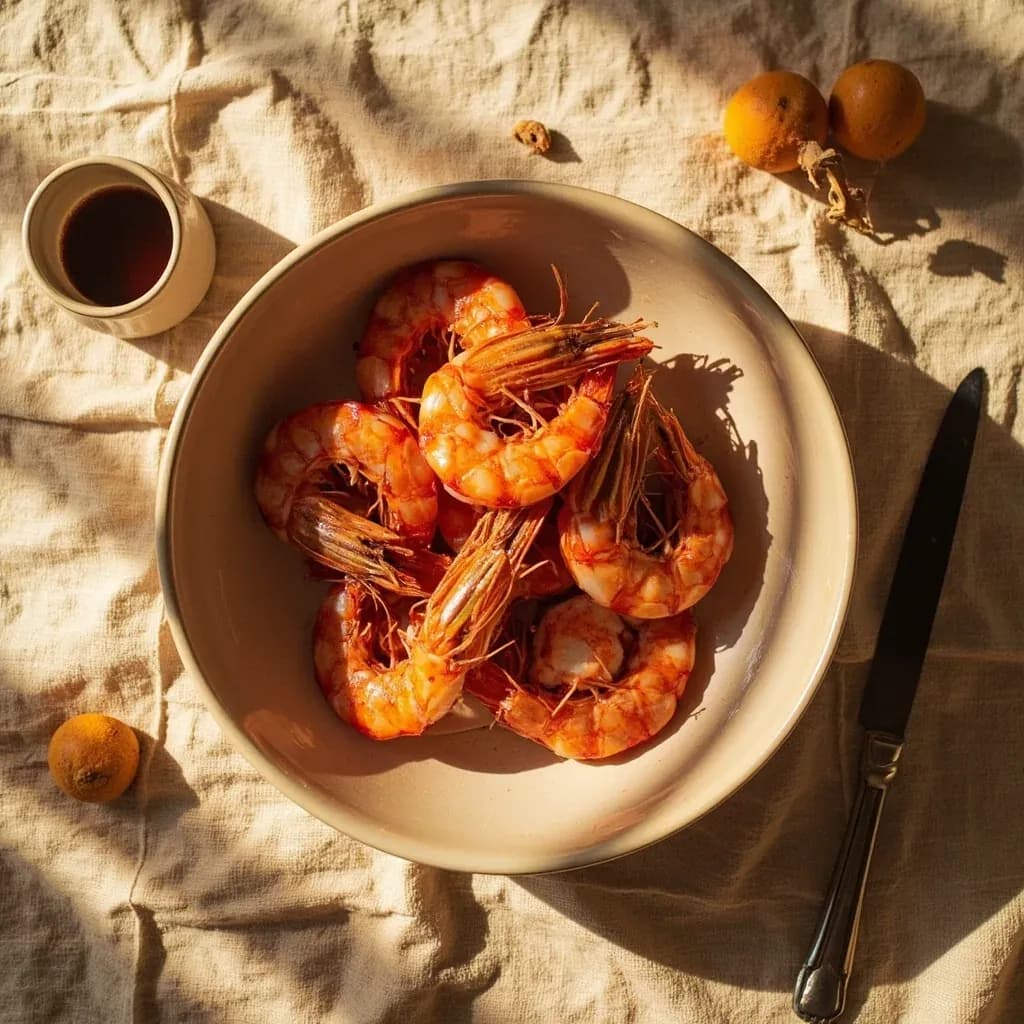
Proteins
Jumbo / Colossal Shrimp
Large, meaty shrimp with a firm snap. Ideal for grilling on skewers, shrimp scampi, or stuffing; size makes them forgiving but watch for quick overcooking.
Jumbo and colossal shrimp aren't a species — they're a size grade, defined by count per pound. Jumbo runs 16–20 per pound; colossal is anything under 15, often labeled U/15, with the biggest animals reaching U/8 or U/10. The same white, pink, or tiger shrimp can land in either category depending on how it grew, which is why size, more than species, drives both price and cooking strategy. The extra meat buys you a wider margin against drying out, makes the shrimp sturdy enough to skewer, butterfly, or stuff, and turns a sautéed preparation into something that can hold its own next to a steak.
The flip side is that bigger shrimp can overcook faster than most cooks expect. The exterior hits high heat almost immediately, but the thicker center takes longer to come up to temperature, so by the time the middle is just opaque the surface has often crossed into rubbery territory. The window between translucent and tough can be under a minute in a screaming-hot pan. A quick brine (1 tablespoon salt per quart of water, 15–30 minutes) buys back some of that margin by helping the meat hold moisture, and pulling the shrimp at the first sign of opaque color lets carryover heat finish the job. Cooked to a loose C, jumbo and colossal shrimp are sweet, snappy, and forgiving; cooked to an O, they're tough and dry no matter how much you paid per pound.
At the counter, the practical decisions are wild versus farmed, shell-on versus peeled, and head-on versus head-off. Shell-on head-off is the workhorse for grilling, broiling, and high-heat sautés because the shell protects the meat and adds flavor. Peeled and deveined is the right call when the shrimp is the centerpiece of a quick sauté, pasta, or stir-fry. Head-on, available with spot prawns and some Southern wild catch, is the premium choice for garlic-butter and barbecue preparations where the head's fat and tomalley season the meat from the inside out.
- Measured in
- g
- Storage
- Refrigerate
Allergens
Find it in
Types & varieties
Gulf and South Atlantic wild-caught; sweet and mild, the classic American shrimp flavor. Available in jumbo and colossal.
Often Florida or Carolina; delicate and slightly sweet, holds size well. A traditional pick for cocktail shrimp.
Gulf wild-caught; more robust, slightly iodine-forward. Often the best value at large sizes.
Mostly farmed in Thailand, Indonesia, and India; the stripes fade on cooking. Reaches true colossal sizes easily.
Farmed in Ecuador and Mexico; mild and sweet, the dominant supermarket jumbo shrimp and the workhorse of most restaurants.
Pacific Northwest and British Columbia wild-caught, often head-on. Naturally sweet, in season May–September.
Deep-water Gulf species with lobster-like sweetness and texture. Usually sold as large or jumbo, rarely colossal.
Hard, lobster-like shell with firm, sweet meat. Sold as peeled tails at this size; excellent in scampi and stir-fry.
Sizing and Counting
Shrimp are sold by count per pound, and the number on the label tells you more than the species name ever will. U/15 means fewer than 15 shrimp in a pound, so each animal averages a little over an ounce — big enough to butterfly, stuff, or thread onto a skewer without drying out. A 21/25 bag, by contrast, is barely past large, and the cooking math is different: smaller shrimp cook faster and have less room for a stuffing or a heavy glaze.
- U/8 to U/10: super colossal. Reserve for showpiece presentations — stuffed, grilled head-on, or butterflied for the grill.
- U/12 to U/15: the sweet spot for stuffing and grilling. One per skewer, one per plate.
- 16/20: classic jumbo. The everyday workhorse for scampi, sautés, and shrimp cocktail.
- 21/25 and up: too small to stuff; overcooks in seconds. Better for pastas, stir-fries, and rice dishes where they cook submerged in sauce.
Wild vs. Farmed
Wild U.S. shrimp — white, pink, and brown from the Gulf and South Atlantic — have a cleaner, sweeter, more briny flavor and are at their best in warmer months when the animals are feeding inshore. Farmed vannamei from Ecuador and Mexico, and farmed black tiger from Southeast Asia, offer consistent year-round quality, uniform sizing, and a milder, sweeter profile. For most home cooking the difference is smaller than freshness and handling; for applications where the shrimp's flavor is the whole point — a shrimp cocktail, a butter-basted barbecue shrimp, a simply grilled split-shell — wild U.S. product is worth the premium when you can find it.
- Wild U.S.: peak flavor, seasonal availability, higher price, more variable size.
- Farmed vannamei: the reliable supermarket default; mild, sweet, and uniform.
- Farmed black tiger: the choice when you need true colossal size on a budget; the texture is slightly firmer than vannamei.
- Look for the country of origin and the method (wild-caught vs. farmed) on the label. 'Product of Ecuador' tells you it's farmed vannamei; 'Gulf wild-caught' tells you exactly what you're getting.
The Brine and the Curl
Two habits separate passable shrimp from great shrimp, and both are simple. A short brine seasons the meat all the way through and helps it retain moisture during high-heat cooking. Watching the shape — not the timer — prevents the rubbery texture that ruins even the most expensive shrimp.
- Brine: 1 tablespoon kosher salt per quart of cold water, 15–30 minutes for shell-on, 10–15 for peeled. Optional add-ins: a teaspoon of baking soda for extra snap, a smashed garlic clove or a slice of lemon for subtle flavor.
- Rinse and dry: drain, rinse briefly, then pat very dry on towels. Surface moisture is the enemy of browning.
- Cook to a C: pull the shrimp at the first sign of opaque color; they should form a loose C. A tight O means overcooked; an I (straight) means underdone.
- Carryover is real: a 16/20 shrimp comes up to temperature in under 90 seconds in a hot pan. Pull early, let residual heat finish, and you've bought back the margin.
Common uses
Tips & pitfalls
- Brine briefly — 1 tablespoon kosher salt per quart of water, 15 to 30 minutes — for plumper, snappier texture, especially before grilling or sautéing.
- Dry the shrimp thoroughly on towels before searing; surface moisture steams the meat and prevents browning.
- For grilling, butterfly-split from the back so the shrimp lays flat on the grate and cooks evenly without rolling.
- Pull at the first sign of opaque color and let carryover heat finish the job. The window between perfect and overcooked is under a minute.
- An O-shape means overdone — the muscle fibers have tightened into a ball. Aim for a loose C; an I is underdone.
- Save shells and heads in a zip bag in the freezer; they make a quick, deeply flavored stock for bisque, risotto, or paella.
- Frozen IQF shrimp can be cooked straight from frozen in a hot pan — extend the cooking time by about 50% and dry the surface well first.
- For stuffed shrimp, source U/12 or larger and butterfly from the back rather than fully peeling; the shell holds the stuffing and keeps the meat moist.
- Never reuse a marinade that has touched raw shrimp unless you bring it to a full boil. Keep a clean batch aside for basting.
- Don't store raw shrimp in standing water or sealed plastic — use a bed of ice in a perforated pan so meltwater drains away.
Nutrition
Energy
356 kJ · per 100 g
Where the calories come from
Protein
20.1g
40% DV
Carbs
0g
0% DV
Fat
0.5g
1% DV
Sodium
119mg
5% DV
Source · USDA FoodData Central · approx. Crustaceans, shrimp, raw
View on FDC →In the shops
Matched grocery products
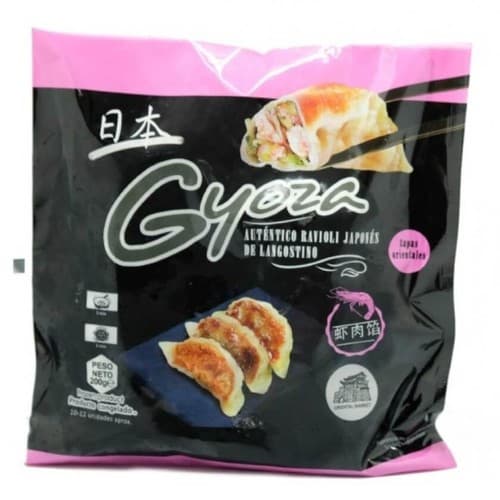 €3.95
€3.95Shrimp Gyoza
ORIENTAL MARKET · kg · Bonpreu
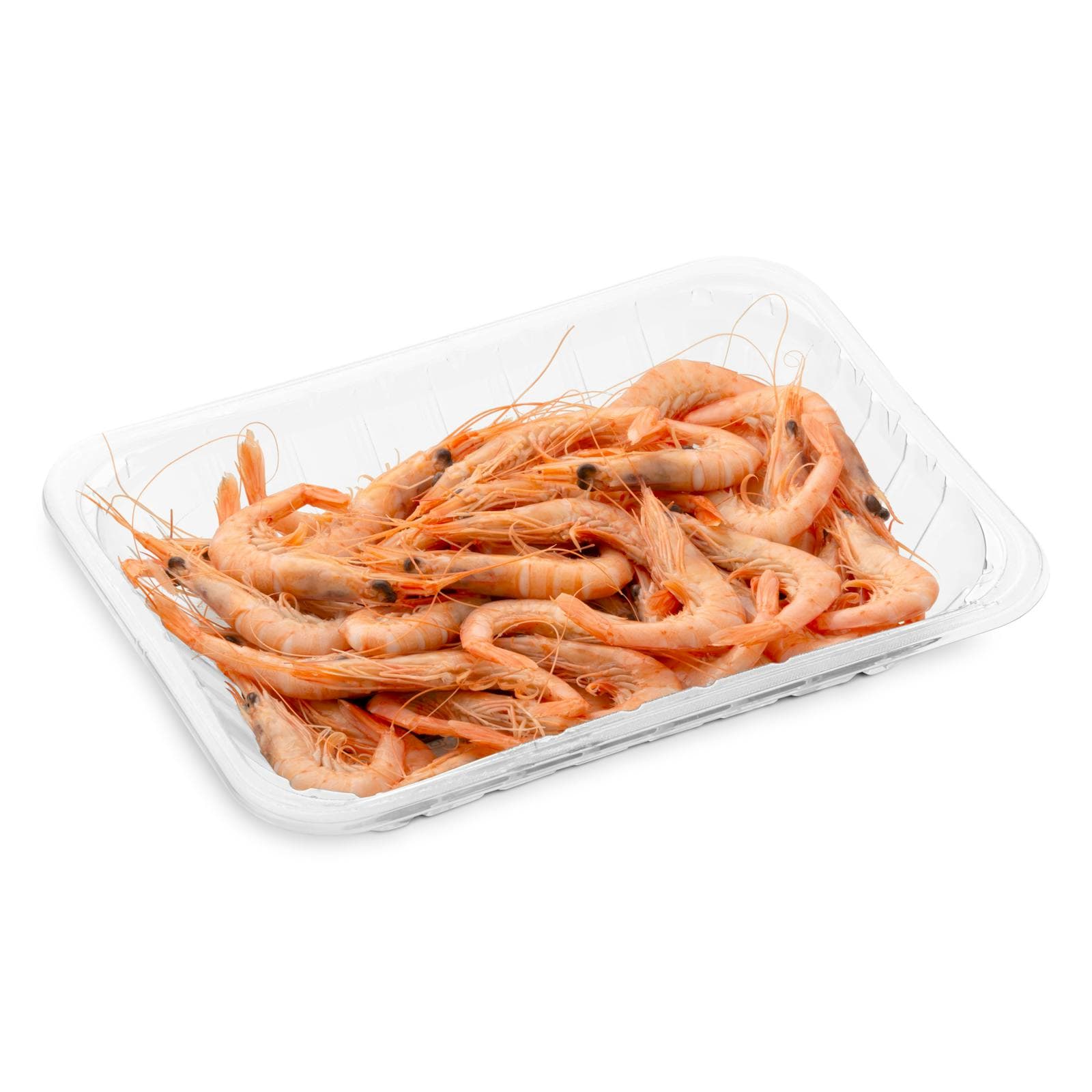 €6.95
€6.95Cooked Shrimp
300 g · Mercadona
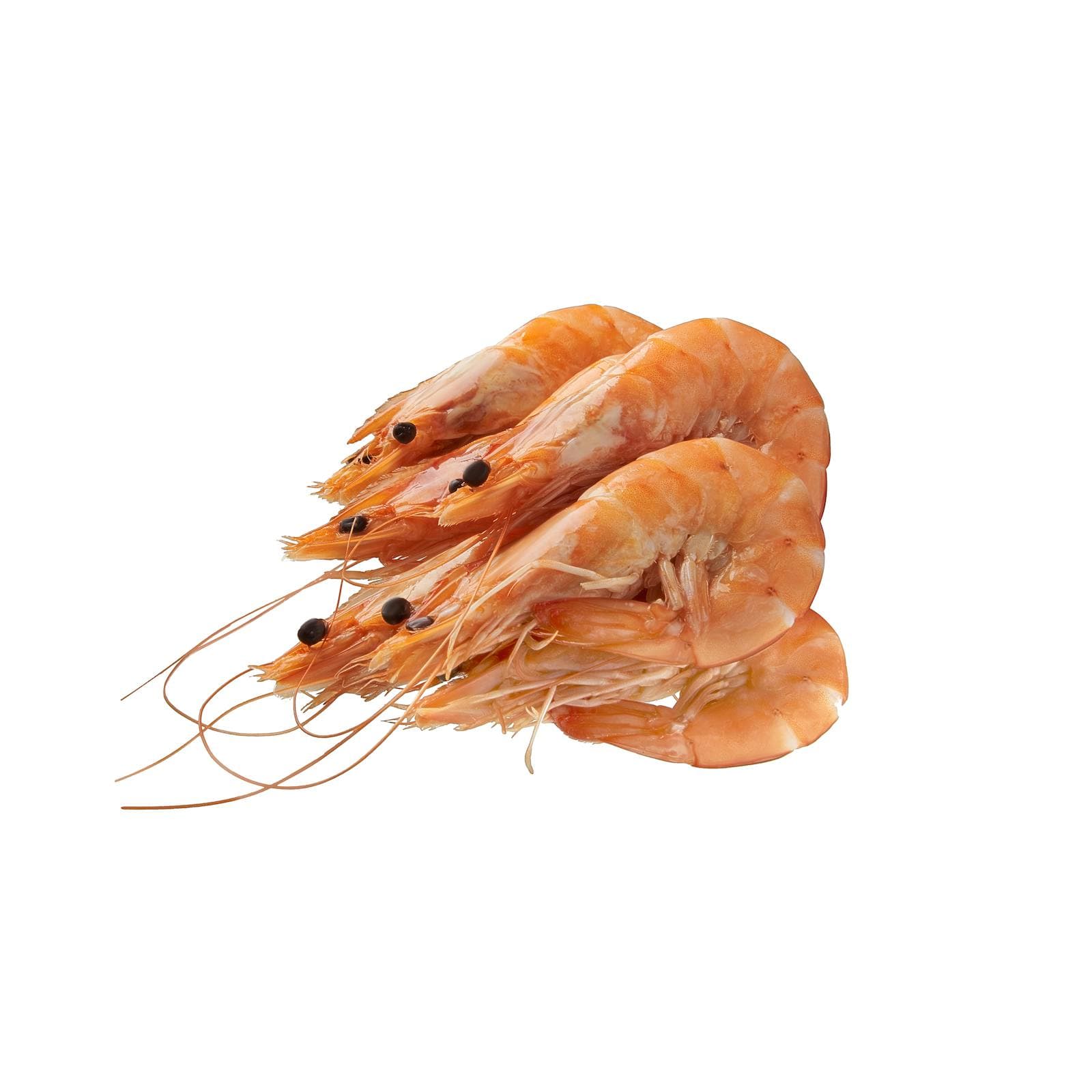 €1084.05
Cooked Shrimp
kg · Mercadona
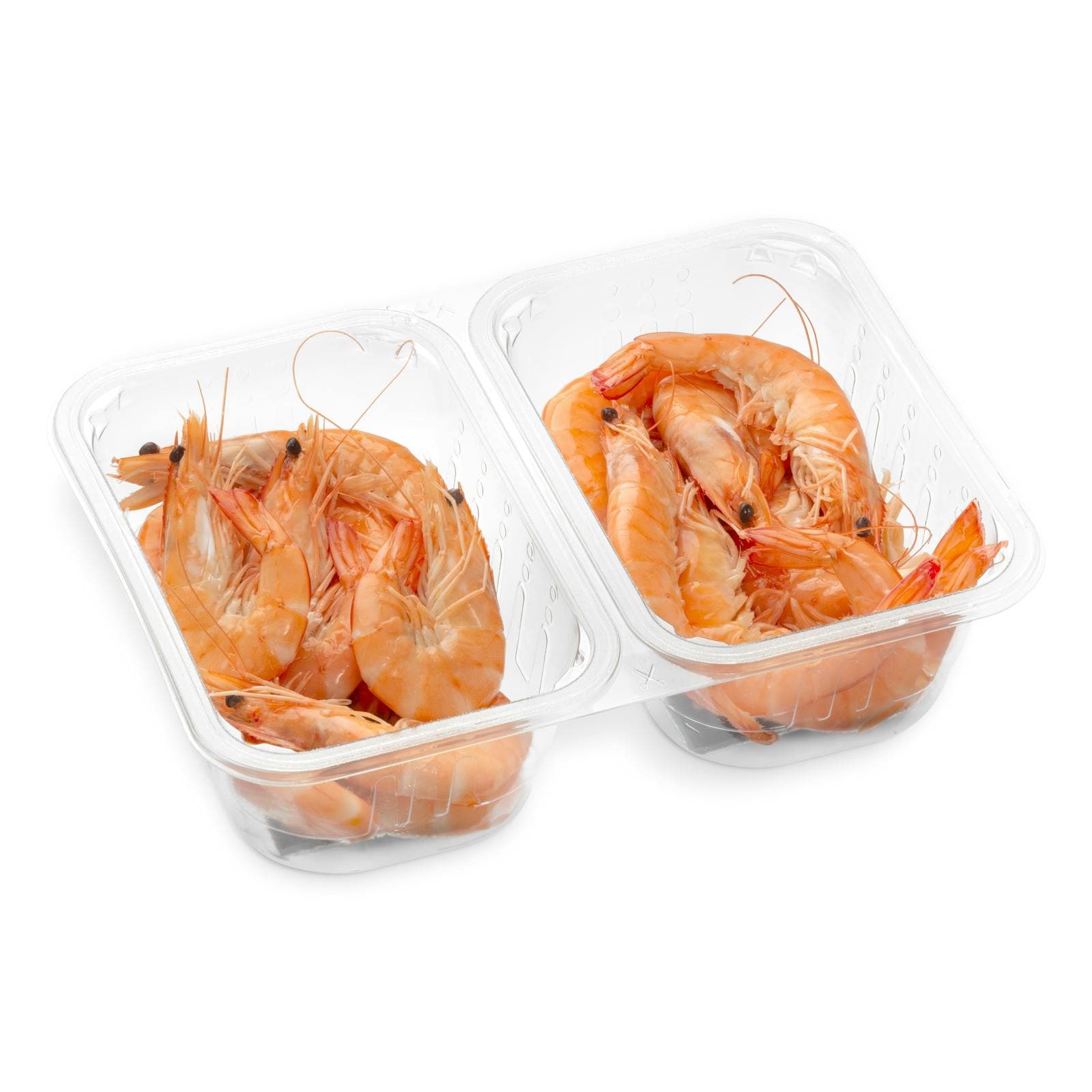 €6.30
€6.30Cooked Prawn
600 g · Mercadona
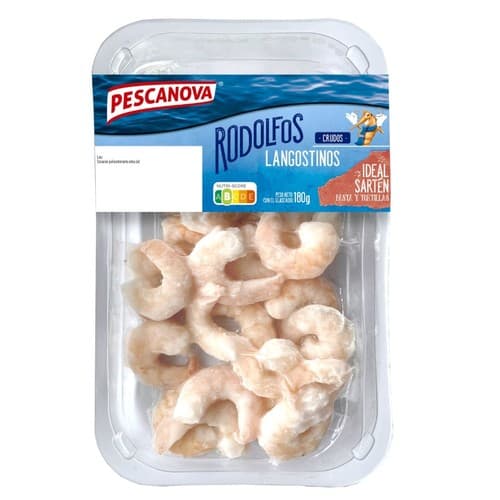 €4.89
€4.89Peeled Raw Shrimp
PESCANOVA · kg · Bonpreu
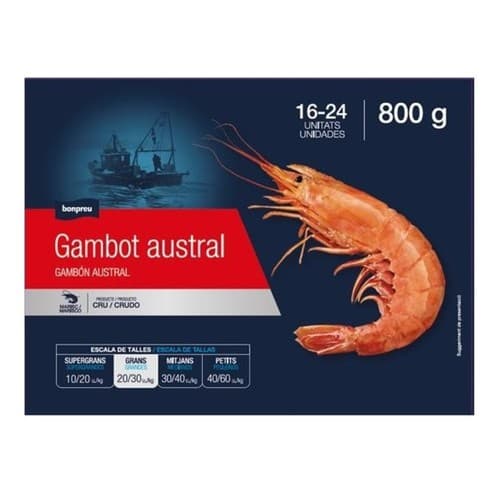 €10.95
Australian Prawn
BONPREU · kg · Bonpreu
Good to know
- Size label (count per pound)
- Jumbo is 16–20 per pound; colossal is under 15 (often U/15). Super or extra colossal runs U/10 down to U/8.
- Common species
- White, pink, and brown (U.S. wild-caught); black tiger (farmed); Pacific white/vannamei (farmed, the supermarket workhorse); spot prawn (West Coast wild).
- Yield after peeling
- Roughly 50% edible meat; shells and heads make a quick, flavorful stock.
- Freshness signals
- Firm bodies, tight shells, and a clean sea smell — never ammonia. Black spots on the shell indicate melanosis, harmless but a sign of age.
- The C and O test
- A loose C means done; a tight O means overcooked. Use the shape, not just the clock.
- Storage (raw, shell-on)
- Up to 2 days on a bed of ice at 32–34°F. Never store submerged in water — it leaches flavor and speeds spoilage.
- Storage (frozen)
- Best within 3–6 months at 0°F or below. Thaw overnight in the refrigerator or under cold running water; do not refreeze.
- Allergen note
- Crustacean shellfish — a top U.S. allergen. Sulfites are sometimes used in processing and must be declared on the label.
Substitutes
- Large or extra-jumbo shrimp (16/20 to 26/30) — Same ingredient, smaller size; reduce cook time and skip presentations that need a butterfly or a stuffing.
- U.S. rock shrimp tails — Firm, sweet flesh; works in scampi, stir-fry, and grills where texture matters more than shape.
- Spot prawns — Naturally sweet, large, and premium; an excellent stand-in for simply grilled or butter-basted preparations.
- Langoustines (Dublin Bay prawns) — Closer to lobster in sweetness and price; a worthy substitute for scampi and garlic-butter dishes.
- Sea or bay scallops — Similar quick-cook, sweet-brine profile; substitute in sautés and kebabs, not in stuffed presentations.
- Crawfish tails — Smaller but sweet and tender; good in étouffée, pasta, and rice dishes in place of jumbo shrimp.
Pairs with
Also called
colossal shrimp · prawns · U-15 shrimp · tiger prawns