Proteins
Pacific Oyster
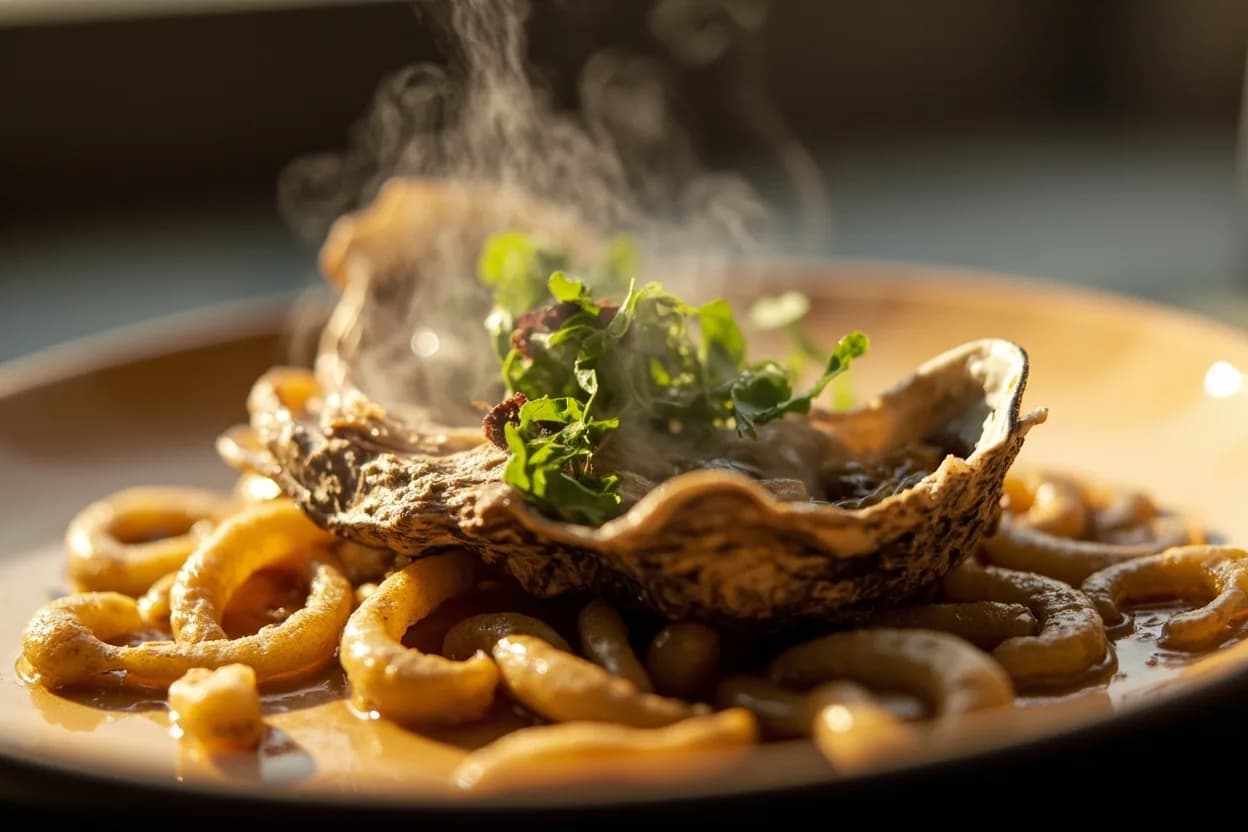
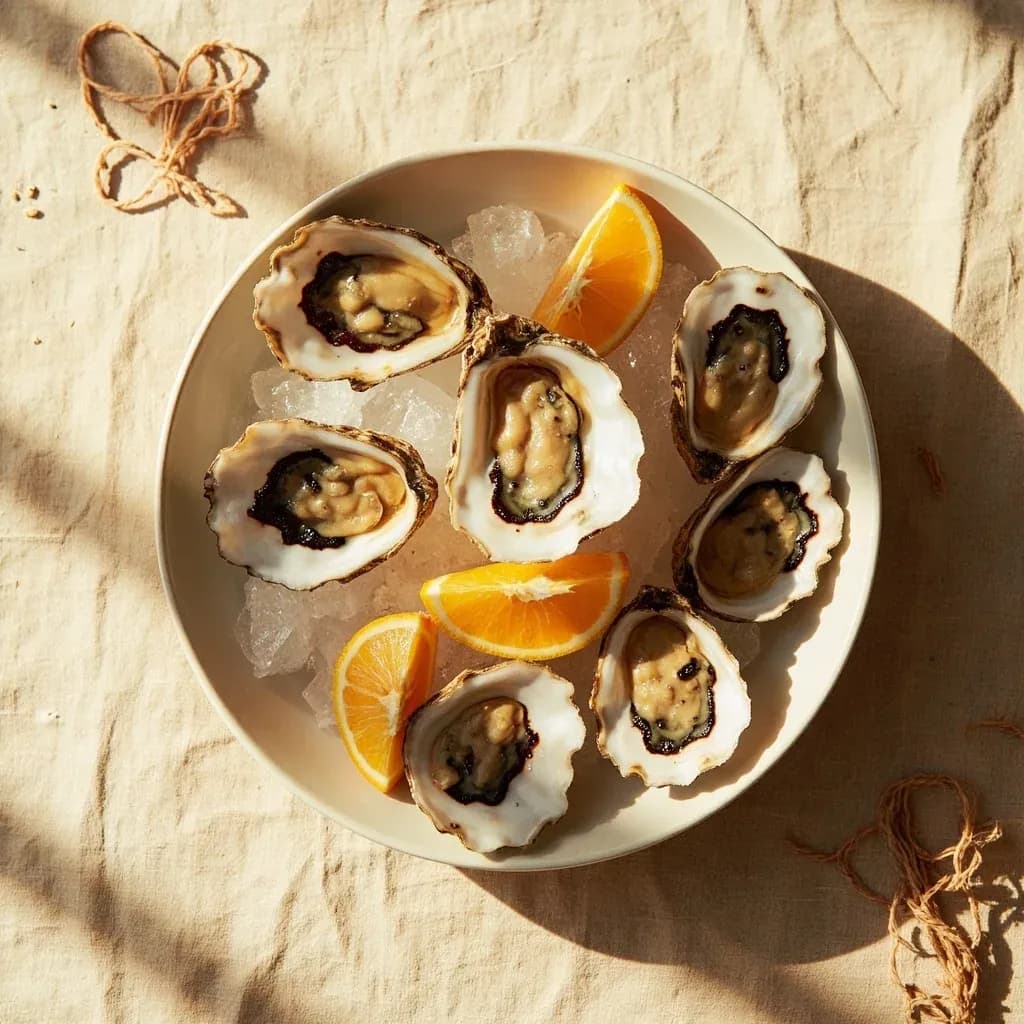
Plump, frilly-shelled oyster with a sweet, melon-cucumber finish. Excellent raw on the half shell, and robust enough to grill or roast with butter.
The Pacific oyster (Crassostrea gigas) is the workhorse of global oyster culture and the species most cooks will encounter in restaurants, markets, and aquaculture programs from British Columbia to Tasmania. Native to Japan, Korea, and southeast China, it was introduced to the U.S. West Coast beginning in the 1920s and to Europe in the 1960s, and now accounts for the majority of farmed oyster production worldwide. Its success is no accident: it grows fast, tolerates a wide salinity range, and adapts to everything from suspended longline culture to traditional bottom planting.
In the kitchen, the Pacific oyster is the most versatile of bivalves. The shell is elongated and teardrop-shaped, often with a frilly, sharp-edged margin, and the deep cup holds a generous amount of meat and liquor. The flavor is characteristically sweet, with a clean cucumber-melon finish that shifts toward saltier and more mineral when grown in open-coast water, and softer and creamier in low-salinity estuaries. The meat is plump and pale, and stays juicy through cooking better than leaner oysters, which is why it dominates hot preparations like grilling, frying, and Rockefeller.
Because Pacifics are protandrous hermaphrodites that spawn in warm summer months, summer oysters can turn thin and milky. Triploid varieties, bred to skip spawning, remain plump year-round, and the cooler months from roughly October through April are generally considered peak season in the Northern Hemisphere.
- Measured in
- g
- Storage
- Refrigerate
Allergens
Find it in
Types & varieties
Large, deeply cupped Japanese-origin oyster; the standard West Coast farm oyster, sweet and creamy, holds up well to grilling.
Technically Crassostrea sikamea, sold alongside Pacifics. Very small (2–3 in), deep cup, exceptionally sweet with a melon finish; best raw.
Oregon bay oyster with a clean, cucumber-like brine and a small, tender meat.
Hood Canal, Washington; cold-water oyster with a firm texture and balanced salinity.
Tomales Bay, California; small, briny-sweet, intensely flavored.
Point Reyes, California; open-coast character, mineral and crisp.
Puget Sound oysters; small to medium, very sweet, low salinity — classic pairing oysters.
New Brunswick triploid, bred for year-round plumpness; avoids the summer spawning slump.
Reading the merroir
Pacific oysters absorb their growing water almost literally into the meat. The same species can taste like a sip of the bay it came from, which is why two oysters at the same shucking bar can taste like entirely different ingredients. As a working rule: protected bays and estuaries with freshwater influence (Yaquina, Totten Inlet, Hog Island) produce smaller, sweeter, lower-salinity oysters with a soft cucumber finish. Open-coast and high-flow sites (Drakes Bay, parts of the outer Washington coast) yield meat with a sharper, more mineral brine and a tighter texture. When choosing for a raw bar, match intensity to the diner; for a buttery grilled preparation, the lower-salinity style will let the butter and smoke read more clearly.
Shucking without losing a finger
Pacific oysters are easy to shuck but unforgiving on the hands. The frilly shell margins chip into knife-edged fragments, and the hinge ligament on a fresh oyster can be tough. A few habits make it routine:
- Chill the oysters for 20–30 minutes before shucking — cold oysters are firmer and the meat is less likely to spill.
- Use a short, stiff shucking knife (3–3.5 in blade) rather than a long flexible one; leverage matters more than reach.
- Cradle the oyster cup-down in a folded kitchen towel, with the hinge away from your palm. Push the thumb of your guard hand into the towel, not onto the shell.
- Work the tip of the knife into the hinge, twist, and listen for the pop. If the hinge resists, move around its edge until you find a softer seam.
- Slide the blade across the top shell to sever the adductor muscle, then flip the top shell away and slice the lower muscle free so the meat rests in its liquor.
Common uses
Tips & pitfalls
- Buy from a fishmonger who tags the harvest date — oysters less than 5 days out of the water are ideal for raw service; treat anything older as a cooked candidate.
- Live oysters should be tightly closed or snap shut when tapped. Discard any that gape and stay open after a firm rap — they are dead and potentially unsafe.
- Store cup-side down on a tray so the liquor pools around the meat, covered with a damp towel. Never submerge in fresh water (the salinity change kills them) or seal in an airtight bag (trapped gases and lack of drainage will spoil them quickly).
- Shuck over a bowl to catch the liquor, then strain it into sauces, stews, shooters, or mignonette — it carries a lot of the oyster's salinity and sweetness.
- Use a short, sturdy shucking knife and a thick folded towel as a hand guard. The frilly Pacific edges snap off as razor-sharp chips if you grip them wrong.
- For raw service, finish the oysters at around 50°F (10°C), not straight off ice. The brine and melon notes open up as the meat warms slightly.
- Don't overcook. On a hot grill, 2–3 minutes over medium-high heat until the edges curl is plenty; the meat should be just opaque and still juicy. Beyond that, the Pacific turns rubbery.
- In summer, expect leaner, milky oysters because Pacifics spawn in warm water. Triploid varieties such as Beausoleil are the workaround.
Nutrition
Energy
339 kJ · per 100 g
Where the calories come from
Protein
9.5g
19% DV
Carbs
5g
2% DV
Fat
2.3g
3% DV
Fiber
0g
0% DV
Sodium
106mg
5% DV
Source · USDA FoodData Central · Mollusks, oyster, Pacific, raw
View on FDC →In the shops
Matched grocery products
No matched grocery products for Pacific Oyster yet.
Good to know
- Scientific name
- Crassostrea gigas
- Native range
- Coastal waters of Japan, Korea, and southeast China
- Global status
- The most widely farmed oyster species in the world
- Typical size
- 3–6 in (7.5–15 cm); market oysters most often 3–4 in
- Meat yield
- Plump, pale beige; roughly 10–15% of total weight at market size
- Flavor profile
- Sweet and briny, with cucumber and melon notes; finish varies with salinity of growing waters
- Season
- Year-round via aquaculture; peak flavor October–April in the Northern Hemisphere
- Storage
- 34–45°F (1–7°C), cup-side down, covered with a damp cloth; up to 7 days but best within 1–2
- Merroir
- Sweeter and milder in estuaries; saltier and more mineral near open coast
Substitutes
- Eastern oyster (Crassostrea virginica) — The standard Atlantic substitute; meat is slightly chewier and brinier with a more mineral finish. Works for nearly any Pacific oyster preparation, raw or cooked.
- Kumamoto oyster (Crassostrea sikamea) — Use when a recipe calls for a small, sweet raw oyster; not suitable for grilled or Rockefeller due to its small size.
- European flat oyster (Ostrea edulis) — Brinier and more metallic, smaller in the cup; classic for Kilpatrick and Rockefeller but a different flavor profile.
- Littleneck or cherrystone clams — Only for cooked preparations such as stews, chowders, and pasta sauces. Texture and sweetness differ, but the briny-umami role translates.
Pairs with
Also called
Japanese oyster · Miyagi oyster · Kumamoto (related)