Proteins
Eastern (Atlantic) Oyster
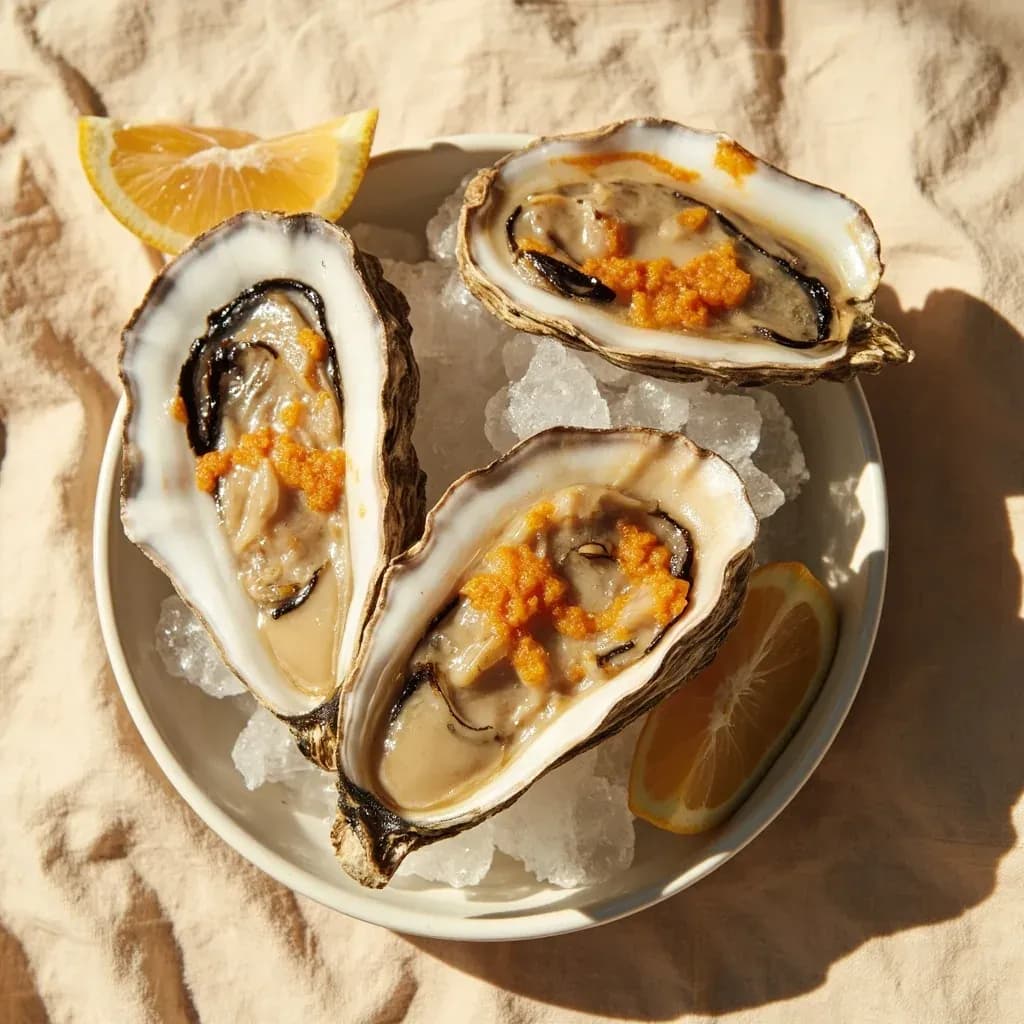
Briny, teardrop-shelled oyster with a clean salty bite. Classic raw on the half shell, and the go-to for oysters Rockefeller or po'boys.
The Eastern oyster (Crassostrea virginica) is the workhorse bivalve of the North American Atlantic and Gulf coasts — a rough-shelled, deeply cupped estuarine mollusk that has fed coastal communities since long before refrigeration. It grows in brackish tidal creeks and shallow bays from the Gulf of St. Lawrence down through the Maritimes, New England, the Mid-Atlantic, and into the Gulf of Mexico, often forming reefs where a single adult can filter 50 gallons or more of water a day. That filtration is the key to understanding it as an ingredient: the oyster is essentially a living snapshot of its home bay, and salinity, mineral content, and the local algae all read directly in the meat.
Cooks prize the Eastern oyster for two reasons. First, its teardrop-shaped shell bakes a deep cup that holds the oyster's own liquor on the half shell and cradles gratins, Rockefeller toppings, and broiled butters without leaking. Second, its flavor is wide-ranging but reliably balanced: a salty, briny opening followed by sweet, melon, cucumber, or mineral notes that shift from bay to bay. A Wellfleet from Cape Cod tastes unmistakably different from a Cape May, a Malpeque, or an Apalachicola, even though they are the same species harvested the same week.
How the oyster behaves in the kitchen depends almost entirely on heat and timing. Raw, the meat is plump, slick, and slightly chewy, releasing its own brine (the liquor) the moment you bite into it. Given a brief kiss of heat — thirty seconds to a minute — the proteins tighten just enough to give the meat a custardy, almost creamy texture while staying sweet. Push past that and the meat turns rubbery, the liquor clouds, and the dish loses the very thing that makes the oyster worth cooking in the first place.
- Measured in
- g
- Storage
- Refrigerate
Allergens
Find it in
Types & varieties
Cape Cod, MA; small, deeply cupped, plump; clean mineral brine with a balanced finish
Long Island Sound, NY/CT; medium with moderate salinity and a mild, slightly sweet finish
Prince Edward Island, Canada; smooth firm meats with a crisp, clean brine and light sweetness
New Brunswick, Canada; small teardrop, grassy and very mild
Maine; small and plump, with a sharp brine and clean finish
Maine; small, deeply cupped, bright brine with mineral notes
Cape May Harbor, NJ; medium, plump, salty with a sweet, buttery finish
Umbrella for Maryland/Virginia brands (Olde Salt, Murder Point, Bear Point); varies bay-to-bay, generally balanced
Florida Gulf coast; small, mild, slightly sweet; one of the few surviving Gulf populations
Massachusetts branded oysters, small to medium; salt content shifts noticeably with rainfall
PEI, Canada; medium, plump, very clean with a sweet finish
PEI, Canada; smooth shell, balanced brine, mild sweetness
Terroir and Branded Varieties
Eastern oysters are sold almost exclusively by their home bay now, and the labels matter. A Malpeque from PEI tastes nothing like an Apalachicola from Florida, and a Cape Cod oyster harvested after heavy rain will be noticeably less salty than the same brand pulled after a dry week. When a recipe or a raw bar lists a specific name, treat it as a flavor instruction, not just a brand. If you want a clean, crisp finish with a moderate bite, look to Prince Edward Island and the colder northern bays. For a fuller, saltier, more mineral cup, the Massachusetts and Maine beaches deliver. The Mid-Atlantic and Chesapeake give a balanced middle ground, and Gulf oysters tend to be smaller, sweeter, and softer. Buying a half-dozen from two or three regions side by side is the fastest way to teach yourself what terroir means for shellfish.
Shucking and Storage
Good shucking is mostly about confidence, a sharp short blade, and protecting the liquor. Work the hinge first, twist, then run the blade across the inside of the top shell to sever the top adductor muscle, then cut the bottom muscle cleanly so the oyster sits whole in its cup. Rinse the shell before serving so grit doesn't end up in the brine, and serve on crushed ice or rock salt to keep them level. Live oysters must be kept cold and wet but never sealed; a container in the fridge, cup-side down with a damp towel over the top, is the standard. Any oyster that stays open when tapped and refuses to close is dead and should be discarded, along with cracked, broken, or unusually heavy (waterlogged) shells.
Common uses
Tips & pitfalls
- Buy only from a supplier that keeps oysters well-aerated, properly cold, and tagged; the harvest tag must stay attached until shucking for traceability.
- Store cup-side down in a lidded container in the fridge with a damp towel over the top — never in a sealed bag and never submerged in water, both of which suffocate them.
- Discard any oyster that stays open when tapped and does not snap shut, plus any with cracked, broken, or unusually heavy (waterlogged) shells.
- Shuck just before serving: work the hinge with an oyster knife, twist, slide the blade across the top shell to sever the top adductor muscle, then cut the bottom muscle cleanly to keep the oyster whole in its cup.
- Do not overcook. Thirty seconds to a minute of heat is enough; longer and the meat turns rubbery and the liquor clouds.
- Save the liquor that pools while shucking — strain it through cheesecloth and use it in stews, chowders, pan sauces, and pasta water for an instant boost of brine.
- Rinse the cup shell after shucking so grit doesn't end up in the liquor, and serve on crushed ice or rock salt to keep them level.
- For raw service, plan roughly 6 medium oysters per person as a starter and 12 or more as a main; the rule of thumb scales with size and appetite.
Nutrition
Energy
213 kJ · per 100 g
Where the calories come from
Protein
5.7g
11% DV
Carbs
2.7g
1% DV
Fat
1.7g
2% DV
Fiber
0g
0% DV
Sugars
0.6g
of which
Sodium
85mg
4% DV
Source · USDA FoodData Central · approx. Mollusks, oyster, eastern, wild, raw
View on FDC →In the shops
Matched grocery products
No matched grocery products for Eastern (Atlantic) Oyster yet.
Good to know
- Scientific name
- Crassostrea virginica
- Also called
- Atlantic oyster, American oyster, Virginia oyster
- Range
- Atlantic coast of North America, Gulf of St. Lawrence to Florida and the Gulf of Mexico; also Caribbean
- Habitat
- Estuaries, tidal creeks, and shallow bays with brackish water; tolerates a wide salinity range
- Shell
- Rough, elongated, teardrop to oval; lower (cup) valve is deeper, fluted, and chalky white
- Market sizes
- Small 3–4 in, Medium 4–5 in, Large/Jumbo 5+ in; roughly 100–150 per U.S. bushel
- Season
- Traditionally 'R' months (Sept–Apr); modern cold-chain handling extends availability, but meats are still fattest from late fall through early spring after spawning ends
- Live shelf life
- 7–10 days at 34–45°F, cup-side down under a damp towel; never sealed in plastic or submerged in water
- Nutrition (per 100 g raw)
- About 50–70 kcal; notable for zinc, vitamin B12, and selenium
Substitutes
- Pacific oyster (Crassostrea gigas) — Closest swap on the half shell in most U.S. markets; creamier and slightly sweeter, often with a rounder cup
- Kumamoto oyster — Small, sweet, very mild Pacific species; works raw but flavor is much softer than Eastern
- Olympia oyster — Native tiny Pacific oyster, intensely briny; substitute only when size and presentation are flexible
- Mussels — Workable in cooked dishes like stews, fritters, and pasta; saltier and more tender but holds up to heat similarly
- Hard-shell clams (littlenecks, topnecks) — Acceptable in chowders, stuffings, and pasta sauces, though texture is firmer and brine is different
Pairs with
Also called
Atlantic oyster · Blue Point oyster · Wellfleet oyster
