Proteins
Pork Hock (fresh)
Bony, collagen-rich lower-leg joint that needs long braising or simmering to release gelatin; builds body in stocks, beans, and stews and yields tender shredded meat.
The fresh pork hock is the lower-leg joint of the pig — the cut between the knee and the ankle, wrapping the tibia and fibula in a thick sleeve of skin, connective tissue, and a modest amount of well-exercised meat. It is one of the cheapest and most useful cuts on the animal precisely because almost no one wants to eat it like a steak: the edible portion is dominated by collagen-rich skin and connective tissue, which means the meat has to be coaxed tender rather than seared rare. Cooks prize it for what it does in a pot — given enough time and moisture, that collagen converts to gelatin, and the hock surrenders its meat in shreds while enriching everything around it.
A bare, gentle simmer is the most honest treatment. After two and a half to four hours, the skin softens enough to cut with a spoon and a fork slides through the meat at the bone without resistance; the internal temperature will read somewhere between 195 and 205°F (90–96°C), well past the medium-rare window a steak would call perfect, but exactly the heat a collagen-heavy cut needs to become tender. That long window is forgiving — there is very little margin between "just tender" and "falling apart," and either is a success. What matters is patience and salt, not precision.
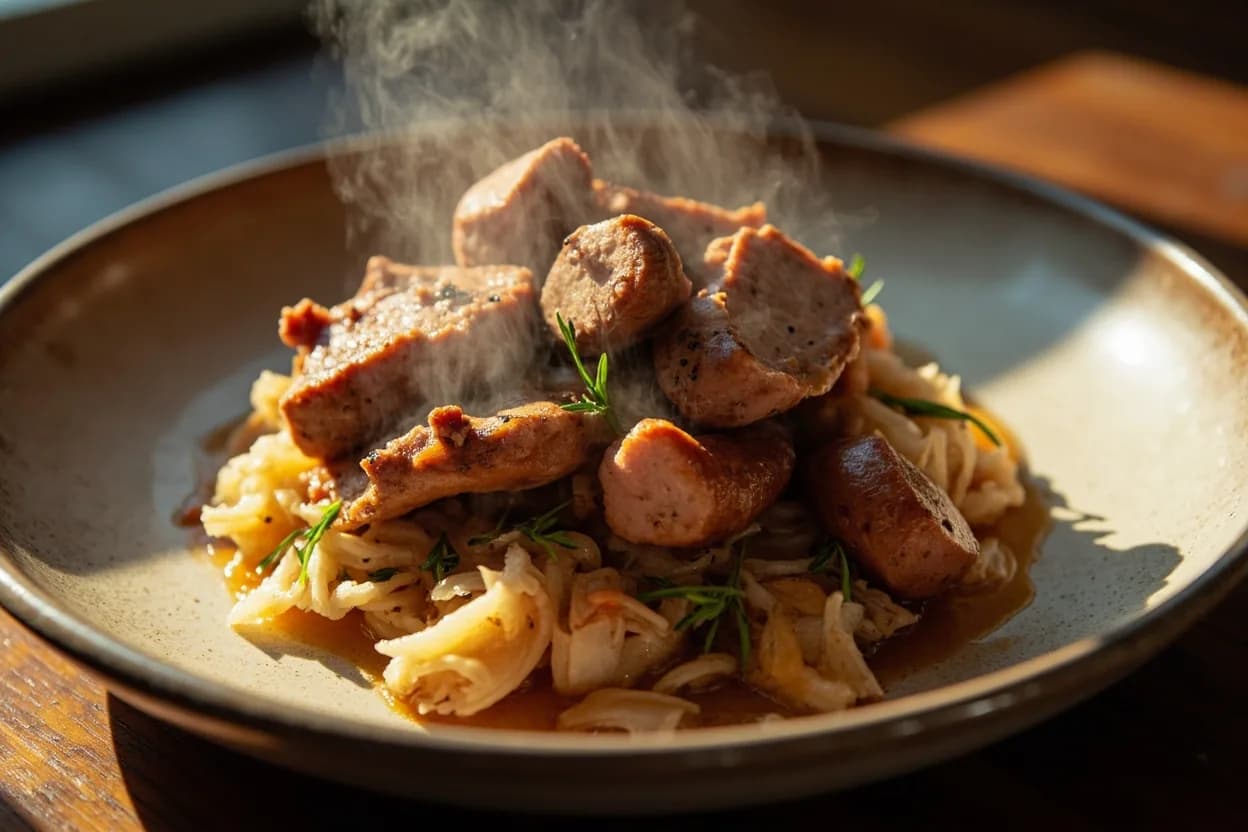
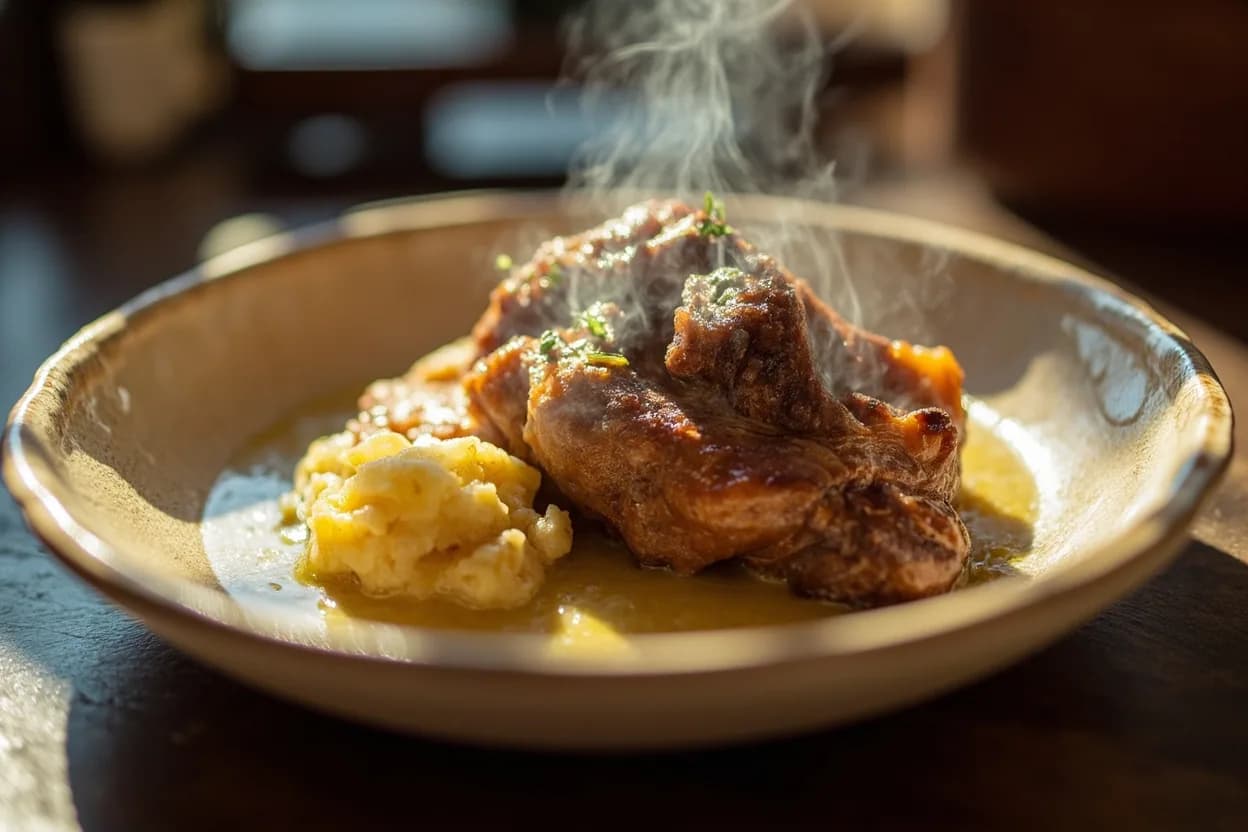
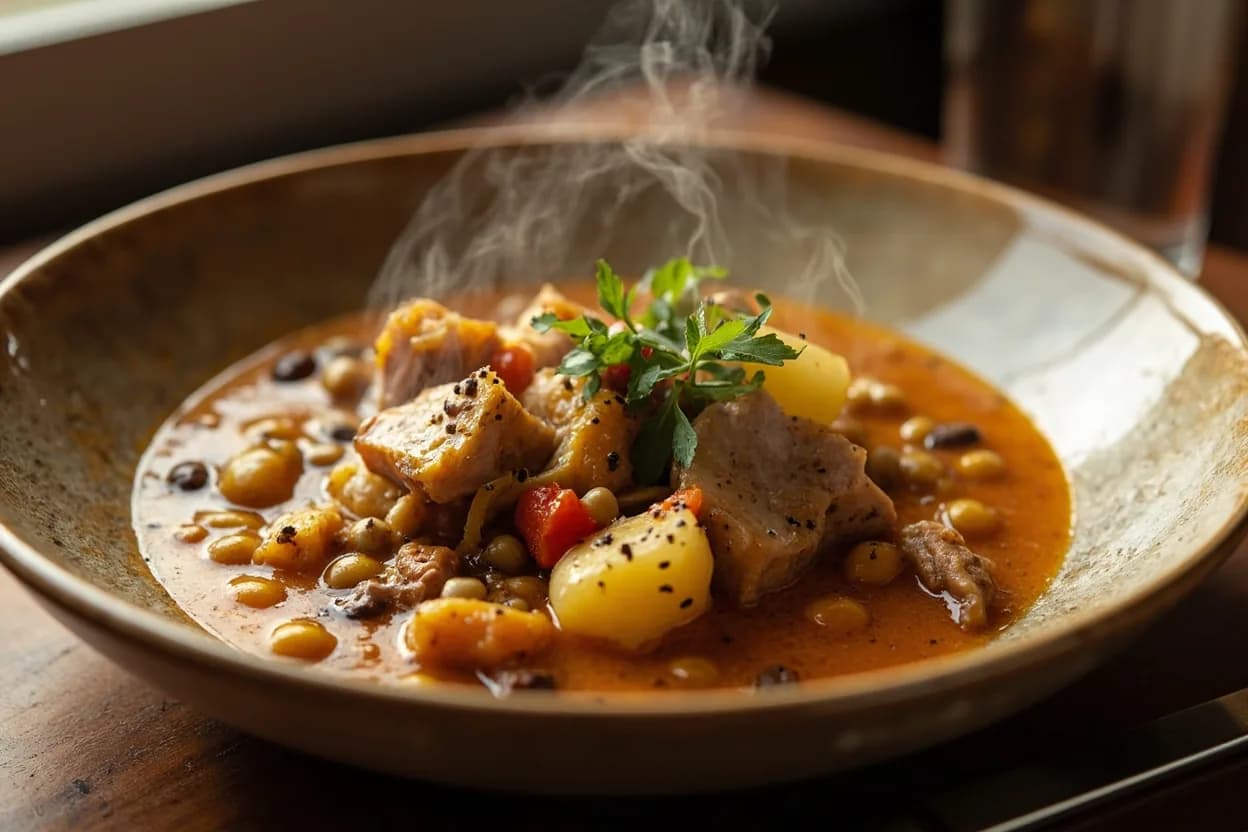
Fresh hocks are pale, clean-smelling, and unseasoned, which makes them a blank canvas for everything from Central European braises to Chinese red-cooking to Brazilian black-bean stews. They are not the same as the cured or smoked ham hock sold next to them in many American butcher cases: that product is salty and pre-flavored, used more as a seasoning accent than as a centerpiece. The fresh hock can play either role, but its real gift is the body it gives a dish through its skin and bones.
- Measured in
- g
- Storage
- Refrigerate Sealed In The Coldest Part; Use Within A Few Days Or Freeze.
Find it in
Types & varieties
Smaller and more uniformly shaped than the hind; leaner meat and a tighter skin. Often labeled 'shoulder hock.' Favored for stock and bean dishes where you want clean pork flavor without a heavy fat cap.
Larger and meatier, with a thicker fat cap and more skin. In the U.S. this is the cut most often sold as 'ham hock,' and it is frequently available both fresh and smoked or cured.
Fresh (the subject of this entry) is pale pink with a clean pork aroma and is sold raw and unseasoned, requiring long cooking to become tender. Smoked or cured hocks are pre-seasoned, salty, and used as a flavoring accent rather than a centerpiece; they are not interchangeable with fresh in recipes without adjusting salt.
What the hock brings to a pot
A fresh pork hock is essentially a delivery system for three things: collagen-rich skin, marrow-bearing bones, and a small but well-flavored piece of meat. The skin is the unsung hero — as it simmers, its connective tissue dissolves into gelatin, which is what gives a finished broth its silky, clinging mouthfeel and what makes shredded hock meat feel unctuous rather than dry. The bones add depth and body; even with very little meat left on them at the end, the stock you skim from the pot will set like a soft jelly when cold if the hock did its job. The meat itself is best treated as a bonus: tender, mildly sweet, and excellent when shredded into whatever it was cooked with.
- The gelatin transformation begins around 160°F (71°C) but is not complete until the meat has held near a simmer for hours — rushing with high heat toughens the muscle before the collagen can relax.
- A ratio of about 1 lb (450 g) hock per 2 quarts (2 L) water gives a stock that will gel firmly when cold; add more water and the body thins out.
- Unlike pure meat stocks, hock-based liquids benefit from a long, gentle cook rather than a hard boil — vigorous bubbling emulsifies fat into the broth and gives it a greasy mouthfeel.
- Saving and chilling the cooking liquid is the easiest way to judge success: a properly cooked hock produces a stock that turns to soft jelly in the refrigerator, which is exactly the body you want in finished sauces, beans, and soups.
Choosing and prepping a fresh hock
Look for a piece that is pale pink to ivory, with white (not yellow) fat and skin that smells clean and faintly porky — never sour or ammoniated. If you plan to crisp the skin at the end, ask the butcher to score it or do it yourself with a sharp knife in a crosshatch just deep enough to cut through the skin but not into the meat beneath.
- If the hock is whole and very large (over 2 lb / 900 g), split it lengthwise yourself with a cleaver or heavy knife — it cooks faster and fits more easily in a standard pot.
- Blot the skin dry before browning; surface moisture is the main reason hocks steam rather than color in the first step.
- For an even cleaner flavor, soak the hock in cold water for 30 minutes and change the water once to draw out any loose blood before you begin cooking.
Common uses
Tips & pitfalls
- Brown the hock first in a dry or lightly oiled pot to develop fond on the bottom — this single step is the biggest flavor boost you can give a finished braise or bean dish.
- Salt the cooking liquid generously; it should taste like sea water. Collagen-rich cuts taste flat and waxy without enough seasoning, and you cannot fix this at the end.
- Keep the simmer at a bare tremble — a rolling boil emulsifies too much fat into the liquid and gives the broth a greasy mouthfeel.
- Score the skin in a crosshatch before braising if you plan to crisp it later; uncut skin contracts violently in heat and can buckle the meat beneath.
- Resist lifting the lid: every peek drops the pot temperature and stretches total cooking time by 10–15 minutes.
- Test for doneness by inserting a fork or wooden skewer near the bone; if it slides in without resistance and the meat flakes away cleanly, the hock is ready — a thermometer reading of 195–205°F (90–96°C) confirms it.
- Save the braising liquid. Strain, defat, and reduce it into a pan sauce, or freeze it in measured portions as a gelatin-rich base for soups, beans, and braises.
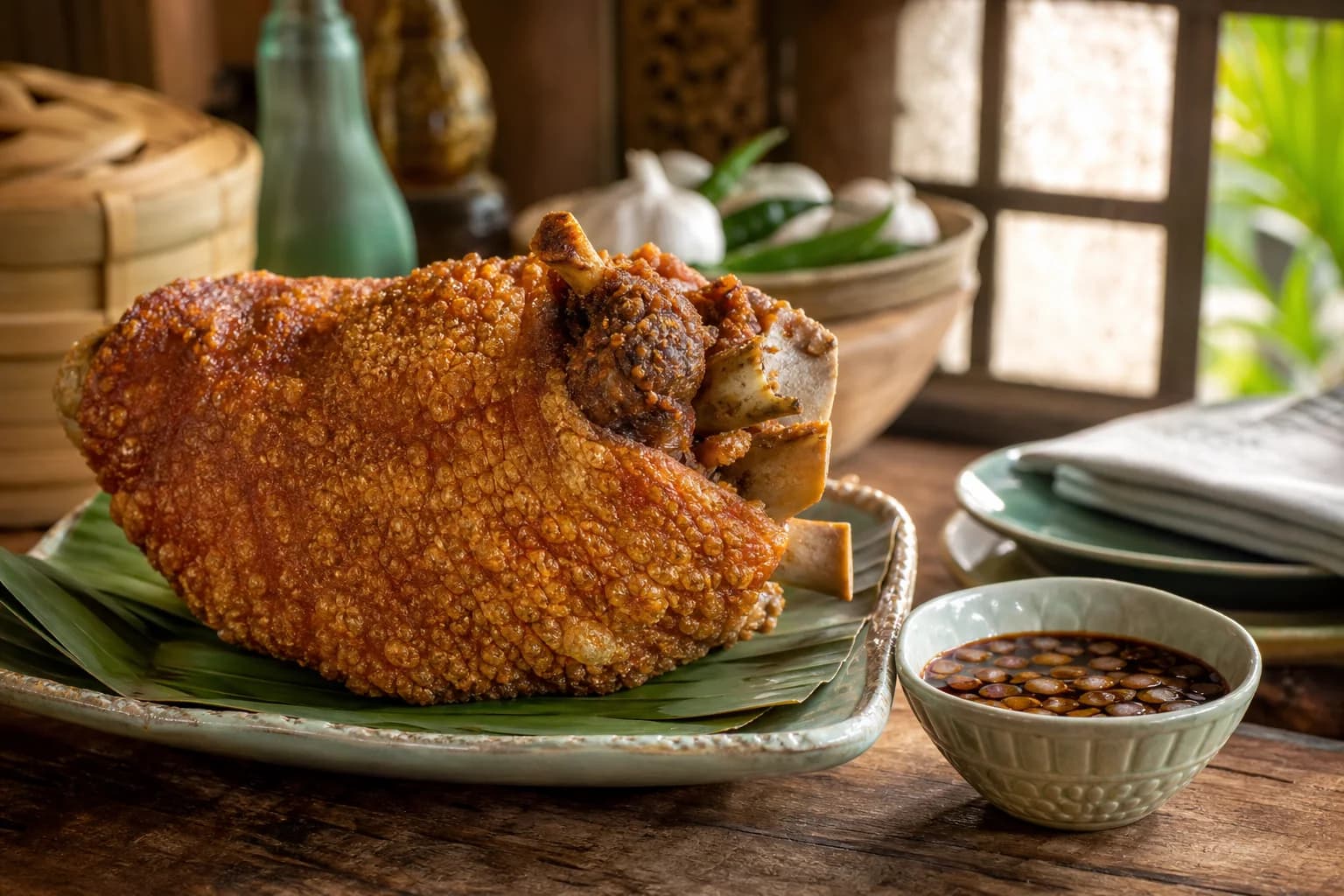
- If the skin turns out rubbery after braising, finish the hock under a 450°F (230°C) broiler or in a very hot oven for 5–10 minutes to crisp it — the contrast between crackling skin and soft meat is worth the extra step.
- For deeper flavor and effortless defatting, par-braise the hock the day before, chill it overnight in its liquid, and skim the solidified fat before reheating — the rest concentrates the flavor noticeably.
- Do not substitute a smoked or cured ham hock 1:1 for a fresh one without adjusting salt elsewhere; cured versions can easily over-season a dish and throw off the balance of a long braise.
Nutrition
Energy
715 kJ · per 100 g
Where the calories come from
Protein
19.1g
38% DV
Carbs
0g
0% DV
Fat
10.5g
14% DV
Fiber
0g
0% DV
Sugars
0g
of which
Sodium
1050mg
46% DV
Source · USDA FoodData Central · Pork, pickled pork hocks
View on FDC →In the shops
Matched grocery products
 €2.20
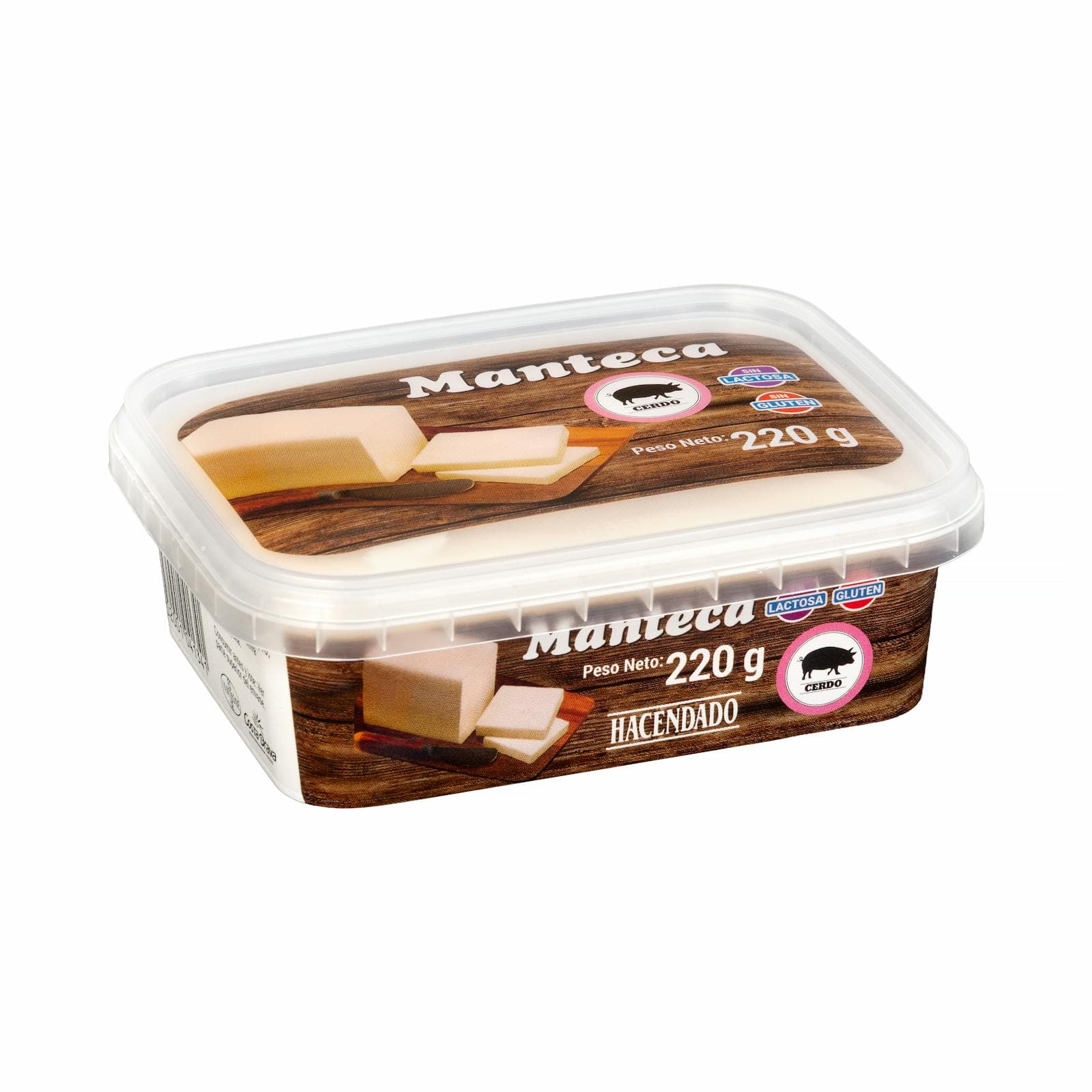
€2.20Pork Lard
Hacendado · 220 g · Mercadona
 €3.40
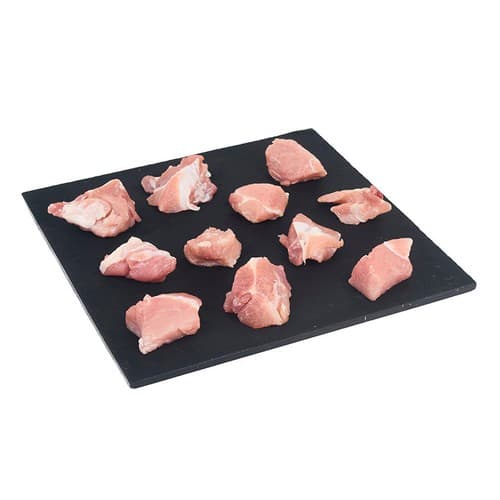
€3.40Pork Stew
BONPREU · ud · Bonpreu
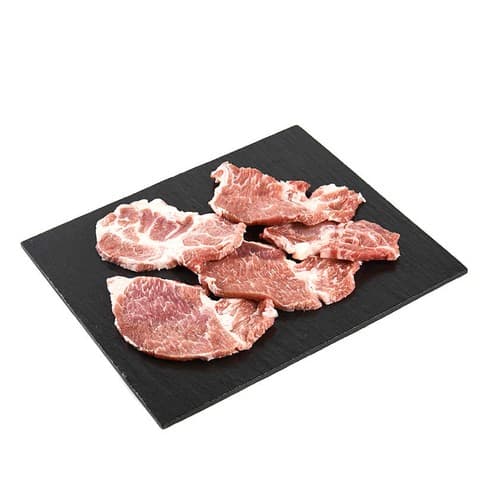 €3.45
€3.45Lean Pork
BONPREU DE L'ERA · ud · Bonpreu
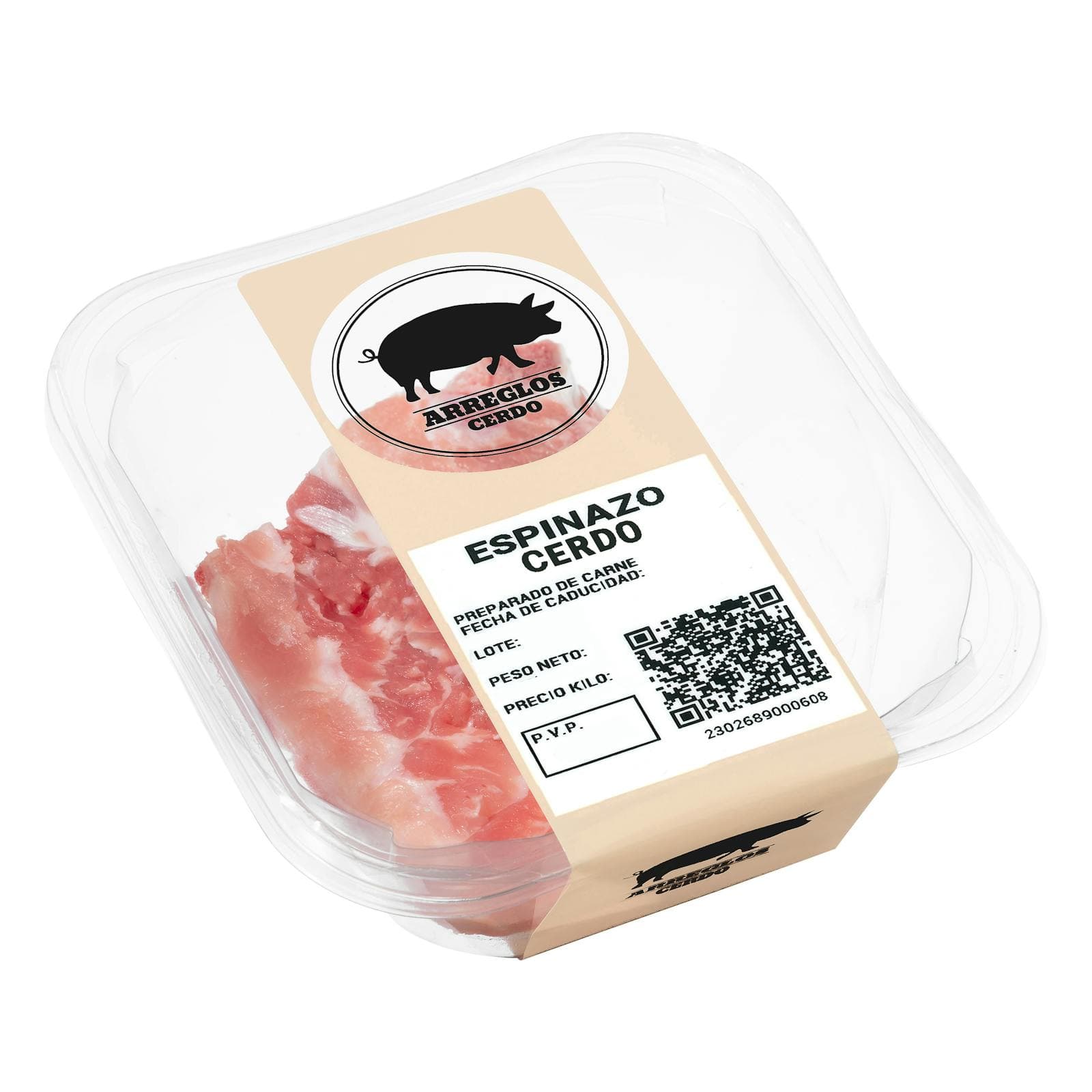 €2.10
€2.10Pork Spine
300 g · Mercadona
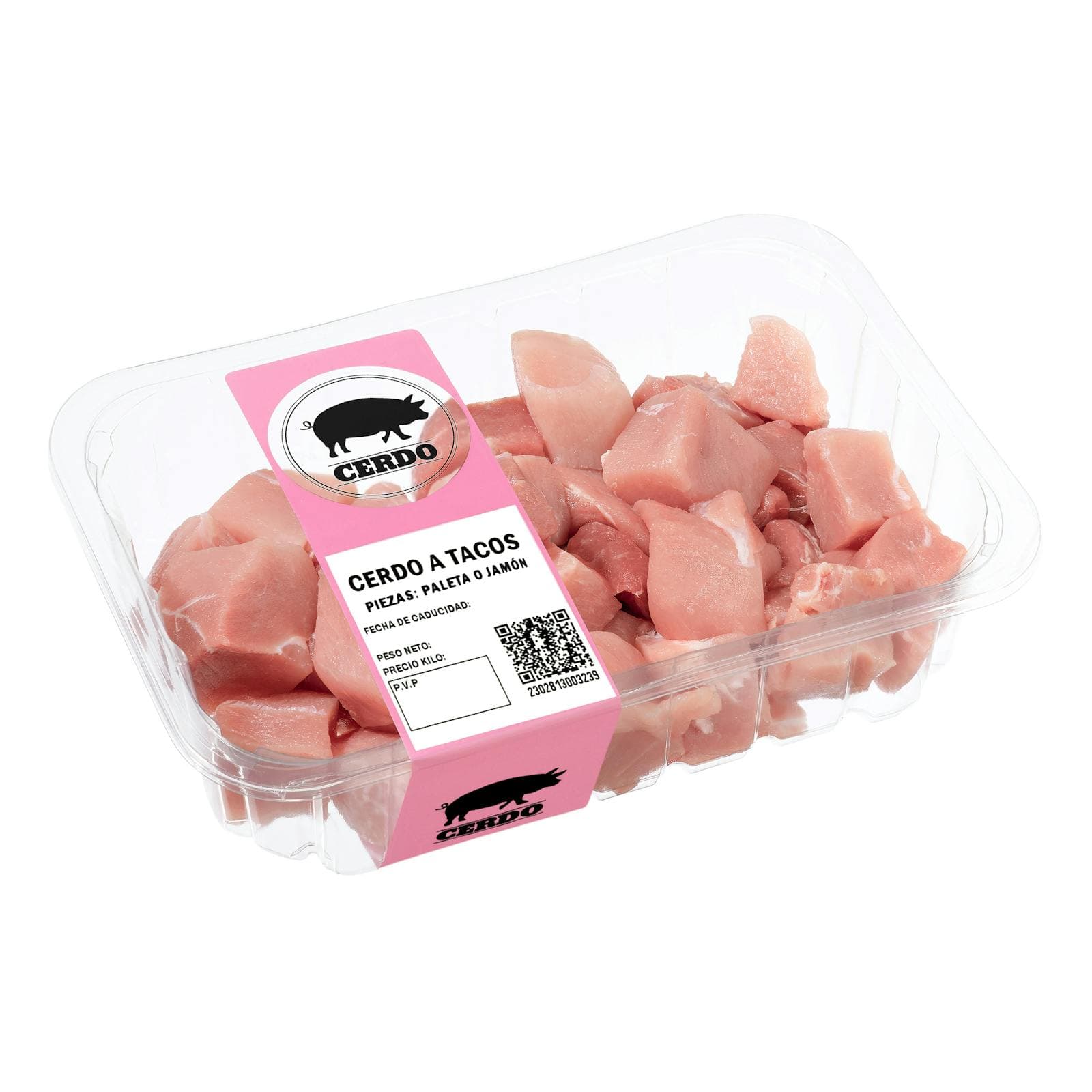 €3.22
€3.22Diced Pork
560 g · Mercadona
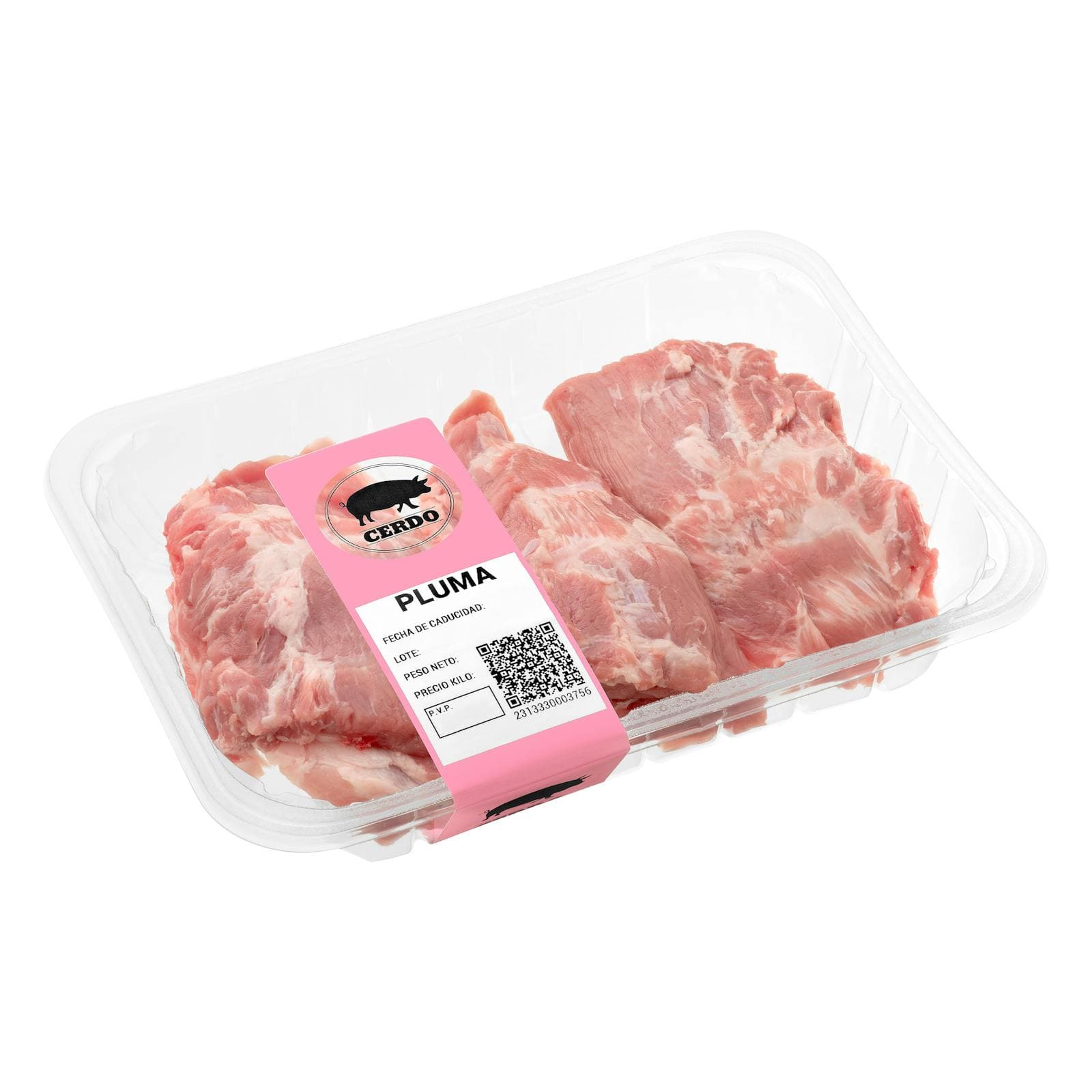 €3.75
€3.75Pork Pluma
300 g · Mercadona
Good to know
- Cut location
- Lower leg of the pig, between the knee and the ankle (shank); contains the tibia and fibula, surrounding connective tissue, skin, and a modest amount of meat
- Also known as
- Ham hock (especially in the U.S. for the hind leg), shank, Schweinshaxe or Hachse (German), jarret (French), pata (Filipino), 蹄膀 or 肘子 (Chinese)
- Typical weight
- 1–2 lb (450–900 g) per hock; butchers will often split one lengthwise into halves
- Composition
- High in collagen and skin, low in intramuscular fat; meat-to-bone ratio is modest, but edible yield rises to roughly 60–70% once gelatin renders
- Cooking method
- Long, moist heat — simmer, braise, or stew; pressure cooker reduces time to roughly 60–90 minutes
- Target doneness
- Internal temperature of 195–205°F (90–96°C); meat should pull cleanly from the bone and the skin should be tender enough to cut with a spoon
- Storage
- Refrigerate raw up to 2 days; freeze up to 6 months; cooked hock keeps 3–4 days refrigerated
- Difficulty
- Easy to cook but requires time; very forgiving of imprecise timing
Substitutes
- Smoked or cured ham hock — The most common substitute and the easiest to find, but it brings significant salt and smoke; reduce or omit added salt and adjust other aromatics accordingly.
- Pork shank — Very close in character — meatier and a bit easier to portion, with the same skin, bone, and collagen profile. A clean 1:1 swap for braises and stocks.
- Oxtail — Behaves similarly in the pot and gives an equally silky, gelatin-rich result, though the flavor is beefy and deeper; best in darker, longer-cooked dishes.
- Veal or beef shank — Substitute when you want a richer, beefier broth and don't need pure pork flavor; expect a heavier final dish and a longer cooking time.
- Pig's feet (trotters) — Almost pure skin and bone with little meat; use them when you want maximum gelatin and body, and combine with another cut for actual meat yield.
- Bacon or salt pork — Only appropriate when you want salt and rendered fat rather than body and shreddable meat; do not rely on these to build a gelatinous stock.
Pairs with
Also called
pork knuckle · fresh ham hock · pork shank · eisbein