Proteins
Pig's Feet
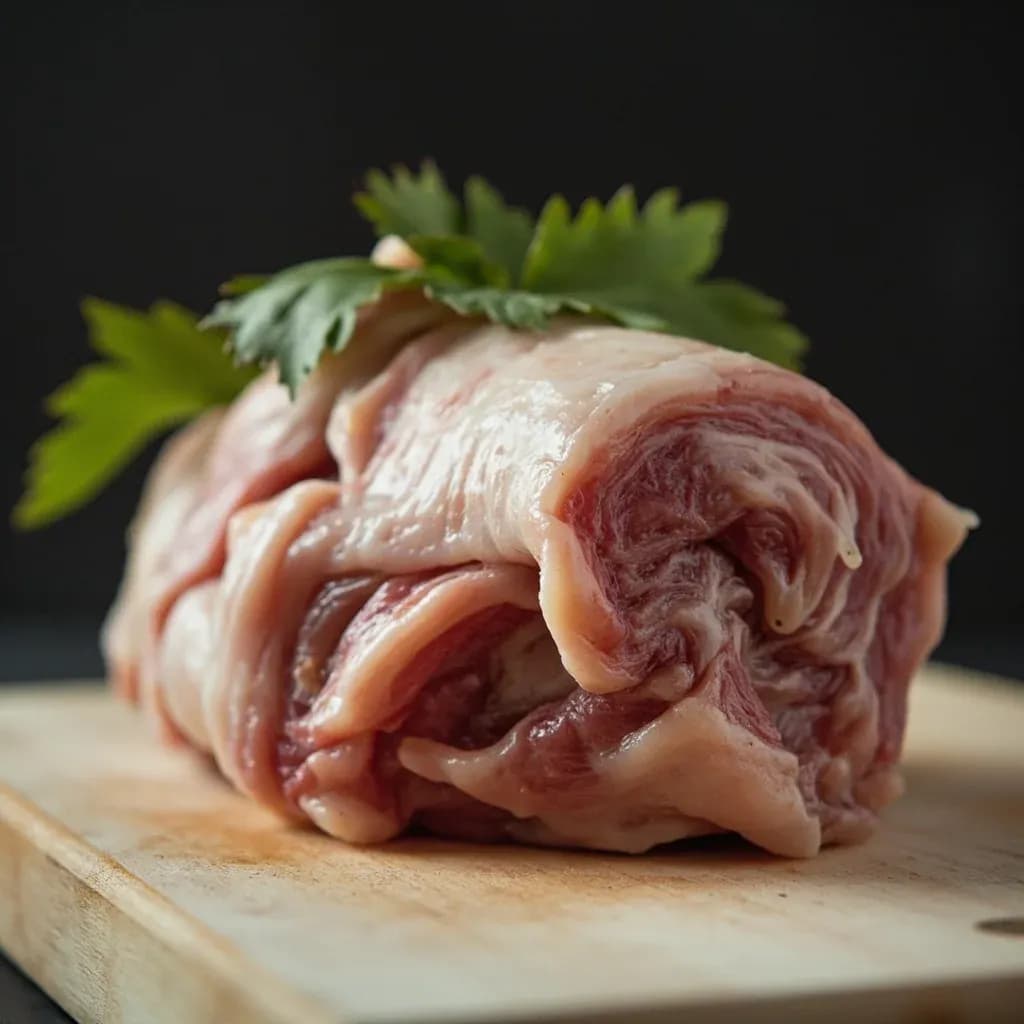
Collagen-heavy pork feet, slow-cooked for gelatinous stews, braises, and stocks.
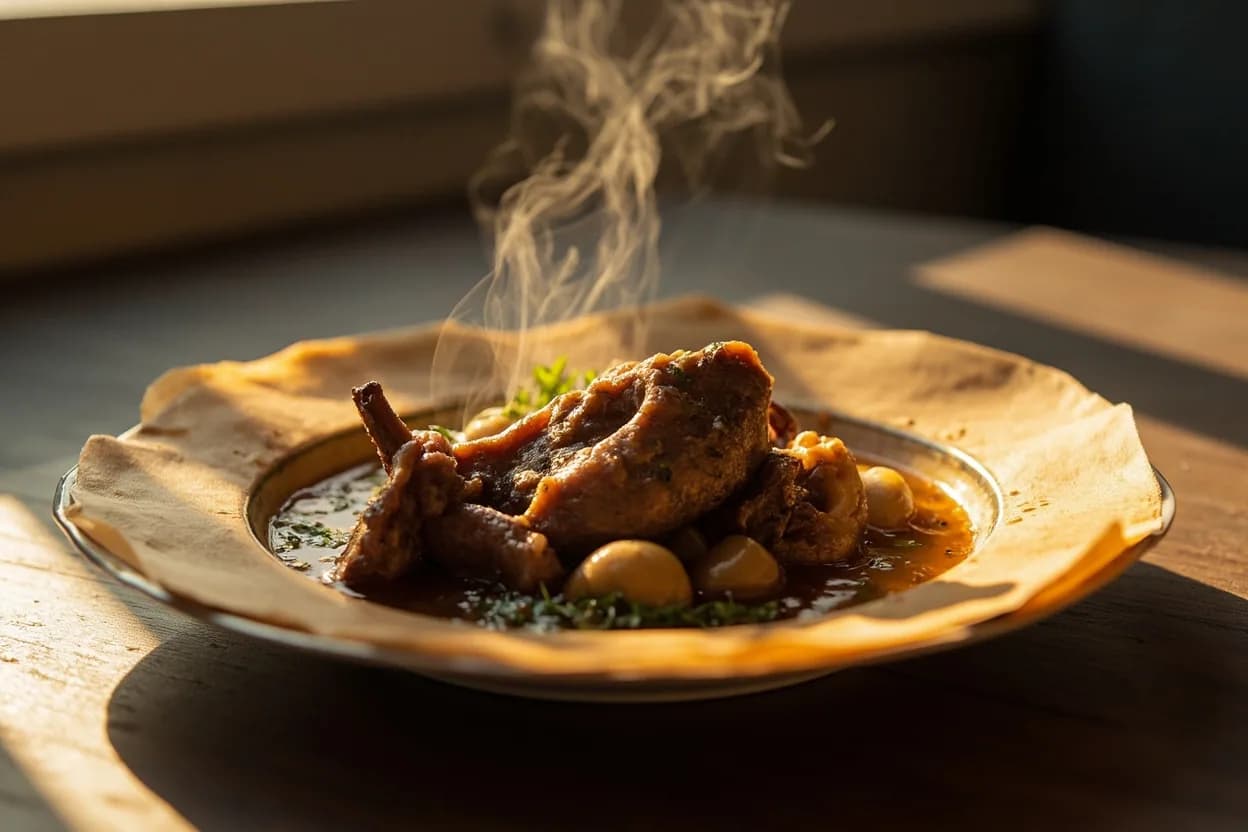
Pig's feet (trotters) are the lower legs and feet of the pig, packed with skin, cartilage, and collagen. They are slow-braised or boiled for hours to extract rich gelatin, used in Okinawan tebichi, Korean jokbal, soul-food stews, and as a thickener for stocks and brawn. The result is sticky, unctuous, and deeply flavored.
Pig's feet, or trotters, are among the most collagen-dense cuts available, consisting primarily of skin, cartilage, and bone with only a thin veil of meat. This composition makes them uniquely suited to long, moist cooking—the sustained exposure to gentle heat converts their abundant Type I collagen into gelatin, which swells to several times its dry weight and gives cooked liquids a rich, silken body. The rendering is purely mechanical and chemical: collagen fibers unwind in warm water, and temperatures between 160–200°F (71–93°C) complete the conversion over 2–4 hours, with conversion accelerating significantly above 185°F (85°C); the broth becomes capable of setting firm when chilled. The foot itself yields modest edible matter—perhaps half its raw weight—but the cooking liquid is the true product, a deeply flavored, collagen-enriched stock that serves as the foundation for aspics, braises, sauces, and the pot liquor of Southern and soul-food traditions.
- Measured in
- piece
- Storage
- Fridge
Types & varieties
Most common in US and European markets; one foot split in half lengthwise, hair removed, ready to braise or stock
Less common; sold with bone intact; requires more cooking time to render the collagen
Not a true trotter — the hock is the joint above the foot; less gelatin, more meat; not interchangeable in recipes requiring gelatinous body
Cured in salt and aromatics; used in Ligurian and Tuscan preparations; reduced cooking time required
Precooked in vinegar brine with onions and bay; served cold sliced thin; common in Eastern European and Southern US traditions
Common uses
Tips & pitfalls
- Blanch raw trotters 5 minutes in boiling water before using — impurities and blood cloud the broth; drain and rinse
- Split trotters yourself with a cleaver or ask your butcher to do it — splitting exposes more surface area and accelerates collagen extraction
- Cook at a bare simmer, never a boil — vigorous bubbling makes the broth cloudy and emulsifies fat that should render out
- Test doneness by twisting the bone — it should rotate freely in the socket; undercooked trotters are rubbery and will not yield gelatin
- Save the cooking liquid — strain through fine mesh, refrigerate, then lift off solidified fat; the broth is the product
- Pressure cooker reduces cooking to 45–90 minutes; conventional pot requires 2.5–4 hours on low heat
- For clear aspic, use a separate pot for blanching (discard that water) then fresh aromatics for the final stock
- The skin is the most valuable part — it holds the most collagen and develops a silken, yielding texture when properly cooked
- Do not add acidic ingredients (tomatoes, wine, vinegar) until the final 30 minutes — acid firms proteins and stalls gelatin conversion
- Pair with rice, sourdough, or crusty bread to absorb the gelatin-rich sauce
Nutrition
Nutrition
No USDA FoodData Central match for Pig's Feet yet. We surface a per-100 g profile once a generic whole-food entry is matched and verified.
In the shops
Matched grocery products
No matched grocery products for Pig's Feet yet.
Good to know
- Type
- Pork cut — foreleg and hindleg feet, with skin, cartilage, small amount of meat, and bone
- Primary compounds
- Collagen (Type I), elastin, glycine, proline, hydroxyproline; negligible fat content
- Collagen conversion
- Collagen converts to gelatin over 2–4 hours of gentle cooking; the gelatin swells as it absorbs liquid, and the cooled broth will set firm
- Typical preparation
- Split lengthwise through cartilage and bone; may be singed, scalded, and scraped clean of hair
- Yield
- Bone-in: 45–55% edible after cooking; meat and cartilage clinging to bone; skin yields most of the edible mass
- Fresh storage
- Refrigerate up to 3 days; freeze up to 3 months; thaw overnight in refrigerator
- Cooked storage
- Refrigerate in cooking liquid up to 1 week; freeze up to 6 months
- Regional availability
- Most common in European, African-American, Chinese, Southeast Asian, and Latin American markets; specialty butcher shops worldwide
- Cost
- Inexpensive per unit; sold per foot or in packages of 2–4; often cheaper than other cuts
Substitutes
- Chicken feet — Similar collagen-to-gelatin conversion; skin is thinner; good for stocks and soups but less substantial as a main dish
- Pork neck bones — More meat, less skin; comparable long-cook application; yields less gelatin per pound
- Oxtail — Bone-in cut with rich marrow and connective tissue; similar cook time; yields less gelatin but more meaty flavor
- Pork hocks (smoked or fresh) — The joint above the trotter; acceptable in stocks; not a substitute when gelatin texture is the goal
Pairs with
Also called
Tebichi · Pork Trotters · Trotters
Appears in these dishes
Related

Egg
The kitchen's everything ingredient — bind, leaven, enrich, or fry

Chicken Breast
Lean, quick-cooking white meat for everyday dinners

Ground Beef
Versatile minced beef for burgers, ragù, tacos, and meatballs

Pork Loin
Lean, tender roasting cut that stays juicy with care

Salmon
Rich, rosy fish that roasts, grills, or cures beautifully

Egg White
Pure protein that whips to airy peaks for meringue and more

Egg Yolk
Rich, golden yolk for custards, mayonnaise, and pasta

Quail Egg
Tiny, speckled eggs for garnishing and elegant bites