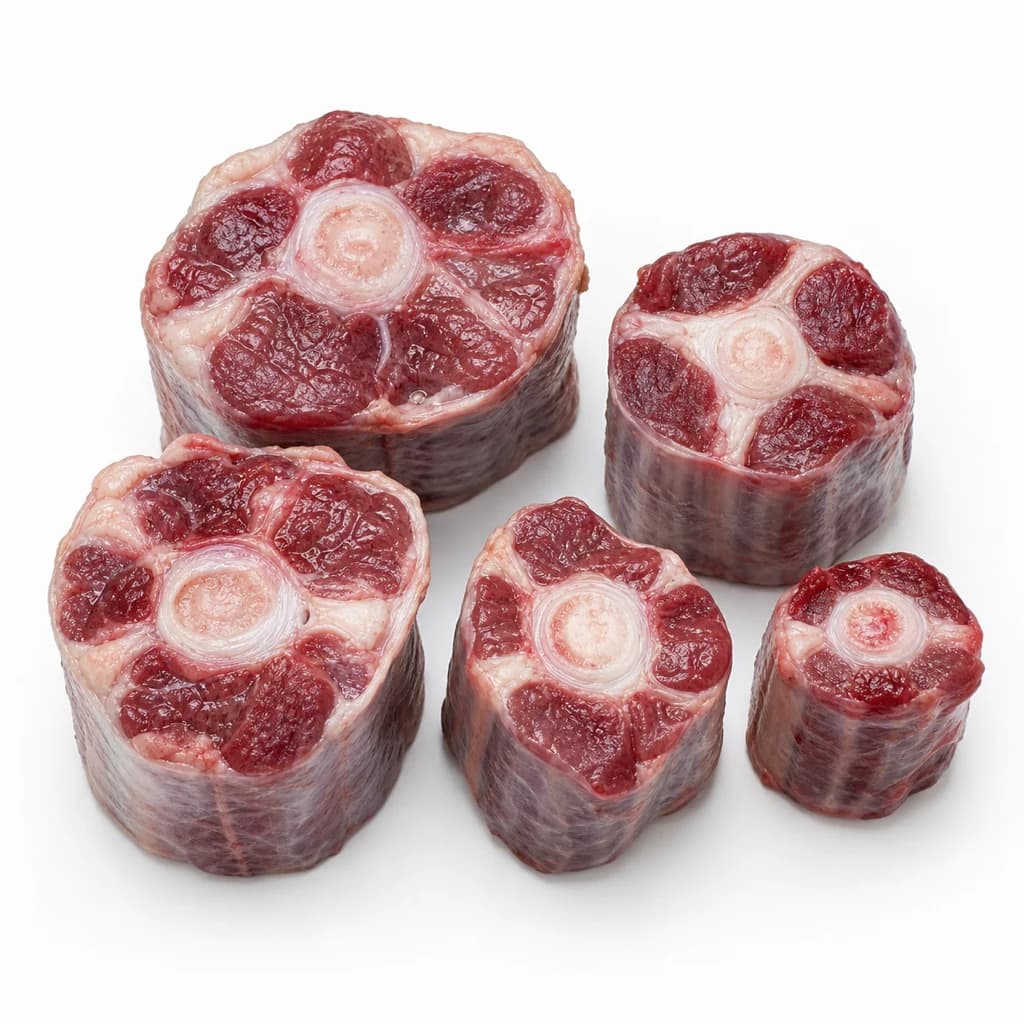
Natural form
Raw oxtail cut into thick bony segments, showing marrow and connective tissue.
Teaches the reader to recognize oxtail by its characteristic cross-cut bony segments, visible marrow cavity, and surrounding connective tissue before any preparation.
Proteins
Oxtail
Bony, gelatin-rich tail of cattle, slow-braised into deeply flavored stews and soups.
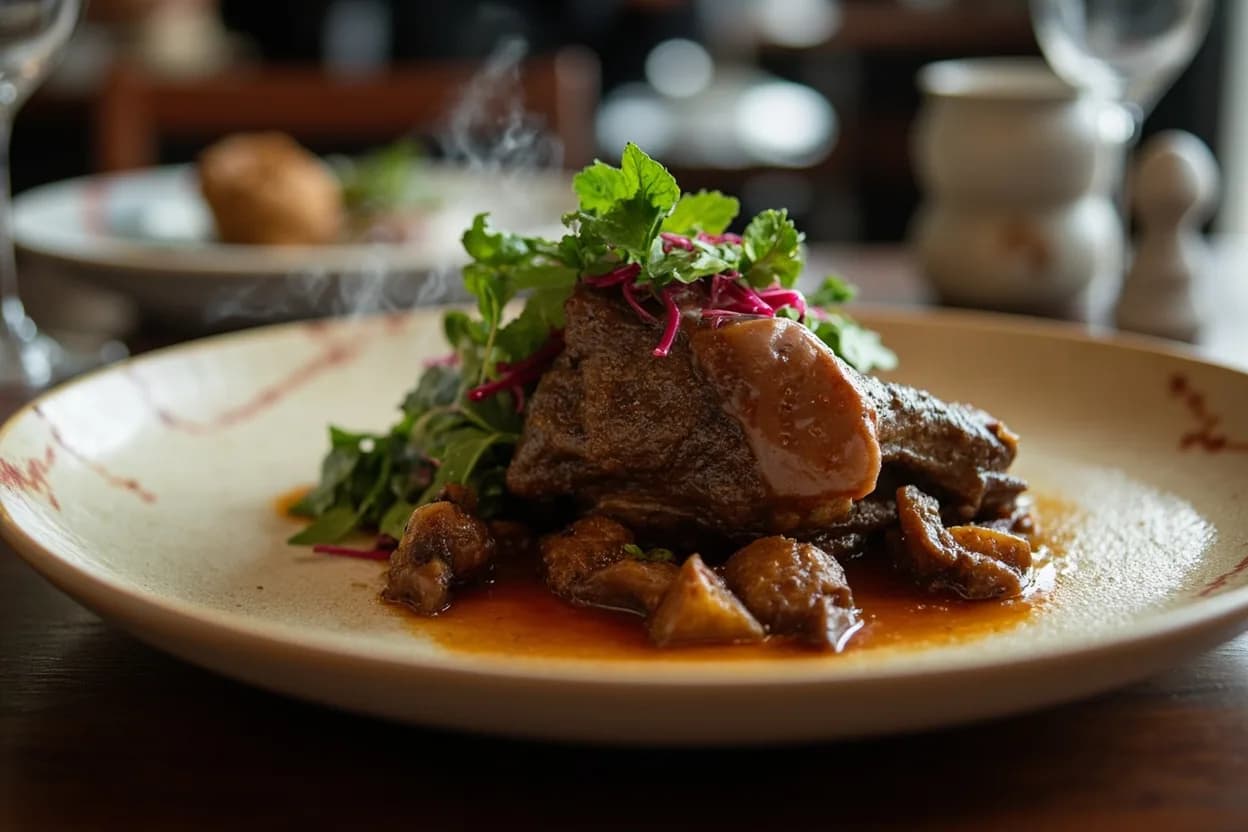
Oxtail is the tail of cattle, sold cut into thick bony segments full of marrow and connective tissue. It needs long, slow braising or stewing, during which the collagen melts into a rich, silky gravy. It stars in Jamaican oxtail stew, Korean kkori-gomtang and Italian coda alla vaccinara.
Oxtail is the bony, collagen-dense tail section of cattle, comprising cervical and thoracic vertebrae wrapped in layers of intermuscular fat, meat, and connective tissue. What distinguishes this cut from other tough, working muscles is its extraordinary collagen-to-meat ratio—the connective tissue that surrounds each vertebra and permeates the muscle bundles hydrolyzes into rich, unctuous gelatin during extended moist heat, transforming an otherwise chewy cut into something silky and yielding. The thick subcutaneous fat cap does not render away completely; instead, it slowly melts from within, basting the meat throughout the cooking process and infusing every bite with deep, savory richness. This is a cut that rewards patience: under 2 hours of cooking, it remains stubbornly tough; beyond 2.5–3 hours at a gentle simmer, the collagen dissolves completely, yielding a sauce that coats the spoon and meat that slips effortlessly from the bone. The marrow inside the vertebrae also softens and enriches the cooking liquid, adding another dimension of flavor that simpler cuts cannot provide. Oxtail occupies a unique position in the kitchen—economical enough for peasant braises, yet sophisticated enough for restaurant-quality ragus and braised presentations.
- Measured in
- g
- Storage
- Fridge
Types & varieties
Uncut tail section; requires butchering into segments at home; better for those with butchery experience or who want to portion flexibly
Segments already divided between vertebrae; the most common retail form and easiest to portion, sear, and braise
Thicker cuts (3–4 inches) available from wholesale or full-service butcher shops; ideal for braising but require longer cooking times
Understanding Collagen and Gelatin
The magic of oxtail lies in its connective tissue composition. Collagen, the structural protein that holds muscle bundles together, requires sustained moisture and temperatures between 160–180°F (71–82°C) to begin converting to gelatin. This hydrolysis process—breaking collagen's triple-helix structure into分散 gelatin molecules—takes time, but the result is a naturally thickened, glossy sauce without any thickener. Gelatin also contributes body and mouthfeel: a properly braised oxtail sauce should coat the back of a spoon. If your sauce remains thin after 3 hours of cooking, the collagen has not fully converted—continue cooking until the meat yields to pressure.
- Collagen begins converting to gelatin at 160°F (71°C); conversion accelerates between 180–200°F (82–93°C)
- Full conversion requires sustained time—shortcuts with higher heat do not work
- A telltale sign of proper gelatin: the braising liquid gels when chilled
Buying and Storing
Request pre-cut pieces from the butcher counter for convenience—segments are already divided between vertebrae, making searing and portioning straightforward. Whole tails offer more flexibility but require a cleaver or saw to divide. For the best flavor and texture, buy from a source with high turnover; oxtail spoils quickly due to its high moisture content and bone exposure. If purchasing frozen oxtail from an Asian or Latin market, ensure it was frozen fresh and thaw slowly in the refrigerator. Do not trim the fat cap completely—it renders slowly and keeps the meat moist during the long cook.
- Ask your butcher to cut the tail into 2-inch segments if not pre-cut
- Avoid oxtail with a grayish-brown color or sour smell—signs of age
- Purchase during autumn and winter for peak availability
Common uses
Tips & pitfalls
- Brown oxtail pieces thoroughly in batches before adding liquid; the Maillard reaction on the fat-cap and meat surfaces builds the foundation of the final dish's flavor.
- Trim excess surface fat only partially—leaving a ¼-inch fat cap during browning prevents the meat from drying out before the collagen renders.
- Add liquid only after browning; deglaze with wine or stock to capture the fond, scraping up all caramelized bits.
- Simmer, never boil. Rolling boils shred the meat and cloud the broth; a gentle simmer (180–195°F) keeps the pieces intact and yields a clear, gelatinous sauce.
- Plan for 2.5–3.5 hours of gentle braising for conventional methods; pressure cooking reduces this to 45–55 minutes with comparable results.
- Cool cooked oxtail in its braising liquid; as it chills, the fat solidifies on top for easy removal, and the meat reabsorbes juices.
- When serving, the meat should yield to gentle pressure and slip from the bone with minimal resistance; if chewy or resistant, it needs more time.
- For a glossy, restaurant-style sauce, strain the braising liquid, degrease, then reduce separately until it coats a spoon.
- Do not salt aggressively before searing—salt draws moisture and inhibits browning. Season after the sear or just before braising.
Nutrition
Nutrition
No USDA FoodData Central match for Oxtail yet. We surface a per-100 g profile once a generic whole-food entry is matched and verified.
In the shops
Matched grocery products
No matched grocery products for Oxtail yet.
Good to know
- Cut type
- Bony, collagen-rich tail section of cattle (cervical and thoracic vertebrae)
- Typical weight
- Whole tail: 3–5 lbs (1.4–2.3 kg); cut into 2–3 inch segments yielding 4–6 pieces per tail
- Fat content
- High intermuscular and subcutaneous fat; thick fat cap common
- Texture
- Tough with high connective tissue; becomes silky and tender with prolonged moist heat (2.5–4 hours)
- Yield
- Meat constitutes roughly 50–55% of weight; substantial bone and cartilage content
- Calories (raw)
- ~175–200 kcal per 100g; cooked meat becomes more caloric due to fat render and absorption
- Primary nutrients
- Collagen and gelatin (from cartilage), protein, marrow fat; modest iron and B12
- Shelf life (fresh)
- 1–2 days refrigerated at 32–36°F; freeze up to 3 months wrapped airtight
Substitutes
- Beef short ribs — Similar collagen content and slow-cook behavior; meatier but less gelatinous; use 1:1 by weight
- Pork trotters — Even more collagen-rich; longer cooking required; milder flavor; excellent for stocks and aspics
- Veal knuckle — Cross-section of shank; comparable bone-marrow richness; slower to break down than oxtail
- Lamb neck — Good gelatin content; slightly more lamb flavor; requires similar long braising time
Pairs with
Also called
Ox Tail · Beef Tail · Beef Oxtail
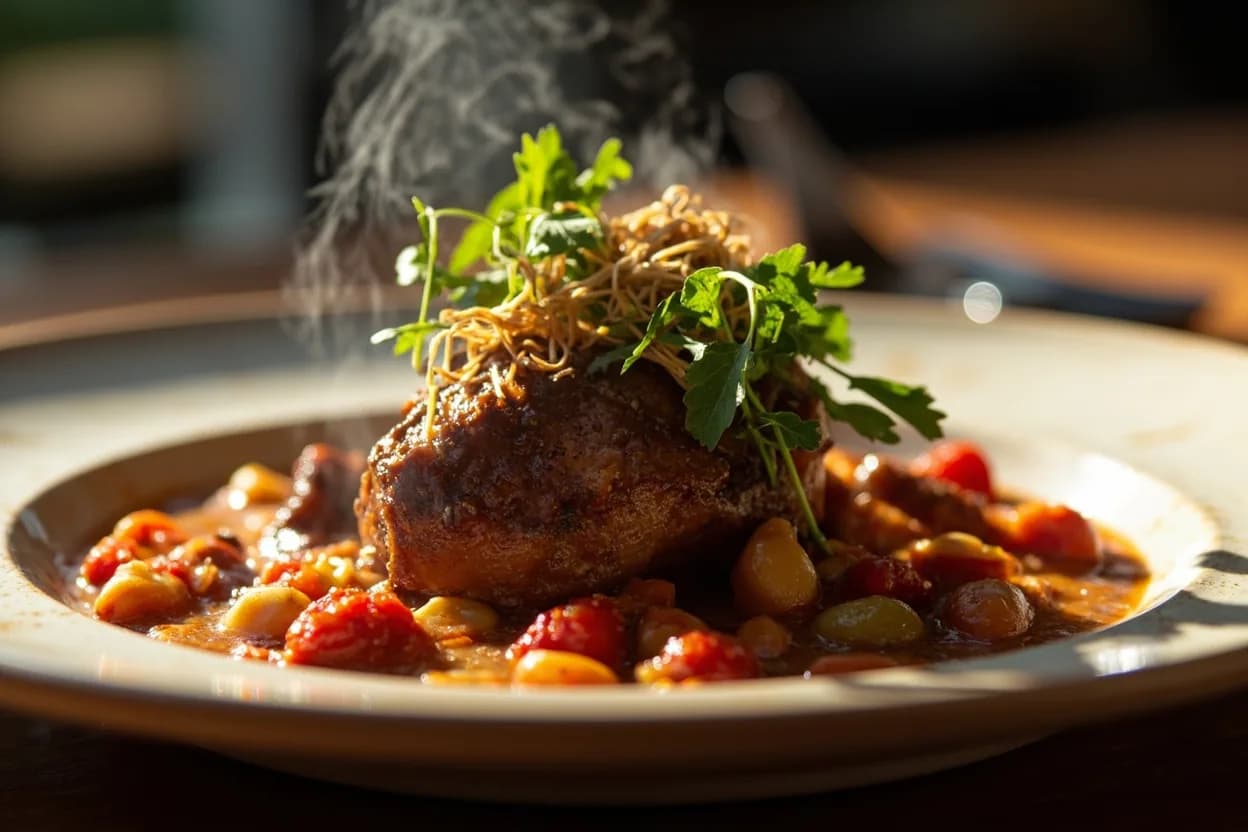
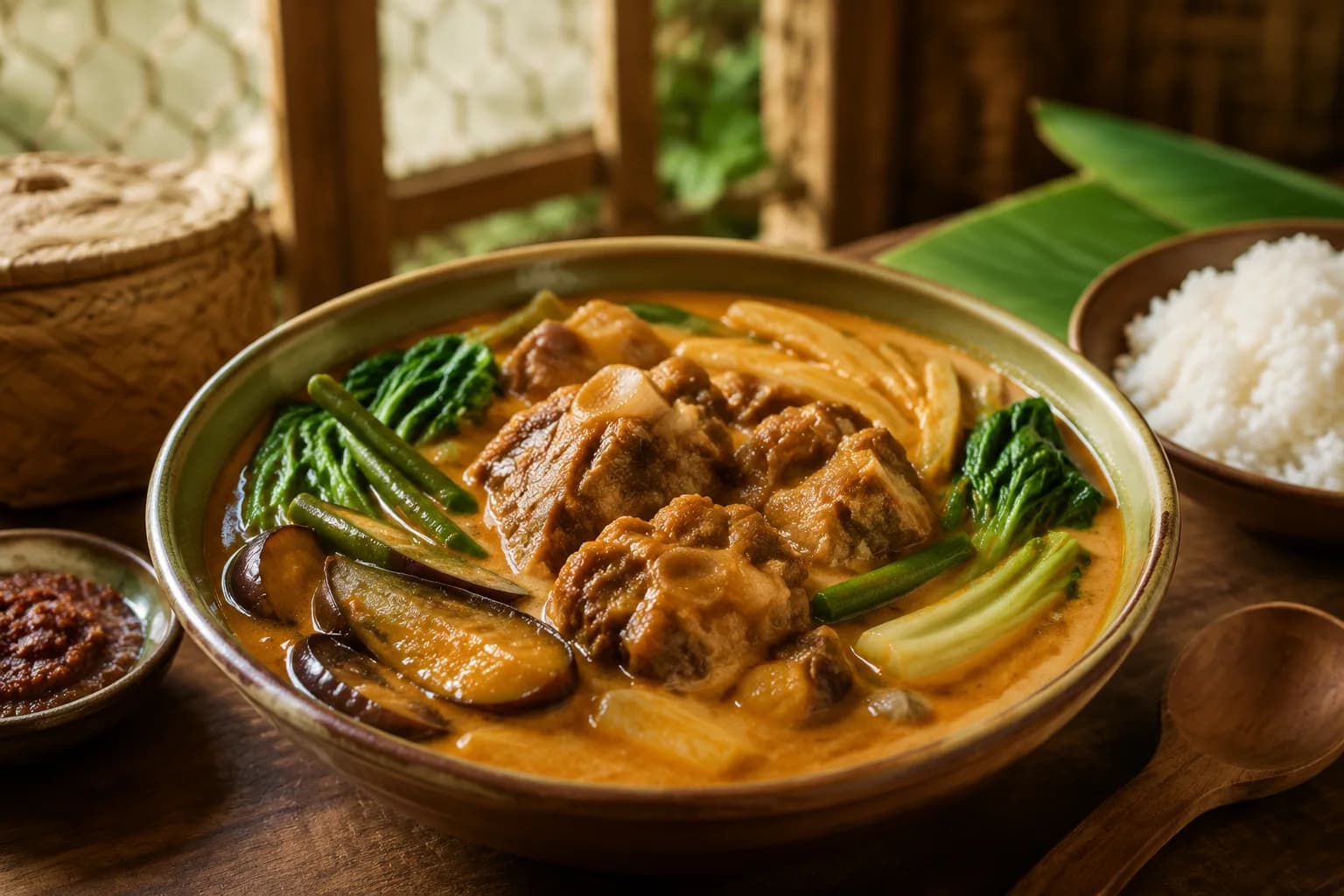
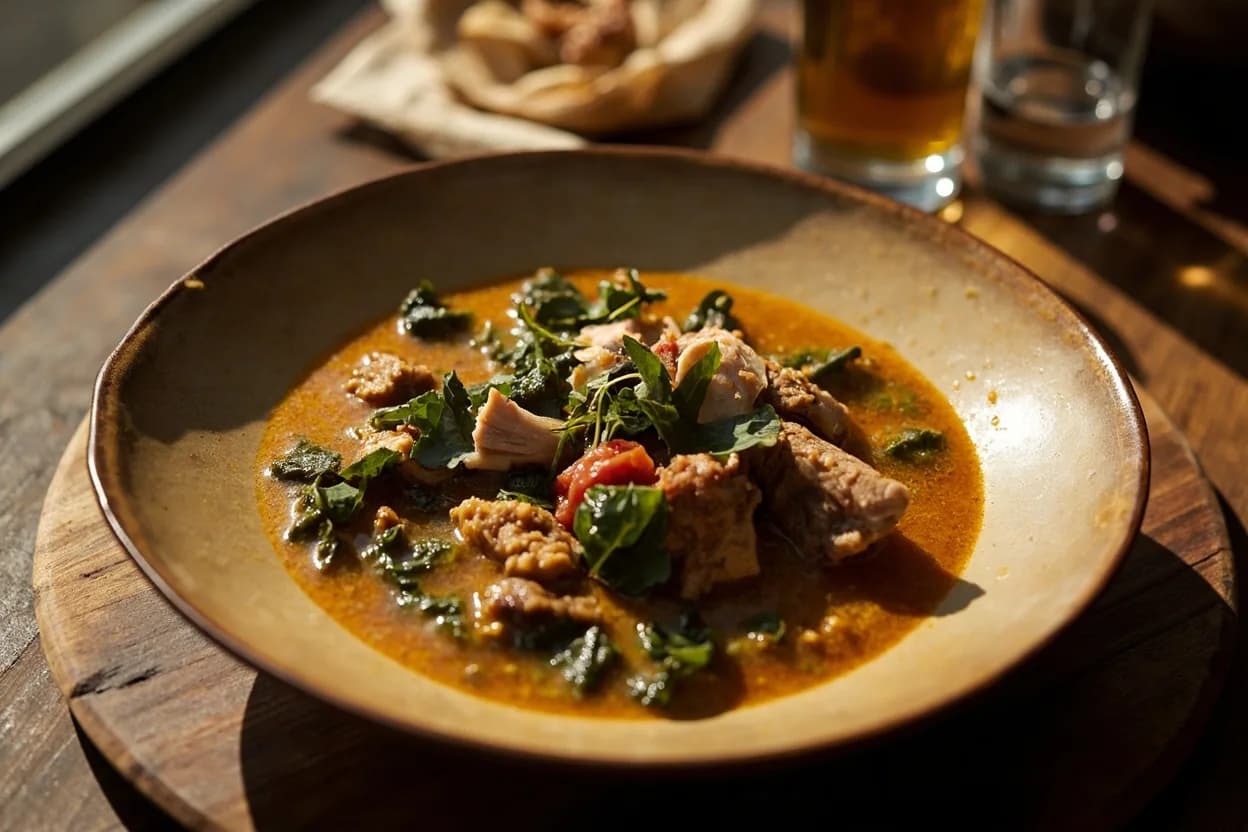
Appears in these dishes
Related

Egg
The kitchen's everything ingredient — bind, leaven, enrich, or fry

Chicken Breast
Lean, quick-cooking white meat for everyday dinners

Ground Beef
Versatile minced beef for burgers, ragù, tacos, and meatballs

Pork Loin
Lean, tender roasting cut that stays juicy with care

Salmon
Rich, rosy fish that roasts, grills, or cures beautifully

Egg White
Pure protein that whips to airy peaks for meringue and more

Egg Yolk
Rich, golden yolk for custards, mayonnaise, and pasta

Quail Egg
Tiny, speckled eggs for garnishing and elegant bites